 Sarasota Siding
 Why Bradenton Decks Wear Out Faster Than the Manuals Say
A deck built to a national spec sheet and a deck built for the Gulf Coast are not the same job. Bradenton sits in Manatee County, right against the same weather system that hammers the rest of the Sarasota-Manatee coastline: long stretches of intense UV, humid air that never fully dries wood out, wind-driven rain that gets pushed sideways under railings and through board gaps, and a steady dose of salt air off the water. None of those factors show up in a generic maintenance schedule, which is exactly why decks here fail years before their rated lifespan.
The damage is rarely dramatic until it suddenly is. UV breaks down the lignin in wood fibers and the UV inhibitors in composite capping, so boards go gray, brittle, and rough well before they look structurally unsound. Wind-driven rain finds every gap around fasteners, ledger boards, and post bases, then sits there because Florida humidity slows evaporation. Salt air accelerates corrosion in anything metal — nails, screws, joist hangers, bolts — often from the inside of a connection where you can't see it happening. By the time a board feels spongy underfoot, the fasteners and framing beneath it have usually been compromised for a while.
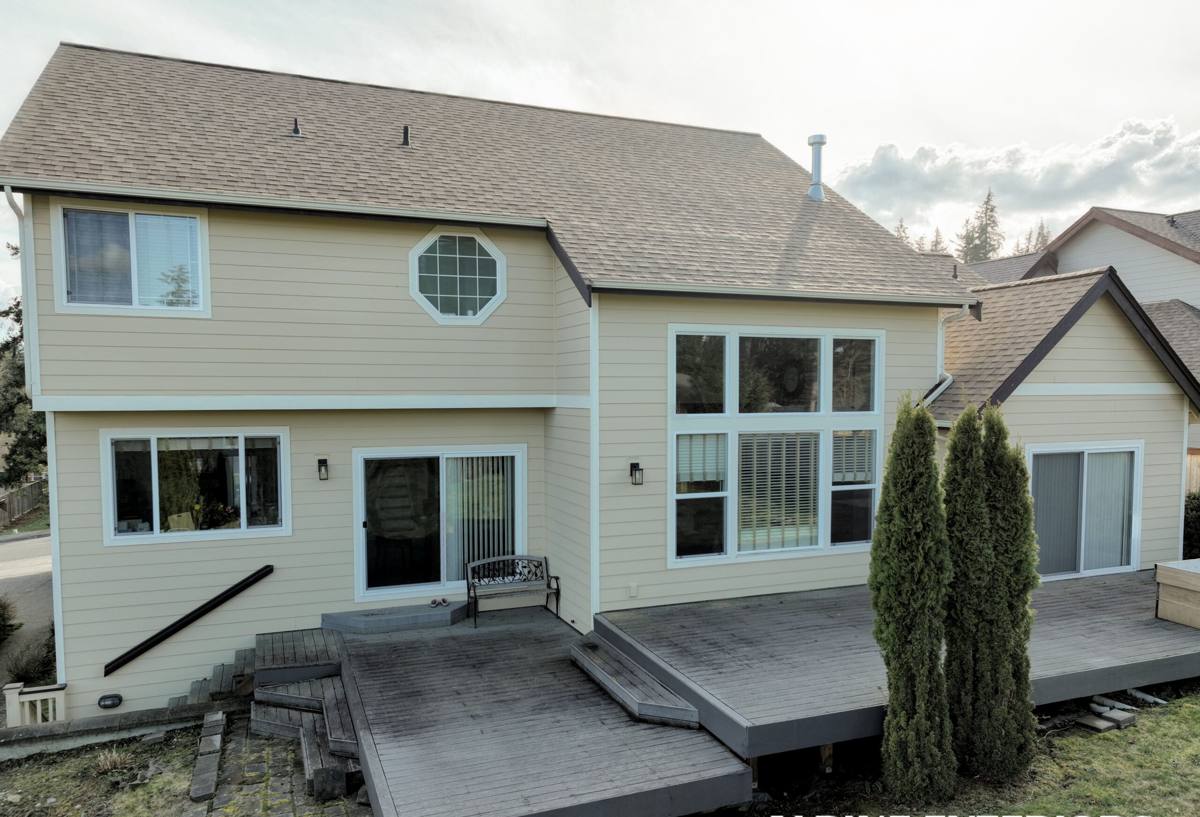
Signs a Bradenton Deck Needs Repair — Not Just Cosmetic Attention
Homeowners often call us about a stain job and end up needing structural work, or call worried about a "cracked board" that turns out to be cosmetic. Here's how to tell the difference before we even get on site.
Cosmetic wear (repair, low urgency)
- Graying or fading on sun-exposed boards with wood still solid underneath
- Surface checking (small hairline splits along the grain) on boards that don't flex
- Loose or popped screws/nails on the surface with sound wood around them
- Minor mildew or algae staining on shaded, low-airflow sections
Structural warning signs (address promptly)
- Any board that flexes, bounces, or feels soft when you press on it
- Rust streaking around fasteners or joist hangers
- Gaps opening up where the deck ledger meets the house
- Wobble in railing posts or stair stringers
- Visible sagging between joists or along a beam
If you're seeing anything in the second list, treat it as a safety issue, not a cosmetic one. A deck that fails is almost always a connection failure — a ledger pulling away, a post base rotting out, hardware corroding through — not the decking boards themselves.
What a Correct Deck Repair Job Actually Involves
A repair that only replaces what's visible from above is a repair that comes back. The parts of a deck that take the worst punishment in this climate are usually hidden: the ledger connection to the house, the joist hangers, the post-to-footing connections, and any flashing that's supposed to keep water out of end grain and fastener holes.
Structural assessment first
Before any boards come off, we check the framing from underneath where accessible — joists, beams, ledger attachment, post bases, and hardware condition. Salt-air corrosion often attacks fasteners from the inside of the wood, so a fastener head can look fine while the shank underneath is failing. We're looking for rot (probing with an awl, not just eyeballing it), corrosion, and any movement in structural connections.
Ledger and flashing
The ledger board — where the deck attaches to the house — is the single most common failure point on Florida decks, because it's a wood-to-wood connection sitting right where wind-driven rain gets pushed against the house. Proper repair means flashing that actually sheds water away from that seam, not just caulk over a gap. Caulk is a stopgap, not a fix.
Fasteners and hardware
Standard hot-dip galvanized hardware degrades faster in coastal salt air than it does inland. We use stainless steel or coated fasteners rated for coastal/ACQ-treated lumber contact where it matters most — ledger bolts, joist hangers, and post connections — so the repair doesn't corrode out again in three years.
Decking and railing
Only after the structure underneath is sound do we address the visible boards and railings — replacing what's damaged, refastening what's loose, and matching material where a full board swap isn't needed.
Wood vs. Composite: What We Recommend for Repairs Here
Which material makes sense for a repair depends on what's already on the deck, the homeowner's maintenance appetite, and budget. We'll give you a straight answer rather than pushing whatever's easiest for us to install.
| Factor | Pressure-Treated / Wood | Composite Decking |
|---|---|---|
| Upfront repair cost | Lower per board | Higher per board |
| UV/fade resistance | Grays over time, needs refinishing | Better UV stability, some fading still occurs |
| Moisture behavior | Can cup, warp, or rot if end grain isn't sealed | Won't rot, but can trap moisture at cut ends if not capped |
| Maintenance | Periodic sealing/staining required | Occasional cleaning, no sealing |
| Matching existing deck | Easier to match an existing wood deck | Hard to match discontinued composite colors/profiles |
| Best fit for a repair | Spot repairs on an all-wood deck | Sections with heavy sun/moisture exposure, if budget allows |
One thing we won't do is mix in whatever composite board is cheapest just to patch a gap — mismatched capping stock and mismatched fastener spacing on composite is a common source of the "why does this one board look different and squeak" complaints we get called out for on other contractors' work. If we can't match it well, we'll tell you honestly and lay out the real options rather than force a patch that looks and performs worse than the rest of the deck.
How Our Deck Repair Process Works
- On-site assessment. We inspect the deck top to bottom, including underneath where accessible, and probe questionable boards and connections rather than just looking at them.
- Written scope and estimate. You get a clear breakdown of what's cosmetic, what's structural, and what we recommend fixing now versus monitoring.
- Permit check. Manatee County and the City of Bradenton require permits for structural deck repair work in many cases — we handle that determination and the paperwork if it applies, so you're not stuck with unpermitted work if you ever sell the house.
- Structural repair first. Ledger, framing, hardware, and post connections get addressed before anything cosmetic.
- Decking, railing, and finish work. Boards and railings replaced or refastened, hardware upgraded to corrosion-resistant fasteners where exposure warrants it.
- Final walkthrough. We show you what was fixed and why, and flag anything worth watching so there are no surprises later.
What Deck Repair Typically Costs — And What Drives the Range
Every deck is different, so we won't quote a number without seeing it, but here's what actually moves the price up or down.
| Cost Factor | Why It Matters |
|---|---|
| Extent of structural damage | A few boards vs. joist/ledger repair changes the job category entirely |
| Accessibility underneath | Low clearance or enclosed skirting adds labor time |
| Material match | Matching existing wood species or discontinued composite profiles can add cost |
| Permit requirement | Structural work triggers permitting and possibly inspection scheduling |
| Hardware upgrade scope | Replacing all connectors with coastal-rated hardware costs more upfront but avoids repeat repairs |
| Deck size and height | Taller or larger decks mean more structural load-bearing points to check and fix |
Repairs limited to boards and surface fasteners run on the lower end of any honest range you'll hear quoted locally. Ledger, framing, or post-base repairs cost more because they involve tearing into structural connections — but skipping them to save money now is the most common reason we get called back to the same deck within a couple of years.
Maintaining a Repaired Deck in a Coastal Climate
A good repair buys you years, but Bradenton's combination of UV, humidity, and salt air means a deck here needs more attention than one in a drier, inland climate. This isn't about babying it — it's a short list that actually matters.
- Rinse salt residue off the deck surface and hardware periodically, especially after storms with onshore wind
- Keep gutters and downspouts clear so runoff isn't dumping extra water onto the deck or ledger area
- Reseal or refinish wood decking on the manufacturer's recommended schedule, not "whenever it looks bad"
- Check railing posts and stair connections for movement once or twice a year
- Keep planters and rugs from sitting in one spot long-term — they trap moisture against boards
- Watch for rust streaking around any exposed hardware and address it before it spreads to the wood
Why It Matters to Hire a Crew That Already Works in Bradenton
Deck repair isn't a one-size-fits-all trade, and the details that matter change by region. A crew that mostly works inland or in a drier climate can build a technically fine deck that still isn't set up for what Bradenton and the broader Sarasota-area coastline actually throw at it — wind-driven rain, salt-laden air, and near-constant UV load. We work this area regularly, which means we know which fastener grades hold up here, which ledger-flashing details actually keep water out in wind-driven rain, and which repairs are worth doing right the first time versus which are genuinely cosmetic.
We also know the permitting expectations for structural deck work in Manatee County and the surrounding jurisdictions, so a repair doesn't turn into a problem when you go to sell the house or renew insurance. That local familiarity is the difference between a repair that holds up through hurricane season after hurricane season and one that's back on our schedule — or someone else's — in two years.
Getting Started
If your deck has soft spots, loose railings, rust stains around the hardware, or you just want an honest read on whether it needs repair or replacement, we're glad to take a look. The estimate is free, there's no pressure, and you'll get a straight answer about what's cosmetic and what's structural — use the form below to get on our schedule.