 Sarasota Siding
 Siding Built for Lakewood Ranch's Growth
Lakewood Ranch has grown into one of the largest planned communities on Florida's Gulf Coast, stretching across Manatee and Sarasota counties east of I-75. New neighborhoods keep going up alongside older sections that are now fifteen, twenty, even twenty-five years old — which means the exterior siding on a lot of these homes is starting to show its age at the same time. Whether you're in a newer build off State Road 70 or an established section closer to University Parkway, the siding on your house is doing the same job: standing between your home and a Gulf Coast climate that does not go easy on exterior materials.
We're a Sarasota-based exterior contractor working siding, roofing, windows, and decks across Sarasota and Manatee counties, including Lakewood Ranch. We install James Hardie fiber cement siding exclusively — no vinyl, no LP SmartSide, no primed wood. Later in this page we'll explain why, but first it helps to understand what's actually working against your siding out here.
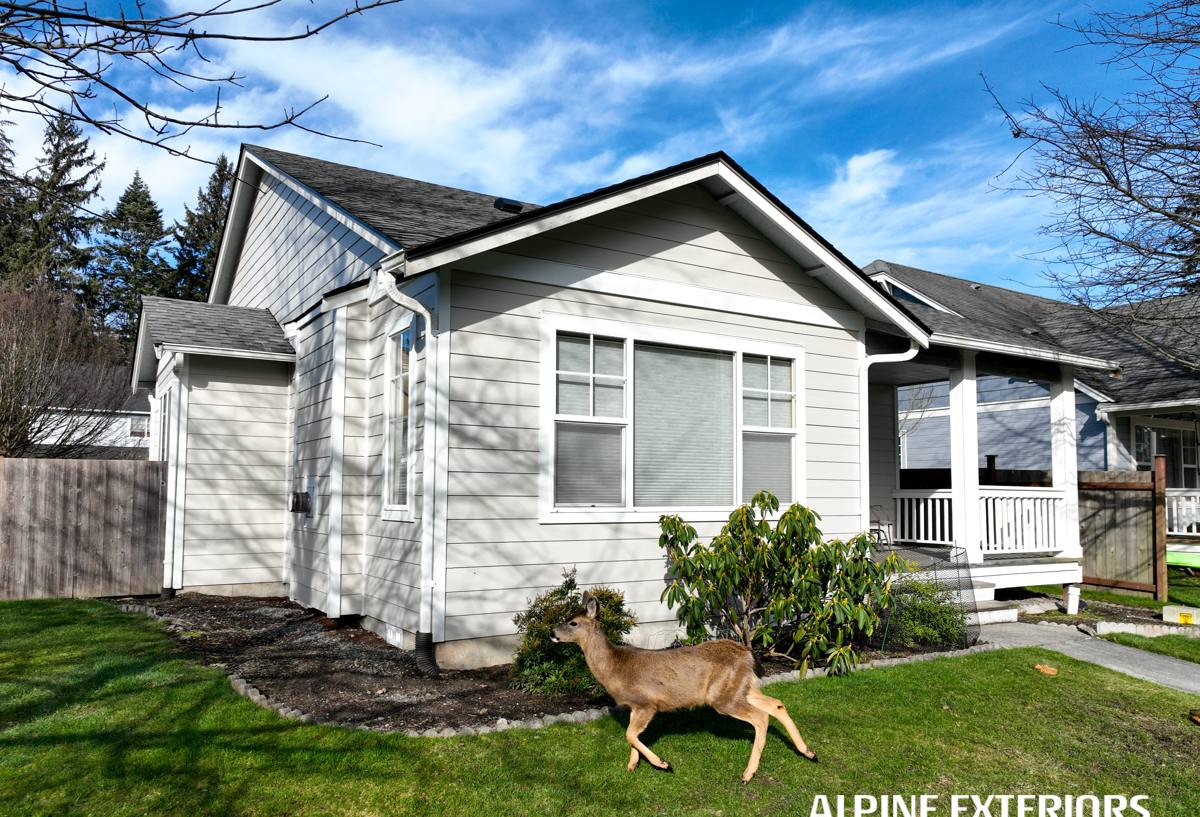
What the Regional Climate Does to Exterior Siding
Lakewood Ranch sits a bit inland compared to the barrier islands and coastal stretches of Sarasota, which does reduce direct salt spray exposure somewhat. But "inland" in this part of Florida is relative — you're still well within the reach of Gulf Coast humidity, tropical storm systems, and the same intense sun that bakes every exterior surface in the region. A handful of factors matter most for siding here:
- Hurricane-force wind: Wind doesn't just risk tearing siding off — sustained gusts drive water sideways and up under laps, seams, and trim, finding any gap in the installation.
- Wind-driven rain: Florida rain rarely falls straight down during a storm. It's pushed horizontally into walls, which means the water-management details behind the siding (flashing, house wrap, proper lap spacing) matter as much as the siding material itself.
- Intense, year-round UV: Sarasota and Manatee counties get some of the most consistent sun exposure in the country. UV breaks down paint film, dries out wood fiber, and fades color on lesser materials faster than homeowners expect.
- Humidity and moisture cycling: Even without direct salt air, the region's humidity means siding is constantly absorbing and releasing moisture. Materials that swell, warp, or hold water are working against themselves here.
None of this is unique to Lakewood Ranch — it's the reality for exterior materials across Sarasota County. But it's worth saying plainly, because a lot of the siding failures we see aren't due to one dramatic storm. They're the slow result of a material that wasn't built for this combination of sun, wind, and moisture, installed without the region's specific water-management needs in mind.
Why We Install Only James Hardie Fiber Cement
We used to get asked why we don't offer vinyl or engineered wood siding as a "budget option." The honest answer is that we've seen how those materials perform on Gulf Coast homes over ten and fifteen years, and we didn't want to keep selling homeowners something we knew would need premature attention.
Vinyl siding is affordable and easy to install, and for a lot of the country it's a perfectly reasonable choice. But it softens and can deform in high heat, it's more vulnerable to cracking and blow-off in hurricane-force wind than fiber cement, and its color is baked into the material rather than factory-cured onto it — so UV fading over years is a real consideration in a climate with this much sun exposure. Engineered wood products (like LP SmartSide) hold paint well initially and are lighter to install, but they're still wood-based at the core, which means moisture intrusion at a cut edge, seam, or fastener point is a much bigger long-term risk than it is with a cement-based product — especially somewhere with as much humidity and wind-driven rain as this region sees.
James Hardie fiber cement is non-combustible, doesn't expand and contract with heat the way vinyl does, and holds up to sustained UV exposure far better than paint-grade products because of the factory-applied ColorPlus finish. Hardie also engineers specific product lines for different climate zones — the HZ5 line, used broadly across Florida, is formulated for high-moisture, humid environments. That's not a marketing detail; it's the reason we standardized on this one manufacturer instead of offering a menu of materials with very different long-term outcomes.
What We Install
Most Lakewood Ranch projects use one or a combination of the following Hardie product lines, matched to the home's architectural style:
- HardiePlank lap siding — the standard horizontal lap look used on the majority of Florida homes, available in smooth or cedar-textured finishes.
- HardieShingle — staggered or straight-edge shingle profiles for coastal, Craftsman, or cottage-style homes, common in some of Lakewood Ranch's newer neighborhoods.
- HardiePanel — vertical panel siding often used as an accent on gables, porches, or modern-style elevations.
- HardieTrim — fiber cement trim boards that match the durability of the field siding, instead of pairing durable siding with trim that will fail first.
Fiber Cement vs. Other Siding Materials
Here's a straightforward comparison of how the common siding options actually hold up under Gulf Coast conditions — wind, UV, humidity, and storm exposure.
| Factor | James Hardie Fiber Cement | Vinyl | Engineered Wood (LP SmartSide) |
|---|---|---|---|
| Wind/impact resistance | High — rigid, holds fasteners well | Moderate — can crack or blow off in high gusts | Moderate — panel-dependent |
| UV/color stability | High with factory ColorPlus finish | Color molded in, but fades and can chalk over time | Paint-dependent, needs repainting cycles |
| Moisture behavior | Does not rot; engineered for humid climates (HZ5) | Doesn't absorb water, but traps moisture behind it if installed poorly | Wood core is vulnerable at cut edges/seams |
| Fire rating | Non-combustible | Combustible | Combustible |
| Typical repaint/refinish cycle | 15+ years with ColorPlus finish | Does not repaint well; replace when faded | 5-10 years |
| Warranty structure | Long, transferable manufacturer warranty | Varies widely by manufacturer | Shorter, more installation-sensitive |
Installation Is What Actually Determines Performance
Fiber cement siding is only as good as the installation underneath it. Most of the siding failures we get called out to inspect in Sarasota and Manatee counties aren't a material problem — they're a water-management or fastening problem that shows up years after a rushed install. Correct Hardie installation in this region includes:
- A properly lapped and sealed weather-resistive barrier behind the siding, not just a wrap stapled up quickly
- Correct flashing at every window, door, and roofline penetration — the places wind-driven rain actually gets in
- Manufacturer-specified nailing patterns and fastener spacing, not a generalized approach
- Proper lap and clearance measurements so panels can move slightly without binding or cracking
- Caulking and sealing only where Hardie's specifications call for it, not as a substitute for proper flashing
This is also why we don't treat siding as a standalone product sale. If the roofline, window flashing, or trim details around a home aren't right, new siding installed over those problems will fail early no matter how good the material is.
One Contractor for Siding, Roofing, Windows, and Decks
Siding doesn't exist in isolation on a house — it meets the roofline, wraps around window and door openings, and often ties into deck ledger boards and trim. We handle siding, roofing, windows, and decks as one crew, which means the person flashing your window openings during a siding job understands how that flashing needs to integrate with the roof edge and window frame, instead of three separate trades guessing at each other's work.
For Lakewood Ranch homeowners dealing with an aging exterior, that often means a siding project surfaces a roofing or window issue worth addressing at the same time — before it's hidden behind new siding for another fifteen years.
What to Look for When Hiring a Siding Contractor in Lakewood Ranch
Lakewood Ranch has attracted a lot of contractor traffic as the community has grown, and not all of it is local or accountable long-term. A few things worth checking before you sign anything:
- Proper Florida contractor licensing and insurance, verifiable through the state license lookup
- A manufacturer certification or documented track record installing James Hardie specifically, not siding in general
- A written scope that specifies flashing, house wrap, and fastening details — not just "install siding"
- References or completed work in Sarasota or Manatee County, where the wind and moisture conditions match your home
- A warranty that covers workmanship separately from the manufacturer's material warranty
Get a Straightforward Estimate
If your siding in Lakewood Ranch is fading, cracking, holding moisture, or just old enough that you're wondering how much longer it has, we're happy to take a look. We'll give you an honest read on the actual condition of your exterior — siding, and roofing, windows, or trim if they're part of the picture — and a free, no-pressure estimate for what a correct James Hardie installation would look like for your home.