 Sarasota Siding
 Lakewood Ranch Decks Take a Different Kind of Beating
A deck in Lakewood Ranch works harder than a deck almost anywhere else in the country. Between the intense year-round UV, the salt-laden air drifting in off the Gulf, and the wind-driven rain that shows up with almost every summer thunderstorm, the structural parts of a deck take on stress that a similar deck in a drier, cooler climate never sees. Add hurricane season into the mix, with gusts capable of putting real uplift force on railings and ledger connections, and it's easy to see why decks here need more frequent attention than the "check it every few years" advice you'll find in generic home-improvement articles.
Most of the damage we find isn't dramatic. It's slow: a fastener that starts to rust, a ledger board that stays damp a little too long after every storm, a footing that shifts slightly in sandy soil. By the time a board feels soft underfoot, the problem underneath has usually been building for a while. That's the case for treating deck repair as structural work first and cosmetic work second — and for having someone who knows what Sarasota County's climate does to a deck take a look before small issues become expensive ones.
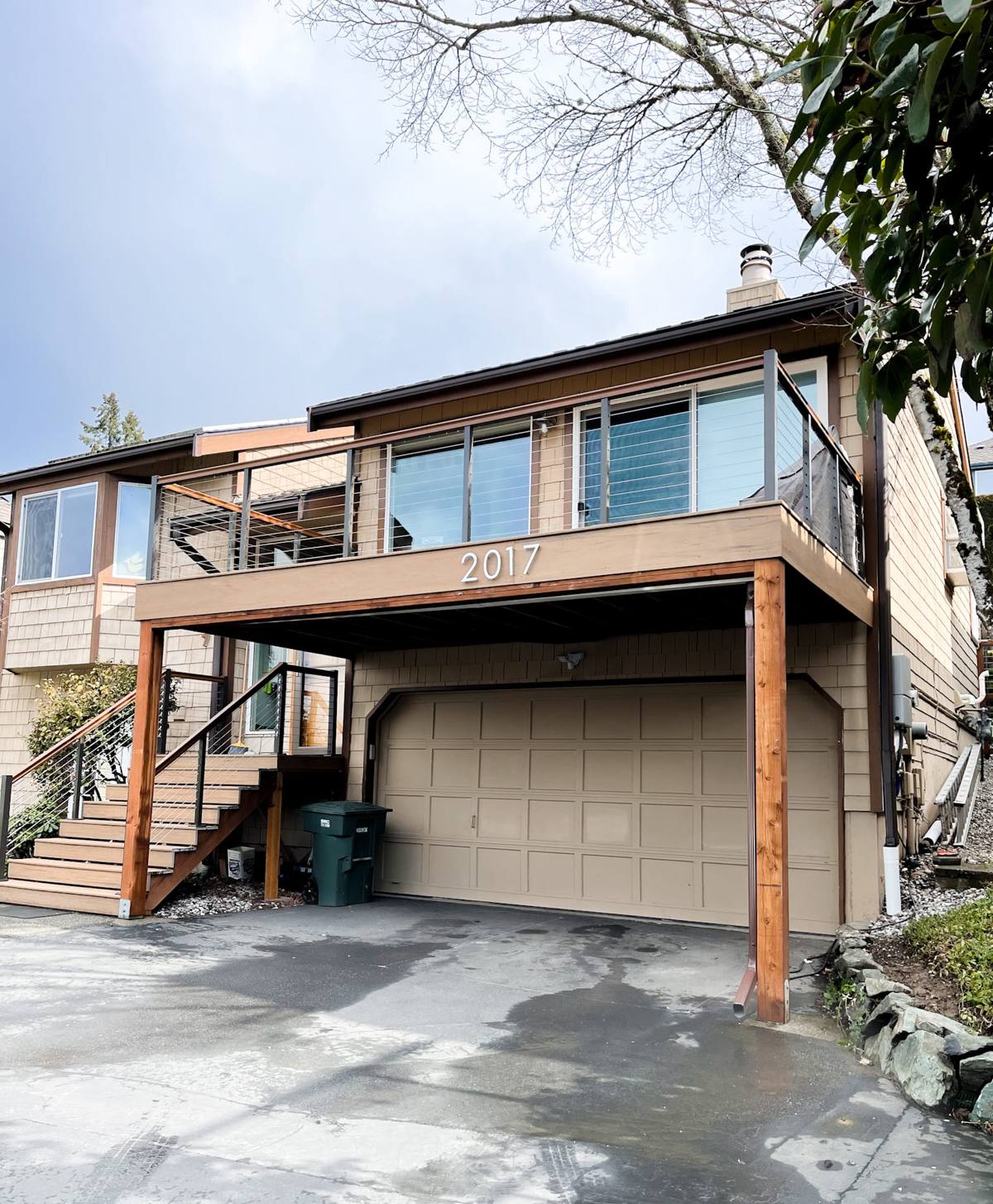
Early Warning Signs Worth Calling About
You don't need to wait for a board to give way to know something's wrong. These are the signs we hear about most often from Lakewood Ranch homeowners, and they're worth a call before they get worse:
- Boards that feel soft, spongy, or slightly bouncy, especially near the house or at the top of the stairs
- Rust streaks bleeding out from screw heads or bolt connections
- A visible gap or dark staining where the deck meets the house (the ledger board connection)
- Railings or posts that wobble more than they used to
- Dark mildew or algae staining in shaded, low-airflow areas under the deck
- Fasteners that have backed out or popped above the board surface
- A musty or damp smell coming from underneath the deck
- Visible daylight or movement where support posts meet their footings
Any one of these on its own might be minor. Several together usually mean moisture has been getting into the structure for a while, which is exactly the kind of problem that's cheaper to fix now than after another storm season.
Wood, Composite, or PVC: What's Actually Holding Your Deck Up
The repair approach depends a lot on what the deck is built from — and what's underneath the visible surface matters more than the material itself, since almost every deck around here has a pressure-treated wood frame regardless of what the decking boards are made of.
| Material | How it handles our climate | Typical repair need |
|---|---|---|
| Pressure-treated wood | Absorbs moisture readily; UV dries and cracks the surface; needs regular sealing | Board replacement, re-sealing, fastener upgrades |
| Composite decking | Resists rot in the boards themselves but can trap moisture against the frame underneath if not installed with proper gapping | Board replacement, ventilation fixes, frame inspection |
| PVC/cellular decking | Best moisture resistance of the surface materials; least affected by salt air; can still fade under constant UV | Surface repair rarely needed; frame condition still the focus |
| Wood or steel framing underneath | This is where almost all real structural failures start, regardless of decking material on top | Ledger, post, footing, and connector inspection and repair |
This is why we don't just look at the decking boards during a repair visit — the frame underneath is what actually determines whether a deck is safe, and it's rarely visible from the top.
What a Correct Deck Repair Actually Involves
The Ledger Board and Flashing
The ledger is the board that bolts the deck directly to the house, and it's the single most common point of failure we see in this area. If the flashing behind it wasn't installed correctly — or has failed over time — wind-driven rain works its way behind the board with every storm. The wood stays damp, rot sets in, and the connection that's supposed to be the deck's strongest attachment point quietly becomes its weakest. Proper repair means pulling the ledger, checking the rim joist and framing behind it for rot, replacing damaged wood, and reinstalling correct flashing before anything gets reattached.
Posts, Footings, and Connectors
Sandy soil common to this part of Florida can shift and settle differently than the denser soils decks are often engineered for elsewhere, so we check footings for heaving, cracking, or movement, not just rot in the post itself. Metal connectors and hardware also deserve close attention — galvanic corrosion between mismatched metals (say, the wrong screw in ACQ-treated lumber) accelerates rapidly in salt air, and a corroded connector can fail well before the wood around it looks bad.
Fasteners and Hardware
Coastal-adjacent air corrodes standard hardware faster than most homeowners expect, even well inland from the water. We replace failing fasteners with hardware rated for the specific treated lumber and coastal exposure involved, rather than whatever matches on the shelf — mismatched metals are a slow but real cause of repeat failures.
Repair vs. Replace: How We Make That Call
Nobody wants to pay for a full rebuild when a repair will genuinely hold up, and nobody wants a repair that's patching over a deck that's already past the point of being worth saving. We walk through the same factors on every job:
| Factor | Leans toward repair | Leans toward replacement |
|---|---|---|
| Extent of rot | Isolated to a few boards or one framing section | Widespread through multiple structural members |
| Footing condition | Stable, level, no visible movement | Heaving, cracked, or undersized for the deck |
| Ledger connection | Sound once flashing is corrected | Rim joist rot behind it requires structural rebuild |
| Original construction | Built to code with adequate framing | Undersized joists or missing structural elements from the start |
| Deck age | Under roughly 10-15 years with good bones | Original structure well past its practical service life |
We'll always tell you plainly which side of that line your deck falls on, including when a repair is the honest answer even though a replacement would be a bigger job for us.
Permits and Code Requirements in This Area
Lakewood Ranch straddles the Manatee-Sarasota county line, so depending on exactly where your home sits, permitting can run through either county's building department. Structural deck repairs — replacing framing, reattaching a ledger, or rebuilding footings — typically require a permit and inspection, not just a courtesy notification. Railing height and baluster spacing are also governed by the Florida Building Code (the common rule of thumb being no gap wide enough for a 4-inch sphere to pass through), and it's worth checking railing code compliance any time a repair touches the railing system, even if the original deck predates current requirements. Skipping the permit step might save time up front, but it can create real problems at resale or insurance renewal, so we handle that paperwork as part of the job rather than leaving it to the homeowner.
Our Process From First Call to Finished Deck
- On-site inspection of the full structure — decking, framing, ledger, posts, and footings, not just the visible surface
- Moisture testing at suspect areas to find hidden rot before it's visible
- A written scope with an honest repair-vs-replace recommendation and the reasoning behind it
- Permit pulled where the work requires one
- Repair work performed, including any flashing, framing, or hardware corrections needed to fix the actual cause, not just the symptom
- Final walk-through so you can see and understand exactly what was done
Why It Matters to Hire a Crew That Already Works in Lakewood Ranch
Deck repair done right depends on understanding the specific conditions a deck has actually been living in — not generic advice that applies anywhere in the country. A crew that regularly works in Sarasota County communities like this one already knows which HOA aesthetic guidelines tend to come up, which permitting office to call and what they'll ask for, and how the local soil and drainage patterns tend to affect footings. That familiarity translates into fewer surprises mid-project and a repair that's built for the conditions it actually has to survive — hurricane-force wind events, constant UV exposure, and salt air — rather than a one-size-fits-all fix.
If you're noticing soft spots, rust stains, or a wobbly rail, it's worth getting a second set of eyes on it before the next storm season rather than after. We're happy to take a look and give you a straight answer about what's actually going on — reach out below for a free, no-pressure estimate.