 Sarasota Siding
 Siding in Ellenton: Built for the Gulf Coast, Not Just Installed Here
Ellenton sits in the Bradenton-Sarasota corridor along the Manatee River, close enough to Tampa Bay and the Gulf that its homes deal with the same coastal weather punishment as properties right on the water — just without always getting treated that way by contractors who don't know the area. Between the outlet mall, the historic Gamble Plantation grounds, and the newer residential growth pushing east off US-301 and I-75, Ellenton is a mix of older homes with decades of sun and storm exposure and newer construction that still needs cladding rated for what this region actually throws at it.
We install James Hardie fiber cement siding exclusively. Not because it's the only product on the market, but because after years of exterior work on the Gulf Coast, it's the one we're willing to put our name behind for homes in this climate. Below is what Ellenton homeowners should actually know before deciding what goes on their walls.
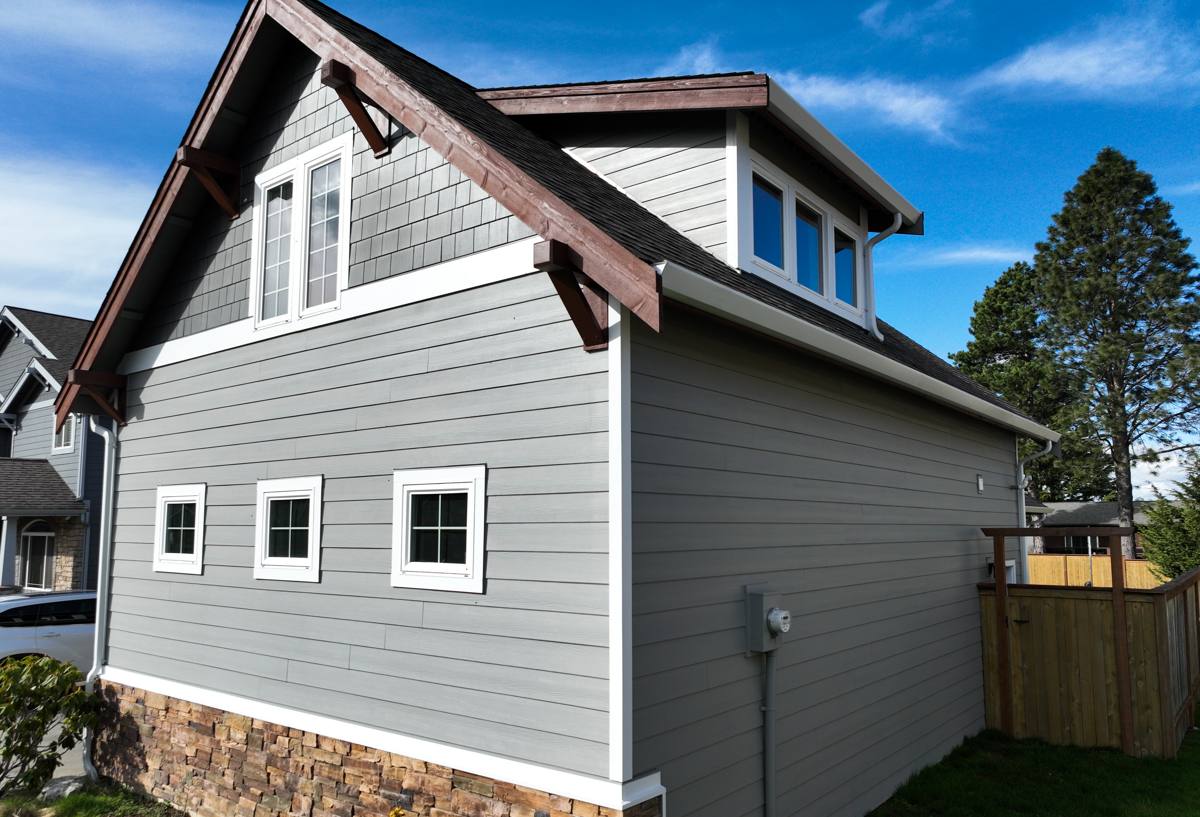
What Ellenton's Climate Does to Exterior Siding
Ellenton isn't oceanfront, but it's close enough to the Gulf and Tampa Bay that salt-laden air, high humidity, and hurricane-track weather all factor into how a home's exterior ages. A few specific stressors show up again and again on inspections in this area:
Wind and Wind-Driven Rain
Manatee County sits squarely in the path of tropical systems moving through the Gulf. Even storms that don't make a direct hit send sustained wind and horizontal rain into siding seams, trim joints, and anywhere flashing was cut corners on. Weak or improperly fastened siding doesn't need a direct hurricane strike to fail — a few seasons of wind-driven rain finding a gap is enough to start rot behind the cladding.
Year-Round UV Exposure
Florida sun is intense and consistent, not seasonal. Siding here gets far more cumulative UV exposure per year than most of the country, which is exactly what causes vinyl to warp and fade and lower-grade paint finishes to chalk out well ahead of schedule.
Humidity and Moisture Cycling
Ellenton's humidity stays high most of the year, and afternoon thunderstorms are routine in summer. Siding materials that absorb moisture, swell, and dry out repeatedly are under constant stress — that cycling is what drives warping, delamination, and hidden rot in products that aren't engineered to handle it.
Salt Air
Ellenton is inland of the barrier islands, but it's still close enough to the Gulf and the brackish Manatee River that airborne salt reaches homes here, especially with onshore wind patterns. Salt exposure accelerates corrosion of fasteners and trim hardware and adds to the moisture load siding has to shed.
Why We Standardized on James Hardie for This Region
James Hardie fiber cement is engineered specifically for climates like ours. It's non-combustible, which matters in a state where wildfire risk and lightning-driven fires are a real, if lower-profile, concern. It holds its shape and paint finish in extreme heat and humidity far better than wood-based or vinyl products, and it doesn't provide the food source that termites and other pests look for in wood siding — a real consideration in Manatee County's warm, humid environment.
Hardie also makes a version of its product engineered for exactly this humidity zone: the HZ5 line is formulated for regions with sustained moisture and heat, which describes Ellenton for most of the year. That's not a marketing detail — it changes how the product performs over a 20- or 30-year timeline, not just how it looks the day it's installed.
What Correct Installation Actually Involves
- Proper water-resistive barrier and flashing details behind every seam, window, and door opening
- Correct fastener type, spacing, and penetration depth — under- or over-driven fasteners are one of the most common failure points we find on re-siding jobs
- Manufacturer-specified clearances from rooflines, decks, and grade to keep the bottom edge of the siding from sitting in standing moisture
- Caulking and sealant only where Hardie's install specs call for it — over-caulking traps moisture instead of shedding it
- Factory-applied ColorPlus finish handled correctly on cut edges to preserve the warranty and the color match
Fiber cement is unforgiving of shortcuts. A technically "acceptable" install and a correct install can look identical the day the crew leaves and perform completely differently five hurricane seasons later.
Why We Don't Install Vinyl, LP SmartSide, or Other Alternatives
We get asked about these regularly, and the honest answer is a matter of fit for this climate, not a blanket condemnation of the products.
Vinyl Siding
Vinyl is inexpensive and easy to install, and it works fine in a lot of the country. In Florida, sustained UV exposure fades and embrittles it faster than in milder climates, and it can warp or buckle in high heat. It's also not rated for the higher wind speeds our building codes and storm exposure call for in the same way heavier claddings are. We don't install it because we don't think it holds up to what Ellenton weather does over a full ownership timeline.
LP SmartSide and Wood-Based Composites
LP SmartSide is an engineered wood product, and engineered wood is still wood at its core — it depends on an intact factory seal and careful field sealing at every cut edge to keep moisture out. In a climate with Ellenton's humidity and rain exposure, any gap in that seal becomes an entry point for swelling and rot. It's a reasonable product in drier climates; we don't think it's the right long-term bet here.
Other Fiber Cement Brands (Cemplank, Allura)
These are legitimate fiber cement competitors, and the underlying material science is similar to Hardie's. Where we see the difference is in factory finish consistency, product line engineering for specific climate zones, and the strength and structure of the transferable warranty. We standardized on one manufacturer so our crews install one system to one spec, every time, and we're confident backing that system in this climate.
Primed Spruce and Unfinished Wood
Traditional wood siding can look great, but it requires an ongoing maintenance commitment — repainting, caulking, and moisture monitoring — that most homeowners underestimate. In Ellenton's humidity, that maintenance interval shrinks. We'd rather install something engineered to reduce that burden than sell a product that quietly becomes a recurring expense.
Comparing Siding Options for an Ellenton Home
| Material | Wind/Storm Performance | Moisture Resistance | Maintenance | Typical Lifespan |
|---|---|---|---|---|
| James Hardie Fiber Cement | Strong, engineered for high-wind zones | Excellent when installed to spec | Low — factory finish, occasional wash | 30+ years |
| Vinyl | Weaker in sustained high wind and heat | Fair, but seams can trap moisture | Low, but fades/warps in intense UV | 15-25 years |
| LP SmartSide / Engineered Wood | Moderate | Vulnerable if seal is compromised | Moderate — edge sealing critical | 20-30 years, climate-dependent |
| Traditional Wood | Moderate, storm-damage prone | Poor without diligent upkeep | High — regular repainting/sealing | 10-20 years without heavy upkeep |
Beyond Siding: Roofing, Windows, and Decks
Siding doesn't fail in isolation — it's one part of a home's building envelope, and in Ellenton the same wind, rain, and UV stress hits the roof, windows, and any exterior decking. We handle all four because they need to work together: a new roofline needs flashing that ties correctly into siding, window replacements need to be flashed and sealed as part of the same water-management plan, and decks exposed to the same sun and rain need materials and fasteners that won't corrode or degrade ahead of schedule. If you're looking at a full exterior update rather than a single project, having one crew coordinate all of it usually means fewer gaps where water finds its way in.
Why a Local Crew Matters for Ellenton Homes
Contractors who work statewide or fly in crews from out of the area often default to generic installation practices that aren't tuned to Gulf Coast conditions. A crew that regularly works Manatee and Sarasota County homes knows the specific failure points that show up here — where rot tends to start on older Ellenton homes, how storm exposure differs between properties closer to the river versus further inland, and what local permitting and wind-load requirements actually call for. That local repetition is what catches problems before they're built into the wall.
What to Expect From an Estimate
A proper siding estimate isn't a drive-by quote. It should include:
- A walk-around inspection of current siding, trim, and any visible moisture or rot damage
- An honest assessment of whether full replacement or targeted repair makes sense
- A clear explanation of which James Hardie product line and profile fits the home and budget
- A written scope covering flashing, fastening, and finish details — not just square footage and color
- A realistic timeline that accounts for Florida's weather windows
If a quote skips straight to a number without walking the property, that's worth asking questions about.
Get a Free, No-Pressure Estimate
If you're weighing siding, roofing, window, or deck work on an Ellenton property, we're glad to come take a look and give you a straight answer about what your home actually needs — no pressure, no inflated scope. Reach out below to schedule a free estimate.