 Sarasota Siding
 Why Siding Installation in Ellenton Requires a Different Approach
Ellenton sits in a stretch of Florida's Gulf Coast where the exterior of a home takes a real beating. Hurricane-force winds test every fastener and seam. Intense, nearly year-round UV breaks down anything not engineered to resist it. Wind-driven rain finds every gap in a poorly flashed wall. And salt-laden air, even miles inland, accelerates corrosion on fasteners, trim, and hardware that wasn't specified for coastal exposure. Siding installation here isn't a cosmetic upgrade — it's the single biggest factor in whether a home's walls stay dry and intact through the next storm season.
Homeowners in this area often come to us after noticing early signs of trouble: caulking that's cracked and pulled away, panels that have started to cup or bow, trim boards gone soft at the corners, or a repaint that didn't hold because the substrate underneath was already failing. Almost all of it traces back to the same root cause — the original siding or the original installation wasn't built for this climate.
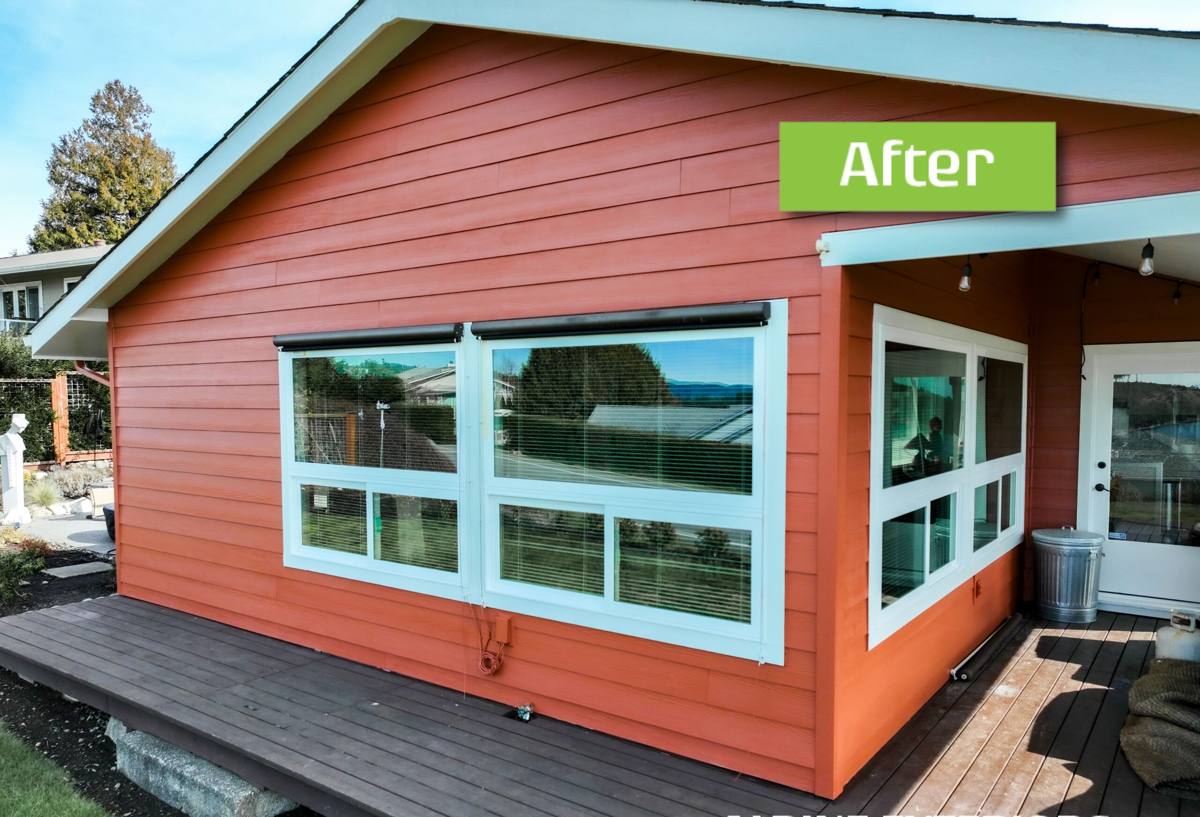
What Ellenton Homes Actually Need From Their Siding
Wind Resistance That Holds Up in a Real Storm
Siding on a coastal Florida home isn't just cladding — it's part of the building envelope that keeps wind-driven water out during a hurricane or tropical storm. That means correct fastener type, correct fastener spacing, and a product rated to stay put under sustained high wind and gusts, not just look good on a calm day.
UV Stability That Doesn't Fade or Chalk
Florida sun is unforgiving on exterior finishes. A siding product with a weak factory finish will chalk, fade unevenly, and need repainting far sooner than a homeowner expects — and repainting siding every few years adds up fast in both cost and hassle.
Moisture Management, Not Just Moisture Resistance
Wind-driven rain doesn't just hit a wall — it gets pushed sideways and upward, probing every joint, window opening, and butt seam. The siding material matters, but the water-resistive barrier, flashing, and installation details behind it matter just as much.
Corrosion Resistance for Salt Air
Even away from the immediate waterfront, salt-laden air travels inland and settles on exterior surfaces. Fasteners, trim accessories, and hardware need to be rated for that exposure, or they'll rust and stain the siding around them within a few seasons.
Why We Install Only James Hardie Fiber Cement
We don't install vinyl, LP SmartSide, Cemplank, Allura, or primed wood siding on Ellenton homes, and we're upfront about why. Vinyl can warp and become brittle under intense, sustained heat and UV, and it isn't rated for the same wind exposure as fiber cement in coastal zones. Wood-based and OEM composite products like LP SmartSide depend heavily on an unbroken factory seal and perfect field caulking to keep moisture out — any breach and the substrate can swell or deteriorate from the inside. Cedar and primed spruce require ongoing maintenance that most homeowners don't want to keep up with in a climate this harsh.
James Hardie fiber cement is non-combustible, dimensionally stable in heat and humidity, and manufactured in HZ product lines specifically engineered for high-humidity, high-UV climates like ours. The ColorPlus factory finish is baked on under controlled conditions, which gives it far better fade and chip resistance than field-applied paint, and it carries a strong transferable warranty when installed to Hardie's specifications. That's the whole reason we standardized on one product line instead of offering several — we'd rather install one material correctly and stand behind it than offer options we know will underperform in this environment.
Material Comparison for Coastal Florida Conditions
| Factor | James Hardie Fiber Cement | Vinyl | Wood / LP SmartSide |
|---|---|---|---|
| Wind performance | Engineered HZ lines rated for high-wind zones | Lower wind ratings, can crack or blow off in gusts | Adequate if sealed perfectly; fails if breached |
| UV / fade resistance | Factory-baked ColorPlus finish | Can fade and become brittle over time | Field-painted finish fades faster, needs repainting |
| Moisture behavior | Won't rot; manages water at the surface | Doesn't rot but can trap moisture behind panels | Vulnerable to swelling and decay if moisture intrudes |
| Fire resistance | Non-combustible | Combustible | Combustible |
| Maintenance | Low — occasional cleaning and caulk checks | Low, but limited repair options if damaged | Higher — periodic sealing, painting, inspection |
What a Correct Siding Installation Involves
The product is only half the equation. A Hardie install done wrong will fail just as fast as a poor product installed carefully — maybe faster, since a heavier, more rigid material exposes sloppy work more visibly than vinyl does. Here's what has to happen underneath and around the siding itself:
- Removal of failing siding and inspection of the sheathing underneath for hidden rot or water damage before anything new goes up
- A continuous, properly lapped weather-resistive barrier installed shingle-style so water always drains outward and down
- Correct flashing at every window, door, roofline, and penetration — the details that stop wind-driven rain from getting behind the wall
- Fasteners rated for coastal exposure, driven at the spacing and depth Hardie specifies, not just "close enough"
- Proper clearance at grade, decks, and roof lines so siding never sits in standing water or constant moisture contact
- Factory-cut and field-cut edges sealed per manufacturer instructions, since raw-cut fiber cement needs to be treated before it's exposed to weather
Our Process for Ellenton Projects
1. On-Site Assessment
We start by walking the exterior with the homeowner, looking at the current siding condition, trim, window flashing, and any signs of past water intrusion — not just the parts that are visibly damaged.
2. Tear-Off and Substrate Check
Old siding comes off and we check the sheathing underneath before covering anything back up. This is the point where hidden problems get caught and fixed, not buried under new material.
3. Weather Barrier and Flashing
We install the water-resistive barrier and flashing system correctly the first time — this layer does most of the real work protecting the home, even though it's invisible once the project is done.
4. Hardie Installation
Panels or plank siding go up per James Hardie's fastening and clearance specifications, matched to the HZ product line suited for this climate.
5. Trim, Caulking, and Finish Details
Trim, corners, and joints are finished and sealed to manufacturer spec, and factory-cut edges are treated so the finished wall performs as a system, not just individual boards.
6. Final Walkthrough
We review the completed work with the homeowner before calling the job done, so there are no surprises after we've left.
Why Hiring a Crew That Already Works This Area Matters
Siding installation isn't uniform across Florida. A crew that mostly works inland or in a different climate zone won't automatically account for the wind exposure, salt air, and storm patterns that shape how a home should be built out here. A crew with real experience in and around Sarasota County and the surrounding Gulf Coast communities already knows the local permitting expectations, the wind-load considerations relevant to this area, and the failure patterns that show up on homes that were sided by out-of-town crews or big-box installers unfamiliar with regional conditions. That experience shows up in the small decisions — flashing details, fastener choice, clearance at grade — that determine whether a siding job holds up for decades or needs attention again in five years.
What Affects the Cost of a Siding Project
| Cost Factor | Why It Matters |
|---|---|
| Home size and wall complexity | More square footage, corners, and architectural detail mean more material and labor time |
| Substrate condition | Hidden rot or water damage found during tear-off adds repair work before new siding goes on |
| Siding profile and accessories | Plank width, trim style, and corner details affect material cost and installation time |
| Number of window and door openings | Each opening needs its own flashing and trim work, which adds labor |
| Access and site conditions | Landscaping, height, and access around the home affect how efficiently the crew can work |
We don't quote a job until we've actually looked at the home, because guessing at these factors sight-unseen leads to change orders and surprises later — something we'd rather avoid entirely.
Maintenance and Long-Term Performance
Once James Hardie siding is installed correctly, upkeep is minimal compared to wood or vinyl alternatives. Rinse it periodically to keep salt residue and grime from building up, keep an eye on caulking at trim joints and openings over the years, and address any impact damage promptly rather than letting a small crack become an entry point for moisture. Because the ColorPlus finish is factory-applied, homeowners typically don't need to repaint on the same schedule they would with field-painted wood siding — one less recurring cost to plan for.
If your Ellenton home's siding is showing its age, or you're planning ahead of the next storm season, we're happy to take a look and walk you through what we'd recommend. Fill out the form below for a free, no-pressure estimate.