 Sarasota Siding
 Exterior Work in Southside Village: What Makes This Neighborhood Different
Southside Village sits among Sarasota's older, established residential pockets — tree-canopied streets, a mix of vintage bungalows and updated homes, and a walkable, close-to-downtown character that a lot of newer subdivisions don't have. That character is part of what makes it a good place to live, but it also creates a specific set of exterior maintenance realities. Mature oak canopy means constant shade-to-sun cycling on siding and roofing, more organic debris in gutters and against wall surfaces, and homes that are often 30, 40, or more years old with original or long-overdue exterior systems. Add in Sarasota County's climate — hurricane-force wind events, intense year-round UV, wind-driven rain, and salt air drifting in off the Gulf and Sarasota Bay — and you've got a neighborhood where exterior materials get tested harder than most marketing brochures ever admit.
We work on siding, roofing, windows, and decks, and in a neighborhood like Southside Village those four systems are rarely separate problems. A roof leak shows up as siding staining. A failed window seal rots the trim around it. A deck that was never flashed correctly sends moisture straight into the wall behind it. We look at the whole envelope, not just the piece someone happens to call about.
How Sarasota's Climate Actually Wears Down a House
Wind
Southside Village isn't a beachfront neighborhood, but it's still well within the wind zones that Sarasota County's building code accounts for. Hurricane-force gusts don't just threaten roofs — they drive rain sideways under siding laps, pry at loose fasteners, and stress every seam and joint in a wall system. Older homes built before modern wind-load requirements were common are especially vulnerable if the siding, trim, and flashing haven't been updated to match current expectations.
UV
Florida sun is relentless and it's a year-round condition here, not a summer problem. Paint film breaks down, caulk gets brittle and cracks, and cheaper composite materials can fade unevenly or chalk. On a shaded, canopy-covered street like you'll find in parts of Southside Village, the effect can actually be more uneven — one side of a house baking in full sun while the other stays shaded and damp, which stresses materials differently on each elevation.
Wind-Driven Rain and Humidity
Sarasota gets serious rainfall, and when it comes in sideways during a storm, any weak point in the siding system — a gap at a butt joint, a poorly sealed penetration, missing or improper flashing — becomes a path for water into the wall cavity. Combine that with year-round humidity and you get the conditions that rot wood trim, delaminate weaker composite sidings, and feed mold growth behind walls that never fully dry out.
Salt Air
Sarasota Bay and the Gulf aren't far away, and salt-laden air corrodes fasteners, hardware, and lesser-quality finishes over time, even a few miles inland. It's a slow, cumulative process — not something you notice in year one, but by year ten it shows up as rust streaking, pitted hardware, and premature failure of anything not built to handle a coastal-adjacent environment.
Why We Standardized on One Siding Product
We install James Hardie fiber cement siding exclusively. We don't offer vinyl, LP SmartSide, Cemplank, Allura, or primed wood species like spruce or cedar, and that's a deliberate professional standard, not a lack of options. Each of those alternatives has legitimate strengths — vinyl is inexpensive and low-maintenance in mild climates, engineered wood products install quickly and take paint well, cedar has a real, warm aesthetic appeal. But none of them hold up as consistently as fiber cement under the specific combination of stressors a Sarasota County home faces: sustained high humidity, intense UV, wind-driven rain, and periodic hurricane-force wind events.
Vinyl can warp or crack under extreme heat and impact, and its seams and J-channels give wind-driven rain more opportunities to find a way in. Wood-based products, even engineered ones, are more vulnerable to moisture absorption and edge swelling if caulking and paint maintenance ever fall behind — and in a busy household, maintenance schedules slip. Fiber cement is non-combustible, dimensionally stable in heat and humidity, and resists the moisture-driven failures we see most often on older homes in this area.
What James Hardie Siding Brings to a Southside Village Home
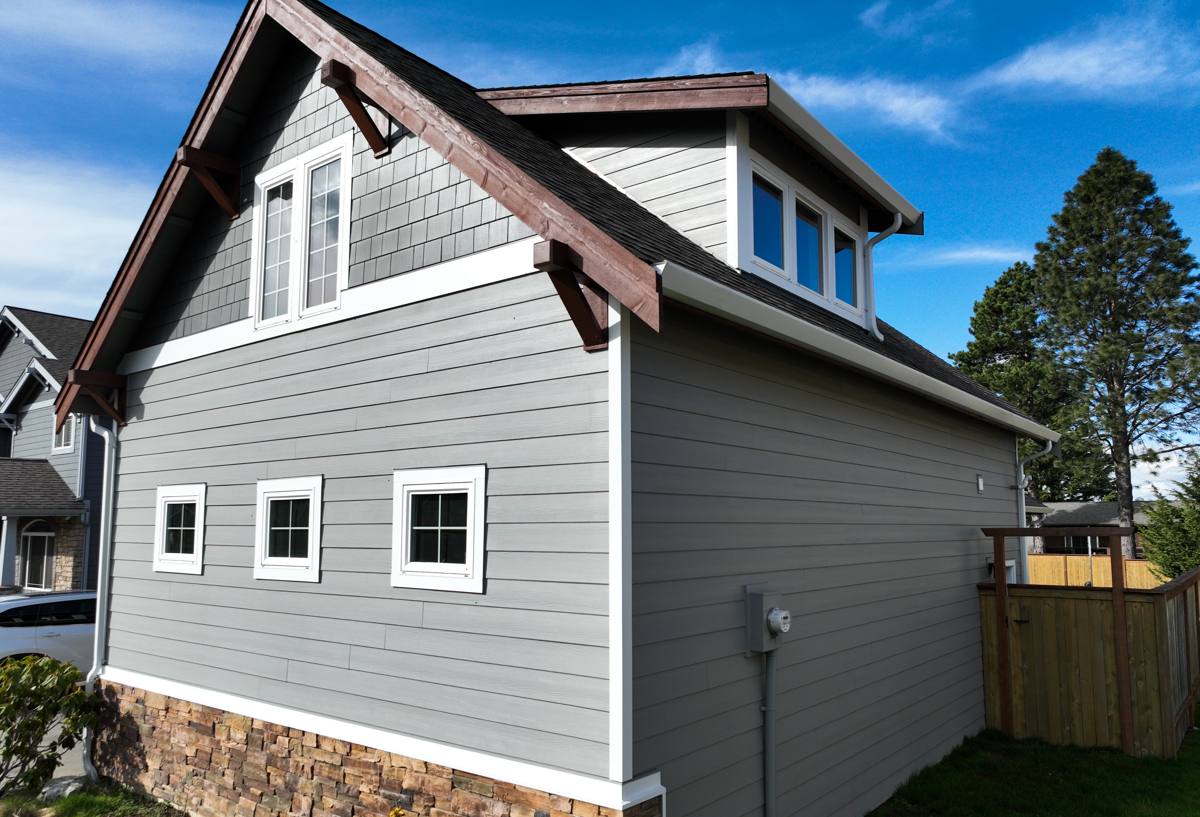
James Hardie's HZ5 product line is engineered specifically for high-humidity, storm-prone climates like ours, with enhanced moisture and crack resistance built into the formulation. The ColorPlus factory-applied finish is baked on under controlled conditions rather than field-painted, which means better color consistency, better adhesion, and a finish that's engineered to resist Florida's UV load far longer than a typical field-applied paint job. That matters in a neighborhood with mixed sun and shade exposure, where uneven fading is a common complaint with lesser products.
Because Hardie board is fiber cement, it doesn't provide fuel for fire, doesn't attract wood-boring insects, and won't rot in the way that wood or wood-based composites can. It also carries a strong transferable warranty — a real consideration in a neighborhood where homes do change hands, and where a documented, reputable siding system can be a point in a home's favor at resale.
Common Hardie Profiles We Use
- HardiePlank lap siding — the standard horizontal siding look for most Sarasota-area homes, available in multiple textures and exposures
- HardieShingle — for homes wanting a shingle or shake aesthetic without the maintenance burden of real wood shakes
- HardiePanel vertical siding — often used as an accent on gables, dormers, or porch details
- HardieTrim — matching trim boards that resist the same moisture and UV stress as the field siding, so trim doesn't become the weak point
Comparing Siding Materials for a Sarasota County Home
| Material | Wind/Storm Durability | Moisture Resistance | UV/Fade Resistance | Long-Term Maintenance |
|---|---|---|---|---|
| Vinyl | Can crack or blow off in high wind | Seams allow water intrusion | Can fade and become brittle | Low upfront, but limited lifespan in storms |
| Engineered wood (LP-type) | Fair, sensitive to fastener quality | Vulnerable at cut edges if not sealed | Requires repainting on a schedule | Moderate — depends on paint upkeep |
| Cedar/primed wood | Fair, weight can be an asset in wind | Prone to rot without diligent upkeep | Fades and grays without refinishing | High — regular sealing/painting needed |
| James Hardie fiber cement | Engineered for high-wind regions | Strong resistance, HZ5 formulation | Factory ColorPlus finish resists fading | Low — no painting cycle required |
Cost is always part of this conversation. Fiber cement generally costs more upfront than vinyl and can run comparable to or somewhat more than engineered wood siding, largely due to material weight and installation labor. Where it earns that difference back is in the maintenance column — no repainting cycle, less caulk maintenance, and fewer emergency repairs after storm season.
How We Approach a Southside Village Siding Job
Every project starts with an actual inspection, not a guess from the street. We look at the current siding condition, check for hidden moisture damage behind it, evaluate trim and window flashing, and look at the roof and gutter system since water management up top directly affects how siding performs below. On older homes in this neighborhood, we often find that the original construction didn't include modern house wrap or properly lapped flashing — details that matter enormously once you're relying on the siding to shed wind-driven rain.
Correct installation is where fiber cement earns its reputation or loses it. Hardie siding installed to manufacturer spec — proper starter strips, correct fastener placement and spacing, proper clearance from roof lines and grade, sealed and flashed penetrations, and factory-recommended gaps at butt joints — performs the way it's engineered to. Installed carelessly, any siding product can fail early, and that's true of Hardie board as much as anything else. We follow manufacturer installation guidelines because that's what keeps the product's warranty valid and what actually keeps water out of the wall.
Roofing, Windows, and Decks: The Rest of the Envelope
Siding doesn't work in isolation. A few things we commonly find and address alongside siding work in this area:
Roofing
Roof condition determines how much water reaches the siding in the first place. Damaged shingles, deteriorated flashing at chimneys and valleys, and clogged gutters under mature tree canopy all send extra water down exterior walls. We evaluate roof condition as part of any full exterior assessment.
Windows
Older windows with failed seals or degraded flashing are one of the most common sources of hidden wall moisture we find behind siding during tear-off. If we're replacing siding around a window with a compromised seal, we address it then rather than closing the wall back up around a known problem.
Decks
Ledger board attachment and flashing where a deck meets the house is a frequent point of moisture intrusion, especially on older homes. A deck built or attached without proper flashing can quietly rot the wall structure behind it for years before it's visible from outside.
Signs Your Exterior Needs Attention
- Soft or spongy spots when you press on siding, especially near the bottom courses or around windows
- Visible warping, buckling, or gaps at siding seams
- Peeling or bubbling paint that keeps coming back in the same spots
- Staining or streaking that suggests water is running behind the siding, not just over it
- Rust stains near fasteners or trim hardware
- Visible daylight or drafts around window and door trim
- A roof nearing or past its expected service life
What to Look for in a Local Contractor
Southside Village's mix of older homes and tree-lined lots means a contractor needs to actually understand the neighborhood's building stock, not just show up with a generic install process. A few things worth checking before hiring anyone for exterior work in Sarasota County:
- Proper Florida contractor licensing and insurance, verifiable through the state license lookup
- Manufacturer training or certification on the specific siding product being installed
- A written scope of work that specifies house wrap, flashing details, and fastener schedule — not just "siding replacement"
- A clear, transferable warranty on both materials and labor
- Local references and a physical presence in the Sarasota area, not just a traveling storm crew
That last point matters more after storm season, when out-of-area crews sometimes move through Florida taking on quick jobs and then aren't around if a problem shows up a year later. A local crew has a reason to stand behind its work — this is our neighborhood too.
Planning a Project in Southside Village
Timing matters here. Spring and early summer, before peak hurricane season activity, tends to be a good window for exterior projects, though we work with homeowners on scheduling around insurance timelines, storm damage claims, and personal preference year-round. If a home has hurricane or wind damage, we can also help document conditions for insurance purposes as part of the assessment.
If you're in Southside Village and dealing with aging siding, storm damage, or just want an honest read on where your home's exterior stands, we're happy to take a look. A free, no-pressure estimate gets you a real assessment of your siding, roofing, windows, and decking — and straight answers about what actually needs attention versus what can wait.