 Sarasota Siding
 Composite Decking Built for Southside Village's Climate
Southside Village sits close enough to Sarasota Bay and the Gulf that every outdoor structure on a property deals with the same combination of stresses: intense year-round UV, high humidity, salt-laden air, wind-driven rain, and the occasional hurricane-force wind event. A deck here isn't just a place to put a grill and some chairs — it's an exterior structure that has to survive Florida weather for fifteen, twenty, or more years without warping, cupping, rotting, or fading into an eyesore. Composite decking, installed correctly, is one of the more sensible answers to that problem for this neighborhood specifically.
We work in Southside Village regularly, which matters more than it sounds like it should. A crew that already knows the tree canopy, lot sizes, and typical home age in this part of Sarasota isn't guessing at drainage, ledger attachment, or shade patterns — they've already solved those problems on a deck down the street.
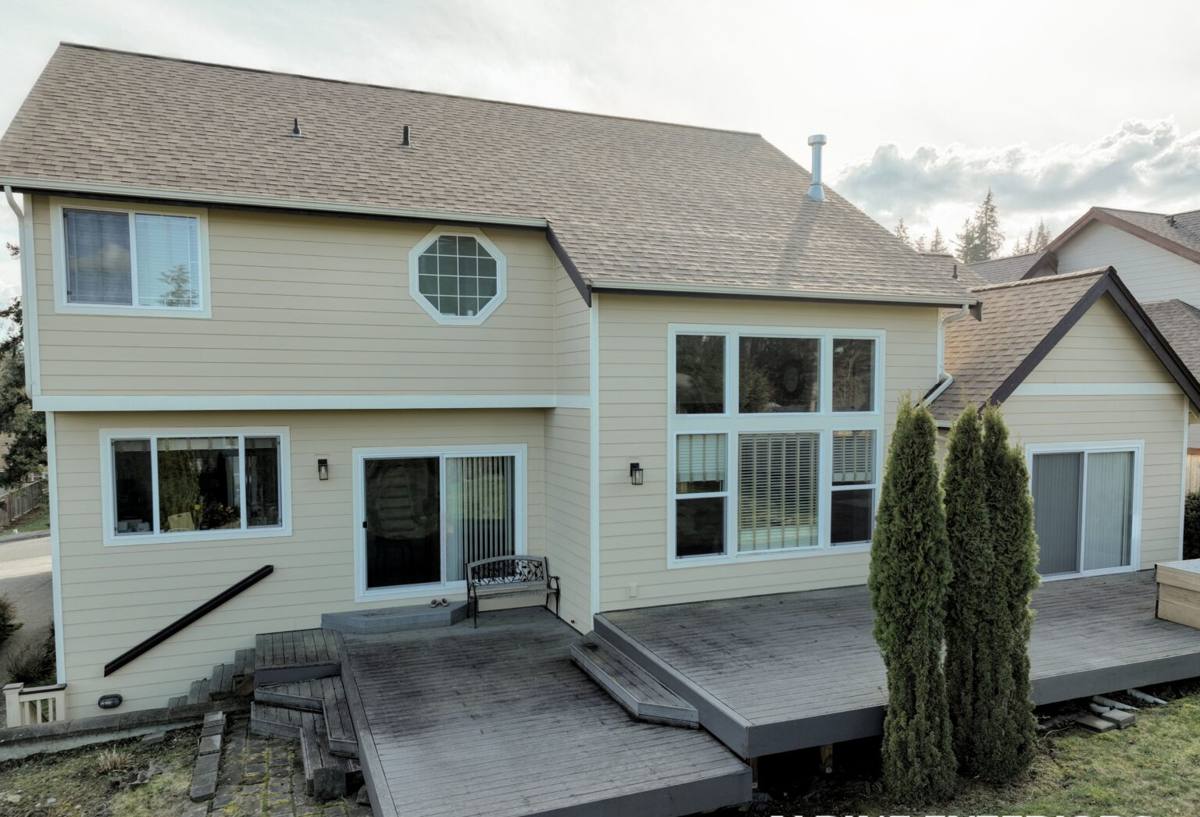
What Southside Village Homes Actually Need From a Deck
Established Lots, Mature Trees, and Shade Patterns
Southside Village is an older, established part of Sarasota with mature tree canopy on many lots. That's a nice amenity for a homeowner sitting on the deck, but it changes what the deck itself has to deal with: more organic debris (leaves, pollen, seed pods) settling into board grooves, more shaded areas that stay damp longer after rain, and root systems nearby that can affect footing placement. A deck design here needs to account for airflow under and around the boards so moisture doesn't just sit.
Older Homes, Older Framing
Many homes in this part of Sarasota were built well before current wind-load and attachment codes existed. When we tie a new deck into an existing house — through a ledger board — we're not just bolting into whatever framing happens to be there. We check what we're actually attaching to, flash it properly, and use fasteners rated for the load and for Florida's corrosive, salt-humid air. Skipping that step is the single most common reason older decks fail at the house connection during a storm.
Why Composite Decking Makes Sense in This Climate
Wood decking isn't a bad product everywhere, but Sarasota's combination of humidity, UV, and salt air is a tough environment for it. Untreated or even pressure-treated wood absorbs moisture, which leads to cupping, splintering, and — in shaded, humid spots like many Southside Village yards — mold and mildew growth on the surface. It also needs a real maintenance commitment: stripping, sanding, and re-sealing on a schedule most homeowners don't actually keep up with.
Modern capped composite decking is engineered specifically to resist that cycle. The wood-fiber core is fully encapsulated in a polymer shell, so it doesn't absorb water the way solid wood does, doesn't require annual sealing, and holds its color under sustained UV exposure far better than uncoated wood. That doesn't mean composite is maintenance-free or bulletproof — it still needs to be installed correctly, cleaned periodically, and matched to the right board style for a shaded vs. sun-exposed area — but it removes the moisture-and-UV failure points that cause most wood deck problems in this climate.
What a Correct Composite Deck Installation Involves
The Substructure Is What Actually Holds the Deck Up
Composite boards get the attention, but the framing underneath is what determines whether a deck lasts. That means pressure-treated or, where budget allows, composite/PVC substructure material sized and spaced to the manufacturer's span tables — not "however it was done on the last job." Florida humidity means joist spacing often needs to be tighter than a manufacturer's minimum spec to prevent long-term board deflection.
Ledger Attachment and Flashing
Where the deck ties into the house, proper flashing keeps water from getting behind siding or into the band board. This is a spot that gets skipped on rushed jobs and is the first place a poorly built deck starts to rot the house it's attached to.
Fasteners and Hardware
Salt air corrodes standard hardware faster than most homeowners expect. We use fasteners and structural connectors rated for coastal, corrosive environments — not because it's required everywhere, but because it's the difference between hardware that's still solid in ten years and hardware that's rusting through in three.
Hidden Fastener Systems and Board Layout
Most composite decking today uses a hidden clip system that fastens boards from the side, leaving the surface free of screw heads. Done right, it gives a clean look and lets boards expand and contract with temperature swings — which matters on a deck that goes from cool mornings to a hot, direct-sun Sarasota afternoon. Done wrong (clips over-tightened, wrong gapping for the board's expansion rating), it leads to buckling.
Composite vs. Other Decking Materials
Homeowners in Southside Village usually end up comparing composite against pressure-treated wood and PVC. Here's an honest breakdown of the trade-offs for a Gulf Coast climate:
| Factor | Pressure-Treated Wood | Capped Composite | PVC/Cellular |
|---|---|---|---|
| Upfront cost | Lowest | Mid-range | Highest |
| Moisture & mold resistance | Weak — absorbs water, needs sealing | Strong — capped shell resists moisture | Strongest — no organic core |
| UV fade resistance | Poor without regular treatment | Good to very good | Very good |
| Maintenance | Annual sanding/sealing | Periodic cleaning | Minimal |
| Heat underfoot in direct sun | Moderate | Can run warm on dark colors | Similar to composite, varies by color |
| Typical warranty | Limited/none on material | 25 years, often prorated | 25+ years, often prorated |
For most Southside Village homes, capped composite is the practical middle ground: it costs less than PVC, performs far better than wood in humidity and salt air, and comes in enough color and texture options to fit an older Florida bungalow or a newer build.
Our Process, Start to Finish
- On-site assessment: we look at the ledger connection point, existing footings if any, drainage, and sun/shade exposure across the deck area.
- Design and material selection: board style, color, and railing options based on how the space is actually used and how much direct sun it gets.
- Permitting: we handle the permit application and coordinate required inspections through Sarasota County or the applicable local jurisdiction.
- Demolition/prep: removal of any existing structure, footing layout, and framing.
- Substructure build: joists, beams, and ledger installation to code, with flashing and coastal-rated hardware.
- Decking installation: composite boards installed with proper gapping and fastening for thermal movement.
- Railing, stairs, and finish details.
- Final walkthrough: we go over cleaning and care with you before we consider the job done.
Permits, Codes, and Wind Load
Sarasota County requires a permit for new deck construction and for most deck replacements, and inspections check things like footing depth, ledger attachment, and railing height/spacing. Given the hurricane-force wind exposure this region sees, the connection details — how the deck ties to the house and how the posts tie to the footings — are where inspectors pay the most attention, and rightly so. We pull permits as part of the job rather than leaving that step to the homeowner, and we build to the wind and attachment requirements that apply here, not to a generic national minimum.
Maintenance in a Salt Air, High-UV Climate
Composite decking cuts maintenance dramatically compared to wood, but "low-maintenance" isn't "no-maintenance," especially this close to the Gulf. A simple seasonal routine keeps a composite deck looking and performing like new:
- Rinse or sweep off leaf litter and organic debris regularly, especially under tree canopy where it collects in board grooves.
- Wash the surface a few times a year with mild soap and water to remove salt residue, pollen film, and surface grime before it builds up.
- Check railing posts, stair connections, and the ledger attachment point once or twice a year for loose hardware.
- Keep gutters and downspouts near the deck clear so runoff isn't dumping directly onto or under the deck structure.
- After a tropical storm or hurricane, walk the deck and check fasteners, railings, and the ledger connection before assuming everything's fine.
- Avoid pressure-washing at close range or high PSI directly into board grooves — it can force water and debris into spaces that are hard to dry out.
Why a Local Southside Village Crew Matters
A composite deck built for coastal Sarasota isn't the same job as one built inland or in a different climate. The tree canopy, the salt air, the age of the housing stock, and the local permitting process all shape how the job should actually be done. A crew that already works in this neighborhood has already worked through those specifics — what the county inspectors look for, how much shade a given lot gets through the day, and how salt air affects hardware choices over time. That's the kind of knowledge that shows up years later as a deck that's still solid, not one that needed a rebuild after the first bad storm season.
If you're considering a new composite deck or replacing an aging one in Southside Village, we're glad to come take a look and give you a straight, no-pressure estimate — just fill out the form below and we'll get in touch.