 Sarasota Siding
 Why Nokomis Homes Wear Out Siding Faster Than Inland Homes
Nokomis sits close to the Gulf, and that proximity changes what siding has to survive. Homes a few miles inland deal with heat and humidity. Homes in Nokomis deal with all of that plus salt-laden air, wind-driven rain that gets pushed sideways into wall assemblies, and the periodic threat of hurricane-force gusts. Add in some of the most intense, consistent UV exposure in the continental United States, and you have a climate that is genuinely harder on exterior materials than most of the country ever sees.
Siding that isn't engineered for this environment doesn't fail all at once. It fails slowly — a hairline crack at a butt joint, a soft spot where moisture found a way in, a color that's noticeably duller than it was three summers ago. By the time it's visibly wrong, there's often been water intrusion happening behind it for a while. Replacing siding correctly in Nokomis means treating the coastal exposure as the design problem, not an afterthought.
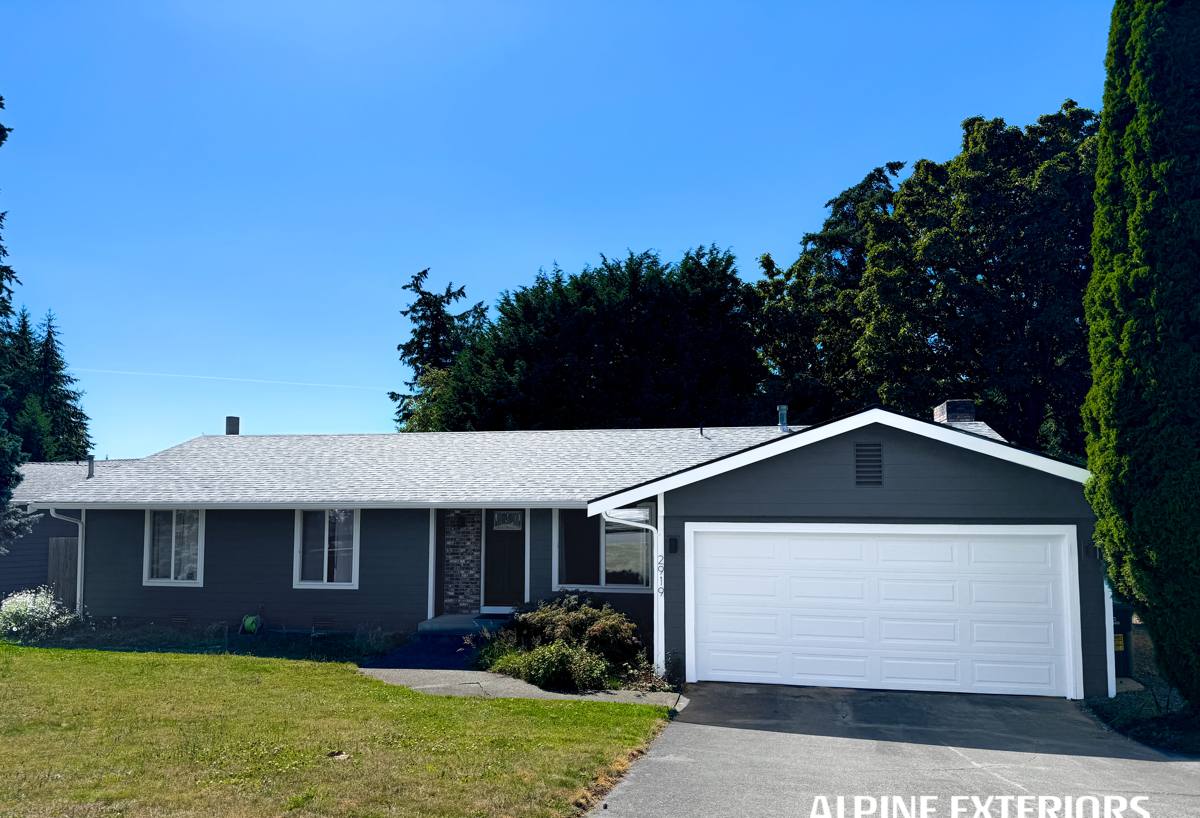
Signs a Nokomis Home Needs Siding Replacement, Not Just Repair
Moisture-Related Damage
Soft or spongy siding, especially near the bottom courses, around window sills, or where two walls meet, usually means water has been getting behind the material for some time. On wood-based products this often means rot has already reached the sheathing. Localized patching rarely solves this — it addresses the visible symptom while the underlying water path stays open.
Buckling, Warping, or Separating Seams
Coastal humidity cycles cause repeated expansion and contraction. Siding not rated for that cycling — or installed without the gaps and clearances it needs — will eventually bow, buckle, or pull away from the wall. Once a product starts moving like this, it's usually past the point where caulk and touch-up paint fix anything long-term.
Chalking, Fading, and UV Breakdown
Some siding materials lose their factory finish under sustained UV exposure, leaving a chalky residue on your hand if you wipe the surface. That's the finish breaking down, not just dirt. Once the protective layer is gone, the substrate underneath is exposed to the exact moisture and sun cycle that caused the problem in the first place.
Mold or Staining at Seams and Corners
Persistent dark staining at joints, corners, or under windows — especially in shaded or less-ventilated wall sections — is often a sign that moisture is trapped rather than shedding the way it should. This is common on homes where the original siding or house wrap wasn't matched to a wind-driven-rain climate.
What a Correct Siding Replacement Actually Involves
Siding replacement isn't just removing old material and nailing up new panels. In a coastal Sarasota County environment, the work behind the siding matters as much as the siding itself.
Full Tear-Off and Substrate Inspection
We remove the existing siding entirely rather than installing over it. That lets us inspect the sheathing underneath for rot, delamination, or prior water damage — problems that are invisible until the old siding comes off, and that will undermine even the best new siding if left unaddressed.
Weather-Resistive Barrier and Flashing
A correctly lapped weather-resistive barrier, properly integrated window and door flashing, and correct kick-out flashing at roof-wall intersections are what actually keep wind-driven rain out of the wall assembly. Siding is the visible layer; the barrier and flashing behind it do most of the real work in a storm.
Manufacturer-Spec Installation
James Hardie fiber cement is engineered with specific fastening patterns, clearances, and gapping requirements — and those specs exist for a reason in high-wind, high-moisture regions. Installing to spec is what keeps the manufacturer's warranty valid and what actually gives the product its rated wind resistance.
Fastening and Joint Treatment for Wind Exposure
Sarasota County's wind requirements are stricter than a lot of the country's, and coastal-adjacent neighborhoods like Nokomis deserve the higher end of that standard, not the minimum. Correct fastener spacing, embedment, and joint flashing are what separate siding that holds through a tropical storm from siding that doesn't.
Why We Install Only James Hardie Fiber Cement
We don't install vinyl siding, LP SmartSide, or other fiber cement brands, and that's a deliberate standard, not a limitation of what we're capable of doing. Vinyl softens and can distort in sustained heat, and in a direct hurricane-force gust it has less structural integrity than fiber cement. Engineered wood products, even good ones, depend on an intact factory coating to keep moisture out — any breach in that coating in a humid, salt-air climate can lead to swelling at the edges over time. These aren't reasons those products are without merit elsewhere; they're reasons we don't think they're the right fit for what Gulf coast homes go through year after year.
James Hardie fiber cement is non-combustible, doesn't expand and contract with humidity the way wood-based products do, and Hardie's HZ5 product line is specifically engineered for high-humidity, high-moisture climates like ours. The ColorPlus factory finish is baked on under controlled conditions and holds color and UV resistance far longer than field-applied paint. It's backed by a strong transferable warranty when installed to Hardie's specifications — which is exactly the installation standard we hold every project to.
Our Process for Nokomis Projects
- On-site assessment — we inspect current siding, look for signs of moisture intrusion, and check the condition of the sheathing where accessible.
- Product and color selection — we walk through Hardie's plank, panel, and shingle profiles and ColorPlus palette suited to the home's style and Sarasota County's HOA or deed restrictions where they apply.
- Permitting — siding replacement in unincorporated Sarasota County requires a permit, and we handle that process rather than leaving it to the homeowner.
- Tear-off and inspection — full removal of existing siding, with substrate repair addressed before anything new goes up.
- Barrier, flashing, and Hardie installation — installed to manufacturer spec for wind and moisture performance.
- Final walkthrough — we review the finished work with the homeowner and address anything before calling the job complete.
Cost Factors for Siding Replacement in Nokomis
Every home is different, but the factors that move the price are consistent. This isn't a quote — it's a guide to what actually drives cost up or down.
| Factor | Why It Matters |
|---|---|
| Home size and wall complexity | More square footage and more corners, gables, and trim details mean more material and labor time. |
| Condition of existing sheathing | Rot or water damage found during tear-off requires repair before new siding goes on, which affects both cost and timeline. |
| Hardie product line and profile | Lap plank, shingle-style panels, and board-and-batten each price differently based on material and install labor. |
| Trim and accessory work | Fascia, soffit, window trim, and corner details add labor beyond the flat wall area. |
| Access and site conditions | Two-story sections, tight lot lines, and landscaping that limits staging space all affect labor time. |
| Color | Standard ColorPlus colors versus premium or custom-matched colors carry different pricing. |
Why Hiring a Crew That Already Works in Nokomis Matters
Siding contractors who work Sarasota County regularly already know the wind load requirements local building departments enforce, already have a working relationship with the permitting process, and already understand how to sequence a project around Florida's storm season rather than getting caught mid-tear-off when weather turns. That familiarity isn't a marketing point — it directly affects how smoothly your project runs and how well the finished result holds up.
A crew unfamiliar with coastal Sarasota conditions may build to a generic standard that's fine in a drier, calmer climate but under-built for what Nokomis actually sees most years. Local experience shows up in the details: how flashing is lapped, how fastener schedules are handled near corners and openings, and how the work is scheduled so a partially-open wall isn't left exposed when a system moves through the Gulf.
Questions Worth Asking Any Siding Contractor Before You Hire
- Do you pull permits yourselves, or is that left to the homeowner?
- What weather-resistive barrier and flashing details do you use at windows, doors, and roof lines?
- Will the installation follow the manufacturer's published fastening and clearance specs?
- What happens to my house if weather moves in mid-project?
- Is the manufacturer's warranty still valid based on how you install, or does non-spec installation void it?
- Can you walk me through what you'll do differently because this home is in a coastal wind zone?
Caring for Hardie Siding After Installation
James Hardie fiber cement is low-maintenance compared to most alternatives, but "low-maintenance" doesn't mean "no maintenance" — especially in a salt-air environment. A little seasonal attention keeps the finish and the warranty in good standing.
- Rinse the exterior periodically with a garden hose to clear salt residue and airborne grit before it builds up.
- Keep sprinklers and irrigation heads from spraying directly on siding — constant wetting accelerates wear on any material.
- Inspect caulking at trim, windows, and joints annually and have gaps resealed before the next storm season.
- Trim landscaping back from the wall so foliage isn't holding moisture against the siding.
- Address any impact damage — from debris in a storm or routine yard work — promptly rather than letting it sit through a rainy season.
If your Nokomis home's siding is showing its age or you're planning ahead of the next storm season, we're glad to come take a look. A free, no-pressure estimate gives you a clear picture of your home's condition and what correct replacement would involve — no obligation either way. The form below gets that started.