 Sarasota Siding
 Two Products, Same Core Material
If you've been shopping for siding in Sarasota County, you've probably run into both James Hardie and Allura. That's not an accident — both are fiber cement, a blend of Portland cement, sand, and cellulose fiber that's been the go-to alternative to vinyl and wood siding for coastal Florida for more than two decades. Fiber cement doesn't rot, doesn't feed termites, and doesn't ignite the way wood-based products can. On that level, Allura and James Hardie are playing the same game.
We get asked fairly often why a company that only installs one brand would bother writing about a competitor's product instead of just staying quiet about it. Our answer is simple: homeowners in this market deserve a straight, specific explanation, not a sales pitch dressed up as "education." So here's the honest version — what Allura gets right, and the trade-offs that led us to standardize on James Hardie instead.
What Allura Gets Right
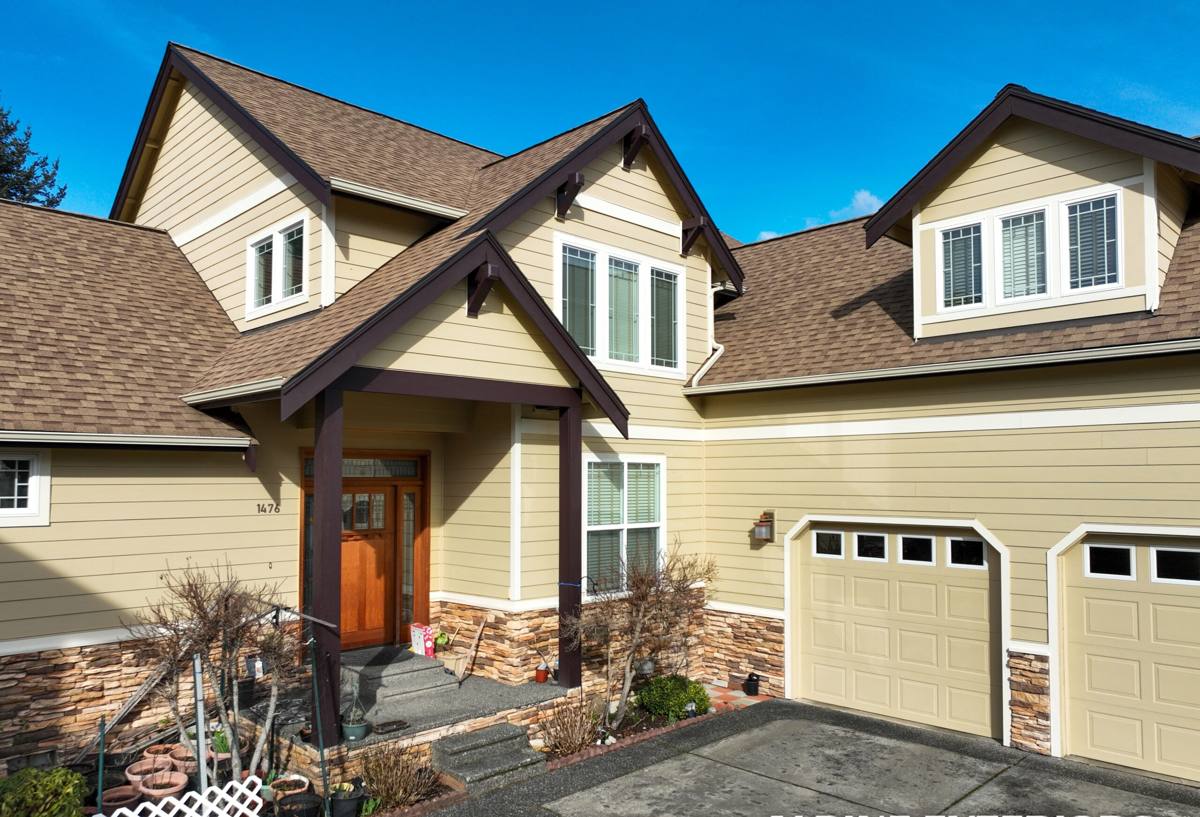
Allura fiber cement is a legitimate, code-compliant product. It's manufactured to the same general ASTM standards as other fiber cement siding, it holds paint and factory finishes reasonably well, and it's been used successfully on homes across Florida, including plenty in wind-borne debris regions. Its plank and panel lineup covers most of the same profiles homeowners expect — lap siding, shake-style panels, and trim — often at a lower material cost than Hardie's comparable lines. For a budget-conscious remodel where fiber cement's basic fire- and pest-resistance is the main goal, it's not a product we'd call a mistake in general terms.
We're not writing this page to tell you Allura is a bad product. We're writing it to explain why, after years of installing and servicing siding on Sarasota's barrier islands and inland neighborhoods alike, we narrowed our own offering to one system we can stand behind completely — parts, finish, warranty, and installation spec all engineered together.
Where the Trade-Offs Show Up in Our Climate
Sarasota's exterior envelope takes a beating that a lot of the country never deals with. We get sustained hurricane-force wind events, wind-driven rain that gets forced sideways into wall assemblies during tropical systems, near-constant UV exposure that fades and chalks lesser finishes within a few years, and salt-laden air rolling in off the Gulf that accelerates corrosion on fasteners and trim. Any siding product installed here is going to be tested by all four at once, often in the same afternoon.
James Hardie engineers its HardieZone system specifically around regional climate profiles, with its HZ5 formulation built for exactly this kind of high-moisture, high-UV, storm-exposed environment. Allura doesn't publish the same kind of zone-specific engineering documentation, and in our experience sourcing and installing both products, the moisture-management behavior at cut edges, laps, and butt joints is where the difference becomes most visible over time — not in year one, but by year five or seven, when caulking, painting, and edge-sealing discipline start to matter more than they did on day one.
Why Edge and Joint Detailing Matters More Here Than Elsewhere
Fiber cement is dimensionally stable compared to wood, but it's still a cementitious product — it can absorb moisture at cut ends and unfinished edges if they aren't properly sealed during installation. In a market with occasional wind-driven rain and near year-round humidity, that detail work isn't optional. It's the difference between siding that looks new at year ten and siding that shows staining, edge swelling, or paint failure well before then.
Factory Finish and Warranty Structure
This is where we see the biggest practical gap for homeowners. James Hardie's ColorPlus finish is baked on in a controlled factory environment with multiple coats and a UV-cured topcoat, and it carries a substantial multi-year finish warranty separate from the product warranty itself. That matters directly in Sarasota, where unprotected paint finishes on any exterior material fade and chalk faster than in northern climates.
| Factor | James Hardie | Allura |
|---|---|---|
| Factory finish options | ColorPlus baked-on finish, wide color range, factory-primed option available | Primed and pre-finished options available, narrower factory color selection in most markets |
| Finish warranty | Separate, long-term finish warranty on ColorPlus products | Warranty coverage typically tied more closely to base product, varies by finish option chosen |
| Climate engineering | HardieZone HZ5 formulation for high-moisture, storm-prone regions | General fiber cement formulation, not zone-specific by published spec |
| Product warranty | Long-term, transferable to one subsequent owner | Manufacturer warranty offered, transferability terms vary by program |
| Regional installer network | Large base of trained, Hardie-preferred contractors in Florida | Smaller regional installer base in Southwest Florida |
None of this means Allura's warranty is worthless — it isn't. But warranty language and transferability terms are worth reading closely on any product, and it's a factor we weigh heavily when we're the ones who have to stand behind the work in five, ten, or twenty years.
Installation Sensitivity and Crew Experience
Fiber cement siding is only as good as the installation behind it, regardless of brand. Fastener pattern, clearance from grade, flashing details around windows and doors, and gap sealing at butt joints all matter more in a hurricane-exposed coastal market than they do in a drier, calmer climate. Because we've built our entire crew training, tooling, and quality-control process around one product line, our installers aren't splitting their attention between two different manufacturers' fastening specs, trim details, and finish-touch-up procedures.
That specialization is a real trade-off of running a single-brand shop — we can't be the contractor for every product on the market. But it also means every crew member on a Hardie job has installed that exact product dozens of times, knows its specific clearance and fastening requirements cold, and isn't guessing at a manufacturer's install bulletin for the first time on your roof.
Long-Term Availability, Repairs, and Resale
Sarasota County sees its share of storm damage, and siding repairs after a wind or debris event are a fact of life here. When a homeowner needs a color-matched replacement plank five or ten years down the road, product availability and finish consistency matter. James Hardie's national distribution network and ColorPlus finish batch consistency make it easier to source a matching replacement plank years later. Allura is available through building supply distributors as well, but the regional stocking depth and dealer density in Southwest Florida is generally thinner, which can mean longer waits or a visible finish mismatch on a partial repair.
Resale is a related consideration. Buyers and their inspectors in this market increasingly recognize the James Hardie name specifically, and appraisers and real estate agents in Florida coastal markets often treat it as a known, durable upgrade. That name recognition isn't a guarantee of value, but it's a real factor for a homeowner weighing a full re-side as a long-term investment in the property.
Why We Standardized on James Hardie
We didn't pick one brand because of a rebate or a badge on our truck. We picked it because running one product line lets us guarantee the entire chain — material engineered for this climate zone, a factory finish warrantied against fading and cracking, an installer crew trained exclusively on its fastening and flashing requirements, and a manufacturer warranty that's transferable if you sell the home. When something goes wrong on a fiber cement job in this climate, it's almost always a detail failure at an edge, joint, or fastener — not a failure of the base material. Standardizing lets us control every one of those details the same way, every time.
Questions Worth Asking Before You Choose a Fiber Cement Product
- Is the finish factory-applied and baked on, or field-painted after installation?
- What does the finish warranty cover separately from the base product warranty, and for how many years?
- Is the product engineered or rated for a specific climate zone, or is it a general-purpose formulation?
- Is the warranty transferable if you sell the home, and are there conditions attached?
- How readily can a matching replacement plank be sourced locally if a panel is damaged in a future storm?
- Has the installing crew worked with this exact product and its fastening/flashing spec before, or is it new to them?
Getting a Straight Answer for Your Home
Every home in Sarasota faces its own mix of sun exposure, wind loading, and proximity to salt air, and the right siding decision should account for that specific home, not a generic pitch. If you're weighing fiber cement options for a Sarasota County project, we're glad to walk your property, talk through what James Hardie's HZ5 line and ColorPlus finish would look like on your home, and give you a straightforward, no-pressure estimate — no scare tactics, no exaggerated claims about what any product will or won't do.