 Sarasota Siding
 Longboat Key Sits in One of the Toughest Climates for Exterior Siding
Longboat Key is a barrier island, which means every home here faces a combination of stresses that inland Sarasota County properties simply don't deal with at the same intensity. Salt-laden air moves across the island from both the Gulf of Mexico and Sarasota Bay, hurricane-force wind events are a real possibility every storm season, and the Florida sun delivers year-round UV exposure that never really lets up. Add wind-driven rain that gets forced sideways into wall assemblies during tropical storms, and you have a climate that will find every weakness in a siding product or an installation shortcut, usually within a few years rather than a few decades.
We install exclusively James Hardie fiber cement siding, and on Longboat Key that isn't a marketing preference — it's a practical decision based on what actually holds up out here. This page focuses specifically on what Longboat Key homes need from their siding, what a correct installation looks like on this island, and why the installation matters as much as the product itself.
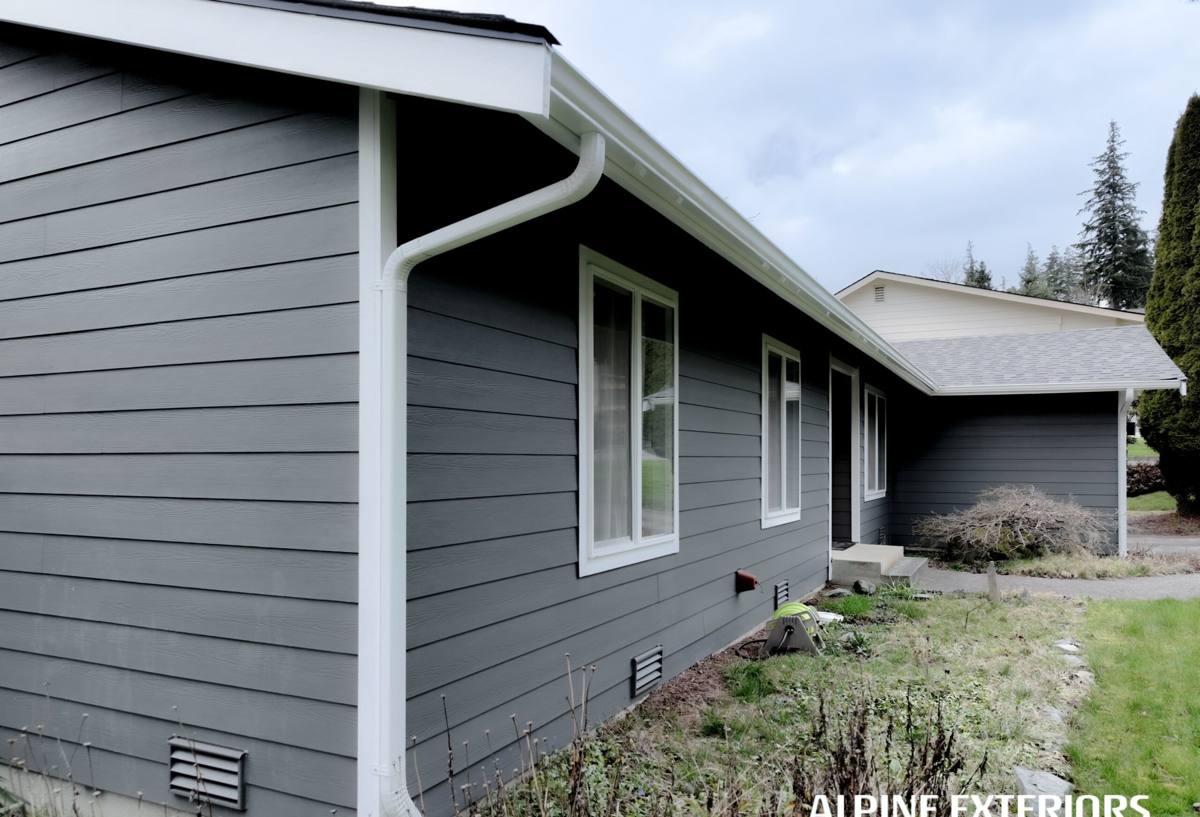
What Salt Air, Wind, and UV Actually Do to Siding Over Time
Understanding the failure modes helps explain why product choice and installation quality matter more here than in most parts of the country.
Salt Air and Moisture
Airborne salt is corrosive to metal fasteners, flashing, and trim accessories, and it also accelerates the breakdown of paint films and lower-grade siding substrates. Materials that absorb moisture or aren't dimensionally stable tend to swell, warp, or delaminate faster in a salt-air environment than they would twenty miles inland.
Wind Load
Longboat Key homes need siding and fastening systems rated to handle real wind pressure, not just standard suburban wind exposure. Panels that aren't fastened correctly, or that rely on adhesive strips and interlocking edges rather than mechanical fastening, are more likely to lift, crack, or blow off in a sustained wind event.
UV Exposure
Constant sun bleaches pigment out of paint and some composite siding finishes over time. A factory finish engineered to resist UV fade behaves very differently over ten or fifteen years than a field-applied paint job that was never designed for this level of sun exposure.
Wind-Driven Rain
During tropical storms and hurricanes, rain doesn't just fall — it's pushed horizontally into wall systems under pressure. Siding that isn't installed with correct flashing, laps, and clearances will let that water find its way behind the cladding, where it can sit against sheathing and framing long after the storm passes.
Why James Hardie Fiber Cement Fits This Environment
James Hardie siding is fiber cement — a mix of cement, sand, and cellulose fibers, engineered and pressed into planks and panels. It doesn't absorb water the way wood-based products do, it won't rot, and it's non-combustible. Those baseline properties matter everywhere, but they matter more on a barrier island where moisture exposure and storm risk are constant background factors rather than occasional concerns.
ColorPlus Technology vs. Field-Painted Siding
Most James Hardie products we install use ColorPlus Technology, a factory-applied finish baked onto the plank under controlled conditions before it ever reaches the jobsite. That finish is formulated to resist fading from UV exposure and holds up better against the elements than siding that's primed at the factory and painted on-site, where the finish is more exposed to touch-up inconsistencies and shorter product life expectations. In a climate that bleaches paint faster than most of the country, that difference shows up sooner rather than later.
Built for the Storm Zone
James Hardie engineers its HZ product lines specifically for climate zones, and homes in Florida's wind and moisture belt are generally specified with the HZ5 formulation, engineered for high-humidity, storm-prone regions like the Gulf Coast. It's the same core fiber cement chemistry, tuned for the conditions a Longboat Key home actually experiences rather than a generic national spec.
What a Correct Installation Involves on a Barrier Island
Fiber cement siding is only as good as the installation behind it. A rushed or generic install can undercut even a well-engineered product, and on Longboat Key the margin for error is smaller than in a low-wind, low-moisture market.
Flashing and Water Management
Every window, door, and penetration needs correctly lapped flashing so that any water that does get behind the cladding has a path back out rather than a place to collect. This is the single most common point of failure we see in older or improperly installed siding jobs, and it's invisible from the street until a problem shows up inside the wall.
Fastening for Wind Resistance
Fastener type, spacing, and placement all need to match the wind exposure the home actually faces, not a minimum national baseline. This includes correct nailing patterns at panel edges and corners, where wind uplift forces concentrate first.
Clearances and Ventilation
Fiber cement siding needs proper clearance from grade, roofing, and decking, along with a drainage plane behind the panels so moisture that reaches the wall assembly can escape instead of staying trapped against the substrate. Skipping this step is a common shortcut that doesn't show consequences until years later.
Sealant and Joint Detailing
Butt joints, corners, and trim transitions need to be sealed with products and methods rated for exterior, coastal-exposure use — not general-purpose caulk that breaks down quickly under UV and salt exposure.
How We Approach a Longboat Key Project
| Step | What Happens | Why It Matters Here |
|---|---|---|
| Site & Wall Assessment | Inspect existing siding, sheathing, and moisture points before proposing a scope | Catches hidden water damage common in older coastal homes before it's covered up again |
| Product Specification | Confirm the correct James Hardie line, profile, and color for the home's exposure | Matches the product to actual wind and salt exposure, not a generic default |
| Flashing & Prep | Install or correct flashing, house wrap, and drainage plane details | This is where most long-term failures start if skipped or rushed |
| Installation | Fasten and lap panels to manufacturer spec for the local wind exposure | Determines whether the siding stays put and stays sealed through storm season |
| Final Detailing | Trim, joints, and sealant work at a coastal-grade standard | Protects the seams and edges that take the most weather abuse |
What Affects the Cost of a Longboat Key Siding Project
Every home is different, but a few factors consistently move the price on island projects more than they would on a typical mainland home.
| Cost Factor | Why It Matters on Longboat Key |
|---|---|
| Existing wall condition | Older homes may have hidden moisture damage behind the current siding that needs repair before new siding goes on |
| Home access & staging | Narrow island lots and limited staging space can affect logistics and scheduling |
| Trim and architectural detail | Coastal homes often have more corners, dormers, and trim work, which adds labor and material |
| Product line and profile | Plank width, texture, and color selection all affect material cost |
| Permitting requirements | Sarasota County and Longboat Key permitting adds time and cost that should be built into the schedule, not treated as an afterthought |
We don't quote broad, made-up price ranges here — every home gets an actual walk-through and written estimate, because the variables above genuinely change the number from one property to the next.
Checklist: What to Ask Before Hiring for a Longboat Key Siding Job
- Is the contractor licensed and insured to work in Sarasota County and on Longboat Key specifically?
- Do they specify fastening and flashing details for coastal wind exposure, or just a generic install?
- Which James Hardie product line and color system are being proposed, and why that one for this home?
- Will they inspect and address existing moisture or sheathing damage before installing new siding over it?
- Who pulls the permit, and how is inspection handled through the project?
- What does the written warranty actually cover — labor, materials, or both?
Why a Crew That Already Works Longboat Key Matters
Barrier-island jobs come with logistics and building conditions that differ from a typical mainland install — permitting through the local jurisdiction, tighter site access on many island lots, and wall assemblies that have already been exposed to years of salt air and storm cycles. A crew that regularly works Longboat Key and the surrounding Sarasota County coastline has already worked through those variables and knows what to look for before the first panel goes up, rather than learning it on your home.
We install James Hardie fiber cement siding exclusively, which means every crew on your project has repetition with one product system rather than switching between vinyl, LP SmartSide, and fiber cement from job to job. That consistency shows up in the quality of flashing, fastening, and finish work — the details that determine whether siding holds up through the next decade of Gulf Coast storm seasons or starts showing problems in year three.
If you're considering new siding for a Longboat Key home, we're glad to walk the property, look at what's there now, and put together a straightforward, no-pressure estimate for a James Hardie system built for this island's climate. Use the form below to get started.