 Sarasota Siding
 Southside Village Is an Older Neighborhood in a Demanding Climate
Southside Village sits close to downtown Sarasota, and like a lot of established, close-in Sarasota County neighborhoods, it's a mix of older homes — some original bungalow and cottage-era construction, others updated or rebuilt over the decades — sitting on mature, tree-shaded lots. That combination matters when it's time to talk about siding. An older exterior wall often has decades of prior repairs, paint layers, and moisture history behind it, and it's carrying that history in a part of Florida that doesn't go easy on building exteriors. Hurricane-force wind events, sun exposure that runs close to year-round, wind-driven rain off the Gulf, and salt-laden air all work on a home's siding continuously, not just during storm season.
We install James Hardie fiber cement siding exclusively, and for a neighborhood like this one, that choice is about matching a proven, climate-engineered product to homes that need to hold up under real coastal stress — not just look good on installation day.
What Southside Village Homes Need From Their Siding
Wind and Storm Resistance
Sarasota County sits in a hurricane-exposed part of the Gulf Coast, and siding on an older home has to do more than look finished — it has to stay attached and intact when wind loads spike during a named storm or even a strong seasonal squall. Fastening pattern, panel engineering, and how the material behaves under sustained wind pressure all matter here in a way they simply don't in calmer inland climates.
Wind-Driven Rain and Moisture
Rain in this part of Florida rarely falls straight down during a storm — wind pushes it sideways and up under laps, trim, and penetrations. On an older home, that means every seam, joint, and transition where the old siding met a window, door, or roofline is a place water has had years to find a way in. A siding replacement is a chance to correct those old vulnerable spots, not just cover them with new material.
Intense, Near-Constant UV Exposure
Sarasota gets strong sun through most of the year, and UV breaks down field-applied paint faster than most homeowners expect. A wall that gets full afternoon sun can show chalking, fading, and peeling well before a shaded wall on the same house does, which is part of why finish quality and how it's applied matters as much as the substrate underneath it.
Salt Air and Corrosion
Being near the Gulf and Sarasota Bay means a steady low level of salt in the air, even away from the immediate waterfront. Salt exposure accelerates corrosion on anything metal — fasteners, trim flashing, hardware — and it's part of why fastener spec and flashing detail deserve real attention on a Southside Village project, not just a passing mention on the estimate.
Why We Standardized on James Hardie Fiber Cement
We don't install LP SmartSide, vinyl, Cemplank, Allura, primed spruce, or cedar siding. Those are established products, and other contractors install them competently — we simply made a professional decision that on homes facing hurricane wind, sustained UV, and salt air, we wanted to stand behind one system we trust completely rather than offer a menu of alternatives with different maintenance burdens and failure modes. James Hardie's fiber cement is non-combustible, dimensionally stable in humidity swings that make wood-based products swell and cup, and it comes from the factory with a baked-on ColorPlus finish engineered to hold color and resist moisture far longer than a field-painted surface. HZ10 products in Hardie's lineup are specifically engineered for high-humidity, high-moisture climates like Florida's Gulf Coast, which is exactly the profile Southside Village sits in.
The James Hardie Product Lines That Fit This Neighborhood
HardiePlank Lap Siding
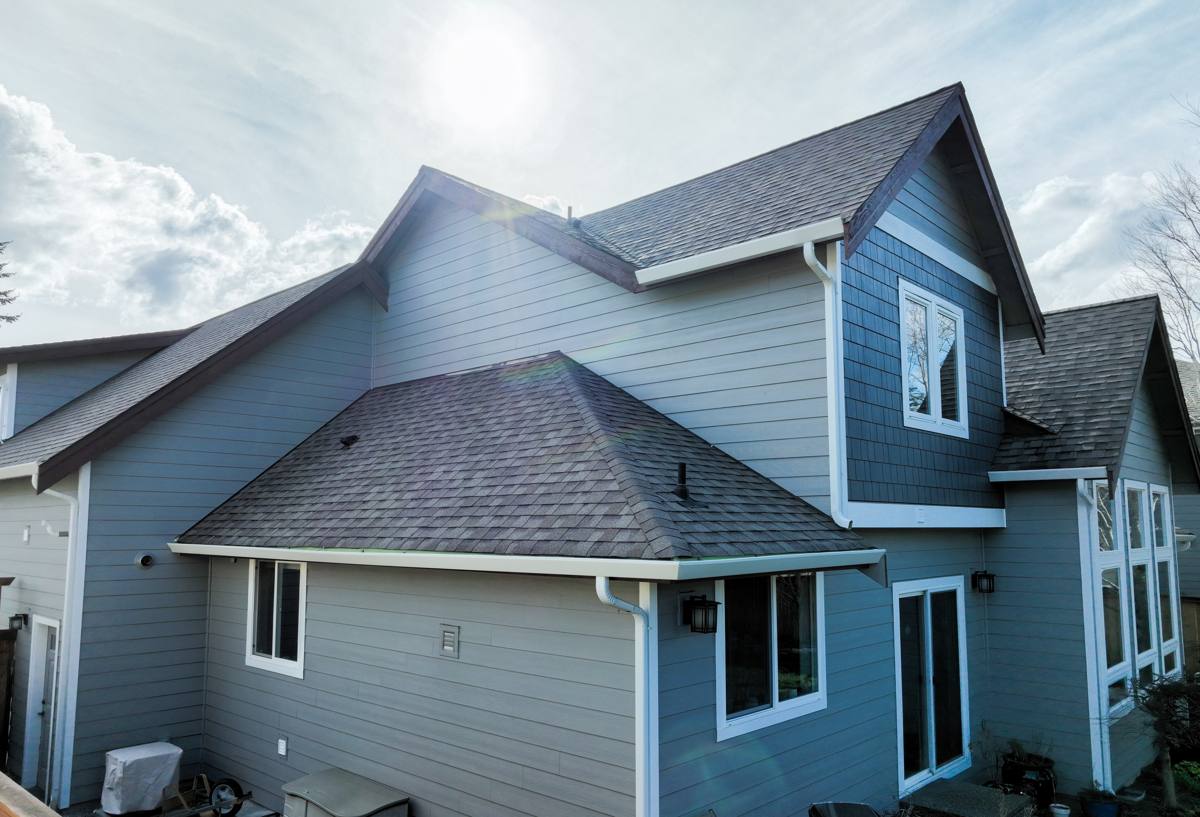
HardiePlank is the workhorse for most Southside Village homes — a horizontal lap profile available in several widths and textures, including smooth finishes that suit the clean lines of a lot of the area's bungalow and cottage-style homes, and cedar-look textures for homes going for a more traditional coastal look.
HardieShingle for Cottage-Style Accents
Some Southside Village homes use shingle-style accents on gables or dormers as a design detail. HardieShingle gives that same look in fiber cement, so the accent doesn't become the weak point in an otherwise upgraded wall.
ColorPlus Technology Finish
Every plank and shingle we install comes with Hardie's factory-applied ColorPlus finish rather than field-applied paint. That finish is baked on and cured under controlled conditions, which gives it a UV and fade resistance that a job-site paint job can't match — a meaningful advantage on walls getting Sarasota's full sun exposure most of the year.
| Product Line | Best Used For | Key Advantage in This Climate |
|---|---|---|
| HardiePlank (HZ10) | Full-home lap siding, most common choice | Engineered for high-humidity, storm-prone Gulf Coast conditions |
| HardieShingle | Gable and dormer accents, cottage detailing | Matches traditional look without wood's moisture sensitivity |
| HardieTrim | Corners, fascia, window and door trim | Won't rot or absorb water the way wood trim does |
| ColorPlus finish (all lines) | Factory color on any of the above | Resists UV fade and chalking far longer than field paint |
What a Correct Installation Actually Involves
The visible result of a siding job — clean lines, a fresh color — hides most of what actually determines whether it lasts. On an older Southside Village home, a correct install means:
- Inspecting and repairing the wall sheathing underneath before any new siding goes up, since older homes often have hidden moisture damage from decades of prior siding
- Installing or verifying a proper weather-resistive barrier, lapped correctly to shed water downward and outward
- Fastening to Hardie's published spec for this wind zone, not a generic national minimum
- Flashing every window, door, and roofline transition so wind-driven rain has nowhere to collect
- Maintaining proper clearance between siding and grade, decks, and roof lines to avoid trapping moisture at the base of the wall
- Cutting boards face-down and priming any field-cut edges to protect the factory ColorPlus finish
- Using corrosion-resistant fasteners appropriate for this area's salt exposure
Skip any one of these steps and the wall can still look right for a year or two. The problems that come from cutting corners — water intrusion at a poorly flashed window, fastener corrosion, a soft spot where moisture got trapped — take time to surface, and they're expensive to fix once they do because they're usually hidden behind the new siding by then.
Our Process for a Southside Village Project
Walkthrough and Assessment
We start by looking at the home's actual condition — age of the current siding, any signs of past water intrusion, how exposed different walls are to sun and wind, and what the substrate underneath looks like once we get past the surface. Older homes in this neighborhood often have layered history here, and it's worth understanding before quoting the job.
Planning Around the Home's Details
Older Southside Village homes tend to have trim details, porch returns, and roofline transitions that a newer production-built home doesn't. We plan the flashing and trim approach around those details before crews start cutting material, rather than improvising in the field.
Installation to Manufacturer Spec
Every fastener, flashing lap, and clearance follows James Hardie's published installation requirements for this wind and moisture zone. That's what keeps the manufacturer's warranty valid and what determines whether the wall performs the way it's designed to for decades rather than years.
Final Walkthrough
We walk the finished job with you, explain what little ongoing maintenance is actually needed, and make sure you know what a properly installed seam, flashing detail, and trim line should look like going forward.
Why Hiring a Crew That Already Works This Neighborhood Matters
A crew that's worked on multiple Southside Village homes has already seen what this specific mix of older construction and coastal exposure tends to hide — how a mature tree canopy changes which walls stay damp longest, how a tight, established lot affects staging and access, and what an original-era wall assembly typically looks like once the old siding comes off. That's the kind of judgment that doesn't show up on a generic estimate sheet, and it's the difference between a job that goes smoothly and one that turns up expensive surprises mid-project. Local permitting experience matters too — Sarasota County's permitting and inspection process moves more predictably when the contractor pulling the permit already knows how it works.
Maintenance and Long-Term Care
One of the practical advantages of James Hardie siding for a Southside Village home is how little ongoing maintenance it asks for compared to wood or engineered wood products. There's no repainting cycle to keep up with — the ColorPlus finish is designed to hold its color for years — and the material itself doesn't rot, swell, or attract pests. Realistic upkeep is an occasional rinse to clear salt residue and organic buildup, a periodic look at caulking and trim joints, and prompt attention if a storm causes any impact damage. That's a meaningfully lighter maintenance load than a homeowner takes on with a painted wood or engineered wood exterior in this climate.
Cost Factors for a Southside Village Siding Project
| Factor | Why It Matters |
|---|---|
| Condition of existing sheathing | Older homes sometimes need substrate repair before new siding goes up |
| Home size and wall complexity | More corners, gables, and transitions mean more cutting and flashing work |
| Trim and accent detailing | Shingle accents or extensive trim work add labor beyond a plain lap install |
| Access and lot conditions | Mature trees and tighter, established lots can affect staging and add time |
| Tear-off vs. install over existing siding | Full tear-off costs more upfront but lets us properly inspect and correct the wall underneath |
We'll walk your specific home and give you real numbers rather than a rough per-square-foot estimate — two Southside Village homes of similar size can carry very different costs depending on what's found once the old siding comes off.
Getting It Right the First Time
On an older home, siding replacement is often the point where hidden issues from decades of prior work either get corrected or get buried under new material. We treat the inspection and planning phase as seriously as the installation itself, because the cost of catching a moisture problem now is a lot lower than the cost of dealing with it after it's been sealed behind a new wall for a few more years.
If you're weighing James Hardie siding for a home in Southside Village, we're happy to walk the property, talk through what your specific walls need given their age, exposure, and condition, and give you a straightforward, no-pressure estimate. There's a form below — reach out and we'll set up a time to take a look.