 Sarasota Siding
 Why Decks in The Meadows Wear Out Faster Than People Expect
The Meadows is one of Sarasota's older established communities, built around mature tree canopy, lakes, and golf course frontage. That setting is a big part of why people live there — but it also creates a specific set of conditions for an outdoor deck. Heavy shade from oak canopy keeps wood damp longer after rain. Proximity to ponds and irrigated turf means more humidity at ground level, which speeds up rot in framing and posts. And because Sarasota sits on the Gulf Coast, homes here still deal with salt-laden air, even several miles inland, which slowly corrodes fasteners, hardware, and railing components that weren't rated for it.
Add in the rest of what a Sarasota County summer throws at an exterior structure — intense UV exposure nearly year-round, sudden wind-driven rain, and the occasional hurricane-force wind event — and it's easy to see why decks in this area rarely fail all at once. They fail gradually, from the inside out, long before the surface looks bad enough to worry most homeowners.
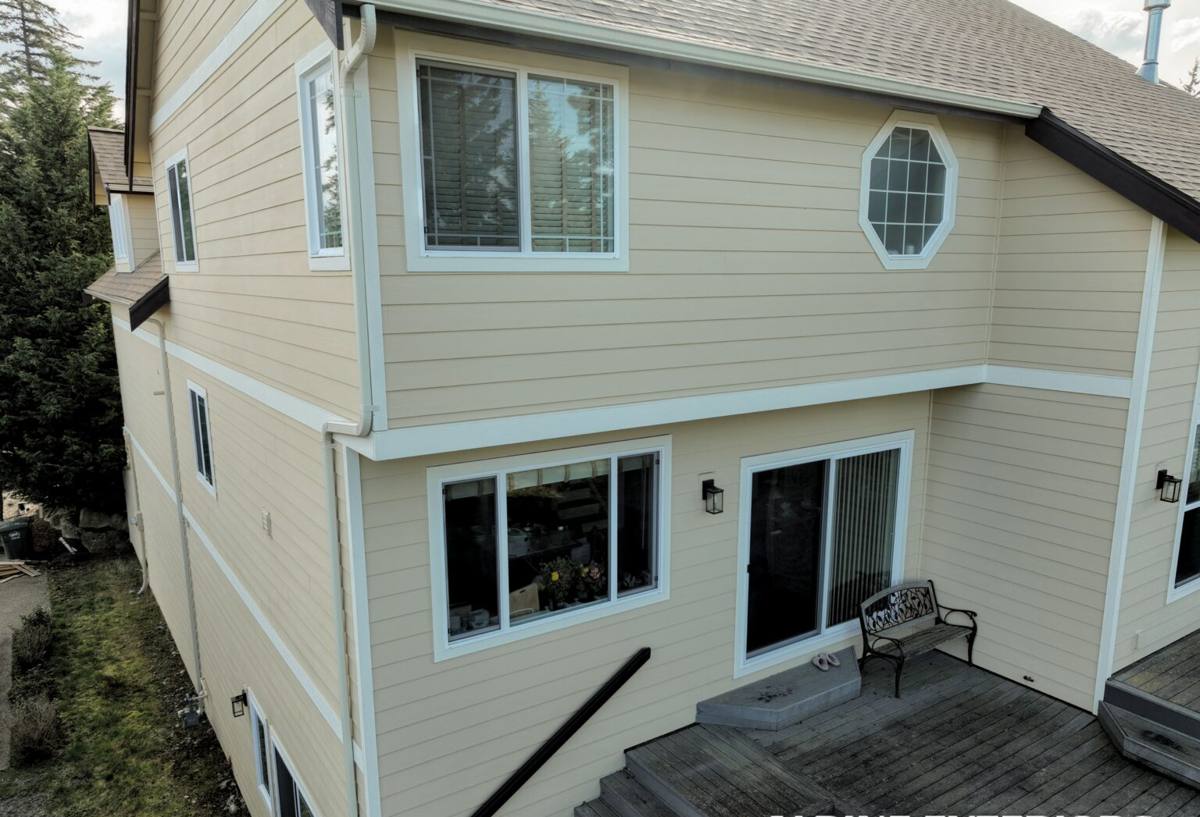
Signs a Deck Needs Replacement, Not Another Repair
Not every tired-looking deck needs to be torn out. But there's a point where patching boards or re-staining stops being a real fix and starts being a way to delay a bigger problem. In our experience working on decks throughout the Sarasota area, these are the signs that mean it's time to replace rather than repair:
- Soft, spongy, or spring-back spots in the decking or stair treads
- Visible rot, splitting, or insect damage at the ledger board (where the deck attaches to the house)
- Posts or footings that have shifted, settled, or show cracking at the base
- Rusted, corroded, or backed-out fasteners, especially on railings and stair connections
- Railings that flex or wobble under normal pressure
- A structure that was never properly flashed at the house connection, allowing water to track behind siding
- A deck built to an older, lighter-duty standard than what current Florida Building Code requires for connections and guardrails
That last point matters more than most homeowners realize. Deck-building standards, especially around structural connections and guardrail strength, have gotten noticeably stricter over the past couple of decades. A deck that was perfectly normal to build in the 1990s or early 2000s may not meet the connection and load requirements enforced today, even if it still looks solid.
Choosing the Right Decking Material for This Climate
Material choice matters more in a coastal, high-UV climate like Sarasota's than it does in most of the country. What holds up well in a drier or cooler region can underperform here. We walk every homeowner through the real trade-offs rather than pushing one product for every job.
| Material | How It Handles This Climate | Maintenance | General Cost Position |
|---|---|---|---|
| Pressure-treated pine | Affordable but most vulnerable to humidity, rot, and UV fading; needs consistent sealing | High — annual cleaning and re-sealing | Lowest upfront cost |
| Tropical hardwoods | Naturally dense and rot-resistant, but still needs oiling to prevent graying and checking from UV | Moderate to high — periodic oiling | Mid to upper range |
| Composite decking | Resists moisture and insects well; quality varies significantly by brand and construction | Low — occasional washing | Mid to upper range |
| PVC / capped polymer decking | Fully sealed surface, strong resistance to moisture, salt air, and UV fading | Lowest — soap and water | Highest upfront cost |
We're straightforward about where each option has limits. Uncapped composite boards from lower-tier product lines can still absorb moisture at cut ends and fastener holes over time, which shows up as swelling near the perimeter — a maintenance issue worth knowing about before you buy, not after. Real wood, whether treated pine or hardwood, will always require more of the homeowner's ongoing attention in a humid coastal climate. Neither is wrong; it depends on how much upkeep you actually want to do.
What a Correct Deck Replacement Actually Involves
Tear-Off and Structural Assessment
Replacement starts with a full tear-off, not just pulling up the decking boards. That's when we can actually see the condition of the framing, posts, and footings underneath — the parts that determine whether the new deck will last. A deck that looks fine on the surface can be sitting on undersized or rotted framing that was simply covered up during a previous "resurfacing."
Footings and Framing Built for Florida Wind Loads
Footings need to be sized and set to local code, not guessed at. Framing lumber, joist spacing, and beam sizing all need to account for the wind uplift and load requirements built into the Florida Building Code — requirements that exist specifically because this state gets hurricane-force wind events. Undersized framing is one of the most common shortcuts we find when we tear out an older deck.
Ledger Board and Flashing
The ledger board connection — where the deck ties into the house — is the single most important structural and water-management point on the whole project. It has to be properly bolted (not just nailed) and flashed correctly so wind-driven rain, which this area sees regularly, doesn't get channeled behind your siding or into your wall framing. A poorly flashed ledger is a slow, hidden source of water damage that can go unnoticed for years.
Fasteners and Hardware
In a salt-air environment, fastener quality isn't optional. We use stainless steel or coated fasteners and connectors rated for coastal exposure, along with joist hangers and structural hardware sized to current code — not the cheaper galvanized hardware that starts showing rust streaks within a few seasons near the coast.
Permits, Codes, and Community Guidelines
Deck replacement in Sarasota County generally requires a permit, since it involves structural work — footings, framing, and attachment to the home. We handle the permitting process as part of the job so it's pulled correctly and the work is inspected at the right stages, which also protects you if you ever sell the home and a buyer's inspector looks closely at the deck.
Established communities like The Meadows often have their own architectural review guidelines on top of county permitting — things like railing style, material appearance, or setback from property lines. We factor that in during planning so the project doesn't stall waiting on approvals that could have been anticipated up front.
How We Approach a Deck Replacement Project
Our process is the same whether the deck is a small platform off a kitchen door or a large structure overlooking a lake or golf course view:
- On-site evaluation of the existing deck, including the framing and ledger connection, not just the visible surface
- Honest recommendation on repair versus full replacement, with reasoning explained
- Material walkthrough based on your budget, maintenance preference, and how the deck will actually be used
- Permit preparation and submission through Sarasota County, plus any community architectural approval needed
- Full tear-off and disposal of the old structure
- Rebuild from the footings up, to current Florida Building Code wind and connection standards
- Final walkthrough covering care and maintenance specific to whatever material you chose
Caring for a New Deck in a Gulf Coast Climate
Whatever material you choose, a few habits go a long way in this climate. Rinse off pollen, salt residue, and organic debris regularly rather than letting it sit and hold moisture against the surface. Keep gutters and downspouts near the deck clear so runoff isn't dumping directly onto framing or footings. Check railings and stair connections once or twice a year for movement, especially after a named storm passes through. And if you have real wood, stay ahead of sealing or oiling on a schedule rather than waiting until it visibly needs it — by the time UV damage is obvious, the wood has already been absorbing moisture unprotected for a while.
Why Hiring a Crew That Already Works in The Meadows Matters
A deck built to a generic national standard isn't necessarily built for Sarasota. Contractors who don't regularly work this specific coastal environment can under-spec fasteners, skip proper ledger flashing, or recommend a material that looks great in a showroom but struggles with year-round UV and humidity. Crews already familiar with The Meadows and similar Sarasota communities know the drainage patterns around lake-front lots, the shade and moisture conditions under mature tree canopy, and what tends to fail first on decks in this specific setting — because we've torn enough of them out to see the pattern.
Before hiring anyone for a deck replacement, it's worth asking a few direct questions:
- Are you licensed and insured to do structural work in Sarasota County?
- Will you pull the permit, and does your bid include it?
- What fastener and hardware grade do you use, and is it rated for coastal/salt-air exposure?
- How is the ledger board attached and flashed?
- Can you walk me through why you're recommending this material over the alternatives, including its downsides?
A contractor who answers those plainly, without dodging the maintenance or cost trade-offs, is one worth trusting with the job.
If your deck in The Meadows is showing its age or you're just not sure whether it needs repair or full replacement, we're happy to take a look and give you a straight answer. Reach out for a free, no-pressure estimate using the form below.