 Sarasota Siding
 Why Southside Village Siding Takes More Punishment Than Inland Homes
Southside Village sits close enough to Sarasota Bay and the Gulf that homes here deal with a different set of stresses than siding on the same street twenty miles inland. It's an established, walkable neighborhood with a mix of older bungalow-style homes and newer infill construction, and both styles share the same exposure: hurricane-force wind gusts during tropical systems, wind-driven rain that gets forced sideways into seams and laps, salt-laden air moving in off the water, and some of the most intense year-round UV load in the continental United States. None of those are occasional events — they're the baseline climate this siding has to survive every single year it's on the wall.
That combination is why siding problems in Southside Village rarely show up as one single failure. More often it's a slow accumulation: UV breaking down a coating, salt air accelerating corrosion at fasteners and trim, and wind-driven rain finding the weak point once the surface is compromised. Understanding that chain is the first step in repairing it correctly instead of just patching what's visible.
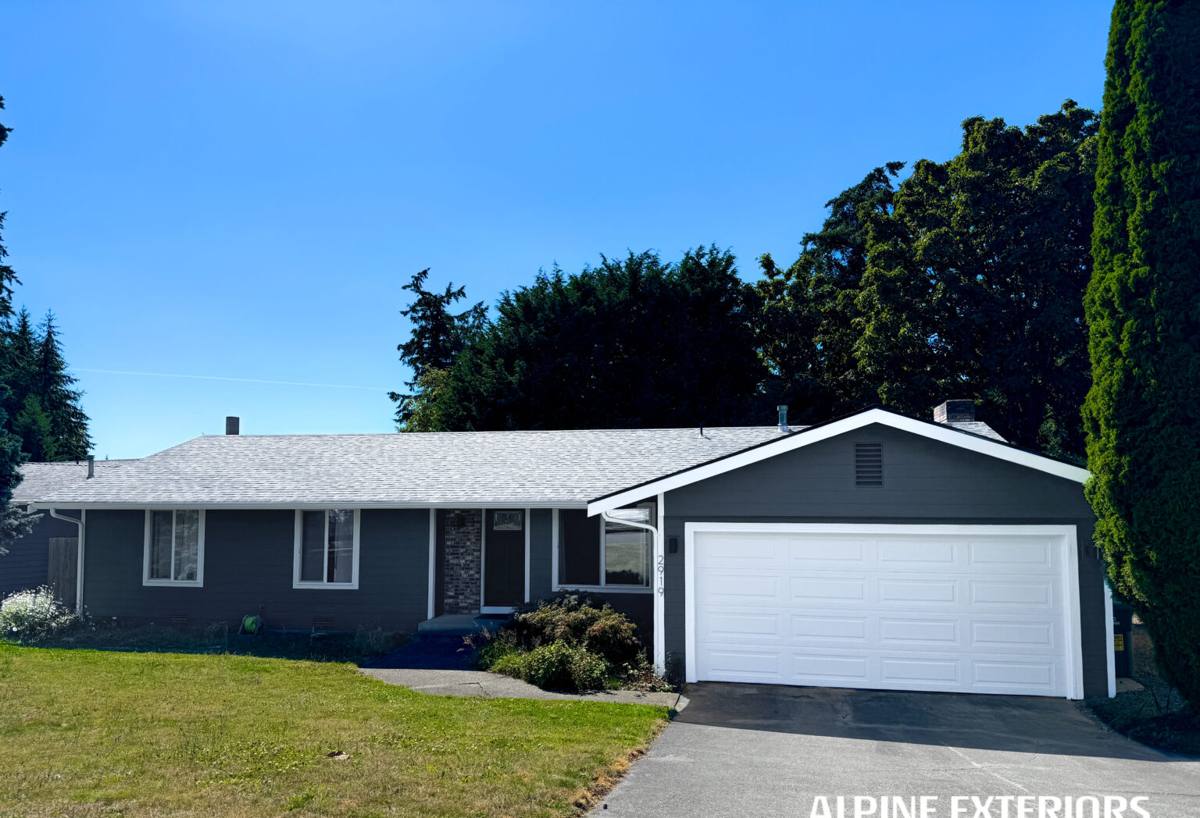
Early Warning Signs Your Siding Needs Repair — Not Full Replacement
Most siding problems we see in this part of Sarasota County are caught early enough that a targeted repair is the right call. The trick is knowing what to look for before a small issue becomes a structural one.
Moisture-Related Signs
- Soft or spongy panels when pressed gently, especially near the bottom courses and around windows
- Visible swelling, bubbling, or a wavy panel line along a wall section
- Dark staining or streaking that keeps returning even after cleaning
- A musty smell near an exterior wall on the interior side
- Paint or coating that's peeling in a localized patch rather than uniformly across the whole elevation
Wind and Impact Signs
- Panels that have lifted, cracked, or separated at a seam after a storm
- Missing or loosened trim pieces, especially at corners and roof lines where wind uplift concentrates
- Fasteners backing out or visible nail pops
- Hairline cracks that widen after each storm season instead of staying stable
Any one of these, caught early, is usually a repair — not a full re-side. Left alone through another hurricane season, several of them turn into replacement territory fast.
What a Correct Siding Repair Actually Involves
A siding repair that's done right is not just "replace the bad piece and caulk the edges." That approach hides a problem instead of solving it, and in a climate like Sarasota's, hidden moisture problems don't stay hidden for long.
Finding and Fixing the Cause
Damaged siding is usually a symptom. Before we touch a panel, we look at what let water or wind get behind it in the first place — a failed sealant joint, a flashing detail that was never installed correctly, a gap where two trim pieces meet, or a fastening pattern that couldn't hold against sustained gusts. Replacing the panel without correcting that entry point just buys a few years before the same spot fails again.
Checking What's Behind the Siding
Once panels come off, we inspect the water-resistive barrier, sheathing, and framing underneath for rot or hidden moisture damage. This is the step that gets skipped by contractors trying to move fast, and it's the step that determines whether the repair actually lasts.
Matching Material, Profile, and Finish
A patch that doesn't match the existing siding in exposure, profile, and color stands out immediately and can also create a performance mismatch — different materials expand, contract, and shed water differently. Correct repair work matches the existing product line as closely as possible, or, where the existing siding is failing broadly, recommends a clean transition rather than a mismatched patch.
Proper Fastening and Sealing for Wind Zones
Southside Village falls within Sarasota County's high-velocity coastal wind requirements. Repairs need to use fastening patterns and sealants rated for those conditions — not whatever happens to be on the truck. This is a detail that matters far more here than it would on a repair fifty miles from the coast.
Repair or Replace? How to Tell the Difference
Homeowners often aren't sure whether a repair is enough or whether they're looking at a bigger project. The table below covers the situations we see most often in this neighborhood.
| Condition | Repair Usually Sufficient | Replacement Likely Needed |
|---|---|---|
| Damage extent | Isolated to one wall section or a handful of panels | Spread across multiple elevations or the whole house |
| Underlying structure | Sheathing and framing test dry and sound | Rot or soft sheathing found behind more than one area |
| Age of existing siding | Siding is under 15-20 years old and otherwise in good shape | Siding is past its expected service life or already failing broadly |
| Storm history | Recent single-event damage on a previously sound wall | Repeated storm damage to the same areas year after year |
| Coating condition | Finish is intact except at the damaged spot | Widespread fading, chalking, or coating failure across the house |
Our Siding Repair Process for Southside Village Homes
- On-site inspection. We assess the visible damage and check adjacent areas for problems that haven't surfaced yet — a common finding in coastal wind-and-rain exposure.
- Diagnosis of the cause. We identify what let the damage happen, not just what it looks like now.
- Removal and structural check. Affected panels come off so we can inspect the barrier and sheathing underneath before anything goes back on.
- Repair or replacement of the substrate if moisture damage is found, so the new siding isn't installed over a compromised wall.
- Reinstallation with matched material, correct fastening for local wind exposure, and properly detailed flashing and sealant joints.
- Final inspection to confirm the repair blends with the surrounding siding and performs the way the rest of the wall should.
Why We Only Repair and Install James Hardie Fiber Cement
We standardized on James Hardie fiber cement siding, and we don't install or patch a repair with LP SmartSide, vinyl, Cemplank, Allura, or wood siding like primed spruce or cedar. That's a deliberate call, not a brand preference. Fiber cement is non-combustible and holds up to sustained UV exposure far better than vinyl, which can fade, warp, or become brittle under the kind of year-round sun Sarasota gets. Hardie's ColorPlus factory finish is baked on under controlled conditions, which gives it more consistent long-term color retention than field-applied paint, and Hardie's HZ product lines are engineered specifically for high-humidity, wind-driven-rain climates like ours — which matters a great deal for a wall assembly that has to shed water sideways in a storm, not just from above.
When we repair Hardie siding, we're working with a material system we understand completely, backed by a warranty structure that's actually meaningful because the manufacturer engineered the product for exactly this climate. That consistency is part of what makes a repair reliable instead of a temporary fix.
Why a Crew That Already Works in Southside Village Matters
Siding repair isn't generic work. A crew that's already handled repairs on homes in this part of Sarasota knows what the salt air does to fasteners over time, what wind exposure looks like on a corner lot versus a sheltered one, and which local wind-zone requirements apply to fastening and flashing details. That local familiarity shows up in the small decisions — how tight to seal a joint, which trim details need extra attention, how to sequence a repair around Southside Village's storm season — that separate a repair that lasts from one that needs to be redone in two years.
It also means faster response when storm damage needs to be assessed quickly, and a crew that isn't guessing at what this climate does to a wall assembly over the long haul.
Questions to Ask Before Hiring a Siding Repair Contractor
- Will you inspect behind the damaged panels for hidden moisture or rot before quoting the repair?
- What fastening and sealing standards will you use for our local wind exposure?
- Can you match the existing siding's profile, exposure, and finish — and if not, what's the honest alternative?
- What's included in writing: material, labor, and any structural repair if rot is found?
- What warranty applies to the repair itself, separate from the manufacturer's product warranty?
If you're seeing early signs of siding damage on a Southside Village home — or you just want an honest assessment of whether it's a repair or something bigger — we're happy to take a look. Request a free, no-pressure estimate using the form below and we'll walk the property with you and tell you straight what we find.