 Sarasota Siding
 Southside Village sits among Sarasota's older, established residential pockets — a walkable mix of bungalow-era cottages, mid-century homes, and updated additions, most within a few miles of the bay. Homes here have a character worth protecting, but that same age and proximity to the water means the exterior siding is often the first thing to show its years. Between hurricane-force wind events, relentless UV exposure, wind-driven rain, and salt-laden air rolling in off the Gulf, Southside Village siding works harder than siding almost anywhere inland — and it needs to be installed with that reality in mind, not treated as an afterthought.
Why Southside Village Siding Wears Differently Than Inland Homes
Sarasota County sits squarely in a high-velocity hurricane zone, and Southside Village's location — close enough to the bay to catch salt air on a regular breeze — adds a corrosion and moisture element that inland Florida neighborhoods don't deal with in the same way. Four forces combine on every exterior wall in this neighborhood:
- Hurricane-force wind: Sustained storms and gusts put uplift and lateral load on every siding panel and fastener, especially near corners, eaves, and gable ends.
- Year-round UV intensity: Florida sun breaks down pigments and surface coatings faster than in most of the country, which is why paint jobs and lower-grade siding fade and chalk within a few years.
- Wind-driven rain: Storms here don't just fall straight down — wind pushes water sideways into seams, laps, and trim joints, which is where most siding failures actually start.
- Salt air: Airborne salt accelerates corrosion of fasteners and metal trim and can degrade certain siding coatings over time, even on homes that aren't waterfront.
None of these forces are unique to Southside Village on their own — but the combination, applied continuously to homes that in many cases are decades old, is why siding decisions in this neighborhood deserve more scrutiny than a big-box quote usually gives them.
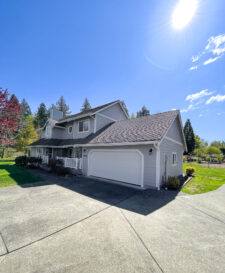
What's Different About Siding on Southside Village's Older Homes
A meaningful share of the housing stock in this part of Sarasota predates modern wind-load codes and moisture-management standards. That shows up in a few consistent ways when we open up a wall:
Layered History Under the Siding
It's common to find a home has been re-sided once or even twice already — sometimes over the original sheathing, sometimes with newer materials layered on top of older ones. Each layer changes how water and vapor move through the wall, and it changes what fastening pattern and furring (if any) the new siding needs.
Additions and Mixed Framing
Bungalow-era homes with later additions often have two different wall assemblies meeting at one wall plane — original wood framing next to a newer addition. Siding installed without accounting for that transition tends to show cracking or gapping at the seam within a couple of seasons.
Aging Trim and Openings
Older window and door bucks, and trim details that were never designed with a modern weather-resistive barrier in mind, need extra attention at flashing and sealant details — this is where wind-driven rain finds its way in, not through the field of the siding itself.
What a Correct Siding Installation Actually Involves
Siding is a system, not a product. Installing it correctly in a coastal-influenced, high-wind neighborhood like Southside Village means getting every layer right, in order:
- Tear-off and inspection: Remove the old siding and inspect the sheathing and framing underneath for rot, moisture damage, or prior repairs that were never properly addressed.
- Repair before covering: Any compromised sheathing or framing gets replaced — covering a problem with new siding just hides it until it's worse and more expensive.
- Weather-resistive barrier: A continuous, properly lapped moisture barrier goes on before siding, with special attention to how it integrates with window and door flashing.
- Flashing at every penetration: Windows, doors, vents, hose bibs, and light fixtures all need correctly lapped flashing so wind-driven rain sheds outward instead of tracking inward.
- Fastening to spec: Fastener type, spacing, and embedment follow the manufacturer's published requirements for the local wind zone — not a generalized pattern used everywhere regardless of exposure.
- Proper clearances: Siding is held above grade, roof lines, decks, and other transitions per code and manufacturer instructions, so water has somewhere to go instead of wicking into the bottom edge of the panel.
- Finish and caulking at joints: Factory-finished panels reduce how much field caulking and painting is needed, which matters because field-applied coatings are exactly what UV and salt air degrade first.
Why We Install Only James Hardie Fiber Cement
We made the decision years ago to install one siding system — James Hardie fiber cement — and not offer vinyl, LP SmartSide, or other fiber cement alternatives. That's not a marketing position; it's a practical one, built around what actually holds up in a climate like Sarasota's.
Non-Combustible and Dimensionally Stable
Fiber cement doesn't expand and contract with heat the way vinyl does, and it isn't a fuel source the way wood-based siding is. In direct Florida sun on a west-facing wall, that stability matters — panels stay flatter and hold their fastening better over decades.
ColorPlus Factory Finish
Hardie's ColorPlus finish is baked on in a controlled factory environment, not brushed on outdoors. That finish is engineered specifically to resist UV fading and hold color longer than field-applied paint, which is a real advantage under Sarasota's sun exposure.
Climate-Engineered HZ Product Lines
Hardie manufactures HZ5 product specifically engineered for higher-moisture, higher-humidity climates like ours, addressing the wind-driven rain and humidity load that Southside Village homes deal with every season.
Warranty That Transfers
Hardie backs its siding with a strong, transferable warranty — a real asset if a Southside Village home changes hands, since it follows the house rather than the original owner.
We're not going to pretend fiber cement is the lightest or cheapest material on the market, and it does require correct installation technique to perform as designed. But weighed against vinyl's heat distortion, wood's maintenance demands, and lower-grade fiber cement's inconsistent factory finishes, Hardie is what we're willing to put our name behind.
Our Process for a Southside Village Siding Project
| Stage | What Happens |
|---|---|
| On-site assessment | Walk the exterior, check for rot and moisture at trim and penetrations, and confirm wall assembly and any prior siding layers. |
| Scope and product selection | Recommend the Hardie plank or panel profile and HZ line suited to the home's exposure, with a clear written scope. |
| Permitting | Pull the required permit and confirm the installation meets current wind-load requirements for the property's location. |
| Tear-off and repair | Remove existing siding, repair any compromised sheathing or framing, and document what was found. |
| Barrier, flashing, install | Install weather-resistive barrier, flash all penetrations, then install siding to manufacturer fastening specs. |
| Final walkthrough | Walk the finished job with the homeowner and confirm trim, caulking, and clearances are complete. |
Cost Factors for Siding Replacement in This Neighborhood
Every Southside Village home is different, so we don't quote from a distance — but the variables that actually move the price are consistent:
| Factor | Why It Matters |
|---|---|
| Sheathing condition | Rot or moisture damage found at tear-off adds repair scope before new siding can go on. |
| Home size and wall complexity | Additions, gables, and multiple roof lines mean more cuts, flashing details, and labor hours. |
| Siding profile | Lap width and panel style (traditional lap vs. shingle-style, for example) affect material and labor cost differently. |
| Trim and accessory scope | Fascia, soffit, and trim replacement alongside siding is often more efficient than doing it later. |
| Access and site conditions | Mature landscaping, tight lot lines, and older foundations common in this neighborhood can affect staging and labor time. |
Why It Matters to Hire a Crew That Already Works Southside Village
Siding installed by a crew unfamiliar with this specific stretch of Sarasota County tends to miss the details that matter most here: the wind-load requirements that apply to this exposure, the moisture patterns particular to older wall assemblies, and the flashing details that keep wind-driven rain out of a decades-old window buck. A crew that already works this neighborhood has seen what's under the siding on homes like these before — that experience shows up in fewer surprises during tear-off and a tighter final result.
It also matters for permitting and inspection. Sarasota County and City of Sarasota inspectors expect installation details to match current wind-zone requirements, and a contractor who pulls permits in this area regularly moves through that process without delay.
Signs Your Southside Village Home May Need New Siding
- Visible warping, buckling, or gaps between siding boards or panels
- Soft spots or give when you press on the siding near the base of the wall
- Paint that's chalking, peeling, or fading noticeably faster than it used to
- Water stains or discoloration on interior walls near exterior corners
- Siding that was last replaced before the most recent hurricane season without a documented wind-rated installation
- Visible rust streaking from fasteners or trim, especially near corners and eaves
If you're seeing any of these signs, or you'd simply like an honest read on where your siding stands, we're happy to take a look. We offer free, no-pressure estimates for Southside Village homeowners — no obligation, just a straight answer about what your home needs.