 Sarasota Siding
 Why Ellenton Homes Need a Different Approach to Decking
Ellenton sits in the humid stretch of Florida's Gulf Coast, close enough to the water that salt air, wind-driven rain, and long stretches of direct UV exposure are simply part of owning outdoor living space here. A deck built the way it might be built inland, or up north, tends to show problems fast in this environment: boards cup, fasteners corrode, and wood fiber that would last a decade in a drier climate can start breaking down in a few humid seasons. Composite decking was developed largely to solve exactly this problem, but only when it's specified and installed correctly for the conditions it will actually face.
Our crew works this part of the Sarasota-Bradenton area regularly, which means we're not guessing at how a deck holds up locally — we're seeing the same soil drainage patterns, the same afternoon storm cycles, and the same salt-laden air move through Ellenton and the surrounding communities year after year. That local repetition matters more than most homeowners realize when it comes to a deck that's supposed to last twenty-five-plus years.
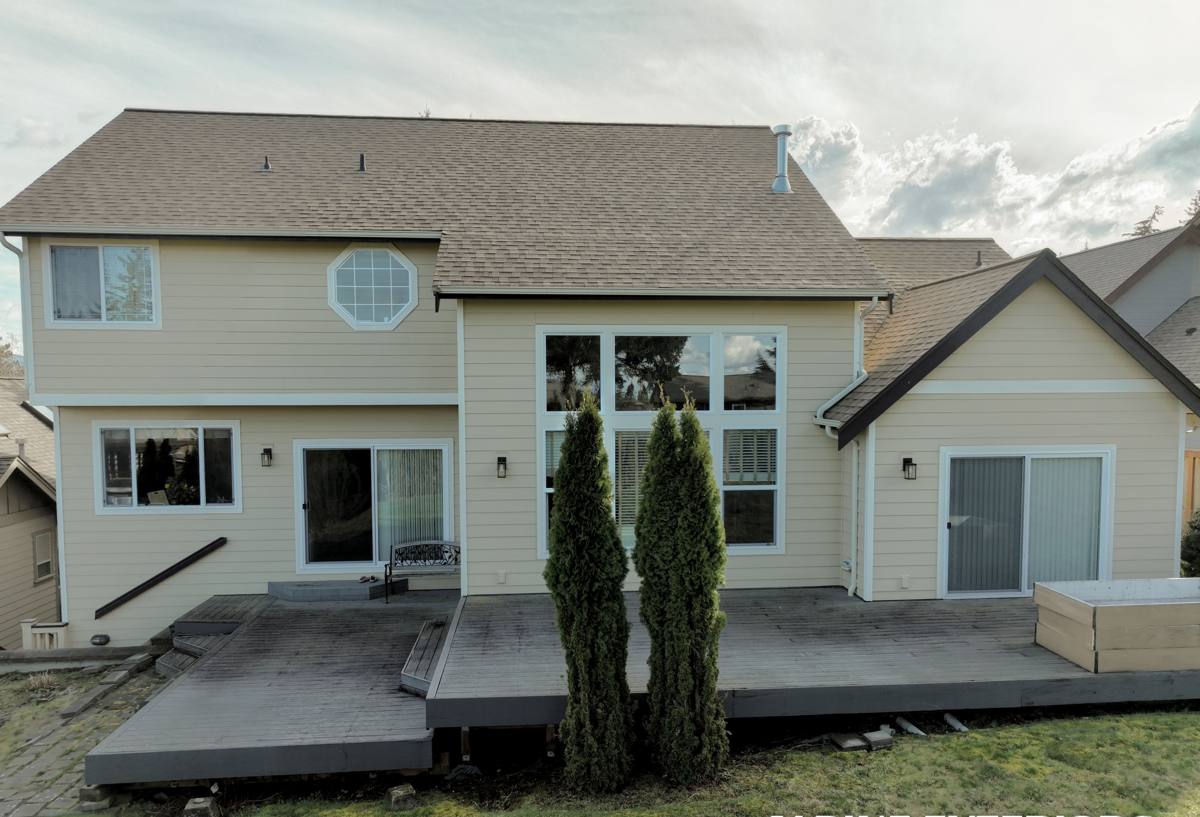
What the Regional Climate Actually Does to a Deck
It helps to be specific about what a deck in this part of Florida is up against, because each stressor calls for a different response in materials and installation method:
- Hurricane-force winds — uplift and lateral loads stress ledger connections, joist hangers, and railing posts far more than typical wind loads elsewhere.
- Intense, near-constant UV — accelerates fading and surface degradation in materials that aren't formulated with UV-stable capping or pigments.
- Wind-driven rain — pushes moisture sideways and upward into gaps and end cuts that a purely "top-down" waterproofing approach never addresses.
- Salt air — corrodes standard fasteners, hardware, and any exposed metal connectors faster than most manufacturers' generic warranty language accounts for.
None of these are exotic problems. They're the normal operating environment for outdoor structures in Ellenton and the broader Sarasota County region, and they should shape every material and fastening decision on the project — not be treated as an afterthought.
What Correct Composite Decking Installation Involves
The Substructure Comes First
Composite boards are only as good as what's underneath them. In this climate, we pay particular attention to:
- Joist spacing tightened to the manufacturer's hot-climate/high-moisture specification, not the minimum allowed spacing for cooler regions.
- Ledger board attachment and flashing detailed to shed wind-driven rain away from the house rim joist, since a poorly flashed ledger is one of the most common sources of hidden rot behind an otherwise good-looking deck.
- Stainless steel or coated corrosion-resistant fasteners and hardware throughout — standard galvanized hardware degrades faster near salt air than most homeowners expect.
- Proper ground clearance and airflow beneath the deck so humidity doesn't sit trapped against the framing.
Board Selection and Layout
Composite boards expand and contract with heat and humidity more than many homeowners assume. Gapping between boards has to account for Florida's temperature swings and moisture cycling, and board orientation should work with the home's drainage rather than against it. Picture-frame borders, fastener systems, and end-cap treatment all affect how well the deck sheds water and resists the freeze-free but moisture-heavy cycle Florida decks live through.
Railing and Structural Hardware
Given the wind loads this region can see, railing posts need real structural attachment into framing — not surface-mounted brackets alone — and any structural connectors should match the same corrosion-resistance standard as the deck fasteners. This is one of the areas where cutting corners doesn't show up as a problem for a year or two, but shows up eventually, and expensively.
Composite vs. Wood vs. PVC: An Honest Comparison
| Factor | Composite | Pressure-Treated Wood | PVC/Cellular |
|---|---|---|---|
| Moisture & humidity resistance | Strong when properly installed | Moderate; needs ongoing sealing | Very strong |
| UV fade resistance | Good with capped boards | Fades and grays without maintenance | Good, varies by brand |
| Upfront cost | Mid-to-higher | Lowest | Highest |
| Ongoing maintenance | Low (cleaning only) | High (staining/sealing) | Low |
| Feel underfoot in heat | Moderate; capped/lighter colors help | Natural, but splinters as it ages | Can run hotter in direct sun |
| Salt air performance | Good with correct fasteners | Fair; hardware corrodes faster | Good |
We install composite for most Ellenton-area homeowners because it strikes a practical balance for this climate: it doesn't need annual staining, it holds color reasonably well under constant sun, and it doesn't absorb moisture the way untreated or minimally treated wood does. Wood remains a legitimate lower-cost option for buyers who understand and accept the maintenance commitment. We don't push PVC as a default — it has real strengths, but the higher cost isn't the right trade-off for every project, and we'll say so honestly during your estimate rather than upselling.
Our Process, Start to Finish
1. On-Site Evaluation
We walk the actual site — grade, drainage direction, sun exposure, and how the deck will tie into the house — before we talk materials. A deck plan that ignores where water actually goes on your property is a plan for future problems.
2. Structural Plan and Permitting
Framing layout, ledger attachment, and railing structure get specified to hold up to regional wind loads, and we handle the permitting and inspection steps required for decks in this area rather than skipping them.
3. Framing and Substructure Build
This is where most of the long-term durability is decided — joist spacing, flashing, hardware grade, and airflow beneath the deck all get built to the standard described above, not the bare minimum.
4. Composite Board Installation
Boards go down with attention to expansion gapping, fastener consistency, and layout that sheds water off the surface efficiently, especially around any picture-frame or border detailing.
5. Railing, Stairs, and Hardware
Structural railing attachment and corrosion-resistant hardware are installed to the same standard as the deck itself — this isn't a place to mix a good deck with weak railing connections.
6. Final Walkthrough
We walk the finished deck with you, check fastener lines, gapping, and railing security, and go over the maintenance basics for your specific board choice before we consider the job done.
What Drives the Cost of a Composite Deck Here
| Cost Factor | Why It Matters Locally |
|---|---|
| Deck size and layout complexity | Multi-level decks and non-rectangular layouts add framing and cutting time |
| Substructure condition | Existing footings or framing may need reinforcement to meet current wind-load standards |
| Board tier and brand | Capped composite typically costs more than uncapped, but resists staining and fading better in constant sun |
| Railing style | Cable, glass, or metal railing systems cost more than standard composite balusters |
| Fastener and hardware grade | Corrosion-resistant hardware for salt-air exposure costs more upfront but avoids early hardware failure |
| Site access | Elevated decks or difficult grade access can add labor time |
We give a written, itemized estimate before any work starts so you can see exactly what's driving the number — no vague lump-sum pricing.
Maintaining a Composite Deck in This Climate
Composite is low-maintenance, not no-maintenance. In Ellenton's environment, a realistic upkeep routine looks like:
- Periodic rinsing to clear salt residue, pollen, and organic debris before it builds up in board grooves.
- Checking railing post connections annually, since these take the most wind stress over time.
- Inspecting fastener heads and hardware for early corrosion signs, especially closer to the coast.
- Clearing debris from under the deck so airflow and drainage stay unobstructed.
- Addressing any standing water or pooling on the deck surface promptly rather than letting it sit through repeated storm cycles.
Questions Worth Asking Before You Hire
Not every contractor building decks in this area is thinking about salt air, wind load, and humidity in the same way. Before hiring anyone for a composite deck project near Ellenton, it's worth asking:
- What fastener and hardware grade will be used, specifically for coastal/salt-air conditions?
- How is the ledger board flashed against wind-driven rain?
- What joist spacing will be used, and does it match the manufacturer's spec for this climate?
- Is the railing structurally attached into framing, or just surface-mounted?
- Will the project be permitted and inspected, or done off the books?
- What does the workmanship warranty actually cover, separate from the manufacturer's material warranty?
A contractor who can answer these clearly, without hesitation, is one who's actually thought through how a deck performs here — not just how it looks on installation day.
Why Local Experience Matters for This Project
A composite deck built to a generic national spec can look identical to one built for Gulf Coast conditions — for the first year. The difference shows up later, in how the railing holds up after a few storm seasons, whether the hardware is still solid, and whether the ledger connection stayed dry through years of wind-driven rain. Working regularly in and around Sarasota County means we're not learning these lessons on your project; we've already built and stood behind decks facing the same sun, humidity, and salt exposure your home deals with every day.
If you're planning a new composite deck or replacing an aging one in Ellenton, we're happy to walk the site, talk through material options honestly, and put together a clear written estimate. There's no pressure and no obligation — just a straightforward look at what your property actually needs. Use the form below to get started.