 Sarasota Siding
 Ellenton's Exterior Is Working Harder Than It Looks
Ellenton sits in the Gulf Coast climate belt that defines exterior work across the greater Sarasota region: long stretches of intense UV, humidity that never really lets up, wind-driven rain that finds every gap in a wall system, and salt-laden air rolling in off the water. None of that is dramatic on any single day. It's the accumulation over years that separates siding that holds up from siding that doesn't.
Homeowners in Ellenton are usually dealing with one of two situations: an older home where the original siding is past its useful life and starting to show it, or a newer home where the builder-grade exterior product is already underperforming faster than expected. Either way, the fix isn't just "put up new siding." It's choosing a product engineered for this specific climate and installing it the way the manufacturer actually specifies — not the way it's fastest to install.
What This Climate Actually Does to Siding
UV and Heat
Florida sun breaks down pigments and surface coatings faster than almost anywhere else in the country. Paint film that would last 8-10 years up north can chalk, fade, and crack in half that time here. Once a factory or field-applied finish starts to fail, the substrate underneath is exposed to everything else on this list.
Wind-Driven Rain
Sarasota-area storms don't just rain down — they rain sideways. That matters enormously for siding, because wind-driven rain gets forced up under laps, around fasteners, and behind trim in ways that vertical rain never would. A siding system that isn't installed with the right clearances, flashing, and fastening pattern will let water in eventually, and once moisture gets behind the cladding, the sheathing and framing behind it are what actually pay the price.
Salt Air
Even well inland of the immediate coastline, salt aerosol travels on Gulf breezes and settles on every exterior surface. It accelerates corrosion on fasteners and trim, and it degrades certain coatings and adhesives faster than a dry-climate product was ever tested for.
Storm Wind Loads
Hurricane-force wind events put direct pressure and uplift on wall cladding. Siding that isn't rated and fastened for local wind exposure can lift, crack, or blow off in a way that isn't just cosmetic — it opens the wall assembly to water intrusion during the exact event when you need it sealed.
Why James Hardie Is the Product We Install Here
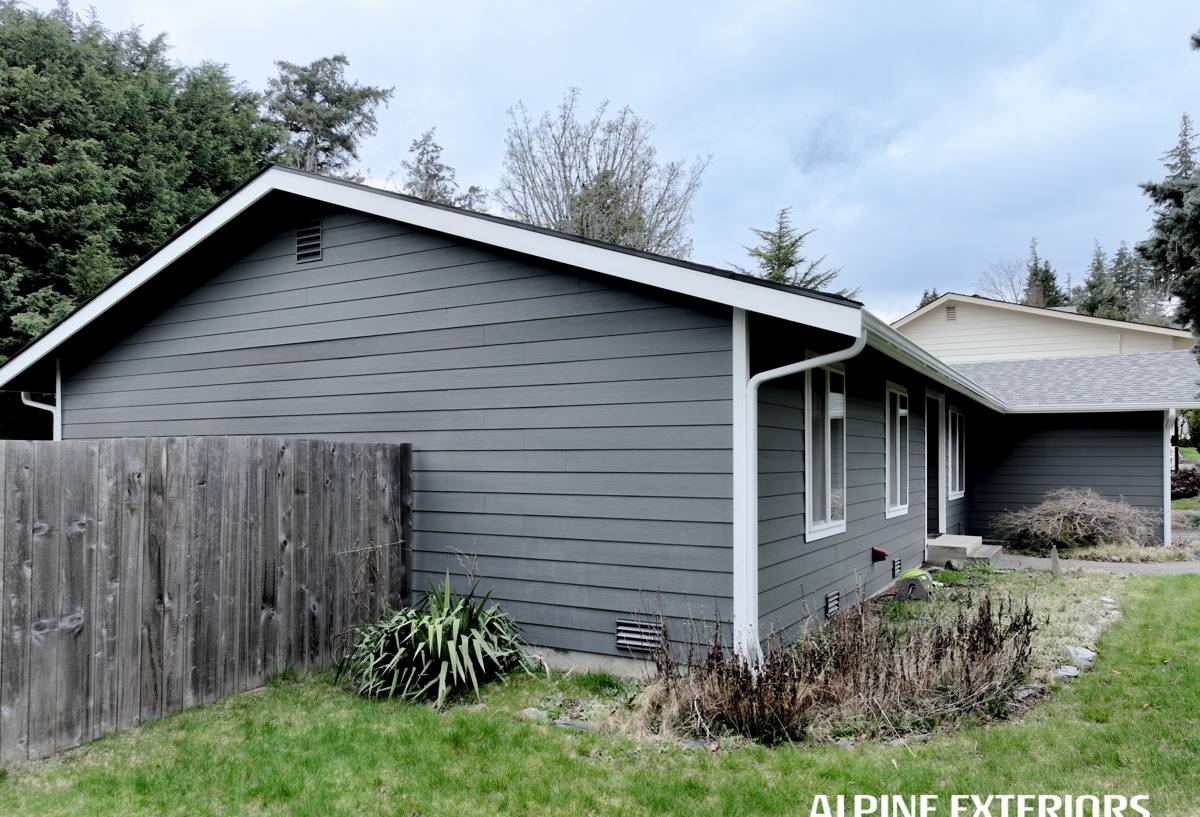
We install James Hardie fiber cement exclusively, and Ellenton's climate is a big part of why. Hardie's HZ5 formulation is engineered specifically for humid, high-moisture climates like Florida's — it resists moisture-related swelling and deterioration in a way that wood-based and some engineered wood siding products fundamentally cannot, because fiber cement doesn't have organic wood fiber at its core to absorb water and rot.
It's also non-combustible, which matters for insurance conversations and for peace of mind, and it holds up to wind-borne debris impact better than lighter claddings. The ColorPlus factory finish is baked on under controlled conditions and backed by its own finish warranty, so it resists the fade and chalking that Florida sun causes so quickly on field-applied paint. That's a meaningful difference in a market where UV exposure is one of the top reasons siding looks tired within a few years.
None of this means Hardie is maintenance-free or installation-proof — it isn't. It means the material itself is matched to what this climate actually demands, which is the starting point. The rest comes down to installation.
What a Correct Installation Involves
Fiber cement siding is only as good as the details underneath it. In a wind-driven-rain climate like Sarasota's, the parts nobody sees after the job is done are the parts that determine whether the siding performs for 30+ years or causes problems in five.
- A compliant weather-resistive barrier installed and lapped correctly before any siding goes up
- Proper flashing at every window, door, and penetration — not caulk used as a substitute for flashing
- Correct starter strip and the manufacturer-specified minimum clearance from grade, roofing, and decking
- Fastener type, spacing, and embedment that match Hardie's published installation instructions, not a generic nailing pattern
- Proper joint treatment and gaps at butt joints and trim to allow for expansion without trapping water
- Field-cut edges sealed or primed per Hardie's guidance so cut ends don't become the weak point
- Ventilation behind the cladding maintained so incidental moisture can dry out instead of sitting against the wall
Skip any of these and the material's climate advantages get undermined by the install. This is where a lot of siding jobs — with any brand — actually fail. It's rarely the product; it's the shortcuts taken to get it up faster or cheaper.
Our Process for an Ellenton Job
1. On-Site Assessment
We walk the exterior in person before quoting anything. We're looking at existing moisture damage, the condition of the sheathing and trim underneath current siding, wind exposure on each elevation, and anything specific to your home's age and construction that affects the scope.
2. Tear-Off and Substrate Check
Old siding comes off and we inspect what's underneath before covering it back up. Soft or water-damaged sheathing gets addressed — new siding over a compromised wall assembly just hides a problem instead of fixing it.
3. Weather Barrier and Flashing
This is the step that matters most for wind-driven rain performance. We install and lap the weather-resistive barrier and flash every opening and penetration before a single piece of Hardie board goes on.
4. Installation to Manufacturer Spec
Siding, fasteners, and trim go up following James Hardie's published instructions for clearances, fastening, and joint treatment — the details covered above, done consistently across the entire home, not just on the elevations that are easy to see from the street.
5. Final Walkthrough
We inspect the finished exterior with you, check caulking and trim lines, and make sure everything meets the standard we'd want on our own home.
James Hardie vs. Other Options in This Climate
| Factor | James Hardie Fiber Cement | Vinyl | Engineered Wood (e.g. LP SmartSide) |
|---|---|---|---|
| Moisture/rot resistance | No organic wood fiber to rot; engineered for humid climates | Won't rot, but can warp or melt under heat/reflected sunlight | Wood-fiber core; vulnerable if moisture gets behind or under the finish |
| UV/fade resistance | Factory ColorPlus finish resists fading and chalking | Color is through-body but can fade and chalk over time | Field-applied or factory paint, subject to Florida UV wear |
| Wind/impact resistance | Rigid, holds up well to wind-borne debris | Lighter material, more prone to cracking or blow-off in high wind | Reasonably rigid but seams and edges are moisture-sensitive |
| Fire performance | Non-combustible | Combustible | Combustible (wood-based) |
| Long-term maintenance | Periodic caulk/paint touch-up over a long service life | Low maintenance but limited repair options once damaged | Regular inspection needed for edge and seam sealing |
We don't install vinyl or engineered wood siding — this table isn't about calling either one a bad product in general. It's about why, for this specific climate and the failures we see homeowners deal with here, fiber cement is the standard we've chosen to build our business around.
Why a Crew That Already Works Ellenton Matters
Siding installation isn't identical everywhere. A crew that regularly works this part of the Sarasota region already knows the wind exposure categories that apply locally, understands how permitting and inspection works with local building departments, and has already seen how homes in this area typically age — which elevations take the worst weathering, where flashing tends to fail on older homes, what HOA architectural standards commonly require.
That local repetition matters more than it sounds. A crew installing Hardie for the first time in an unfamiliar market is learning on your house. A crew that's done it repeatedly in this exact climate and code environment brings that experience to every decision on the job, from fastener choice to flashing detail to how tight to run clearances at grade.
Living With Hardie Siding in Ellenton
Correctly installed Hardie siding is low-maintenance, not no-maintenance. A simple annual routine keeps it performing the way it's designed to:
- Rinse the exterior periodically to clear salt residue and airborne grime, especially on elevations facing prevailing winds
- Inspect caulking at trim, windows, and joints yearly and re-caulk where it's cracked or pulled away
- Walk the exterior after any major storm and check for cracked boards, loose trim, or fastener issues
- Keep irrigation heads and sprinklers from spraying directly on siding, which causes localized mineral staining and constant wetting
- Trim back landscaping that holds moisture against the wall or blocks airflow along the siding
None of this is difficult, but skipping it for years is how small issues turn into repair calls.
Questions Worth Asking Before You Hire
Whether you go with us or another contractor, a few questions separate a properly specified James Hardie job from one that just looks similar:
- Are you a James Hardie-preferred or certified installer, and can you show it?
- What weather-resistive barrier and flashing details do you use, specifically, before siding goes on?
- What fastener type and spacing will you use, and does it match Hardie's published specs for this product line?
- Will you inspect the sheathing underneath the old siding before covering it back up?
- What does your warranty cover, separate from the manufacturer's material warranty?
If a contractor can't answer these clearly, that's worth noticing before signing anything.
If your Ellenton home needs new siding, or you're not sure whether what's on it now is holding up the way it should, we're happy to take a look and give you a straightforward, no-pressure estimate — no obligation, just an honest read on where things stand.