 Sarasota Siding
 Building New in Ellenton? Get the Windows Right the First Time
New construction is the one point in a home's life where windows can be installed exactly to spec, with every flashing layer, fastener, and sealant joint done in the right order before walls close in. Get it right at this stage and the windows perform for decades. Get it wrong, and you're chasing leaks, stucco cracks, and warranty disputes for years — often long after the general contractor has moved on to the next job. For homes going up in and around Ellenton, that first-pass accuracy matters more than in most parts of the country, because this stretch of the Gulf Coast throws a lot at a window assembly: sustained heat and UV, salt-laden air moving in off the coast, and wind-driven rain events that test every seam a window has.
We work new-construction window packages for builders and owner-driven projects in the Ellenton area on a regular basis, coordinating directly with framers, stucco crews, and siding installers so the window opening is treated as one continuous weatherproofing system — not a hole that gets a window dropped into it and caulked around later.
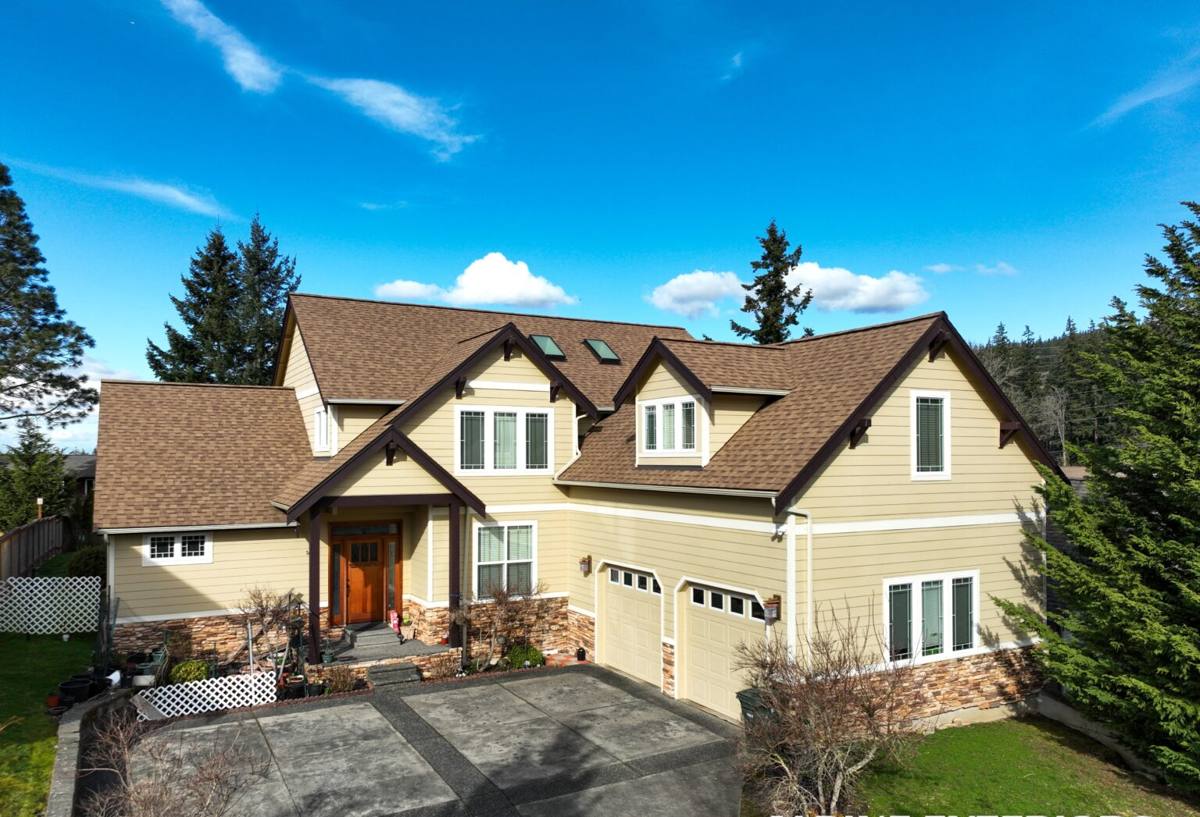
What Ellenton's Climate Demands From a New Window Install
Southwest Florida's building envelope has to handle conditions that don't exist in most of the country. A new-construction window package here needs to account for:
- Wind load: Florida Building Code sets minimum design pressure requirements based on location, and coastal-influenced areas like this one carry higher wind-load requirements than inland construction elsewhere in the state.
- Wind-driven rain: Tropical systems and summer storms don't just bring rain straight down — they push it sideways into wall assemblies at pressure. Flashing details that work fine in a dry climate can fail here.
- UV exposure: Nearly year-round sun breaks down cheap vinyl, degrades seals, and fades interior finishes if glass isn't specified with the right coatings.
- Salt air: Even set back from the immediate coastline, airborne salt accelerates corrosion on hardware, screws, and metal flashing that isn't rated for it.
- Heat and humidity: Poorly sealed or poorly glazed windows drive up cooling costs and can contribute to condensation and moisture problems inside wall cavities.
None of this is exotic — it's the standard operating environment for this part of Florida, and it's exactly what current product approvals and code requirements are written for. The risk isn't that compliant products don't exist; it's that installation shortcuts undercut products that would otherwise perform fine.
What a Correct New-Construction Window Install Actually Involves
Before the Window Ever Arrives
Rough openings get checked for square, level, and correct dimension against the approved window schedule. This sounds basic, but framing tolerances that are "close enough" for a door are not close enough for a window that has to seal against wind-driven rain. We flag discrepancies before install day, not after.
Flashing Sequence
The single biggest predictor of a leak-free window in this climate is flashing sequence — the order in which sill pan, side flashing, window nailing fin, and head flashing are integrated with the building's water-resistive barrier. Done correctly, water that gets past the window (and eventually, some always does) sheds down and out, never into the wall cavity. Done out of sequence, water gets trapped behind the barrier where it can sit for months before anyone notices — usually as a stain or soft spot well after the home is finished and occupied.
Fastening and Anchoring
New-construction flanged windows are fastened through the nailing fin per the manufacturer's product approval — fastener type, spacing, and edge distance all matter and are tied to the tested design pressure rating. Substituting fasteners or spacing "because it's faster" voids the engineering behind the approval, whether anyone notices at the time or not.
Sealant and Backer Rod
Exterior sealant joints need the right backer rod, joint depth, and a sealant rated for continuous UV and movement — not whatever caulk happens to be on the truck. This is a small line item that gets skipped more often than it should on tight schedules.
Interior Finish Coordination
Interior sill and jamb details need to be planned before drywall goes up, especially for stucco or fiber cement exteriors where the return depth and reveal are set early. Getting this wrong means rework after finishes are in.
Choosing the Right Window for New Construction Here
New construction gives you a real choice of frame material, glass package, and configuration — a chance that renovation projects rarely offer, since retrofit work is often constrained by existing openings. For Ellenton-area builds, the decisions that matter most are wind rating, glass performance, and frame durability against salt air and UV.
| Factor | What to Look For | Why It Matters Locally |
|---|---|---|
| Design pressure rating | Matches or exceeds the wind load required for the specific site and elevation | Coastal-influenced wind pressures are higher than statewide averages; the wrong rating fails inspection or, worse, fails in a storm |
| Product approval / NOA | Current Florida product approval or Miami-Dade NOA on file for the exact model and size | Required for permitting; also confirms the unit was actually tested for these conditions, not just marketed for them |
| Glass package | Impact-rated laminated glass or code-compliant impact protection system; Low-E coating | Impact glass addresses windborne debris risk; Low-E coating cuts solar heat gain in a climate that's hot most of the year |
| Frame material | Vinyl, aluminum, or fiberglass rated for coastal exposure | Standard hardware and lesser-grade frames corrode or degrade faster under salt air and UV |
| Weep system | Clear, unobstructed weep holes and channels | Wind-driven rain needs a path out of the frame; blocked weeps trap water against the sill |
We'll walk through these trade-offs plainly during the estimate — including where a mid-range option makes more sense than the top-tier one for a given elevation or budget, and where it doesn't.
A Quick Pre-Install Checklist We Run on Every New-Construction Job
- Rough openings verified square, plumb, and correctly sized against the window schedule
- Water-resistive barrier installed and lapped correctly before flashing begins
- Sill pan flashing installed and sloped to drain outward
- Correct fastener type and spacing confirmed against the product's approval documentation
- Head flashing integrated last, over the side flashing, so water always sheds outward and down
- Sealant joints backed and finished with a UV-stable exterior-grade product
- Weep holes and drainage paths confirmed clear before final walk-through
Why It Matters Who Installs Windows on a New Build in Ellenton
Window installation on a new build is a coordination job as much as a trades job. The window crew has to sync with the framer's tolerances, the stucco or siding schedule, and often the general contractor's timeline — all while working with materials and methods suited to this specific coastal climate rather than a generic national spec sheet. A crew that mostly works inland or in a different climate zone may install a technically fine window with a flashing sequence that was never really tested against wind-driven rain the way it happens here.
Working new-construction jobs in this area regularly means we already know how local stucco and siding crews sequence their work, what inspectors are checking for at rough-in and final, and where the common failure points show up years later on homes that were rushed through the window stage. That's not something a crew can fake on a single job — it comes from doing this work in this climate, repeatedly.
Timeline and Scheduling on a New Build
Window installation on new construction is a scheduled trade slot, not a flexible one. Windows typically go in after the building is dried in and the water-resistive barrier is up, but before stucco, siding, or interior drywall closes in around the openings. Missing that window — literally — either delays the whole build or forces rework later. We coordinate directly with builders and general contractors on timing so the window install doesn't become the bottleneck, and so nothing gets covered up before it's inspected.
For owner-managed builds without a general contractor running the schedule, we can also help sequence the window install against your other trades so the flashing and weatherproofing steps aren't rushed to hit someone else's deadline.
Inspections and Documentation
New-construction windows in this region go through permit review and inspection, and the paperwork trail matters — for the inspection itself, for any future insurance claim, and for resale. We keep documentation on the product approvals used, the design pressures they're rated for, and the installation method, so it's available if it's ever needed for a permit closeout, an insurance question, or a future buyer's due diligence.
Get a Straight Answer on Your Ellenton Build
Every new-construction project is a little different — elevation, exposure, wall assembly, and budget all factor into the right window choice and installation approach. If you're framing up a new home or building in Ellenton, or you're a builder looking for a window crew that already knows how to sequence this work with stucco and siding trades, we're glad to walk the plans and give you a straightforward, no-pressure estimate. Use the form below to get started.