 Sarasota Siding
 Asphalt Shingle Roofing Built for Rosemary District Homes
Rosemary District sits just north of downtown Sarasota, and it's a neighborhood in transition — a mix of older single-family homes, renovated cottages, and newer infill construction, all within a few miles of Sarasota Bay. That mix means roofing needs vary block to block. A 1960s-era home with the original decking needs a different approach than a recently built house with modern sheathing. What doesn't change is the climate every one of those roofs has to survive: Gulf humidity, intense sun nearly year-round, wind-driven rain off the bay, and the real possibility of hurricane-force gusts during storm season.
Asphalt shingle roofing remains one of the most practical choices for Sarasota homeowners when it's installed correctly — the key phrase being "installed correctly." A shingle roof that's cut corners on underlayment, fastening, or ventilation will show problems within a few years in this climate. One that's built to the standard Florida's building code actually demands can hold up for decades. Our job on every Rosemary District roof is to make sure it's the second kind.
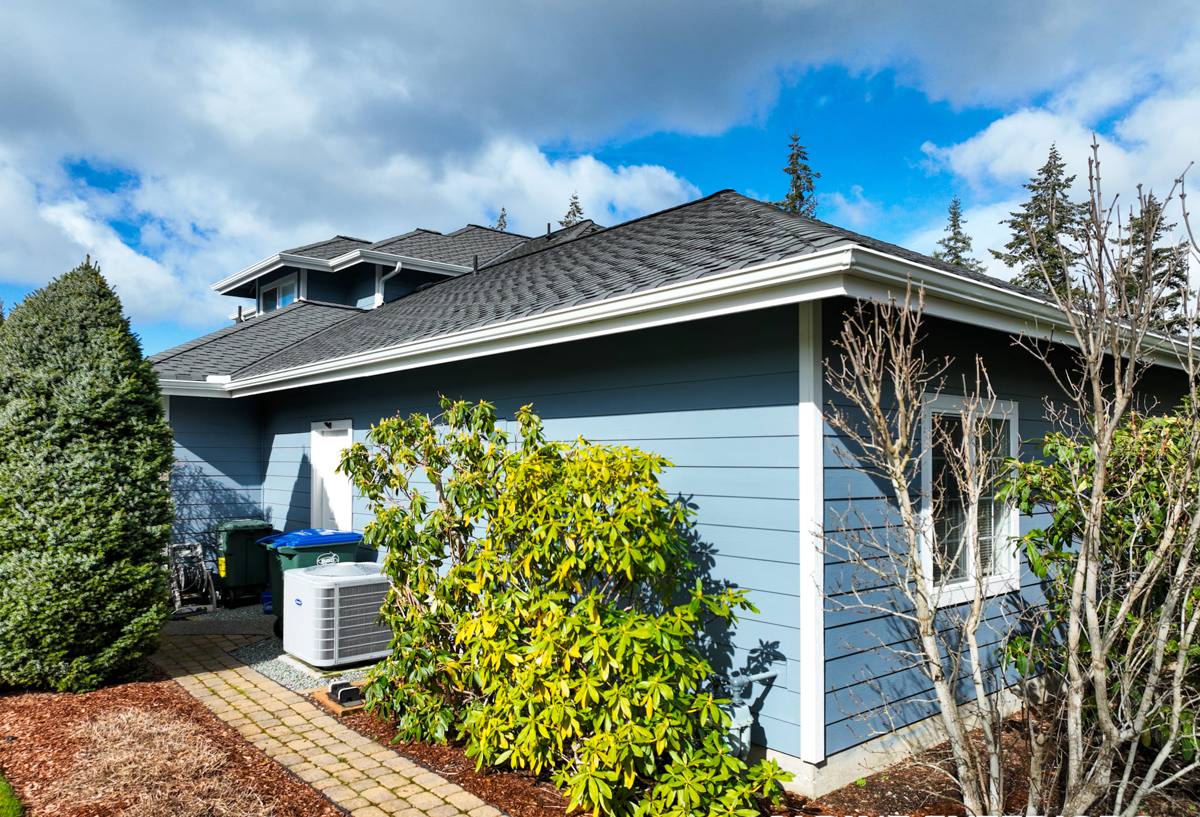
What Sarasota County's Climate Does to a Shingle Roof
Sarasota County sits in one of the more demanding roofing climates in the country, and it's worth understanding why before you pick materials or a contractor.
Wind and Storm Exposure
Rosemary District isn't right on the water, but it's close enough to Sarasota Bay that wind-driven rain and tropical-system gusts are a real design factor, not a hypothetical one. Florida Building Code requires High Velocity Hurricane Zone-adjacent wind ratings for shingle installations in this region, which affects everything from the nailing pattern to the starter strip to how the ridge is capped. A shingle roof installed to a lower standard — the kind common in less demanding climates — will underperform here.
UV and Heat
Florida sun is relentless on roofing materials. UV exposure breaks down the asphalt binders in shingles over time, which is why shingle quality and granule coverage matter more here than in a milder climate. Attic heat buildup compounds the problem, which is why ventilation is part of every legitimate roofing conversation, not an upsell.
Wind-Driven Rain and Moisture
Rain in Sarasota rarely falls straight down. Wind pushes it sideways and up under shingle edges, which is exactly what underlayment, flashing, and proper shingle overlap are designed to stop. A roof that looks fine from the street can still be letting water into the decking at valleys, penetrations, or edges if those details were rushed.
Salt Air
Even a few miles inland from the bay, salt-laden air accelerates corrosion on exposed metal — nails, flashing, vent stacks, and drip edge. Roofing hardware rated for coastal exposure isn't optional here; it's a baseline requirement.
What a Correct Shingle Roofing Job Actually Involves
A shingle roof is a system, not a single product. Every layer matters, and skipping or shortcutting one layer is where most premature failures start.
- Deck inspection and repair — plywood or OSB decking is checked for soft spots, delamination, and proper fastening before anything new goes down.
- Underlayment — a synthetic or self-adhering underlayment rated for wind-driven rain, installed with correct overlap, not just stapled down loosely.
- Starter strip and drip edge — corrosion-resistant metal edging that gives wind and water nowhere to get under the first course.
- Shingle installation — correct nail count and placement (not staples, not high-nailing) matched to the wind rating the manufacturer and code require.
- Valleys and flashing — properly woven or metal-lined valleys, and step/counter flashing at every wall, chimney, and penetration.
- Ridge venting and attic airflow — a ventilation path that actually moves air, reducing heat buildup and moisture accumulation in the attic.
- Final inspection — checking nail lines, seal strips, and flashing details before calling the job done.
Skip any one of those steps and the roof might look complete for a year or two before the shortcut shows up as a leak, a lifted shingle, or premature granule loss.
Signs a Rosemary District Roof Needs Attention
Because of the mixed housing stock in this neighborhood, we see everything from roofs that are clearly past their service life to roofs that look fine but have hidden storm damage. Common warning signs include:
- Shingles that are curling, cupping, or losing granules faster than the rest of the roof
- Visible cracking, especially on south- and west-facing slopes that take the most sun
- Soft or discolored ceiling spots after heavy rain, even if the roof "looks fine" from outside
- Missing or lifted shingles after a wind event, even minor ones
- Granules collecting in gutters — a sign the shingle surface is wearing down
- Visible rust streaking near flashing or vent stacks
None of these mean an automatic full replacement. Sometimes it's a repair; sometimes it's a sign the roof is nearing the end of its practical life. We'll tell you honestly which situation you're in.
Repair, Recover, or Full Replacement
Not every shingle roof problem needs a full tear-off. We walk every roof and give a straight recommendation based on the decking condition, the age of the existing shingles, and the extent of damage — not on what generates the biggest invoice.
| Situation | Typical Approach | What It Addresses |
|---|---|---|
| Isolated wind or storm damage, roof otherwise sound | Targeted repair | Replaces damaged shingles and flashing without disturbing the rest of the roof |
| Widespread granule loss, roof past mid-life, deck still sound | Full tear-off and reroof | New underlayment, flashing, and shingles on a verified good deck |
| Soft decking, multiple leak points, roof near or past rated lifespan | Full replacement with deck repair | Addresses the structural layer, not just the surface layer |
| Roof under 10 years old with a single leak source | Diagnostic repair | Finds and fixes the actual entry point rather than assuming full failure |
We do not recommend a full replacement when a repair will genuinely hold, and we won't patch a roof that's structurally past the point where patching makes sense. Both calls are judgment calls, and we make them based on what we find on your specific roof.
Why Local Experience in Rosemary District Matters
A roofing crew that regularly works in this part of Sarasota already understands the permitting process through the City of Sarasota and Sarasota County, knows what wind rating and inspection standards apply to this specific area, and has a feel for how the older homes in the neighborhood were originally built versus the newer construction going up nearby. That local familiarity shortens the guesswork on older homes and helps make sure new work integrates cleanly with what's already there — matching shingle profiles, working around existing roof lines, and accounting for how a particular home's orientation to sun and wind affects wear patterns.
It also means we're not learning the local wind and moisture requirements on your roof. Correct installation to Sarasota County's code isn't an extra — it's the standard every roof in this area should already be built to.
Our Process for Rosemary District Homeowners
- On-site inspection. We walk the roof (and the attic, when accessible) to assess decking, ventilation, flashing, and shingle condition — not just a drive-by look.
- Honest assessment. We explain what we found in plain language: what's urgent, what can wait, and what your real options are.
- Written estimate. Clear scope of work and pricing before anything starts — no surprise line items added mid-job.
- Scheduling around weather. Florida's rain patterns mean timing matters; we plan installation windows to avoid leaving a roof exposed mid-project.
- Installation to code. Deck repair as needed, correct underlayment, correct fastening pattern, proper flashing and ventilation — every layer, not just the visible one.
- Final walkthrough. We review the completed work with you before considering the job done.
Choosing Shingles for a Coastal Sarasota Climate
Not all asphalt shingles perform the same in Gulf Coast conditions. When we talk through options with Rosemary District homeowners, the conversation usually covers wind rating (matched to code requirements for this area), granule quality and UV resistance, and manufacturer warranty terms — including what voids that warranty, since improper installation is the most common reason a warranty claim gets denied. We'll walk you through the realistic tradeoffs between a standard three-tab shingle, a heavier architectural shingle, and higher-tier impact-rated products, including honest cost-versus-lifespan tradeoffs rather than steering you toward whatever has the best margin.
Quick Reference: What to Ask Before Hiring
- Are you licensed and insured to do roofing work in Sarasota County?
- What wind rating and nailing pattern will you use, and does it meet current code for this area?
- Will you pull the required permit, or expect me to?
- What does the manufacturer warranty cover, and what would void it?
- Will you inspect and repair decking before installing new shingles, not just over it?
If your Rosemary District home needs a shingle roof repaired, replaced, or simply inspected honestly, we're glad to take a look and walk you through what we find. Reach out for a free, no-pressure estimate — there's a form right below this page to get started.