 Sarasota Siding
 Board & Batten Siding in Ellenton: A Style That Has to Earn Its Keep
Board and batten has become one of the most requested looks for homes in and around Ellenton, and it's easy to see why. The vertical boards and raised battens throw crisp shadow lines across a facade, work beautifully as an accent on porches, gables, and garage walls, and pair well with the modern farmhouse and coastal styles that are popular on new builds and renovations throughout the greater Sarasota area. But on the Gulf Coast, a siding style is only as good as the material and installation behind it. This stretch of Florida throws hurricane-force wind, intense year-round UV, wind-driven rain, and salt-laden air at every exterior surface a home has, and board and batten siding has more seams, more fasteners, and more edges exposed to that weather than a standard lap profile. Done right, it holds its lines and its color for decades. Done wrong, it's one of the first things on a house to show trouble.
This page covers what board and batten siding needs to survive in Ellenton specifically, what a correct installation actually involves, and why we install it exclusively in James Hardie fiber cement rather than the vinyl or engineered wood versions sold elsewhere.
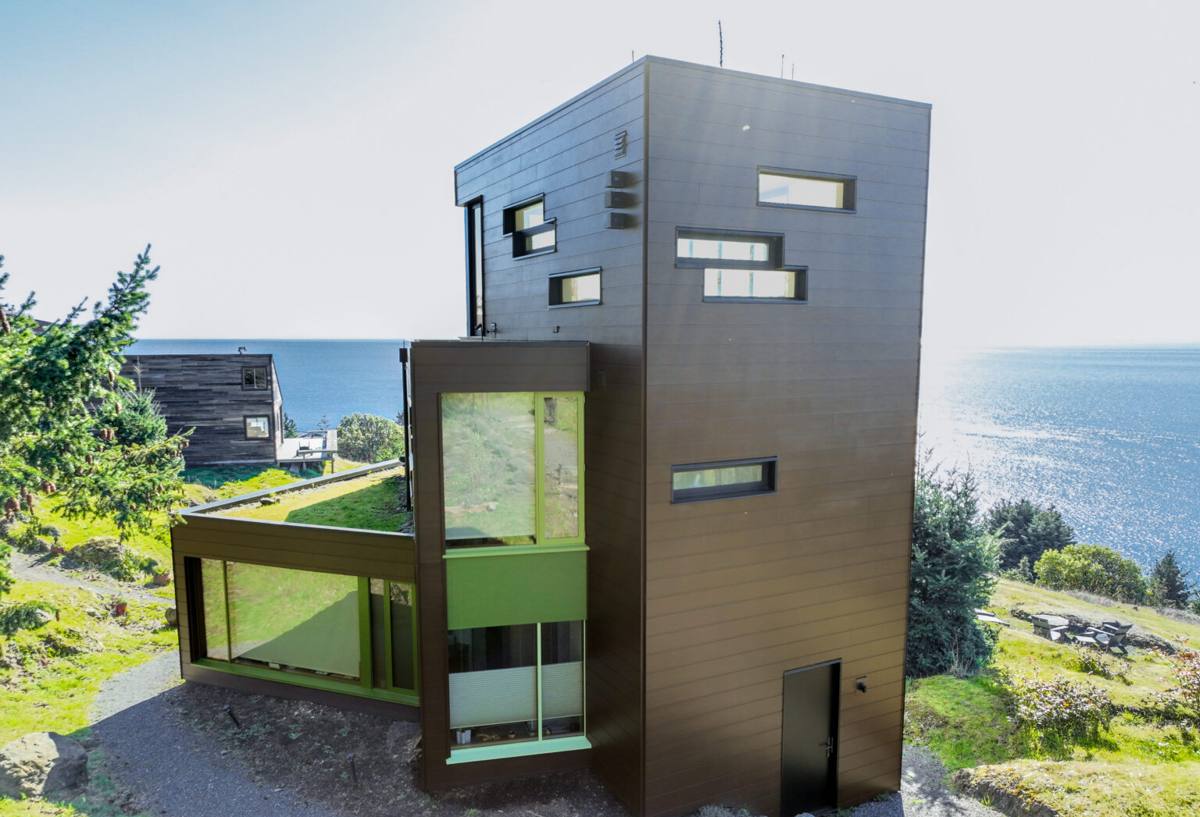
What Ellenton's Climate Actually Does to a Board & Batten Wall
Every siding decision on this project starts with the same four stressors, and board and batten is more sensitive to them than most profiles because of its vertical seams and exposed batten edges.
Hurricane-Force Wind
Wind doesn't just push on a wall — it creates uplift and pressure differences at every joint, corner, and seam. Board and batten has a batten strip fastened over every board joint, and each of those battens is a potential lever point if it isn't fastened to the manufacturer's nailing schedule. Under-fastened battens are one of the most common causes of board and batten failure in wind events, and it's almost always an installation shortcut rather than a product flaw.
Intense, Year-Round UV
Florida sun is harder on exterior finishes than most of the country ever deals with, and it doesn't let up in winter the way it does farther north. A factory finish that isn't formulated for this kind of UV load will chalk, fade unevenly, and start showing color breakdown on the sun-facing elevations years before the shaded side of the same house.
Wind-Driven Rain
Vertical siding sheds bulk water well, but wind-driven rain in a coastal storm doesn't fall straight down — it drives sideways and gets pushed up and under battens and trim. If the water-resistive barrier, flashing, and drainage plane behind the siding aren't installed correctly, that water finds its way behind the boards instead of running down the face of them.
Salt Air
Even homes that aren't waterfront in Ellenton sit within reach of salt-laden air moving in off the Gulf. Salt accelerates corrosion on fasteners, staples, and any exposed metal trim, and it degrades poor-quality caulks and finishes faster than an inland climate would.
Why Board & Batten Is a Good Fit for This Area — When It's Built Right
The same vertical profile that concerns us on the fastening side is actually an advantage on the drainage side. Water runs down a vertical board faster and with less standing contact time than it does across a horizontal lap, which matters in a climate that sees heavy, fast-moving rain events. Board and batten also gives homeowners a way to mix textures on a single elevation — using it as a full-wall treatment, a gable accent, or a wainscot-style band paired with lap siding elsewhere — without looking busy. The trade-off is that every one of those extra seams and battens needs the same discipline in flashing and fastening that the field siding gets, or the style advantage gets erased by a maintenance headache.
What a Correct Board & Batten Installation Involves
This is the part of the job that doesn't show up in photos but determines whether the siding is still performing in fifteen years. We treat every layer as load-bearing to the outcome, not just the visible boards.
Water-Resistive Barrier and Drainage Plane
A code-compliant weather-resistive barrier goes on the sheathing first, lapped correctly from the bottom up so water is always shed downward and outward. On board and batten, we pay close attention to how this barrier integrates behind every board and batten joint, not just at the field.
Flashing at Every Penetration and Transition
Windows, doors, roof-to-wall transitions, and horizontal trim bands all need proper flashing before a single board goes up. Skipping or shortcutting flashing is one of the most common causes of hidden water damage behind any vertical siding profile, board and batten included.
Fastening Schedule
Both the boards and the battens have to be fastened per the manufacturer's specification for our wind zone — fastener type, length, spacing, and placement all matter. This is where hurricane-rated performance actually comes from; it's engineering, not marketing.
Batten Placement and Gapping
Battens need consistent reveal and proper gapping over the boards beneath them to allow for material movement without trapping moisture or telegraphing stress cracks at the joints.
Sealant and Trim Details
Corners, top caps, and any transitions to windows or roofline need a sealant rated for exterior, coastal exposure — not a generic caulk that will dry out and crack under UV within a couple of seasons.
Material Matters More on Board & Batten Than on Any Other Profile
Because board and batten has more seams and more exposed edges per square foot than lap siding, the material underneath the paint has to hold up to moisture, movement, and impact better than average. Here's how the common options actually compare for this application in a coastal Florida climate.
| Material | Moisture Behavior | UV/Color Stability | Wind/Impact Performance | Long-Term Maintenance |
|---|---|---|---|---|
| James Hardie Fiber Cement | Dimensionally stable; engineered for high-humidity, coastal use | ColorPlus factory finish resists fading and chalking | Non-combustible; installs to documented high-wind fastening specs | Low — no repainting cycle needed for years with ColorPlus |
| Vinyl Board & Batten | Can warp or buckle with heat and won't stop water that gets behind it | Color is molded-through but can fade and grow brittle in intense UV | Lighter material; more prone to cracking or blow-off in high wind | Low upfront, but replacement (not repair) is often the only fix |
| Engineered Wood (e.g. LP SmartSide) | Wood-based substrate is more moisture-sensitive at cut edges and joints | Painted finish; holds up reasonably but needs monitoring at seams | Good impact resistance; performance depends heavily on sealed edges | Moderate — edge sealing and joint caulking need regular inspection |
| Primed Spruce / Cedar | Natural wood; absorbs moisture readily if finish is compromised | Requires repainting or restaining on a recurring cycle | Combustible; performance varies with grade and installation | Highest — ongoing painting, sealing, and rot monitoring |
We install James Hardie exclusively because it's the product we're willing to stand behind on a coastal Florida wall. It's non-combustible, it's engineered specifically for humid, high-moisture climates through Hardie's HZ product line, the ColorPlus factory finish is built to resist the UV load this region gets year-round, and the warranty is transferable if the home sells. We're not saying the alternatives are junk — vinyl and engineered wood both have a place — but we've made a professional decision not to install products where we've seen the maintenance burden or moisture sensitivity show up down the line in this specific climate.
Our Process, Start to Finish
- Walkthrough and measurement — we look at your home's specific exposure, existing substrate condition, and any trouble spots before quoting anything.
- Detailed proposal — board and batten layout, reveal spacing, color, and trim details spelled out before work starts, not decided on the fly.
- Tear-off and substrate check — old siding comes off and we inspect sheathing for hidden moisture damage before closing anything back up.
- Barrier, flashing, and drainage plane installation — the unglamorous layer that determines whether the finished wall stays dry.
- Board and batten installation to spec — fastening schedule, gapping, and flashing details matched to our wind zone.
- Finish and detail work — trim, caulking, and a final walkthrough with you before we call the job done.
Keeping Board & Batten Siding Performing in Ellenton
James Hardie board and batten is genuinely low-maintenance, but "low" doesn't mean "none." A little attention twice a year goes a long way in this climate.
- Rinse the siding periodically to clear salt residue and airborne grime, especially on elevations facing prevailing wind off the Gulf
- Walk the exterior after any major storm and look for loose battens, cracked caulk lines, or displaced trim
- Check caulking at window and door transitions annually — this is usually the first place a coastal climate shows wear
- Keep sprinklers and irrigation from spraying directly on the lower courses of siding
- Trim back landscaping that holds moisture against the wall or blocks airflow behind the batten reveals
- Address any small chips or scratches promptly with touch-up product matched to your ColorPlus finish
Why It Matters That We Already Work in Ellenton
Wind ratings, flashing requirements, and permitting expectations aren't identical from one Florida county to the next, and a crew that only occasionally works this area is more likely to treat those details as an afterthought. A contractor who regularly works Ellenton and the surrounding Sarasota-area communities already knows what inspectors here are looking for, has a feel for how local homes are built and where they tend to trap moisture, and isn't learning the region's wind and rain patterns on your project. That local repetition is what turns "installed correctly on paper" into "still tight and true after the next big storm."
If you're weighing board and batten siding for a home in Ellenton, we're happy to walk the property, talk through layout and color options, and give you a straightforward, no-pressure estimate — just fill out the form below to get started.