 Sarasota Siding
 Composite Decking Built for Lakewood Ranch's Climate
Lakewood Ranch sits inland from the coast, but that doesn't spare it from what Sarasota County's climate does to outdoor living spaces. Long stretches of intense UV, heavy summer humidity, sudden downpours, and the occasional hurricane-force wind event all put real stress on a deck. Add in the sprinkler systems and irrigated lawns common throughout the community's landscaped neighborhoods, and wood decking in this area faces near-constant moisture cycling on top of sun exposure. Composite decking was designed to handle exactly this combination, which is why it's become the default choice for homeowners here who want a deck that still looks good in year eight, not just year one.
We install composite decking throughout Lakewood Ranch and the surrounding Sarasota area, and this page covers what actually matters for a deck in this specific location: the climate factors, the installation details that separate a deck that lasts from one that doesn't, and how we approach the job from first call to final walkthrough.
Why Wood Struggles Here
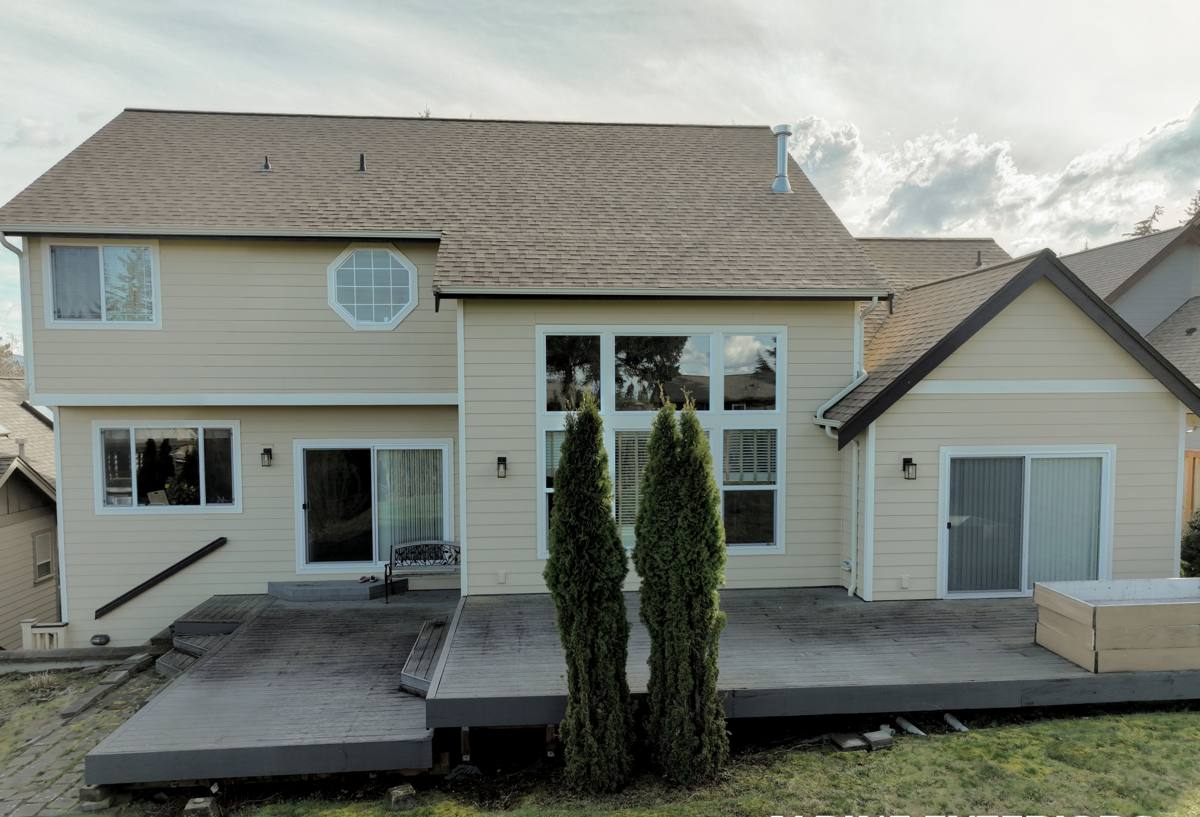
Traditional wood decking isn't a bad product, but Florida's climate is unusually hard on it. Pressure-treated lumber and even naturally rot-resistant species need consistent maintenance to survive here: annual sealing, regular inspection for softening or splitting, and prompt attention to any fastener that starts to back out. In a community like Lakewood Ranch, where irrigation runs on a schedule and afternoon storms are routine in summer, wood decking is rarely fully dry. That constant moisture exposure accelerates the freeze of grain-swelling and drying cycles that eventually causes cupping, splintering, and fastener pop.
Composite decking sidesteps most of this. It doesn't absorb water the way wood does, it won't splinter, and it doesn't need to be sanded, stained, or sealed on a recurring schedule. That's not a marketing claim — it's simply a function of the material being an engineered blend of wood fiber and polymer rather than solid lumber. For a homeowner who wants to actually use their deck rather than maintain it, that difference matters.
The UV and Heat Factor
Sarasota County gets sun exposure most of the year, and UV degradation is one of the biggest long-term threats to any outdoor surface. Cheaper composite products from years past had a reputation for fading unevenly or chalking on the surface after a few Florida summers. Modern composite boards use cap-stock technology — a protective outer shell fused to the composite core — specifically to resist UV fade and surface degradation. When we spec composite decking for a Lakewood Ranch project, UV performance is one of the first things we check on the manufacturer's data, not an afterthought.
What a Correct Composite Deck Installation Involves
Composite decking is only as good as the structure underneath it and the details of how it's fastened. A lot of the problems homeowners eventually run into with composite decks trace back to installation shortcuts, not the material itself. Here's what we treat as non-negotiable on every job:
- Joist spacing matched to the manufacturer's specification for the board profile — composite boards typically need tighter joist spacing than wood, especially at angles or on diagonal patterns
- Corrosion-resistant fasteners and hardware rated for coastal/humid climates, since standard hardware corrodes faster in Sarasota County's humidity and salt-influenced air
- Proper gapping between boards to allow for thermal expansion — composite expands and contracts with heat more than people expect
- Ventilation underneath the deck structure so moisture doesn't pool or get trapped against joists
- Ledger board attachment done correctly where the deck meets the house, with proper flashing to keep water from tracking back into the structure
- Picture-frame or fascia board detailing that's measured and cut for a clean finished edge, not just butted boards
None of this is exotic work, but it's the difference between a deck that stays flat and quiet for twenty years and one that develops squeaks, waves, or soft spots within five.
Substructure Matters as Much as the Boards
Homeowners often focus on which composite brand or color to choose, but the framing underneath is just as important. In Sarasota County's humidity, we typically recommend pressure-treated or composite substructure components rather than untreated lumber, since the framing is harder to inspect and replace once the deck boards are down. A deck is only as durable as its weakest hidden component, and the substructure is the part nobody sees until something goes wrong.
Choosing a Composite Board for Lakewood Ranch Conditions
Not all composite decking is built the same, and the right choice depends on budget, how much direct sun the deck gets, and how the space will be used. We walk homeowners through the real trade-offs rather than pushing one product line.
| Factor | What to Consider |
|---|---|
| Cap-stock coverage | Fully-capped boards (all four sides) resist moisture and UV better than boards capped only on the surface — worth the upgrade in a full-sun yard |
| Color | Darker composite boards run hotter underfoot in direct Florida sun; lighter and variegated colors stay more comfortable on pool decks and uncovered patios |
| Board profile | Grooved-edge boards use hidden fastener clips for a clean look; solid-edge boards are typically face-screwed and cost less |
| Warranty structure | Compare what's covered — fade and stain warranties are often separate from structural warranties, and terms vary significantly by manufacturer |
| Budget range | Entry-level composite generally runs less than premium capped lines; the difference usually shows up in fade resistance and surface feel over time, not in the first year |
We don't sell one brand as the answer for every yard. A shaded lanai extension has different needs than an open pool deck baking in full Sarasota sun all afternoon, and the right product spec should reflect that.
Hurricane Season and Structural Considerations
Sarasota County sees real hurricane risk, and a deck attached to a home needs to be built with wind in mind, not just weather in general. This means proper ledger attachment to the house structure, adequate post footings sized for local soil conditions, and railing systems installed to code — not just to what looks right. Florida building code in this region reflects the wind-load realities of the area, and permitted work gets inspected against that standard. We pull permits and build to code on every composite deck project, because a deck that isn't properly anchored is a liability risk during storm season, not just a cosmetic issue.
Wind-driven rain is also a factor worth planning for at the design stage. Proper board gapping and drainage beneath the deck keep water from pooling against the house or the structure itself during heavy, sideways-blowing storms — a common summer pattern here.
Our Process for a Lakewood Ranch Composite Deck
Every project starts with an in-person visit, not a phone estimate. We look at the site, note sun exposure and drainage patterns, and talk through how the household actually plans to use the space — grilling, entertaining, a pool surround, a quiet morning-coffee spot. That use case affects layout and board choice more than people expect.
- On-site assessment of the existing structure (if replacing a deck) or the build area, including grading and drainage
- Design and material selection, with real cost and warranty comparisons across composite lines
- Permitting through the appropriate local building department, with plans built to current wind-load code
- Demolition of the old deck (if applicable) and structural framing
- Composite board installation with attention to gapping, fastening, and finished edge detail
- Final walkthrough and inspection sign-off
We handle the permitting and inspection steps directly rather than leaving homeowners to navigate that process — it's a routine part of the job, not an upcharge.
Maintenance: What Composite Actually Needs
Composite decking isn't zero-maintenance, but it's dramatically lower maintenance than wood. In Lakewood Ranch's climate, the main upkeep is periodic cleaning — soap and water or a manufacturer-approved cleaner — to keep pollen, mildew, and organic buildup from dulling the surface, especially in shaded or low-airflow areas near landscaping. There's no sanding, staining, or sealing required. We walk every homeowner through the specific care recommendations for the board line we install, since some cap-stock finishes have cleaning products to avoid.
Why Local Installation Experience Matters
A composite deck built to a generic spec sheet doesn't automatically perform well in Sarasota County. The details that matter here — joist spacing for humidity-driven expansion, fastener corrosion resistance, drainage planning for wind-driven rain, and wind-load framing for hurricane season — are regional knowledge, not something every crew accounts for by default. A crew that regularly works in Lakewood Ranch and the surrounding area already knows the permitting process with the local building department, understands how the area's soil and drainage behave, and has seen firsthand which installation shortcuts cause problems two or three years down the road.
That local track record is worth asking about directly when you're vetting a contractor for this kind of project. A company that can walk you through specific climate-driven decisions — not just show you a brochure of composite colors — is the one that's actually thought through what a deck needs to survive here.
If you're planning a composite deck in Lakewood Ranch, we're happy to come take a look at your space and talk through options — no pressure, no obligation. Fill out the form below for a free estimate.