 Sarasota Siding
 Why Venice Decks Wear Out Faster Than the Manufacturer's Warranty Suggests
Venice sits on the Gulf, wrapped by the Intracoastal Waterway and a network of canals, and that setting is exactly what makes deck ownership here different from almost anywhere inland. A deck built to a generic national spec will start showing problems in Venice years before it would in, say, Ohio or Georgia. The combination that does the damage is specific: salt-laden air corroding metal fasteners and connectors, near-constant UV exposure breaking down wood fibers and composite surface layers, wind-driven rain forcing moisture into joints that were never designed to shed water fast, and the real possibility of hurricane-force gusts loading the whole structure sideways in a way flat, static weight never does. None of these forces are hypothetical for a house near Roberts Bay, the Venice canals, or the barrier island — they're the baseline.
Deck replacement here isn't just "pull up old boards, screw down new ones." Done right, it's an opportunity to correct the underlying weaknesses that caused the failure in the first place — usually in the framing and fasteners, not just the decking surface.
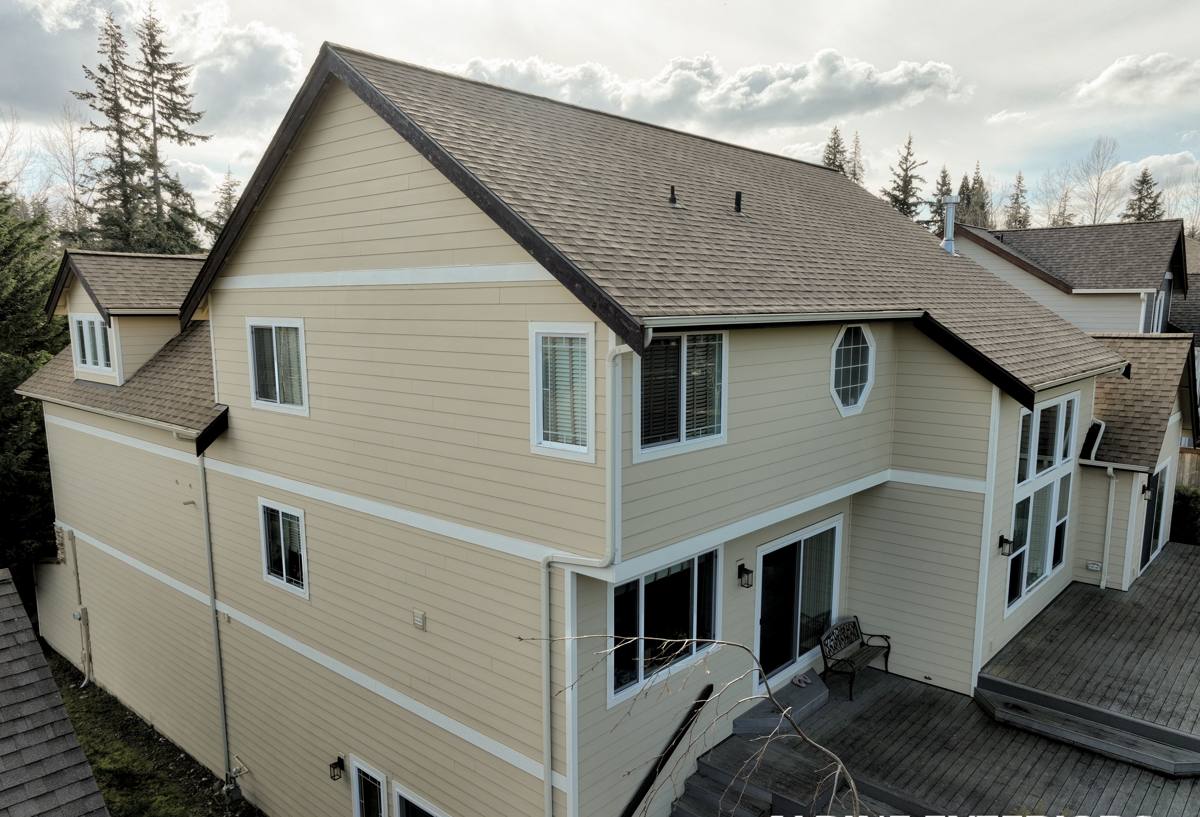
What Actually Fails First on a Venice Deck
When we tear off an old deck in this area, the decking boards are rarely the whole story. The pattern we see repeatedly:
- Ledger board attachment — where the deck bolts to the house is the single most common point of rot and the single most dangerous thing to get wrong. Trapped moisture behind an old or improperly flashed ledger is a slow, hidden failure.
- Fasteners and hardware — standard galvanized nails and screws corrode fast in salt air. We regularly find joist hangers and bolts that are more rust than metal on decks well under 15 years old.
- Post bases and footings — ground contact posts that were never properly isolated from soil moisture, or footings undersized for the wind loads Sarasota County code actually requires.
- Decking boards themselves — UV breakdown on the surface (graying, splintering, or on lower-grade composite, fading and chalking) combined with cupping from repeated wet-dry cycles.
- Railings — often the first thing to loosen because railing posts take direct wind load and are frequently under-fastened to begin with.
A proper replacement addresses all five, not just the top layer people can see.
What a Correct Deck Replacement Involves
Tear-Off and Structural Assessment
We remove the old decking and railings and inspect the framing, ledger, and any posts or footings before deciding what gets reused versus replaced. In coastal Sarasota County, we lean toward replacing rather than reusing older fasteners and hardware even when the wood framing underneath is sound — the cost difference is small compared to the risk of building a new surface on corroded connectors.
Ledger Flashing Done Right
If the deck attaches to the house, the ledger gets proper flashing that directs water away from the house band board, not just a bead of caulk. This is the detail that determines whether you get another 15-20 years or a hidden rot problem in five.
Fasteners and Hardware Rated for Coastal Exposure
We use stainless steel or coastal-rated hot-dip galvanized fasteners and connectors throughout — not standard interior-grade hardware. It costs more up front and it's the single biggest lever for longevity this close to the Gulf.
Framing to Current Wind-Load Requirements
Sarasota County follows Florida Building Code wind provisions, which are meaningfully stricter than what many older decks were built to. Joist spacing, beam sizing, post-to-beam connections, and railing attachment all get built to current code, with a permit and inspection — not to whatever spec the original deck happened to use decades ago.
Decking Material Selection
What goes on top depends on the homeowner's priorities — see the comparison below — but every option gets installed with proper gapping for drainage and expansion, since Florida's heat and humidity move materials more than people expect.
Decking Material Comparison for Venice Conditions
| Material | How It Handles Sun, Salt & Moisture | Maintenance | Typical Lifespan Here |
|---|---|---|---|
| Pressure-treated wood | Prone to graying, splintering, and cupping under intense UV and repeated wet-dry cycles; needs sealing to slow it down | Annual cleaning and resealing recommended | 10-15 years with upkeep, less without it |
| Composite decking | Resists rot and splintering; better UV stability than wood, though lower-grade products can still fade or chalk over time | Periodic washing; no sealing or staining needed | 20-25+ years depending on product grade |
| PVC/capped polymer decking | Fully sealed surface handles moisture and UV well; among the most stable choices for salt-air exposure | Low — occasional washing | 25+ years |
| Tropical hardwoods (e.g., ipe) | Naturally dense and rot-resistant, holds up well to sun and moisture when maintained | Requires regular oiling to maintain color and prevent surface checking | 20-30 years with consistent maintenance |
There's no universally "right" answer — a homeowner who wants zero maintenance and plans to stay long-term is usually best served by composite or PVC; a homeowner who wants the classic wood look and doesn't mind the upkeep may still prefer treated wood or hardwood. We'll walk through the honest trade-offs for your specific deck rather than push one material.
Elevated, Waterfront, and Pool-Adjacent Decks Need Extra Attention
A lot of Venice properties have decks that aren't just a simple ground-level platform — elevated decks off a second story, decks along a seawall or canal, or decks that wrap a pool. Each adds a wrinkle:
- Elevated decks carry more structural risk in high wind since they're catching more exposed surface area — post and beam sizing matters even more.
- Waterfront and canal-adjacent decks deal with near-constant salt spray and higher humidity at the water's edge, accelerating the corrosion and moisture issues described above.
- Pool decks deal with chlorine and standing water in addition to sun and rain, which affects both material choice and drainage detailing around the perimeter.
We factor the specific setting of your deck into the framing, hardware, and material recommendation rather than treating every job the same.
Our Process
- On-site assessment — we inspect the existing deck, ledger, framing, and any visible rot or corrosion, and take measurements.
- Honest scope and estimate — we tell you what actually needs replacing versus what can stay, with pricing broken out by material option.
- Permitting — deck replacement in Sarasota County typically requires a permit; we handle the application and coordinate inspections so the work is documented and code-compliant.
- Tear-off and structural rebuild — old decking, railings, and compromised hardware come out; framing, ledger flashing, and connections are brought up to current code.
- Decking, railing, and finish install — installed with proper spacing and fastening for Florida's heat, humidity, and wind.
- Final walkthrough — we go over the finished deck with you and pass final inspection.
Why Hiring a Crew That Already Works in Venice Matters
Deck-building fundamentals don't change from region to region, but the details that determine whether a deck lasts 10 years or 25 in this specific climate absolutely do. A crew that primarily builds decks in drier, milder climates may not default to stainless hardware, may not think twice about ledger flashing against wind-driven rain, and may not be current on the wind-load requirements Sarasota County actually enforces. A crew that works Venice and the surrounding Sarasota County coastline regularly sees what salt air and hurricane-season wind do to decks over time, and builds accordingly from the start — not after a callback.
Local familiarity also means fewer surprises on permitting and inspection timing, since the process and requirements are consistent across the jobs we run in this county.
Signs Your Venice Deck Needs Replacement, Not Repair
- Soft, spongy, or visibly rotted boards, especially near the ledger or in shaded areas that stay damp
- Rust staining running down from screws, bolts, or joist hangers
- Railings or posts that flex or wobble under normal pressure
- Visible gaps, separation, or movement where the deck meets the house
- Boards that have cupped, split, or delaminated across a large portion of the surface
- A deck built more than 15-20 years ago that has never had hardware or ledger flashing updated
If only isolated boards or hardware are affected and the framing is sound, targeted repair can make sense. Once the ledger, framing, or a significant share of the structure is compromised, replacement is usually the more honest recommendation — patching a structurally weak deck just delays the real cost.
Get a Free Estimate
If your deck in Venice or elsewhere in Sarasota County is showing its age — or you just want a straight answer on whether it needs repair or full replacement — we're happy to come take a look. The estimate is free, there's no pressure, and you'll get a clear breakdown of what we'd recommend and why. Use the form below to get started.