 Sarasota Siding
 Bee Ridge Homes Face a Specific Set of Siding Problems
Bee Ridge sits inland enough from the coast that some homeowners assume salt air and storm exposure are someone else's problem. They aren't. Sarasota County's climate doesn't stop at the barrier islands — humidity, ultraviolet load, and wind-driven rain reach every neighborhood in the county, and hurricane wind events don't check a map before they hit. A siding product that isn't engineered for this climate will show it faster in Bee Ridge than it would in a milder region, whether that's a home built decades ago with its original siding or a newer build that got a budget-grade product during a fast build cycle.
We work on siding across Sarasota County, and Bee Ridge has its own mix of housing stock — older ranch-style homes from earlier development waves sitting alongside newer construction. That mix means we see the full range of siding failure patterns in this one area: sun-bleached and chalking surfaces on older homes, swollen or delaminating panels where moisture got behind the cladding, and newer installs that already show gaps or fastener issues because they were rushed. Whatever era your home is from, the fix is the same starting point — a siding system actually built for Gulf Coast Florida conditions, installed correctly.
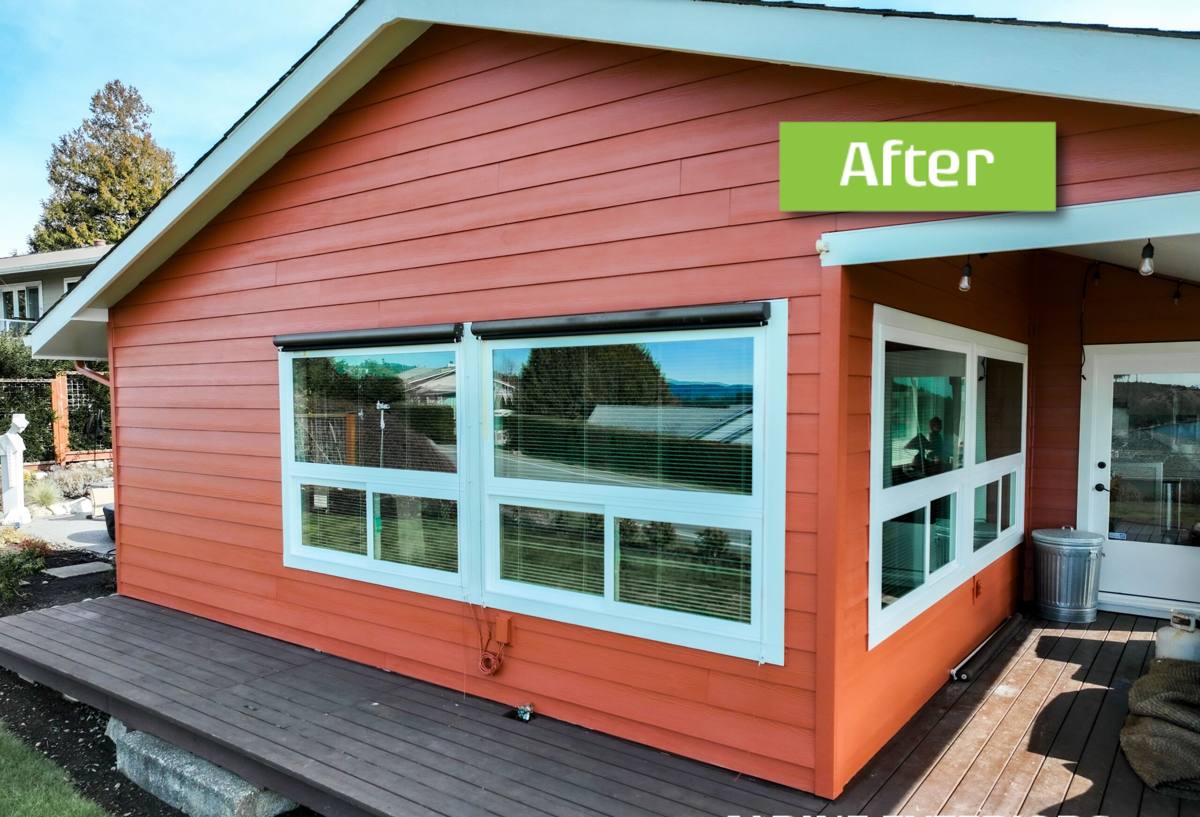
What Fiber Cement Siding Has to Survive Here
Hurricane-Force Wind
Sarasota County sits in a high-wind coastal zone, and Bee Ridge is well within range of tropical storm and hurricane wind events most seasons carry some risk of. Siding doesn't just need to look good — it needs to stay attached through sustained wind loads and wind-driven debris without panels lifting, cracking, or pulling loose at the fasteners. This is a fastening-pattern and product-thickness issue as much as a material issue.
Year-Round, Intense UV
Florida's UV exposure is relentless almost every month of the year, not just in summer. Siding finishes that aren't formulated for this level of sun exposure fade unevenly, chalk, and lose their protective integrity years before a homeowner expects to think about repainting.
Wind-Driven Rain
Rain in this region rarely falls straight down. Wind pushes it sideways and up under laps, trim, and penetrations, which is exactly where most real-world siding failures start — not on the face of the panel, but behind it, where moisture gets trapped against sheathing that was never meant to stay wet.
Salt Air
Bee Ridge isn't beachfront, but salt-laden air moves inland across the whole Sarasota area, especially with onshore winds. Salt exposure accelerates corrosion on fasteners and metal components and adds another layer of stress to any siding system that isn't built with corrosion-resistant hardware and finishes.
Why We Install Only James Hardie Fiber Cement
We don't install vinyl siding, LP SmartSide, Cemplank, Allura, or primed wood products like spruce or cedar — and we're upfront about why. Vinyl can warp and become brittle under intense, sustained UV and doesn't hold up well against wind-driven debris. Engineered wood products carry real moisture-management risk in a climate this humid; once water gets past the coating at a seam or cut edge, the wood substrate is vulnerable in a way fiber cement simply isn't. Alternative fiber cement brands may perform reasonably, but we've standardized on one manufacturer so we can guarantee consistency in the product, the finish, and the warranty backing it — rather than mixing systems and hoping the weakest link holds.
James Hardie fiber cement is non-combustible, dimensionally stable in heat and humidity, and available in HZ5 formulations engineered specifically for high-humidity, high-moisture climate zones like ours. The factory-applied ColorPlus finish is baked on and warranted against fading and peeling in a way field-applied paint can't match — which matters enormously given the UV load Bee Ridge sits under year-round. That's the whole reason we standardized on one manufacturer instead of installing whatever a homeowner's budget or a supplier's stock happens to favor.
What a Correct Installation Actually Involves
Fiber cement siding is only as good as the installation behind it. A huge share of the siding failures we get called out to inspect trace back not to the product itself but to installation shortcuts — the wrong fasteners, missing clearances, or a water-resistive barrier that was never properly integrated with flashing.
- Correct water-resistive barrier installed and lapped properly beneath the siding, not just stapled up as an afterthought
- Flashing detailed at every window, door, and roofline transition so wind-driven rain has nowhere to collect
- Manufacturer-specified fastener type, length, and spacing pattern — critical for wind resistance in this region
- Proper clearance between the bottom of the siding and grade, roofing, decks, and patios to prevent wicking moisture
- Correctly sized and sealed joints and butt seams, caulked with a product rated for exterior movement and UV exposure
- Corrosion-resistant fasteners and trim hardware suited to salt-air exposure
Skip any one of these and the siding can still look fine on install day — the problems show up eighteen months to five years later, usually as soft spots, staining, or panels that have started to separate at the seams.
Our Process for a Bee Ridge Fiber Cement Project
1. On-Site Assessment
We walk the home, check the condition of the existing siding and the sheathing underneath where accessible, and look at sun exposure, drainage patterns, and any trouble spots specific to that lot — a shaded north wall behaves differently than a wall that takes full afternoon sun all year.
2. Product and Profile Selection
We help homeowners choose the right Hardie product line, plank exposure, and ColorPlus color for their home's style and HOA requirements, if applicable, while making sure the HZ5 formulation and fastening spec match Sarasota County's wind and moisture conditions.
3. Tear-Off and Substrate Check
Old siding comes off and we inspect the sheathing underneath for hidden moisture damage before anything new goes up. Covering damaged sheathing with new siding just hides a problem — we address it first.
4. Installation to Manufacturer Spec
Water-resistive barrier, flashing, fastening pattern, and clearances are all installed to James Hardie's published specifications, not a shortcut version of them. This is also what keeps the manufacturer's warranty intact.
5. Final Walkthrough
We inspect the finished work with the homeowner, checking seams, trim, caulking, and overall fit and finish before calling the job complete.
Signs a Bee Ridge Home's Siding Needs Attention
| What You're Seeing | What It Usually Means |
|---|---|
| Chalky residue or faded, patchy color | UV degradation of the finish — common on older or non-factory-finished siding after years of Florida sun |
| Soft spots or visible swelling | Moisture has gotten behind the siding and is affecting the substrate underneath |
| Gaps, buckling, or panels that flex | Fastening or clearance issues, often from a rushed original install |
| Rust streaks near fasteners or trim | Hardware not rated for salt-air exposure beginning to corrode |
| Cracked caulking at seams and trim | Normal aging, but left unaddressed it becomes a direct path for wind-driven rain |
What Drives Cost on a Fiber Cement Project
| Factor | Why It Matters |
|---|---|
| Home size and wall complexity | More corners, gables, and trim details mean more labor and material |
| Condition of existing sheathing | Hidden moisture damage found during tear-off adds repair work before new siding goes up |
| Product line and profile chosen | Plank style, exposure width, and texture affect material cost |
| Trim and accessory scope | Corner boards, frieze boards, and soffit work add to the total |
| Access and site conditions | Landscaping, fencing, and building height affect labor time |
We give straightforward, itemized estimates rather than vague lump-sum numbers, so homeowners can see exactly what they're paying for.
Maintaining Fiber Cement Siding in This Climate
- Rinse the exterior periodically to remove salt residue and airborne grime before it builds up
- Inspect caulking at seams, trim, and penetrations annually and re-caulk as it ages
- Trim back vegetation and irrigation spray that keeps siding damp longer than it should be
- Check fastener heads and trim hardware for early signs of corrosion
- After a major storm, walk the exterior and look for cracked panels, loose trim, or damaged caulk lines
Properly installed James Hardie siding needs far less attention than alternative materials — no repainting on a repeating cycle, no swelling to watch for — but it isn't zero-maintenance, and a little seasonal attention goes a long way in this climate.
Why Local Experience in Bee Ridge Matters
A crew that already works this part of Sarasota County knows the wind exposure differences between a shaded interior lot and one with open exposure, understands what county permitting and inspection expect for wind-rated installations, and has already seen how different generations of Bee Ridge housing stock were originally built and sided. That local pattern recognition shortens the assessment phase and helps catch problems — like sheathing damage or undersized flashing — before they become part of a new install instead of after.
If your Bee Ridge home needs new siding, is showing early wear, or you're planning ahead for a replacement, we're happy to take a look and walk you through what we find. Use the form below to request a free, no-pressure estimate.