 Sarasota Siding
 Decks in Laurel Park Face a Different Set of Conditions Than Most Places
Laurel Park is one of Sarasota's older in-town neighborhoods, and that matters when you're planning a deck. Homes here tend to be smaller-footprint bungalows and cottages on established lots, many built decades before today's Florida Building Code existed. A deck project in a neighborhood like this isn't just about picking a nice board and screwing it to some joists. It's about tying new construction into an older structure correctly, working within a tighter lot, and building something that will actually survive a Sarasota County summer and hurricane season year after year.
Sarasota's climate is hard on outdoor structures in ways that aren't always obvious until a few seasons in. Intense year-round UV breaks down finishes and dries out wood fiber faster than most manufacturers' warranty language assumes. Wind-driven rain gets pushed sideways during storms and finds its way into ledger connections, fastener holes, and end grain that isn't sealed. Salt air drifting in off the Gulf accelerates corrosion on hardware that would last decades further inland. And hurricane-force wind events mean a deck isn't just a place to put furniture — it's a structure that has to be engineered to stay attached to the house and stay in the ground.
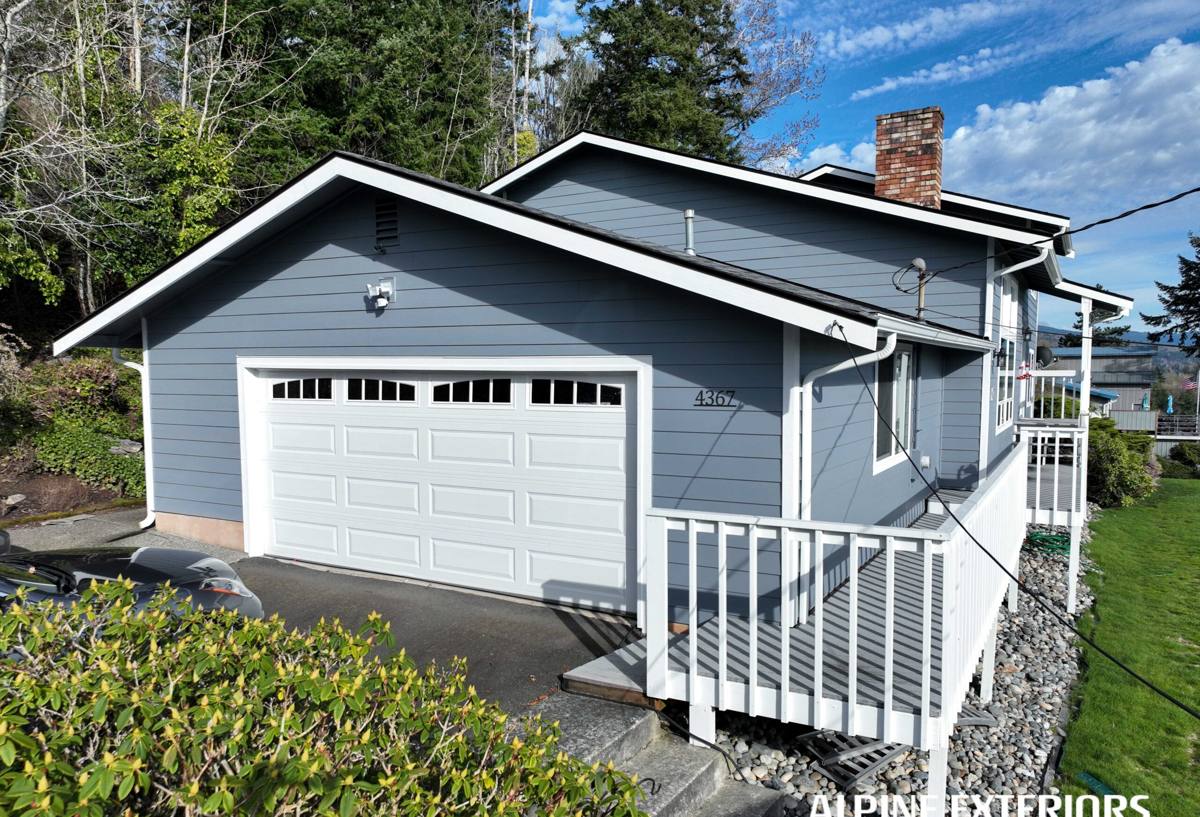
What Correct Deck Attachment Looks Like on an Older Laurel Park Home
The single most common failure point on any deck, anywhere, is the ledger board connection — the point where the deck ties into the house. On an older home, this gets more complicated because the original wall framing, sheathing, and even foundation may not match what a modern deck design assumes.
Before we attach anything, we want to know:
- What's actually behind the exterior wall at the attachment point — solid framing, or something that needs sistering or blocking first
- Whether the home's existing moisture management (flashing, house wrap, siding overlap) will be compromised by a new ledger, and how to flash the new connection so water sheds away from the house instead of into it
- Whether the foundation and soil at the attachment point can handle the added load, especially on older pier-and-beam or shallow-footing construction common in this part of Sarasota
- Local setback and lot-coverage rules that apply to older, smaller lots, which can limit deck size or placement more than a newer subdivision would
Skipping this step is how decks end up with rot hidden behind the ledger board within a few years — a problem that's invisible from the top of the deck until the structure starts to sag or separate from the house.
Choosing Materials That Actually Hold Up Here
Wood vs. Composite vs. PVC
There's no single right answer for every homeowner — it depends on budget, how much upkeep you want to take on, and how long you plan to stay in the home. What we won't do is recommend a product based on what's cheapest to install versus what actually performs in Sarasota's UV and humidity. Here's the honest comparison:
| Material | Upfront Cost | Maintenance | How It Handles Sarasota's Climate |
|---|---|---|---|
| Pressure-treated wood | Lowest | Annual cleaning and re-sealing | Good if sealed and re-sealed on schedule; UV and humidity will gray and dry it out fast if neglected |
| Tropical hardwood (e.g., ipe) | High | Periodic oiling to maintain color, or allow to gray naturally | Very durable structurally; dense grain resists rot and insects well in humid conditions |
| Composite decking | Mid-to-high | Occasional washing, no sealing or staining | Handles UV and moisture well; quality varies a lot between product lines, so board choice matters |
| PVC/cellular decking | Highest | Lowest — essentially just cleaning | Fully resists rot and moisture absorption; best long-term option where upkeep time is limited |
Framing underneath the decking matters just as much as what's on top. Pressure-treated lumber framing is standard, but in a salt-air environment, the fasteners and connectors holding that framing together deserve just as much attention as the boards people can see.
Fasteners and Hardware: The Part Nobody Sees Until It Fails
This is where a lot of decks quietly go wrong, and it's the detail that separates a deck built for Sarasota from a deck that was just built. Standard hot-dip galvanized fasteners can corrode faster than expected in a coastal, salt-laden environment, especially in contact with treated lumber's chemical preservatives. We use stainless steel or coated fasteners rated for coastal and treated-wood exposure at every structural connection — joist hangers, ledger bolts, post bases, and hurricane ties — not just where it's visible.
Post bases and hurricane straps matter more here than in most of the country. Florida Building Code wind provisions for Sarasota County are strict for a reason, and a deck's post-to-footing and joist-to-beam connections need to be engineered to resist uplift, not just downward load. This is also where we see the most corner-cutting from lower-bid work: it's easy to hide a missing hurricane tie or an undersized post base under decking boards, and it doesn't show up as a problem until a storm.
A Practical Checklist Before You Sign Any Deck Contract
- Ask what fastener and hardware spec is being used — get it in writing, not just "code compliant"
- Confirm whether a permit and engineering review is included, or if it's being skipped
- Ask how the ledger board will be flashed and how water will be kept out of the house wall
- Get the footing depth and post spacing specified, not just "standard"
- Ask what happens if hidden rot or framing issues are found once the old siding or skirting comes off
Permitting in Sarasota County
Most deck construction in Sarasota County requires a building permit, and elevated decks typically require an engineered plan showing footing size, post spacing, beam sizing, and connection hardware. This isn't paperwork for its own sake — it's the mechanism that catches undersized framing or missing hurricane connectors before they're buried under decking boards. On an older Laurel Park lot, permitting can also surface setback or lot-coverage questions specific to the property that are worth knowing about before design work goes too far. We handle the permit process and engineering coordination as part of the job, not as an add-on.
How We Approach a Laurel Park Deck Project
1. On-Site Assessment
We look at the existing structure, soil conditions, drainage patterns on the lot, and how the deck will tie into the house before any design decisions get made. On an older home, this step often uncovers things a generic estimate would miss.
2. Design and Material Selection
We talk through the honest tradeoffs between wood, composite, and PVC decking based on your budget and how much maintenance you actually want to do, not what's easiest for us to install.
3. Permitting and Engineering
We pull the required permits and coordinate engineering sign-off so the footing, framing, and connection hardware are sized correctly for Sarasota County's wind requirements.
4. Construction
Footings, framing, ledger attachment and flashing, then decking, railing, and any stairs — built in that order, with inspections at the structural stages, not just at the end.
5. Final Walkthrough
We go over the finished deck with you, including what maintenance (if any) the material you chose will need going forward.
Maintenance: What You're Actually Signing Up For
Whatever material you choose, Sarasota's sun and humidity mean upkeep isn't optional the way it might be in a milder climate. A quick reference for what to expect:
- Pressure-treated wood: plan on cleaning and re-sealing roughly once a year to prevent UV drying and moisture cycling from causing cracking and splintering
- Hardwood decking: periodic oiling if you want to maintain the original color, or let it weather to a silver-gray naturally with minimal upkeep
- Composite: occasional washing to prevent mildew film in humid months; no sealing or staining needed
- PVC: the lowest-maintenance option — periodic cleaning is typically all that's required
- All materials: check fastener heads, railing connections, and stair stringers each year, especially after storm season, for anything that's worked loose
Why It Matters That We Already Work in Laurel Park
A crew that's worked on Laurel Park's older homes has already dealt with the specific problems that come with this neighborhood's housing stock — tight lots, older framing, foundations that predate current code, and the permitting questions that come with all of that. That's not something a contractor coming from a newer subdivision picks up on day one. It shows up in fewer surprises once the old skirting or siding comes off, and in a design that actually fits the lot instead of a one-size-fits-all layout.
It also matters because deck building here isn't a one-time transaction — it's a structure that has to perform through hurricane season, brutal UV exposure, and salt air, year after year, sitting right up against a home we want to protect rather than compromise.
If you're planning a new deck or replacing an aging one in Laurel Park, we're happy to take a look at your property and talk through what makes sense for your home, your budget, and Sarasota's climate. There's a form below if you'd like a free, no-pressure estimate.