 Sarasota Siding
 Why Osprey Decks Take a Different Kind of Beating
Osprey sits along the water in Sarasota County, and that location cuts both ways. It's part of what makes a backyard deck worth having — but it also means the deck itself is exposed to a harder combination of conditions than a deck built inland. Salt air drifts in off the water and speeds up corrosion on anything metal. Intense, nearly year-round UV breaks down wood fibers and fades or chalks lesser composite and PVC products. Wind-driven rain doesn't just fall straight down here — it gets pushed sideways and up under rail caps, into fastener holes, and along ledger boards where a deck attaches to the house. And when a named storm comes through, that same deck has to survive hurricane-force gusts without the ledger pulling away from the house or the railing failing.
None of this means a deck in Osprey can't last. It means the build has to account for these specific stresses from the start — material selection, fastener choice, framing connections, and drainage all have to be decided with this climate in mind, not treated as an afterthought.
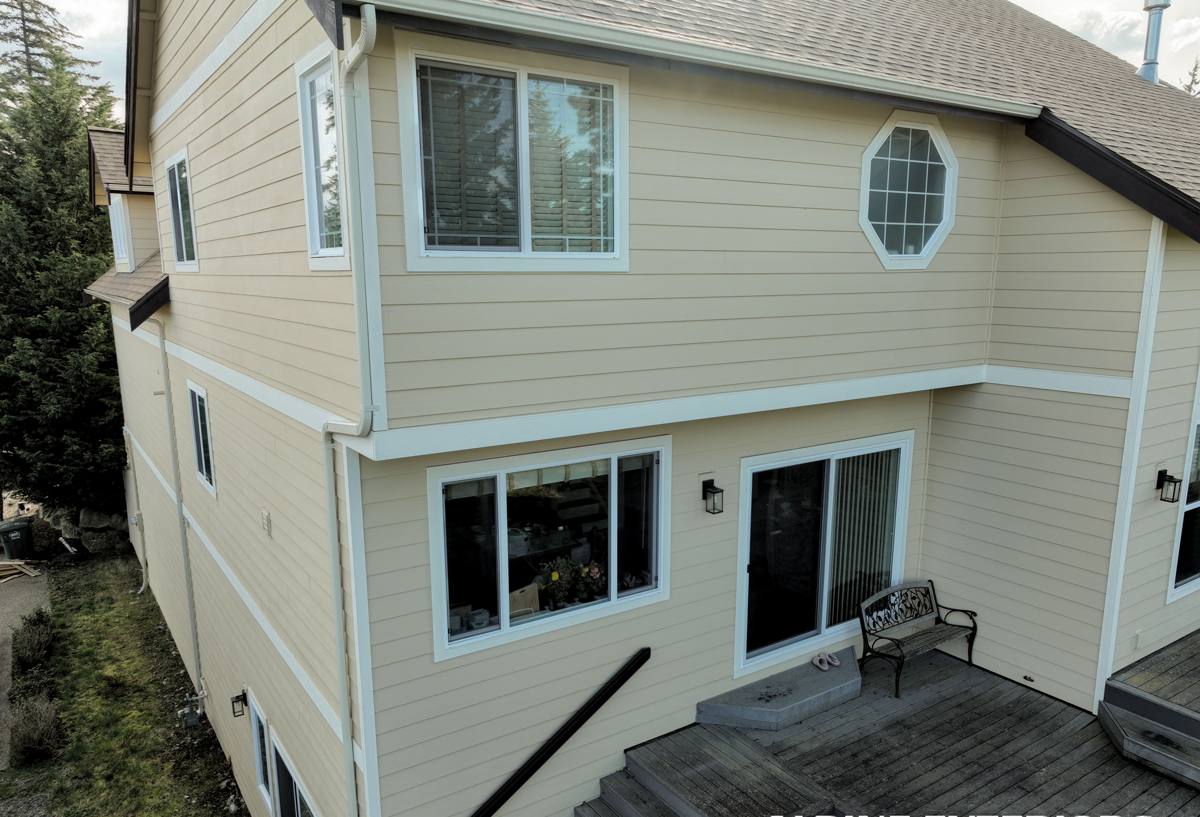
What a Deck Built for This Area Actually Needs
Structural connections that resist uplift
Wind doesn't just push on a deck — it lifts. Florida Building Code wind provisions exist because uplift forces on an open structure like a deck can be significant during a tropical system. That means the ledger board connection to the house, the post-to-footing connections, and the railing posts all need hardware and fastening patterns rated for the wind loads this area actually sees, not the minimum you'd use in a low-wind region.
Corrosion-resistant hardware, full stop
Standard zinc-coated fasteners degrade faster near salt air. Anything holding a deck together here — joist hangers, structural screws, bolts, post bases — should be stainless steel or a coating rated for coastal/salt exposure. This is one of the most common places we see older decks fail early: the wood is fine, but the hardware rusted, weakened, and let go.
Drainage that doesn't trap water against the frame
Wind-driven rain finds its way into every gap. A deck built for this area needs proper flashing at the ledger, gapped decking boards for water to shed through, and framing that isn't sitting in standing water after every afternoon storm.
UV-stable materials, not just UV-resistant on the label
Cheaper composite and PVC boards can chalk, fade unevenly, or get brittle faster under Sarasota County's sun exposure. It matters which product line you're actually buying, not just the category.
Material Options Compared
There's no single "best" decking material — there's a best material for your budget, your maintenance appetite, and how close you are to the water. Here's the honest breakdown.
| Material | Upfront Cost | Maintenance | How It Handles This Climate |
|---|---|---|---|
| Pressure-treated wood | Lowest | Annual sealing/staining recommended | Durable if maintained, but UV and rain cycles will gray and crack it faster here without upkeep |
| Composite decking | Mid to high | Occasional cleaning, no sealing | Good UV and moisture resistance in quality product lines; lower grades can fade or chalk faster near salt air |
| PVC/capped polymer | Highest | Very low | Best moisture and salt-air resistance of the common options; higher upfront cost pays off in reduced upkeep |
| Tropical hardwoods | High | Regular oiling to maintain color | Naturally dense and rot-resistant, but requires real commitment to upkeep or it grays quickly in full sun |
We'll walk through this table with you specifically for your project — how much sun and rain exposure your deck's location gets, how close you are to the water, and what your realistic maintenance plans are, all change which material makes the most sense.
Our Deck Building Process
1. On-site assessment
We look at the actual site: sun and rain exposure, proximity to water, existing structure if it's a rebuild, drainage, and how the deck ties into the house. This is where material and hardware decisions start getting made, not guessed at.
2. Design and permitting
Sarasota County and local jurisdictions require permits for deck construction, and for good reason — a deck is a structure people stand and gather on. We handle the permitting process and design the deck to meet current Florida Building Code wind and structural requirements for this area, not generic national minimums.
3. Framing and structural connections
This is where a deck's real lifespan gets decided. Proper ledger attachment, correctly spaced and rated joist hangers, footings sized for the load and soil conditions, and post connections built for uplift resistance — all with corrosion-resistant hardware throughout.
4. Decking, railing, and finish work
Once the frame is right, we install decking and railing to spec, with attention to gapping for drainage and expansion, fastener placement that won't telegraph or pop over time, and railing that meets code height and load requirements.
5. Final walkthrough
We go over the finished deck with you — what maintenance it needs (if any), what to expect from the material over time in this climate, and answer any questions before we consider the job done.
Permits, Codes, and What "Built to Code" Actually Covers
A permit isn't paperwork for its own sake. It means an inspector — someone with no financial stake in the job — checks the footings, framing, and connections before they're covered up, and again at final. In a coastal wind zone, that inspection matters more than in most parts of the country, because the difference between a deck that survives a bad storm and one that doesn't often comes down to details you can't see once the decking boards are down: footing depth, hardware rating, and how the ledger is actually fastened to the house.
Skipping permits to save time or money on a deck project in this area is a real risk — not just of a fine, but of a structure that wasn't actually checked by anyone qualified before it went into use.
A quick pre-project checklist for homeowners
- Confirm the contractor pulls a permit and schedules required inspections — don't take "we don't need one" at face value
- Ask what fastener and hardware grade will be used (stainless or coastal-rated coating, not standard zinc)
- Ask how the ledger board will be attached and flashed against the house
- Get the decking and railing material specified by product line, not just "composite" or "wood"
- Ask about drainage — how water will shed off the deck surface and away from the frame
- Confirm railing height and spacing will meet current code, especially if the deck is elevated
Fasteners and Hardware: The Detail Most Homeowners Never See
We mentioned this above, but it's worth its own section because it's genuinely the single biggest factor in how long a deck holds up near the water. Every joist hanger, every structural screw, every bolt and post base on a deck we build in Osprey is chosen for salt-air exposure. This costs more than standard hardware. It also means the frame isn't quietly rusting from the inside while the surface still looks fine — which is exactly how a lot of older, distressed decks in this area got that way. By the time hardware failure shows up as visible sagging or movement, the damage has usually been happening for a while.
Maintenance Reality by Material Choice
What you'll actually need to do after the deck is built depends entirely on what you chose to build it with:
- Pressure-treated wood: Plan on cleaning and resealing roughly once a year to keep UV and moisture from taking their toll early
- Composite: Periodic washing to keep salt residue and organic buildup off the surface; no sealing needed
- PVC/capped polymer: Lowest maintenance of the group — occasional cleaning is generally enough
- Hardwoods: Regular oiling if you want to maintain the original color, otherwise expect natural graying over time
- All materials: Rinse salt spray and debris off railings and hardware periodically, and keep an eye on any fastener that starts showing rust bleed
Why a Crew That Already Works in Osprey Matters
A deck builder who works this specific stretch of Sarasota County knows what actually happens to decks here over five and ten years — not in theory, but from having built and sometimes repaired them. That's the difference between a contractor who defaults to standard hardware because it's what they always use, and one who specs coastal-rated hardware because they've seen what happens without it. It's also the difference between someone who treats the permit and inspection process as a formality and someone who understands why it matters for a structure built to withstand hurricane-force wind.
We also know the practical side: how Sarasota County permitting works, what inspectors here are actually checking for, and how to sequence a build so it isn't sitting exposed to a sudden afternoon storm at the worst possible stage of construction.
What This Means for Your Project
If you're planning a new deck or replacing one that's showing its age, the decisions that matter most — material, hardware, framing connections, drainage, and permitting — all get made early. Getting them right the first time costs less than fixing a deck that was built to a lower standard than this climate actually requires. We're happy to walk your property, talk through material options honestly including the trade-offs, and give you a clear picture of what a properly built deck for your specific site would involve.
If you're ready to talk about a deck project in Osprey, reach out for a free, no-pressure estimate using the form below.