 Sarasota Siding
 Why Decks Wear Out Faster in Downtown Sarasota
A deck in Downtown Sarasota lives a harder life than the same deck would a hundred miles inland. Salt air drifting off the bay corrodes fasteners and hardware from the inside before you ever see a problem on the surface. Intense, near year-round UV breaks down wood fibers and composite polymers alike, drying out boards and fading finishes faster than manufacturers' warranties usually admit. Add wind-driven rain that gets up under railings and around ledger boards, and you have the three forces that quietly end a deck's useful life: corrosion, UV degradation, and moisture intrusion.
Most decks we're asked to replace in this part of Sarasota County aren't structurally dramatic failures. They're decks that were built to a reasonable standard ten or fifteen years ago, using fasteners and flashing details that weren't matched to a coastal environment. The wood or decking on top can look fine while the framing underneath — ledger connections, joist hangers, support posts — has quietly been losing strength for years.
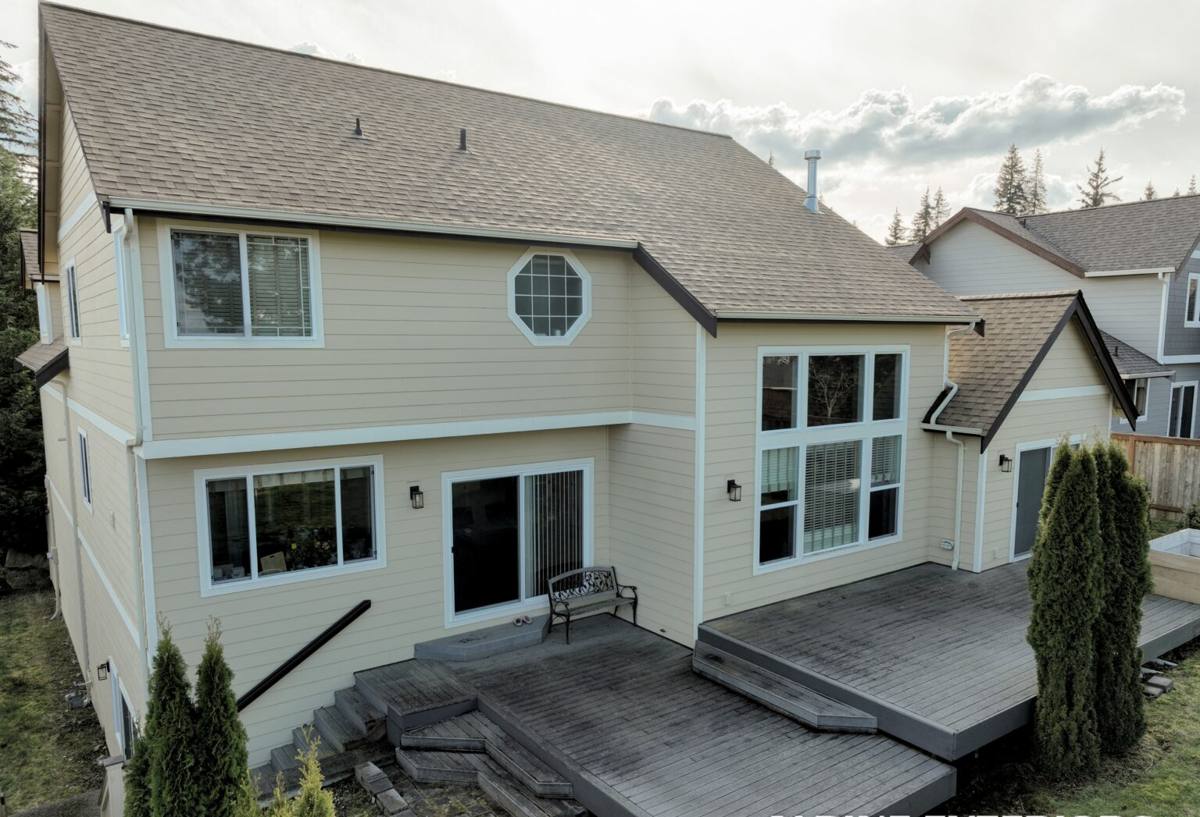
Repair or Replace? How We Tell the Difference
Not every tired-looking deck needs a full replacement, but downtown lots tend to push decks past the repair threshold sooner than homeowners expect. Here's how we actually make that call on site.
Signs a repair can still work
- Surface graying or minor UV fading on boards that are still structurally solid
- A handful of loose or popped fasteners in an otherwise sound frame
- One or two soft boards isolated from the rest of the decking
- Railings that are cosmetically worn but not loose at the posts
Signs it's time to replace
- Soft or spongy decking in multiple areas, not just one board
- Rust staining or visible corrosion at joist hangers and ledger bolts
- Any give or bounce when you walk near the ledger connection to the house
- Support posts with visible rot or insect damage at or below grade
- A deck built before current wind-uplift and ledger-attachment standards were common practice
If the framing is compromised, patching the decking on top just hides the real problem. We'll tell you honestly when a deck can be repaired — a full replacement isn't the right answer for every job, and we'd rather keep a customer for the long run than sell a bigger project than the deck needs.
What a Correct Deck Replacement Involves Here
A deck built for Downtown Sarasota needs to handle hurricane-force wind loads, shed wind-driven rain away from the house, and resist corrosion from salt-laden air — all without looking over-engineered. That means the details matter more than the decking material on top.
Ledger and framing
The ledger board — where the deck attaches to the house — is the single most important connection on the whole structure and the most common failure point we find. Proper flashing behind the ledger, correct through-bolting (not just lag screws), and a gap or drainage detail to keep water from sitting against the house band board are non-negotiable on our jobs.
Fasteners and hardware
Standard galvanized hardware corrodes faster near the water and in salt air than most homeowners realize. We use stainless steel or heavy-duty coated fasteners and connectors rated for coastal exposure on every replacement, along with joist hangers sized and installed to current wind-uplift requirements.
Footings and posts
Post bases set correctly above grade, proper concrete footing depth for Sarasota County soil conditions, and post-to-beam connections that resist uplift — not just gravity loads — are what keep a deck attached to its footings in a serious wind event.
Choosing Materials That Actually Hold Up
There's no single "best" decking material — there's a best material for your budget, your maintenance appetite, and how much direct sun and salt exposure your specific deck sees. Here's how the common options actually compare in this climate.
| Material | UV/Sun Behavior | Salt Air Resistance | Maintenance |
|---|---|---|---|
| Pressure-treated wood | Fades and grays without regular sealing | Moderate — depends on fastener quality | Annual sealing/staining recommended |
| Composite decking | Good, though color fade varies by brand/line | Strong when hardware is coastal-rated | Occasional cleaning, no sealing needed |
| Tropical hardwoods | Very good natural UV resistance | Good, but fasteners are still the weak point | Periodic oiling to maintain color |
| PVC decking | Excellent, minimal fading | Excellent — fully synthetic board | Lowest maintenance of the group |
We install across all four categories. Our job is to walk through the real trade-offs with you — upfront cost versus long-term maintenance, appearance preferences, and how much direct sun and salt spray your particular deck actually sees — rather than pushing whatever happens to be easiest for us to install.
A note on why we're selective about certain composite lines
Some early-generation composite boards were prone to moisture absorption and swelling at cut ends if they weren't capped and sealed correctly during install. That's an installation-sensitivity issue more than a product-quality one, and it's exactly why we follow manufacturer end-capping and gap-spacing specs precisely rather than treating decking installation as one-size-fits-all. If a product has installation quirks that make long-term performance harder to guarantee in this climate, we'll say so and recommend an alternative.
Permits and Sarasota County Requirements
Deck replacement in Sarasota County generally requires a permit, and inspections check the structural connections we've already covered — ledger attachment, footing depth, post-to-beam and post-to-footing hardware, and railing height and spacing. Downtown lots sometimes carry additional considerations around setbacks or flood zone elevation depending on the property's location, which is worth confirming before design work starts rather than after materials are ordered.
We handle the permit submission and schedule inspections as part of the job. Skipping permitting on a deck replacement isn't a shortcut worth taking — it can create real problems at resale and, more importantly, it's the inspection process that catches connection mistakes before they become safety issues.
Our Deck Replacement Process
- On-site assessment — we inspect the existing frame, ledger, footings, and posts to confirm what actually needs to go and what, if anything, can stay
- Material and layout conversation — we walk through decking options, railing style, and any layout changes against your budget and how the deck gets used
- Permit submission — plans go to Sarasota County before demolition starts
- Demolition — old decking, railings, and any compromised framing are removed
- Framing and ledger work — new or reinforced framing goes in with coastal-rated hardware and correct ledger flashing
- Decking and railing installation — following manufacturer spacing and fastening specs for the chosen material
- Inspection — county inspection of the completed structure
- Final walkthrough — we go over the finished deck and any maintenance recommendations specific to the material you chose
What Drives the Cost of a Deck Replacement
Every deck is different, so we won't quote a number without seeing the site, but these are the factors that move the price up or down.
| Factor | Effect on Cost |
|---|---|
| Decking material chosen | Widest swing — PT wood is the entry point, PVC and premium composites cost more upfront |
| Framing condition | A deck needing full reframing costs more than one where the frame is sound |
| Footing and post work | New footings or additional posts add cost but are often required by code on older decks |
| Deck size and shape | Multi-level decks or non-rectangular layouts add labor |
| Railing style | Cable, glass, and composite rail systems cost more than standard baluster railing |
| Site access | Downtown lots with tight side yards or limited equipment access can add labor time |
Why a Crew That Already Works Downtown Sarasota Matters
Downtown Sarasota's mix of older homes, tighter lots, and proximity to the water means the same generic deck plan that works fine out in a suburban subdivision often needs adjustment here — different footing depths for the soil, different setback considerations, different expectations from inspectors who see a lot of coastal-zone work. A crew that's already pulled permits and passed inspections in this specific area knows what the county is going to look for before the inspector shows up, which keeps the job moving instead of stalling on a correction.
Local presence also matters after the job is done. Salt air and UV don't stop working once the crew leaves — a contractor based in the area is realistic to reach for a warranty question or a follow-up look, not someone who did one job in your zip code and moved on.
Keeping a New Deck Looking Good After Installation
- Rinse salt residue off the decking and railings periodically, especially after storms
- Check fastener heads and connections once or twice a year for early signs of corrosion
- Reseal or restain wood decking on the schedule recommended for your specific product — don't wait until it looks bad
- Keep gutters and downspouts clear so runoff isn't dumping extra water onto the deck surface
- Trim back vegetation that keeps the deck surface shaded and damp for long stretches
- Address any soft spots or loose railings right away rather than waiting for the next inspection cycle
If your deck is showing its age or you're not sure whether it needs repair or a full replacement, we're glad to take a look and give you a straight answer. Reach out for a free, no-pressure estimate using the form below.