 Sarasota Siding
 Venice's Climate Is Hard on Siding — Here's Why
Venice sits on the Gulf Coast in Sarasota County, and that location comes with a specific set of stresses that inland siding never has to deal with. Hurricane-force wind events test how well siding is fastened and flashed, not just what it's made of. Year-round, high-angle UV breaks down pigments and surface coatings faster than in northern climates. Wind-driven rain gets forced sideways into laps, corners, and penetrations during storms, and salt-laden air off the Gulf accelerates corrosion on fasteners, trim, and anything not rated for a coastal environment.
None of this means siding fails quickly here — it means siding that's marginal in a milder climate gets exposed fast in Venice. Seams open up. Paint chalks and fades unevenly. Water finds its way behind panels that were installed with generic, non-coastal details. The material and the installation both have to be matched to what this stretch of Florida actually throws at a house, not to a national average.
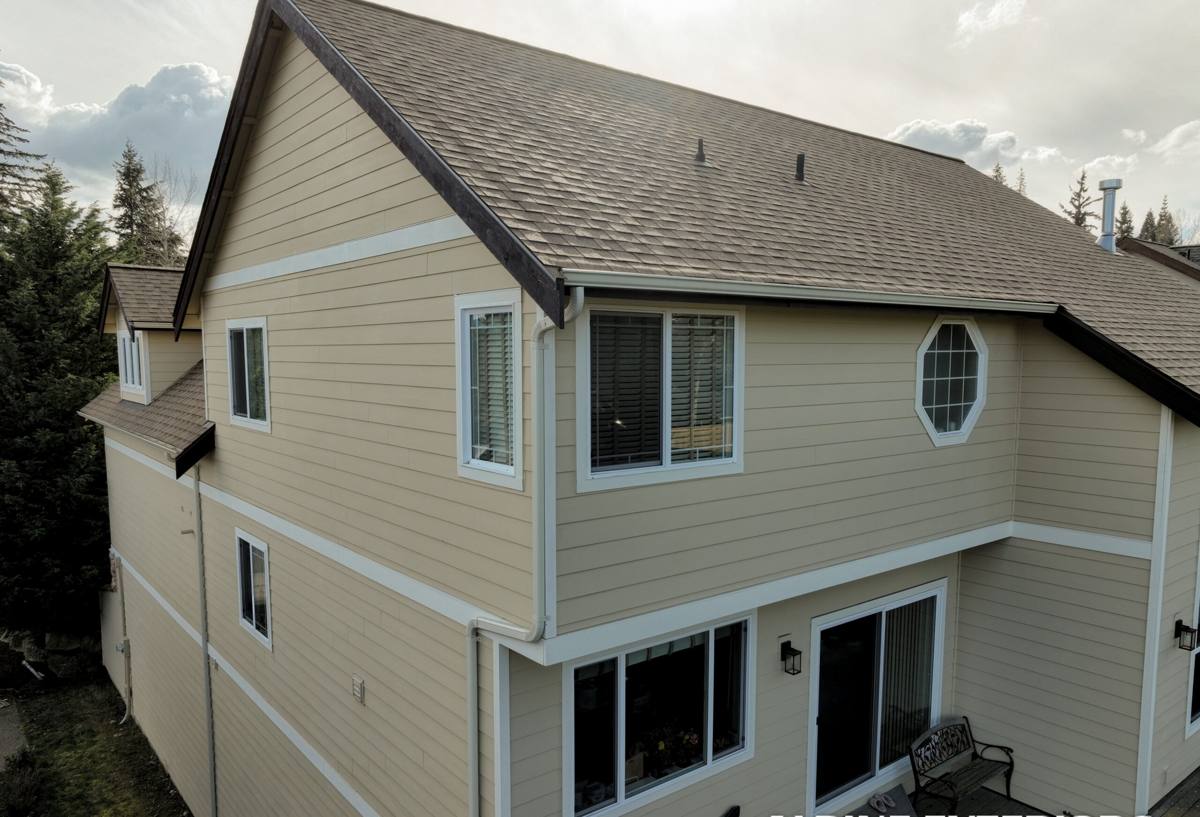
What "Correct" Fiber Cement Installation Actually Means Here
James Hardie fiber cement is engineered for coastal exposure, but the product only performs as designed if it goes on correctly. In Venice, that means a handful of details get non-negotiable attention:
- Fastener spacing and type matched to the local wind zone, using corrosion-resistant fasteners rated for coastal, salt-air conditions.
- Proper clearances — siding held up off roof lines, decks, and grade so water doesn't wick into the bottom edge.
- Flashing and weather barrier detail at every window, door, and penetration, so wind-driven rain during a storm has nowhere to get behind the cladding.
- Correct joint and seam treatment, including sealant products compatible with ColorPlus finishes, so seams don't become the first failure point.
- Manufacturer-specified overlap and gapping for the specific HardiePlank, panel, or shingle profile being used, since these numbers change by product line.
These aren't cosmetic preferences — they're the difference between siding that shrugs off a Gulf Coast storm season and siding that looks fine on install day but starts showing problems within a couple of years. Installation quality is the single biggest variable in how fiber cement performs on a Venice home, more than the brand of caulk or the shade of color chosen.
Why We Only Install James Hardie
We install James Hardie fiber cement exclusively — not vinyl, not LP SmartSide, not Cemplank or Allura, not primed spruce or cedar. Hardie's fiber cement formulation is non-combustible and engineered specifically for high-moisture, high-heat climates through its HardieZone system, with a factory-applied ColorPlus finish that's baked on rather than field-sprayed. For a coastal Florida property, that combination of moisture resistance, UV-stable color, and a manufacturer warranty built around real climate zones is what we're willing to put our name behind.
The James Hardie Lines That Make Sense for Venice Homes
Venice has a mix of architectural styles — coastal ranch homes, Florida vernacular, and Mediterranean-influenced builds — and Hardie's product lines cover most of them without forcing a homeowner into one look.
| Hardie Product | Typical Use | Why It Fits Venice |
|---|---|---|
| HardiePlank Lap Siding | Traditional horizontal lap look | Most common choice for coastal ranch and Florida vernacular homes; wide color range in ColorPlus |
| HardiePanel Vertical Siding | Board-and-batten or modern accents | Works well on gables, porches, and mixed-material facades common in newer coastal builds |
| HardieShingle Siding | Staggered or straight-edge shingle look | Popular for accent gables and cottage-style coastal architecture |
| HardieTrim Boards | Corners, fascia, window and door trim | Matches the siding's moisture and UV performance so trim doesn't become the weak point |
Every one of these lines is available with ColorPlus Technology, which matters more in Venice than almost anywhere else in the country — factory-cured finishes hold color and resist fading far better than field-applied paint under sustained, high-angle Florida sun.
Fiber Cement vs. the Alternatives, in a Coastal Climate
Homeowners in Venice often ask how James Hardie compares to the other siding materials they've seen or been quoted on. Here's an honest breakdown based on how each material actually behaves in wind, moisture, and sun.
| Material | Wind/Storm Behavior | Moisture Behavior | UV/Color Retention | Coastal Maintenance |
|---|---|---|---|---|
| James Hardie Fiber Cement | Rated and tested for high-wind zones when installed to spec | Non-combustible, engineered for humid/moisture-heavy climates | ColorPlus factory finish resists fading | Low; periodic caulk and paint checks |
| Vinyl Siding | Can warp, crack, or blow off in sustained high wind | Doesn't rot but traps moisture behind panels if installed loosely | Fades and becomes brittle under sustained UV | Low upfront, but limited repair options once faded/warped |
| Wood/Cedar | Structurally sound but fasteners and seams are storm-vulnerable | Absorbs moisture; prone to rot in humid coastal air | Requires refinishing to hold color | High; regular sealing, staining, or painting |
| Engineered Wood (e.g., LP SmartSide) | Reasonable wind performance when installed correctly | OSB-based core is more moisture-sensitive than fiber cement | Field-applied finishes fade faster than factory finishes | Moderate; edge sealing and moisture monitoring matter |
This isn't about any one product being "bad" — it's about which trade-offs a homeowner is comfortable living with 50 miles from open Gulf water. We made our decision to install Hardie exclusively based on which material holds up with the least maintenance burden and the fewest moisture surprises in this specific climate.
What Drives the Cost of a Venice Siding Project
Every Venice home is different, so we don't quote fiber cement work off a flat per-square-foot number without seeing the house. The factors that actually move the price are:
| Factor | Why It Matters in Venice |
|---|---|
| Home size and number of stories | More surface area and taller walls mean more labor and equipment |
| Siding profile (lap, panel, or shingle) | Shingle and mixed-profile work takes more time than straight lap runs |
| Condition of the existing substrate | Moisture-damaged sheathing found during tear-off has to be addressed before new siding goes on |
| Trim and detail work | Coastal homes often have more corners, window trim, and architectural detail to flash correctly |
| Site access | Tight lots, fencing, or waterfront/limited-access properties can add labor time |
| Color selection | Standard ColorPlus colors versus premium or custom options affect material pricing |
We'll give you a real, itemized number after walking the property — not a ballpark that changes once we're on the roofline.
Our Process, Start to Finish
- On-site assessment. We walk the exterior, check the current siding and substrate for moisture damage, and measure for material needs.
- Product and profile selection. We help you choose the HardiePlank, panel, or shingle profile and ColorPlus color that fits the home's style.
- Tear-off and substrate check. Old siding comes off and we inspect sheathing underneath before anything new goes up — this is where hidden moisture issues get caught.
- Weather barrier and flashing. Every window, door, and penetration gets flashed and sealed before siding is installed, not after.
- Installation to manufacturer spec. Fastening, gapping, and clearances follow James Hardie's published requirements for this wind zone and climate.
- Trim, caulk, and final walkthrough. Trim boards go in, seams are sealed with compatible product, and we walk the finished job with you before calling it done.
Maintaining Hardie Siding in a Salt-Air Environment
Fiber cement is low-maintenance compared to wood or vinyl, but "low-maintenance" isn't "no-maintenance" — especially with salt air in the mix. A simple annual routine keeps a Venice home's siding performing the way it's supposed to:
- Rinse the exterior periodically to clear salt residue and airborne debris, particularly on sides facing prevailing coastal winds.
- Inspect caulked joints and seams once a year, and re-caulk any that have cracked or pulled away.
- Check fastener heads and trim edges after major storm events for signs of corrosion or loosening.
- Keep irrigation heads and sprinklers from spraying directly on siding, which causes localized staining and mineral buildup.
- Trim vegetation back from exterior walls so moisture and debris don't sit against the siding.
Signs Your Current Siding Is Failing
If your Venice home still has older siding — or fiber cement that wasn't installed to spec — watch for these warning signs:
- Visible gaps or separation at seams and corners
- Soft or spongy spots when pressed, especially near the bottom courses
- Paint or finish that's peeling, bubbling, or chalking unevenly
- Staining or streaking that keeps returning after cleaning
- Visible warping, buckling, or panels pulling away from the wall
- Increased pest activity around siding edges or penetrations
Any of these can indicate moisture is already behind the siding, which is worth addressing before the next storm season rather than after.
Why Local Experience in Venice and Sarasota County Matters
Fiber cement installation isn't identical everywhere. A crew that regularly works in Sarasota County already knows the wind load requirements local permitting expects, understands how coastal humidity behaves against a wall assembly, and has seen firsthand what generic, non-coastal installation details fail to hold up to after a season of Gulf storms. That experience shows up in the small decisions — where extra flashing goes, how tight to run fastener spacing, which details get reinforced — that don't show up on a spec sheet but make the difference in how the siding performs five or ten years down the road.
If you're planning a siding project in Venice or elsewhere in the Sarasota area, we're happy to walk your property, look at what you currently have, and put together a straightforward, no-pressure estimate for James Hardie fiber cement siding built for this climate. Use the form below to get started.