 Sarasota Siding
 Why Gulf Gate Estates Roofs Take a Different Kind of Beating
Gulf Gate Estates sits close enough to the water that every roof in the neighborhood deals with a combination most inland homes never see: salt-laden air, wind-driven rain that finds its way in sideways during a tropical system, and sun exposure strong enough to break down roofing materials from the top down, year-round. None of these forces are dramatic on their own, but together they shorten the useful life of a roof and make storm damage worse than it would be somewhere with milder weather.
Sarasota County building codes reflect that reality, and homes here are generally built and re-roofed to hold up against high wind. But codes only guarantee what was installed correctly held up when it was new. A roof that's taken a few hurricane seasons of wind uplift, plus daily UV breakdown, plus the slow corrosion that comes with living near the Gulf, is not the same roof it was on installation day. That's the gap where storm damage repair work in Gulf Gate Estates lives — not just patching an obvious hole, but recognizing where a roof has already been weakened before the next storm finds it.
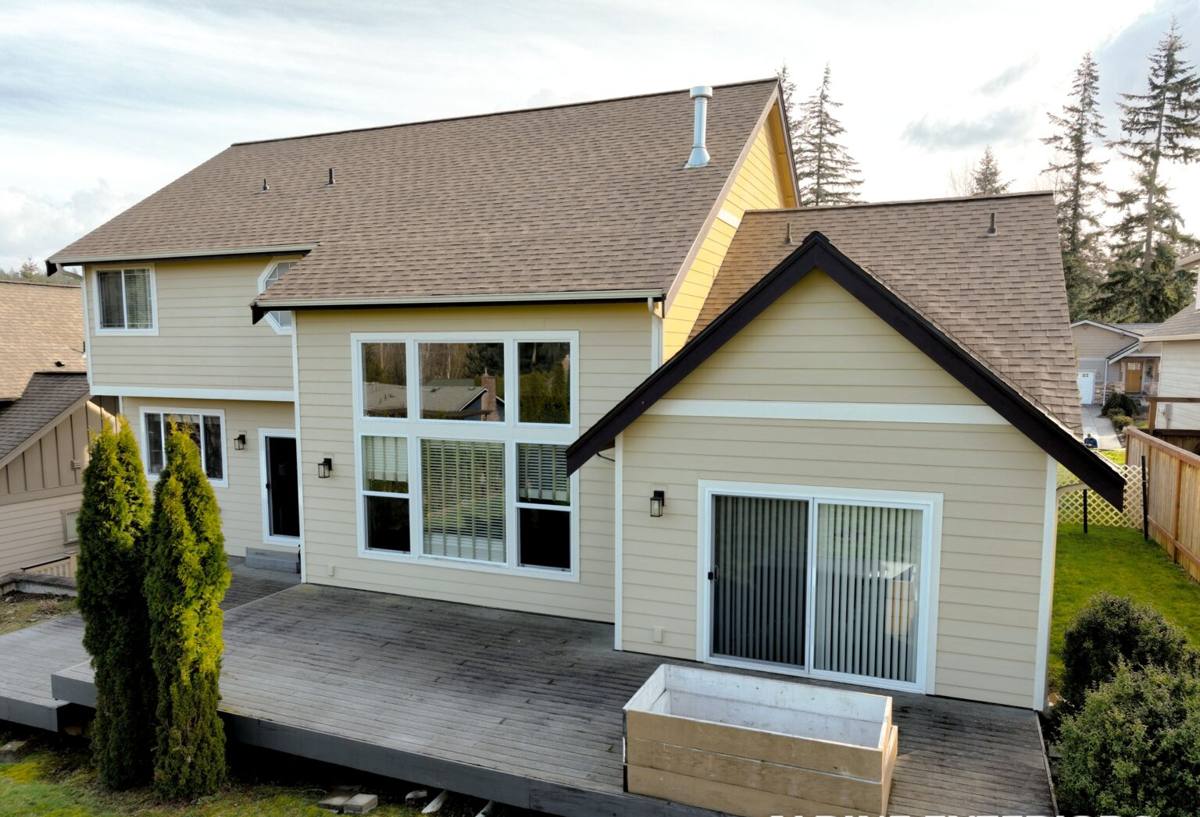
What Storm Damage Actually Looks Like on a Sarasota Roof
Homeowners usually call us after something obvious happens — a shingle sails off the roof during a squall, a tree limb comes down, or a ceiling stain shows up after a hard rain. Those are real problems, but they're often just the visible tip of the damage.
Visible damage
- Missing, cracked, or curled shingles, especially on the roof faces that catch prevailing wind
- Lifted or torn flashing around chimneys, vents, and roof-wall intersections
- Dented or creased metal panels and trim
- Debris impact marks, punctures, or granule loss you can see from the ground or a ladder
Hidden damage
- Wind uplift that breaks the seal on shingles without removing them — they look fine but no longer hold
- Water intrusion under intact-looking shingles that's already reached the underlayment or decking
- Fastener backout from repeated wind flexing, which loosens the whole field over time
- Soft or delaminating decking found only once shingles are pulled back
The hidden category is why a rushed or surface-level inspection after a storm is a bad idea. A roof can look fine from the driveway and still be actively leaking into the attic. We check both categories every time, not just the parts a homeowner already flagged.
What a Correct Storm Damage Repair Actually Involves
A proper repair isn't just replacing what's missing. It's restoring the roof's ability to shed wind-driven rain and resist the next storm, which means the work has to go a layer deeper than the shingles.
Step one: confirm the deck is sound
If water got past the roofing material, the plywood or OSB decking underneath may be softened or delaminated. Repairing over compromised decking just hides a problem that will resurface, usually as a leak, within a season or two. Any section that doesn't pass a firm walk-and-probe check gets replaced before anything goes back on top.
Step two: rebuild the water barrier, not just the surface layer
Underlayment and flashing are what actually keep wind-driven rain out — the shingles or panels are the first line of defense, but the underlayment is the backup that matters most in a sideways storm. Repairs that skip re-sealing flashing at penetrations (vents, chimneys, skylights) are a common source of "the roof looks new but still leaks in a storm."
Step three: match wind-rated installation, not just wind-rated material
A shingle rated for 130 mph winds is only as good as its installation. Nail placement, fastener count, and starter-strip detail all affect real-world wind performance more than the product label does. We install to the manufacturer's high-wind specification, not the minimum code nailing pattern, because the minimum is what tends to fail first here.
Step four: match materials so the repair doesn't stand out or age differently
Where a full re-roof isn't warranted, we match shingle profile, color line, and metal gauge as closely as current product lines allow, so the repaired section weathers at roughly the same rate as the rest of the roof instead of aging visibly faster or slower.
Our Process for Gulf Gate Estates Storm Repairs
- Inspection and documentation. We walk the full roof, not just the damaged area, and photograph findings — this record also supports an insurance claim if you're filing one.
- Written scope and honest range. You get a clear explanation of what's damaged, what's precautionary, and what it will cost, before any work starts.
- Temporary protection if needed. If a roof is actively leaking or exposed, we get it dried in and protected first, especially during active storm season, so interior damage doesn't compound while a full repair is scheduled.
- Repair to the deck, water barrier, and surface layer. As outlined above — not a shingle-only patch over an unknown substrate.
- Final walkthrough. We show you what was done and why, including anything we found that's worth watching but didn't require immediate repair.
Insurance Claims: What Homeowners Should Know
Most storm damage repairs in this area involve an insurance claim, and the process goes smoother when the damage is documented clearly and promptly. A few honest points worth knowing going in:
- Adjusters look for a clear cause-and-effect link between a specific storm event and the damage — good photo documentation from a roofer helps that case.
- Not every repair need is storm-related; normal wear from UV exposure and age is typically not a covered claim, and we'll tell you plainly when that's what we're looking at.
- Getting a roof inspected and documented soon after a storm — even before you're sure you'll file a claim — gives you options you don't have if you wait months.
We provide the documentation and scope you need to support a claim, but the claim itself is between you and your insurer. We won't tell you what to claim — we'll tell you what we actually found.
Roofing Material Comparison for Gulf Gate Estates Conditions
| Material | Typical Wind Performance | Salt Air / UV Resistance | Maintenance Considerations |
|---|---|---|---|
| Asphalt shingle (architectural) | Good when high-wind nailing spec is followed | Moderate — granule loss accelerates with UV over time | Periodic inspection after storms; most common repair type |
| Standing seam metal | Very good, especially with concealed fasteners | Strong if properly coated; coastal-grade fasteners matter | Watch for fastener corrosion and panel oil-canning over years |
| Concrete or clay tile | Good if tiles and underlayment are both intact | Excellent — tile itself doesn't degrade from UV or salt | Underlayment beneath tile still ages and needs eventual replacement |
None of these materials is "wrong" for this area — each is a legitimate choice with different upkeep and cost trade-offs. What matters more than the material itself is whether the original installation followed high-wind detailing, since that's usually the difference between a roof that needs a repair after a storm and one that needs a full replacement.
Cost factors homeowners ask about
| Factor | Why it moves the price |
|---|---|
| Extent of decking replacement | Hidden water damage often isn't known until shingles are pulled back |
| Roof pitch and access | Steeper or harder-to-access roofs take more labor and safety setup |
| Material availability and matching | Older shingle lines can be harder to match exactly |
| Scope of flashing work | Chimneys, skylights, and multiple roof valleys add complexity beyond field shingles |
Checklist: Signs Your Gulf Gate Estates Roof Needs Attention Now
- Granules collecting in gutters or at downspout outlets after rain
- Any ceiling stain, even a small one, following a storm
- Shingles that look intact but flap or lift visibly in wind
- Rust streaking below metal flashing or fasteners
- Visible daylight through the attic decking
- A roof that's due — most materials in this climate benefit from a professional look every year or two, storm or no storm
If more than one of these applies, it's worth getting an inspection before the next named storm, not after.
Why Local Experience in This Neighborhood Matters
Roofing standards don't change block by block, but familiarity with a neighborhood's housing stock does help. Knowing the roof ages, common construction styles, and typical wind exposure patterns in Gulf Gate Estates means less guesswork and a faster, more accurate inspection when you're dealing with active storm damage and want answers quickly. A crew that's already worked in the area also knows which permitting steps apply locally and how to move a repair along without unnecessary delay — which matters most when a roof is actively compromised.
We also understand that Sarasota County homeowners are dealing with the same climate stresses — hurricane-force wind events, constant UV load, and salt air corrosion — season after season, not as a one-time event. That shapes how we repair: durability against the next storm, not just a fix for the last one.
Keeping a Repaired Roof Sound Going Forward
A quality repair buys you time, but a few habits extend it further in this climate:
- Have the roof looked at after any storm with sustained winds, even if nothing looks obviously wrong
- Keep gutters and valleys clear so water doesn't pool against flashing or shingle edges
- Trim back tree limbs that overhang the roofline before storm season
- Address small issues — a lifted shingle corner, minor rust at a fastener — while they're still small repairs
If you're dealing with storm damage on your Gulf Gate Estates home, or just want an honest look at where your roof stands before the next system rolls through, we're glad to come take a look. The estimate is free, there's no pressure, and you'll get a straight answer either way — use the form below to get started.