 Sarasota Siding
 Siding That Has to Work for Osprey, Not Just Look Good
Osprey sits in that stretch of Sarasota County where the Intracoastal, Little Sarasota Bay, and the barrier islands are never far away. That proximity to salt water is part of what makes the area beautiful, and it's also exactly what wears exterior building materials down faster than almost anywhere else in the country. Add in the intense, nearly year-round Florida UV, the wind-driven rain that comes with every tropical system passing through the Gulf, and the periods of hurricane-force wind Sarasota County has to plan for, and you have a climate that is genuinely hard on a home's exterior. Siding here isn't a cosmetic decision — it's a functional one.
We install James Hardie fiber cement siding exclusively. Not as one option among several, but as the only product we're willing to put our name behind for homes in this area. This page covers what that actually means for a house in Osprey specifically: what the climate does to siding over time, what correct installation looks like, and how our process works from first visit to final inspection.
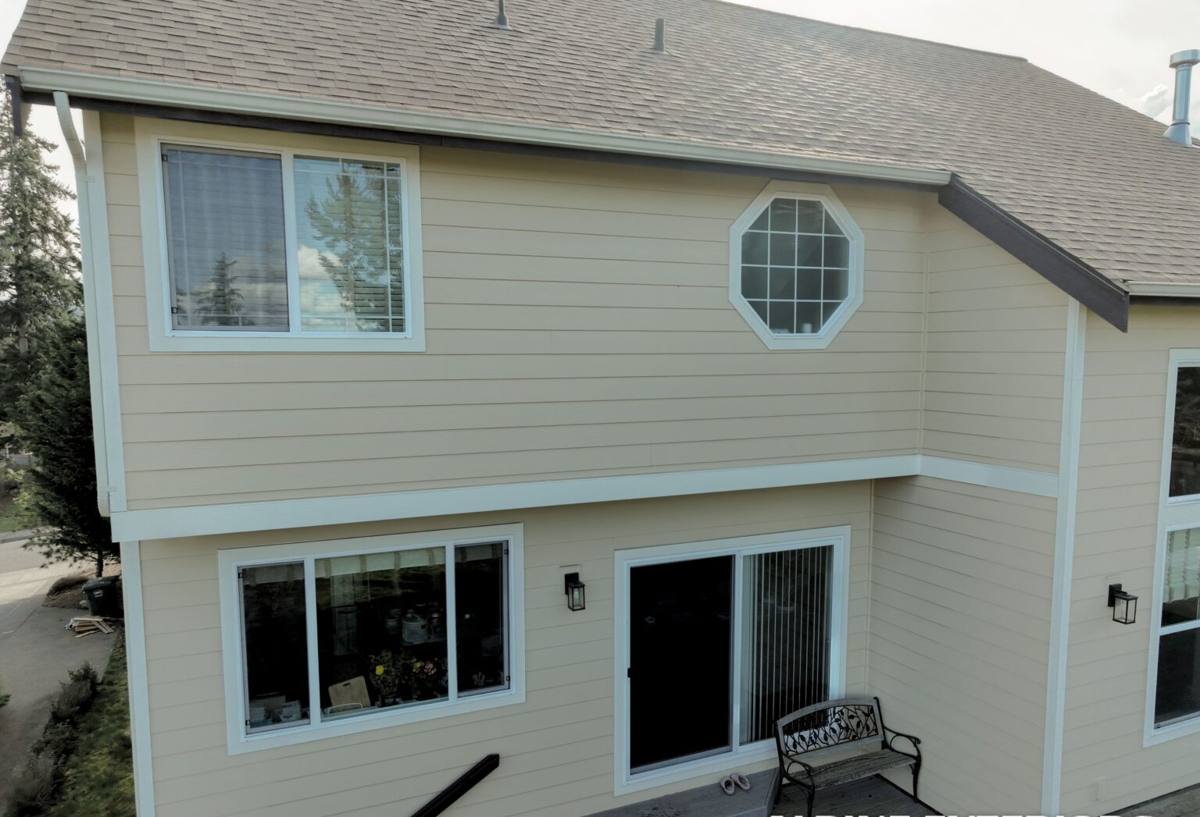
What Osprey's Climate Actually Does to Exterior Siding
Salt air and corrosion
Even homes that aren't waterfront in Osprey sit close enough to the bay and Gulf that salt-laden air is a constant. Salt accelerates corrosion in fasteners, staples, and any metal trim components, and it degrades the surface of materials that aren't formulated to resist it. Over years, that shows up as pitting, streaking, and premature failure of paint and caulk lines.
UV and heat cycling
Florida sun is relentless, and siding on the south and west sides of a house takes the brunt of it almost every day of the year. Materials with thin or field-applied paint finishes chalk, fade, and eventually crack as they expand and contract through daily heat cycles. That cracking is where the real damage starts, because it opens a path for moisture.
Wind-driven rain and humidity
Sarasota County's rainy season doesn't just deliver water from above — storms push rain sideways into siding seams, laps, and trim joints. Combine that with the region's high ambient humidity, and any siding product that isn't dimensionally stable or that traps moisture behind it is set up to rot, delaminate, or grow mold over time.
Wind load
Osprey homes have to meet Florida Building Code wind-load requirements for their exposure category, and siding that isn't rated and fastened correctly for coastal wind exposure can lift, crack, or blow off panel by panel during a strong storm — turning a repair job into a full replacement.
Why James Hardie Is Engineered for This Specific Climate
James Hardie makes region-specific product formulations, and the HZ5 formulation is engineered for humid, high-moisture climates like Florida's — including better resistance to moisture-related damage and cracking than the standard formulation sold in drier parts of the country. That's not a marketing detail; it's the reason we consider Hardie appropriate for Osprey in the first place.
A few specific advantages that matter here:
- Non-combustible core — fiber cement doesn't feed a fire the way wood-based products can, which matters for insurance and peace of mind alike.
- ColorPlus factory finish — baked-on color that resists the fading and chalking that field-applied paint suffers under constant Florida sun, backed by its own finish warranty.
- Dimensional stability — fiber cement doesn't swell, warp, or cup the way wood and some composite products do when humidity swings day to day.
- Pest resistance — termites and wood-boring insects, common in this part of Florida, have no interest in fiber cement.
- Proven track record in coastal Gulf Coast climates — this isn't an untested product for our conditions; it's the standard a lot of Florida contractors have converged on for exactly these reasons.
What Correct Installation Actually Involves
James Hardie siding performs the way it's supposed to only when it's installed to the manufacturer's specifications — and in a climate like Osprey's, the installation details matter more than they would somewhere drier and calmer. Corners get cut in this trade, and the shortcuts don't show up as problems until a year or two later, usually right after a bad storm season.
The details we don't skip
- Correct clearances — minimum gaps from rooflines, decks, and grade so water has somewhere to go instead of wicking into the bottom of the siding.
- Proper flashing at every window, door, and roof intersection, including kick-out flashing where a roofline meets a wall, to direct water away from the structure.
- Corrosion-resistant fasteners driven at the correct depth and spacing — over- or under-driven nails are one of the most common causes of early siding failure.
- Manufacturer-approved, paintable sealant at joints and penetrations, applied where Hardie's specs call for it (and left out where they don't, since over-caulking can trap moisture).
- A drainage plane and weather-resistant barrier behind the siding, installed continuously with no gaps.
- Panel and joint layout planned to shed wind-driven rain rather than catch it.
None of this is exotic. It's just disciplined work, done the same careful way on every wall of the house, including the sides nobody sees from the street.
Comparing Siding Options for a Coastal Sarasota County Home
| Factor | James Hardie Fiber Cement | Vinyl Siding | Wood / Engineered Wood |
|---|---|---|---|
| Salt air resistance | Formulated for humid, coastal climates (HZ5) | Can become brittle and discolored over time in intense UV/salt exposure | Vulnerable to moisture and salt-driven decay without constant upkeep |
| Wind performance | Rated for high wind-load compliance when properly installed | Can crack or blow off in high wind if fasteners loosen | Performance varies widely by product and installation quality |
| Fire resistance | Non-combustible | Melts/deforms under heat | Combustible |
| Moisture/rot risk | Low when installed to spec | Low material rot risk, but trapped moisture behind panels is common | High — primary failure mode in humid climates |
| Finish longevity | Factory ColorPlus finish resists fading/chalking | Color is baked into the material but can chalk and fade in intense sun | Requires repainting/staining on a recurring cycle |
| Typical upkeep | Occasional wash, repaint on a long cycle if not ColorPlus-matched | Low, but damage often means full panel replacement | Frequent — sealing, painting, pest monitoring |
This isn't a knock on every other product on the market — it's why, after weighing these trade-offs for homes in this specific climate, we made the decision to install James Hardie and only James Hardie.
How We Approach a Siding Project in Osprey
1. On-site assessment
We walk the exterior with you, looking at existing siding condition, moisture damage, trim and flashing details, and any areas where the home's exposure to sun, wind, or water is more severe than average.
2. Product and profile selection
James Hardie comes in several lines and profiles — lap siding, board and batten, shingle-style panels, and trim — so we help you choose the profile and ColorPlus color that fits the home's style and the neighborhood context, without pushing you toward anything the house doesn't need.
3. Tear-off and substrate check
Old siding comes off, and we inspect the sheathing underneath for hidden water damage before anything new goes up — installing new siding over a compromised substrate just hides a problem instead of fixing it.
4. Weather barrier and flashing
A continuous, correctly lapped weather-resistant barrier goes down first, with flashing detailed at every penetration before a single piece of siding is installed.
5. Installation to spec
Panels go up following James Hardie's fastening, clearance, and joint requirements — the same standards regardless of which side of the house we're on or how visible that section is.
6. Final inspection and warranty registration
We walk the finished job with you, and register the installation so the manufacturer's product warranty is properly on file in your name.
Why It Matters That We Already Work in This Area
A siding job in Osprey has to account for things a crew unfamiliar with the area might miss: the wind exposure that comes with proximity to open water, the way tree canopy and humidity interact with a home's north and shaded sides, and the county's permitting and inspection process for exterior work. A contractor who already works this part of Sarasota County isn't guessing at any of that — it's routine.
Local presence also matters after the job is done. If a question comes up during the next storm season, or a warranty item needs attention, you're dealing with a company that's still working down the street, not one that's moved on to a different region.
What to Ask Before You Hire Anyone for Siding Work
- Are you a factory-certified James Hardie installer, and can you explain why you chose the product lines you install?
- Will you inspect and address substrate/sheathing damage before installing new siding, not just cover it up?
- What flashing and clearance details will you follow at rooflines, windows, and grade?
- Is your fastening schedule based on Hardie's published specifications, and will you put that in writing?
- Will the manufacturer's warranty be registered in my name after the job is complete?
- Do you carry proper licensing and insurance for exterior work in Sarasota County?
Maintenance Expectations Once It's Installed
Correctly installed James Hardie siding is low-maintenance, not zero-maintenance. Plan on an occasional gentle wash to keep salt residue and organic growth from building up, a periodic look at caulking around penetrations, and prompt attention to any impact damage (from storm debris, lawn equipment, etc.) so it doesn't sit exposed. That's a modest ask compared to the recurring painting, sealing, and repair cycles that wood and some engineered products demand in this climate.
If your Osprey home needs new siding, or you're just trying to figure out whether what's on the house now is holding up the way it should, we're happy to take a look. Estimates are free, there's no pressure, and we'll tell you honestly what we see — use the form below to get started.