 Sarasota Siding
 Composite Decking Built for Laurel Park's Climate
Laurel Park sits close enough to Sarasota Bay and downtown that homes here take the full brunt of what Gulf Coast weather has to offer: long stretches of intense UV, humidity that never really lets up, wind-driven rain off the bay, and salt-laden air that creeps into anything metal or untreated. A deck in this neighborhood isn't just an outdoor living space — it's an exterior structure that has to survive Sarasota County's climate year after year without turning into a maintenance chore or a safety problem.
Composite decking has become the go-to choice for homeowners in this part of Sarasota because it's engineered to resist exactly the conditions that wear down traditional wood decks fastest: moisture cycling, UV fade, and insect damage. But composite is not a "install it and forget it" product. How it's installed — the substructure, the fasteners, the drainage, the ventilation underneath — matters just as much as the decking boards themselves, especially in a coastal-adjacent neighborhood like Laurel Park where humidity sits under the boards nearly year-round.
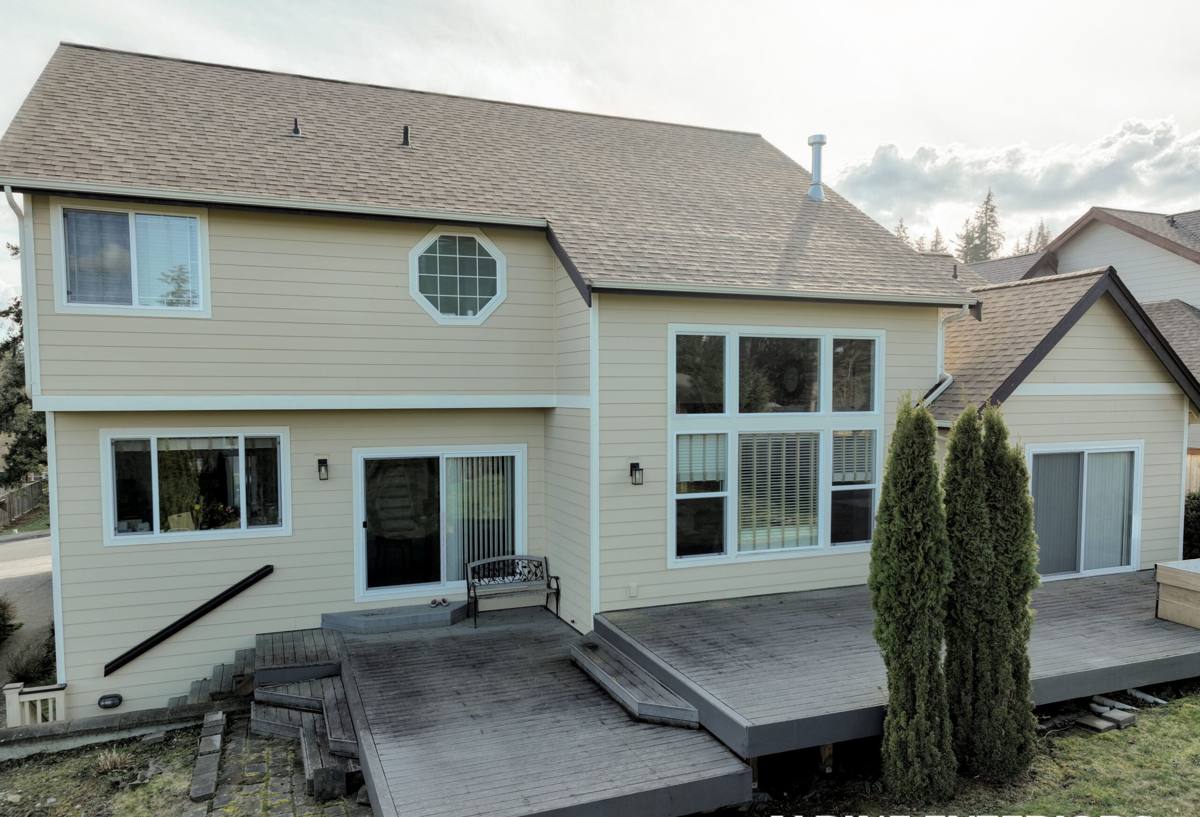
What Laurel Park Homes Specifically Need From a Deck
Older and newer homes alike in this part of Sarasota share a few conditions that should shape how a deck is designed and built:
- Consistent humidity under the deck. Without proper airflow and ground clearance, moisture gets trapped beneath the boards and accelerates corrosion of fasteners and hardware, even when the decking itself is composite.
- Intense, near-constant UV exposure. Central Florida sun is harder on exterior materials than most of the country experiences. Board color, cap-stock quality, and even fastener finish all affect how well a deck holds its look over a decade of sun.
- Wind-driven rain during storm season. Rain in Sarasota rarely falls straight down during a squall or tropical system. It drives sideways and up under fascia and rail bases, which means flashing and water-shedding details at the ledger board and rim joist aren't optional extras — they're what keeps water out of the house framing behind the deck.
- Salt air, even set back from the water. Laurel Park isn't waterfront, but it's close enough to the bay that airborne salt still reaches fasteners, brackets, and railing hardware over time. Standard zinc-coated screws corrode faster here than they would inland.
Composite vs. Other Decking Materials — An Honest Comparison
We install composite decking as our standard recommendation for this area, but it's worth understanding why, and where the trade-offs actually lie. No material is perfect for every budget or every homeowner's priorities.
| Factor | Composite Decking | Pressure-Treated Wood | Tropical Hardwood |
|---|---|---|---|
| Upfront cost | Higher | Lowest | Highest |
| Maintenance | Occasional cleaning, no sealing/staining | Annual sealing or staining required | Periodic oiling to maintain color |
| UV fade resistance | Strong, especially capped boards | Fades and grays without upkeep | Grays naturally unless treated |
| Moisture/rot resistance | Excellent — core doesn't absorb water like wood | Moderate; treatment can wear off at cuts and fastener holes | Good, dense wood, but still organic material |
| Insect resistance | Excellent | Good while treatment is intact | Good, naturally dense |
| Long-term cost | Lower — minimal upkeep spend | Higher over time due to recurring maintenance | Moderate, depends on oiling frequency |
Pressure-treated wood costs less to install, and there's nothing wrong with choosing it for a homeowner on a tighter budget who's willing to reseal it regularly. But in a climate like Sarasota's, that maintenance schedule is not optional — skip a season or two of sealing and the wood starts absorbing moisture at the cuts and fastener holes, which is where rot actually begins. Composite removes that maintenance burden almost entirely, which is why it's become the standard we recommend for Laurel Park decks that see full sun and regular rain exposure.
What a Correct Composite Deck Installation Actually Involves
The Substructure Comes First
The decking boards get the attention, but the framing underneath is what determines whether a deck lasts 10 years or 25. We build substructures with corrosion-resistant fasteners and hardware rated for coastal-adjacent exposure — not the standard hardware that's fine inland but degrades faster here. Joists get proper spacing for the specific composite product being installed, since composite boards have different span ratings than wood and sagging shows up fast if spacing is guessed rather than specified.
Ledger Attachment and Flashing
Where the deck attaches to the house is the single most common failure point on any deck, composite or otherwise. Proper flashing at the ledger board keeps wind-driven rain from working its way behind the siding and into the wall framing. This is a detail that's invisible once the deck is finished, but it's the difference between a deck that protects your home and one that quietly causes rot inside the wall over several rainy seasons.
Ventilation and Ground Clearance
Composite doesn't rot, but the framing underneath it can if airflow is blocked. We maintain proper clearance and ventilation beneath the deck so humidity doesn't sit stagnant against joists and beams — a bigger concern in Sarasota's climate than in drier parts of the country.
Fastening Method
Hidden fastener systems give composite decking its clean, screw-free surface look, but they require precise spacing and correct clip selection for the board profile being used. Installed loosely or with the wrong clip system, boards can shift, squeak, or develop uneven gaps over time — problems that are avoidable with correct installation but are a hassle to fix after the fact.
Railing and Hardware
Railing posts need to be through-bolted to the framing, not just screwed to the rim joist, to meet code load requirements and to actually hold up under real use. Hardware selection matters here too — coastal-adjacent air corrodes standard hardware faster, so we spec fasteners and brackets rated for that exposure.
Our Process for a Laurel Park Deck Project
- On-site assessment. We look at your existing structure (if replacing a deck), the home's ledger attachment point, drainage around the foundation, and sun/shade exposure across the day.
- Design and material selection. We walk through board color, profile, and railing options, and explain the honest trade-offs of each so you're picking based on how you'll actually use the space.
- Permitting. Deck construction in Sarasota County typically requires a permit; we handle that process rather than leaving it to you.
- Demolition (if applicable). Old wood decking and any compromised framing get removed and hauled off.
- Framing and structural work. This is where the substructure, flashing, and ventilation details described above get built correctly the first time.
- Decking, railing, and hardware installation. Boards, hidden fasteners, and code-compliant railing go in last.
- Final walkthrough. We go over the finished deck with you, including basic care so it stays looking right.
Sizing Up Cost Factors Before You Get a Quote
Every deck project prices differently based on a handful of variables. Knowing them ahead of time makes for a more useful conversation when you're ready for an estimate.
| Cost Factor | Why It Matters |
|---|---|
| Deck size and shape | Square footage and complexity (multiple levels, angles, cutouts) both drive labor and material |
| Board tier | Composite lines vary in cap-stock quality, color depth, and warranty coverage |
| Substructure condition | Replacing an existing deck's framing costs more than building fresh over sound ground |
| Height and railing requirements | Elevated decks need code-compliant railing and stair systems, which adds material and labor |
| Site access | Tight lots or limited equipment access in older established neighborhoods can add labor time |
| Permitting | County permit and inspection requirements are part of the project timeline, not an optional add-on |
Maintenance: What Composite Actually Requires
One of the real advantages of composite decking is how little upkeep it demands compared to wood, but "low maintenance" doesn't mean zero. In Sarasota's climate, a few habits keep a composite deck looking and performing its best:
- Sweep off leaves, pollen, and debris regularly — organic material sitting on boards during humid stretches can lead to surface mildew.
- Wash the deck surface a couple times a year with soap and water or a manufacturer-approved cleaner to prevent mildew buildup in shaded areas.
- Check railing hardware and fasteners periodically for corrosion, especially after storm season.
- Keep gutters and downspouts near the deck clear so runoff isn't dumping extra water onto or under the structure.
- Trim back nearby vegetation that keeps sections of the deck shaded and damp longer than the rest.
Why Hiring a Crew That Already Works in Laurel Park Matters
Deck work in this neighborhood isn't the same as deck work in a drier inland climate, and it isn't identical to waterfront construction either. A crew that regularly works Sarasota County jobs already knows the county's permitting process, understands how humidity and salt-adjacent air affect fastener and hardware choices, and has a feel for how existing homes in this area are typically built — which affects how a new deck ties into the house correctly. That local familiarity shows up in details that aren't visible on install day but matter five and ten years down the line: flashing that actually sheds water, hardware that doesn't corrode early, and framing spaced correctly for Florida's humidity swings.
If you're weighing a new composite deck or a replacement for an aging wood deck in Laurel Park, we're happy to come take a look, walk you through your options honestly, and put together a straightforward estimate — no pressure, no upsell. Use the form below to request your free estimate.