 Sarasota Siding
 Roofing a Barrier Island Home Is a Different Job
Longboat Key sits on a narrow barrier island between Sarasota Bay and the Gulf of Mexico, with the island split between Sarasota County and Manatee County. That location is beautiful, and it's also demanding on a roof. Homes here take direct salt-laden air off the Gulf almost every day, sit exposed to storm winds with very little inland buffer, and bake under Florida sun for most of the year. A roofing product that performs fine ten miles inland in Sarasota can age noticeably faster once it's sitting a few hundred yards from open water. Metal roofing, installed correctly, is one of the few systems built to handle that combination — but "installed correctly" is doing a lot of work in that sentence, and it's where a lot of coastal roofs fall short.
This page is specifically about metal roofing on Longboat Key homes: what the island's conditions actually require, what a correct installation looks like, and what our process is when we take on a project there.
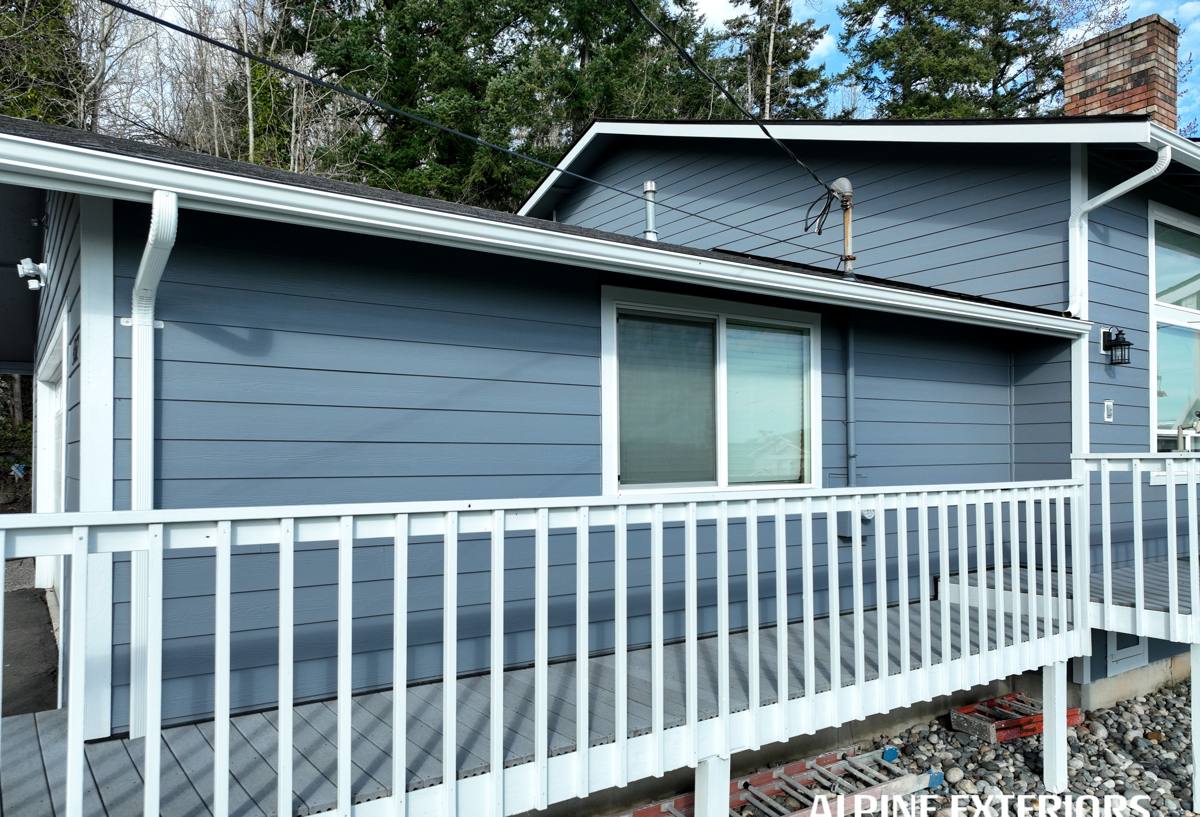
What Longboat Key's Climate Actually Does to a Roof
A few conditions overlap here in a way that doesn't happen everywhere in Sarasota County, and each one affects a different part of the roof system.
Salt air and corrosion
Airborne salt settles on every exposed surface, including fasteners, flashing, and panel seams. Left unmanaged, it accelerates corrosion on lower-grade metals and hardware far faster than the same materials would corrode a few miles inland. This is the single biggest reason coastal metal roofing isn't a "buy whatever's cheapest" decision — the metal, the coating, and the fasteners all need to be matched to a marine environment.
Hurricane-force wind
Longboat Key is directly exposed to Gulf storm systems with no inland terrain to slow wind speeds down. Roof coverings here need to be installed to resist wind uplift, not just wind pressure from the side — uplift is what peels panels and shingles off in a storm, and it's addressed through fastening pattern, panel design, and underlayment, not just the roofing material itself.
Wind-driven rain
During storms, rain on the island doesn't fall straight down — it's pushed sideways and upward under panel edges, ridge caps, and any gap in flashing. A roof can be rated for the wind and still leak if the underlayment and flashing details weren't built to handle water moving in the wrong direction.
Year-round UV exposure
Florida sun is intense for most of the year, and metal roof finishes take a steady dose of it. A quality factory finish holds its color and protective properties for decades; a weak one chalks, fades, and can start to break down well before the metal underneath is anywhere near its own service life.
None of these factors are unique to Longboat Key individually, but the combination — barrier island exposure, hurricane wind, and constant salt and UV — is more concentrated here than in most of Sarasota County, and it's what should drive material and installation choices.
Choosing a Metal Roofing System for Coastal Exposure
Not every metal roofing product is built the same way, and the differences matter more on Longboat Key than they would further inland. The two broad categories are standing seam and exposed-fastener panel systems.
| Factor | Standing Seam | Exposed-Fastener Panel |
|---|---|---|
| Fastener exposure | Fasteners are concealed under the seam, not exposed to weather | Fasteners penetrate the panel face and are exposed to sun, rain, and salt air |
| Long-term maintenance | Very low — no exposed screws to inspect or replace | Exposed screw gaskets degrade over time and need periodic checking, especially near the coast |
| Wind uplift performance | Generally stronger when properly engineered and clipped | Can perform well but is more dependent on fastener spacing and screw condition holding up over time |
| Upfront cost | Higher material and labor cost | Lower upfront cost |
| Typical best fit | Full-time coastal exposure, higher-end homes, longest low-maintenance lifespan | Budget-conscious projects, secondary structures, less direct salt exposure |
For a home with regular direct salt air exposure — which describes most of Longboat Key — we generally steer homeowners toward standing seam. The concealed-fastener design removes the weakest long-term point of an exposed-fastener system: screw gaskets and washers that sit in the weather for the roof's entire life and eventually need attention. It costs more upfront, but on this island it tends to be the lower-maintenance, longer-service-life choice, which matters more here than in a lot of inland neighborhoods.
Metal Choice and Coastal-Grade Coatings
The base metal and the finish matter as much as the panel style. For coastal Florida applications, aluminum is a common choice because it naturally resists corrosion without relying entirely on a coating layer — a real advantage in a salt-air environment. Coated steel systems (including Galvalume-type substrates) can also perform well on the coast, but they depend more heavily on an intact, high-quality finish to keep salt from reaching the base metal, so finish quality and installation care matter more with steel than with aluminum.
On the finish itself, a premium factory-applied PVDF (often called Kynar-type) coating holds color and chalk resistance far longer under constant UV than a basic painted finish. It costs more, but on a roof that's going to sit in direct Gulf sun for decades, it's one of the areas where cutting corners shows up early — in fading, chalking, and reduced corrosion protection at the coating level.
Where Metal Roof Failures Actually Start
When a metal roof underperforms on a coastal property, it's rarely the panels themselves that fail first. It's almost always one of these:
- Mismatched fasteners: Using standard fasteners instead of coastal-rated, corrosion-resistant hardware sets up the earliest failure point on the whole roof.
- Underlayment shortcuts: A high-temperature, self-adhering underlayment matters more here than in most of the country — it's the backup layer that protects the deck if wind-driven rain gets past the panel seams.
- Weak flashing details: Valleys, penetrations, wall transitions, and ridge caps are where water intrusion actually happens. A well-installed panel with poorly detailed flashing will still leak.
- Under-spec'd fastening pattern: Wind uplift resistance comes from clip spacing and fastening schedule matched to the home's actual wind exposure category, not a generic pattern used everywhere.
- Skipped edge and eave detailing: Edges are where wind first gets a grip on a roof system; loose or undersized edge metal is a common point of storm failure.
Every one of these is an installation decision, not a product decision. Two homes with identical metal panels can have very different real-world performance based entirely on how the roof underneath the panels was built.
Wind Ratings and Florida Building Code
Sarasota County enforces the Florida Building Code's wind-borne debris and wind-load requirements, and coastal properties like those on Longboat Key are typically engineered to a higher wind speed design than homes further inland, given the direct Gulf exposure. In practice, that means the roofing system — panels, clips or fasteners, and underlayment — needs to carry a wind uplift rating that's actually appropriate for a barrier island exposure category, not just meet a baseline code minimum. Permitting on a reroof typically requires documentation showing the installed system meets the wind uplift and wind-borne debris requirements for the property's location and exposure. This isn't paperwork for its own sake — it's the difference between a roof that's engineered for what actually hits this island and one that technically passed a permit somewhere else.
HOA and Architectural Review on Longboat Key
A large share of homes and condominiums on Longboat Key fall under some form of HOA, condo association, or architectural review process, and many of these have specific rules on exterior appearance — including roofing material, panel profile, and color. This is worth raising before a project starts, not after materials are ordered. We factor association approval into project timelines and can work from whatever documentation an association requires for submittal. It's a step that's easy to overlook and can hold up a project for weeks if it's discovered late.
Our Process for a Longboat Key Metal Roof
The process we follow is built around the conditions specific to this island:
- On-site inspection: We look at the existing roof structure, deck condition, and exposure — a bay-side lot and a direct Gulf-front lot don't always call for the same spec.
- System and finish selection: We walk through panel style, metal type, and coating options based on your home's exposure, HOA requirements if applicable, and budget.
- Permitting: We handle the wind uplift documentation and permitting through the appropriate local jurisdiction, and coordinate with your HOA or association submittal if one applies.
- Tear-off and deck check: We inspect the deck once the old roofing is off — salt air can affect deck fasteners and sheathing over time, and we address any issues found before covering it back up.
- Underlayment and flashing: We install a coastal-grade underlayment and detail every valley, penetration, and transition before a single panel goes down.
- Panel installation: Panels and fasteners are installed to the fastening schedule required for the property's wind exposure, not a generic default.
- Final walkthrough: We review the completed roof with you, including what routine maintenance looks like going forward.
Living With a Metal Roof on Longboat Key
A correctly installed coastal-grade metal roof is genuinely low-maintenance, but "low-maintenance" isn't "no-maintenance" this close to the Gulf. A short annual routine goes a long way:
- Rinse accumulated salt residue off the roof surface periodically, especially after long dry stretches without rain
- Keep gutters and valleys clear of debris so water has a clean path off the roof during heavy rain
- After any major storm, do a visual check (or have it checked) for loose flashing, lifted edges, or panel damage
- Trim back overhanging vegetation that can drop debris or hold moisture against the roof surface
- Have exposed-fastener systems checked periodically for gasket wear if that's the system installed
Why It Matters That We Already Work This Island
Longboat Key isn't a generic Sarasota address. Permitting runs through Sarasota County or Manatee County depending on where the property sits, wind exposure requirements are stricter than an inland home would need, HOA and association review is common, and the day-to-day salt exposure is more intense than most of the surrounding mainland. A crew that only occasionally works barrier island properties can miss any one of those factors — the wrong fastener grade, an underlayment spec that's fine inland but not here, or a permitting detail that a mainland-focused crew doesn't run into often. We work this island regularly enough that those details are part of the normal process, not something we're figuring out for the first time on your roof.
If you're weighing a metal roof for a Longboat Key home, we're happy to walk the property, talk through system and finish options for your specific exposure, and give you a straightforward, no-pressure estimate. There's a form below — reach out and we'll set up a time to take a look.