 Sarasota Siding
 Deck Repair Built for Nokomis Conditions
Nokomis sits on Sarasota County's Gulf coast, and that location shapes what a deck goes through every year. Between hurricane-season winds, wind-driven rain that finds its way into every seam and fastener hole, intense year-round UV, and the steady presence of salt air off the coast, decks here age faster than the same structure would inland. A deck that looks fine from the yard can have soft framing underneath, corroded hardware, or connections that have quietly loosened over several storm seasons.
We repair decks for homeowners throughout the Nokomis area, and we see the same failure patterns over and over because they're driven by the same regional exposure. This page covers what typically goes wrong with decks here, what a proper repair actually involves, and how to decide between repairing and replacing.
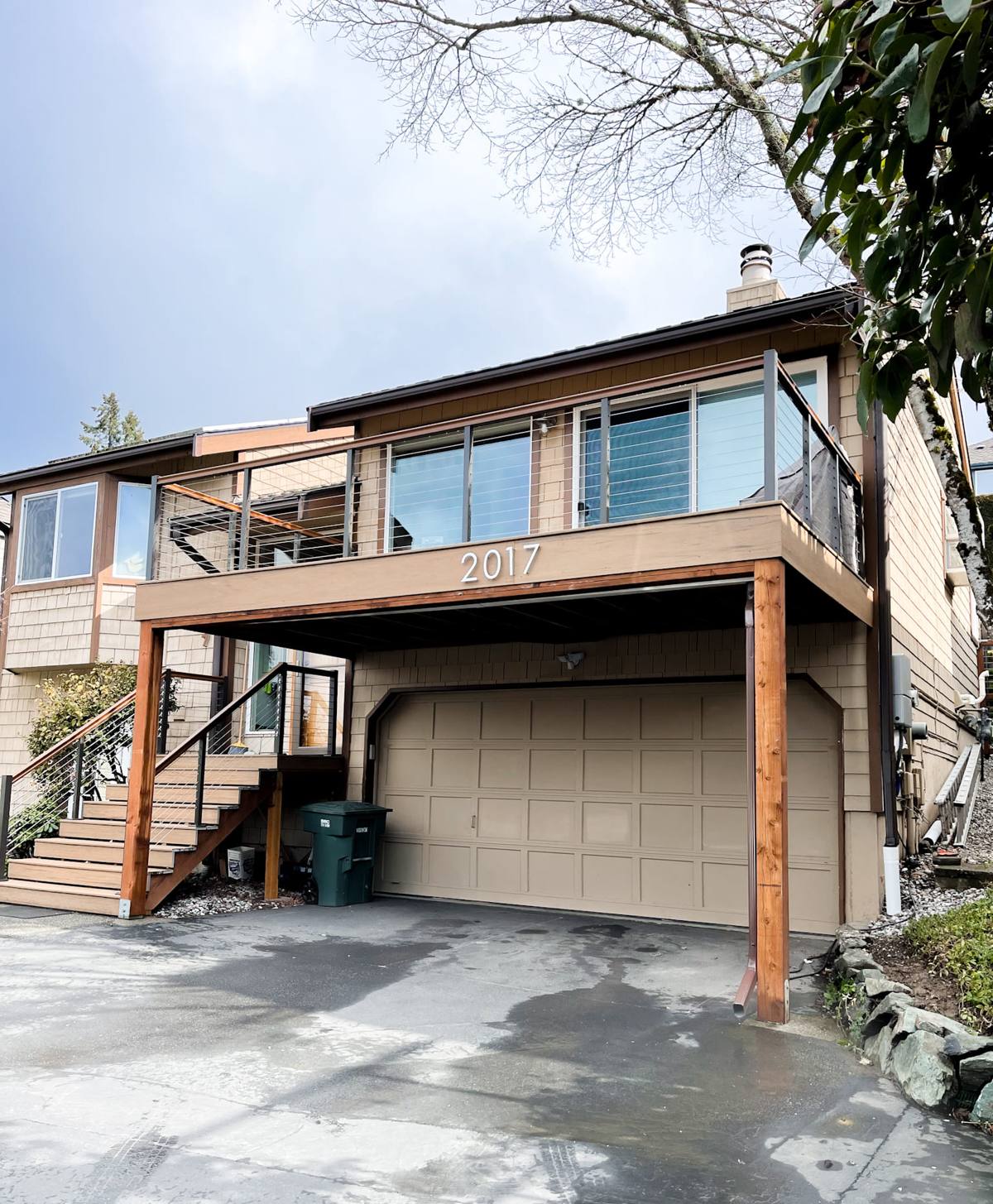
Signs Your Deck Needs Attention
Deck problems in this climate tend to start underneath or inside a structure before they're visible on the surface. A walk-through with a trained eye catches issues most homeowners miss until a board gives way.
- Boards that feel spongy, bouncy, or noticeably flexible when you walk across them
- Nails or screw heads popping up above the deck surface
- Rust streaks running down from fasteners, brackets, or ledger connections
- Gaps opening up between boards, or boards cupping and warping
- Railings or posts that wiggle when pushed
- Graying, splintering, or a chalky surface texture on wood decking
- Soft spots where the deck meets the house, especially around the ledger board
- Visible gaps or separation where the deck attaches to the house framing
Any one of these on its own might be minor. Several together, especially near the ledger board or support posts, usually means it's time for a closer inspection rather than a wait-and-see approach.
Why the Ledger Board Deserves Extra Attention
The ledger board — the piece that attaches the deck to the house — is the single most common source of serious deck failure, and it's also the hardest part for a homeowner to inspect without pulling back siding or decking. Wind-driven rain pushes moisture into this joint over time, and if flashing was installed poorly or has failed, water sits against the wood and the house framing behind it. We check this connection closely on every repair call in the Nokomis area because it's where a cosmetic problem and a structural one most often overlap.
What's Actually Causing the Damage
Deck damage here isn't random — it's the predictable result of a handful of environmental stresses acting on a structure year after year.
UV Exposure
Florida sun breaks down the lignin in wood fibers and degrades the UV inhibitors in composite decking and sealants. Over time this shows up as graying, surface checking, and a decking material that's more brittle than it was when installed. Fasteners and finishes rated for northern climates often underperform here simply because they weren't tested against this much annual sun exposure.
Wind-Driven Rain
Rain that falls straight down mostly runs off a deck the way it's designed to. Rain driven sideways by wind gets pushed under railings, into fastener holes, behind flashing, and into board-to-board gaps that were never meant to shed water horizontally. This is one of the main reasons decks fail from the inside out rather than the top down.
Salt Air and Corrosion
Being close to the Gulf means airborne salt is a constant, low-level presence even without a direct storm. Salt accelerates corrosion in fasteners, brackets, and structural hardware. Once a fastener starts to corrode, it loses holding strength well before it looks visibly bad, which is why hardware condition matters as much as the wood or composite decking itself.
Hurricane and Tropical Storm Winds
High wind loads stress every connection point on a deck — railing posts, joist hangers, ledger attachments. A deck can survive a storm with no visible damage and still come out of it with loosened connections that won't show a problem until the next event puts real load on them.
Repair or Replace? How We Decide
Not every damaged deck needs to be torn out. The right call depends on where the damage is, how much of the structure it affects, and the age and condition of the framing underneath the surface. We inspect before we recommend anything, and we explain what we find in plain terms.
| Condition | Repair Usually Makes Sense | Replacement Usually Makes Sense |
|---|---|---|
| Decking boards | A few boards cupped, splintered, or loose | Widespread cupping, rot, or splintering across most of the deck |
| Framing/joists | Isolated soft spots caught early | Soft or spongy framing in multiple areas |
| Ledger board | Flashing failure caught before framing rot sets in | Rot present in the ledger or adjacent house framing |
| Railings/posts | Loose connections, minor wobble | Cracked or rotted posts, unstable structure |
| Fasteners/hardware | Surface corrosion, isolated failures | Widespread corrosion across brackets and hangers |
| Deck age | Under 10-15 years with good bones | Original structure aging out, multiple systems failing together |
The honest answer for a lot of Nokomis decks we look at is a hybrid: replace the decking surface while the underlying framing is still sound, or rebuild framing in one section while leaving a healthy section alone. We'll tell you when a full replacement is genuinely the better value rather than defaulting to the bigger job.
Materials: What We Use and Why
Material choice matters more here than in a lot of the country, because whatever goes into a Nokomis deck has to hold up against sun, salt, and storm-driven moisture at the same time.
| Material | Maintenance Burden | Moisture/Salt Behavior | Best Fit |
|---|---|---|---|
| Pressure-treated pine | Regular sealing/staining needed | Prone to cupping and splintering if maintenance lapses | Budget-conscious repairs, framing |
| Composite decking | Low — no sealing or staining | Resists rot well; UV-stable finishes hold color longer | Long-term, low-maintenance surfaces |
| Tropical hardwoods | Periodic oiling for appearance | Naturally dense and rot-resistant | Homeowners who want a natural wood look |
| Galvanized/stainless hardware | None | Stainless resists salt corrosion best; galvanized is a solid mid-tier option | All fasteners and structural connectors in coastal areas |
We don't push one product as a universal answer. Composite decking cuts down on maintenance calls but costs more up front; pressure-treated wood costs less initially but only holds up if it's sealed on a real schedule. For hardware, we lean toward stainless or high-grade galvanized fasteners on repair work near the coast — it costs a bit more than standard hardware, but replacing corroded brackets in five years costs a lot more than that.
Our Repair Process
- Inspection — We check decking, framing, the ledger connection, railings, posts, and fastener condition, including areas that aren't visible from a casual walk-through.
- Written assessment — You get a clear explanation of what's damaged, what's causing it, and what your realistic options are, in plain language.
- Scope and estimate — We spell out what's being repaired versus what's being left alone, and why.
- Repair work — Damaged boards, framing, or hardware are removed and replaced to match the surrounding structure's load requirements, not just patched over.
- Connection and flashing check — Every repair includes a check of the ledger flashing and structural connections, since this is where recurring damage most often originates.
- Final walk-through — We go over the completed work with you before we consider the job done.
Permits and Code Compliance
Structural deck repairs in Sarasota County — particularly anything touching framing, ledger attachment, or railings — can require permitting and inspection depending on scope. We handle that process as part of the job rather than leaving it on the homeowner, so the finished work is documented and up to code, not just visually repaired.
Why a Local Crew Matters for This Job
Deck repair isn't the same job in Nokomis that it is somewhere without salt air and hurricane exposure. A crew that works this specific area regularly knows which failure points show up first in this climate, what hardware actually holds up here versus what's rated for it on paper, and how local permitting works in practice. That local familiarity is the difference between a repair that looks good for a season and one that holds up through the next storm cycle.
We're not travelling in from another market to bid a job and move on. We work in this area consistently, which means we're accountable for how our repairs hold up over time — not just how they look the day we finish.
Maintenance That Extends the Life of a Repair
A good repair lasts longer with a little routine attention, especially given how hard this climate is on decks.
- Rinse salt residue off the deck surface and railings periodically, especially after storms
- Reseal or restain wood decking on the schedule the product actually requires, not just when it looks faded
- Check fastener heads and hardware for early rust once or twice a year
- Keep gutters and downspouts near the deck clear so runoff isn't dumping extra water onto or under the structure
- After any major storm, do a quick visual check of railings, posts, and the ledger connection before heavy use
If your Nokomis deck has soft spots, storm damage, corroded hardware, or is just starting to show its age, we're glad to take a look and give you a straight answer about what it needs. Reach out for a free, no-pressure estimate using the form below.