 Sarasota Siding
 Why Nokomis Homes Need Siding Built for This Climate
Nokomis sits close enough to the Gulf that salt air is a daily fact of life, not an occasional nuisance. Add in Sarasota County's exposure to hurricane-force winds, wind-driven rain that gets pushed sideways into wall assemblies, and some of the most intense year-round UV in the continental United States, and you have a climate that is genuinely hard on exterior building materials. Siding here doesn't get a slow, gentle decline — it gets tested every storm season and every summer, and the cheap shortcuts show up fast.
We install exclusively James Hardie fiber cement siding, and this page explains why that's the right call specifically for a home in Nokomis, what a correct installation actually involves, and how our process is built around the realities of this stretch of the Gulf Coast.
What Hurricane-Force Wind and Wind-Driven Rain Do to the Wrong Siding
Most siding failures in this area aren't caused by a single storm. They're caused by years of small moisture intrusions that finally add up. Wind-driven rain during Sarasota's frequent thunderstorms and tropical systems doesn't just fall on a wall — it gets forced horizontally and even upward under wind pressure, finding any gap in a lap joint, a poorly flashed window, or a seam that wasn't caulked correctly.
Materials that swell, rot, or delaminate when they take on moisture are a poor match for that pattern. Wood-based products and engineered wood siding can hold water at the panel edges and behind trim long enough for rot to start, especially in a climate that rarely gives a house a long, dry stretch to fully evaporate that moisture back out. Vinyl siding doesn't rot, but it isn't rated to withstand true hurricane-force gusts the way a heavier, properly fastened fiber cement panel is, and it can crack or blow off in sustained wind events.
Fiber cement doesn't have that vulnerability. It's a cement-and-cellulose composite that doesn't absorb and swell the way wood does, and when it's installed with the correct fastening pattern and clearances, it's rated to hold up under the wind loads Sarasota County actually sees.
Salt Air and Metal Components
Salt air doesn't just affect the siding panel itself — it affects everything attached to it. Fasteners, flashing, and trim all take a beating from airborne salt near the Gulf. Part of doing this job correctly in Nokomis means using corrosion-resistant fasteners and flashing details suited to a coastal environment, not the standard specs you'd use on a home twenty miles inland.
Why We Install Only James Hardie Fiber Cement in Nokomis
We made a deliberate decision years ago to stop installing LP SmartSide, vinyl, Cemplank, Allura, and primed wood siding products, and to install James Hardie exclusively. That's not a marketing position — it's a standard we hold because we've seen what holds up in this climate and what doesn't.
James Hardie fiber cement is non-combustible, which matters in a state where wildfire risk and lightning-sparked brush fires are a real, if secondary, concern. It's engineered specifically to resist moisture, pests, and the kind of freeze-free, high-humidity decay cycle that Gulf Coast homes are exposed to nearly twelve months a year. The ColorPlus factory finish is baked on under controlled conditions rather than field-applied, which gives it far better fade and chip resistance against Sarasota's intense UV exposure than a job-site paint job can match — and it comes backed by a real, transferable warranty structure.
Just as important, James Hardie makes climate-specific product lines. Homes in this region should be installed with the HZ5 formulation, engineered for high-humidity, high-moisture climates like ours, rather than a generic panel meant for a drier part of the country. That distinction is easy for a homeowner to miss and easy for a contractor to skip if they're not paying attention — and it's one of the reasons product choice alone doesn't guarantee a good result. The installation has to match the product.
What a Correct Fiber Cement Installation Involves
Fiber cement siding is only as good as the installation behind it. A large share of the "siding failures" we get called out to inspect in Sarasota County aren't material failures at all — they're installation shortcuts that let water behind a perfectly good product. Doing it right on a Nokomis home means:
- A proper weather-resistant barrier installed and lapped correctly behind the siding, not just stapled up as an afterthought
- Flashing at every window, door, and roofline intersection, integrated with the barrier so water sheds outward instead of behind the panel
- Correct fastener spacing and placement, using corrosion-resistant fasteners suited to a coastal environment
- Manufacturer-specified clearances from the roofline, decks, patios, and grade, so panels aren't sitting in standing water or trapped moisture
- Properly sealed and painted cut edges wherever a factory-finished panel is field-cut
- Correct joint treatment at every seam, using sealant rated for exterior, UV-exposed use
Skip any one of these steps and you can end up with moisture problems behind siding that looks fine from the curb — the kind of hidden damage that's expensive to find and expensive to fix once it's been sitting behind the wall for a year or two.
Fastening for Wind Zones
Sarasota County's building code reflects its wind exposure, and fiber cement fastening patterns have to be tightened up compared to a low-wind-zone install. Nail spacing, fastener embedment, and the correct fastener type all change based on the wind zone a home sits in — this isn't a place to use a one-size-fits-all fastening schedule pulled from a national average spec sheet.
Comparing Siding Options for a Coastal Sarasota Home
Homeowners in Nokomis often ask us to walk through why we settled on one product instead of offering several. Here's an honest look at how the major categories compare under this area's specific conditions.
| Material | Moisture Behavior | Wind Resistance | UV/Fade Resistance | Long-Term Maintenance |
|---|---|---|---|---|
| James Hardie Fiber Cement | Does not swell or rot; HZ5 formulation engineered for high-humidity climates | Rated for high wind loads when installed to spec | Factory-baked ColorPlus finish resists fading | Low — occasional rinse, no repainting cycle for years |
| Vinyl Siding | Does not rot but can trap moisture behind panels if not vented properly | Can crack, warp, or blow off in sustained high wind | Color runs through material but can fade and chalk under intense UV | Low, but damaged panels often need full replacement, not spot repair |
| LP SmartSide / Engineered Wood | Wood-based core is vulnerable to swelling and rot if seams fail | Reasonable when new; long-term performance tied to moisture condition | Field-applied or factory finish, variable fade resistance | Moderate to high — edge sealing and caulk upkeep are critical |
| Primed Spruce / Cedar | Natural wood; absorbs moisture and is prone to rot in humid coastal climates | Moderate; heavier maintenance burden after storm exposure | Requires regular repainting to protect against UV and moisture | High — repainting and caulking on a recurring cycle |
This is why we don't offer all four as equal options with different price points. In a climate like Nokomis sees, the moisture and UV columns aren't a minor consideration — they're the difference between siding that looks the same in year fifteen and siding that needs significant work by year seven or eight.
Our Process, From Estimate to Finished Job
We keep the process straightforward and try to remove the guesswork for homeowners who haven't been through a full siding replacement before.
- Free on-site estimate. We walk the home, check the existing wall assembly and any moisture or rot issues, and measure for material.
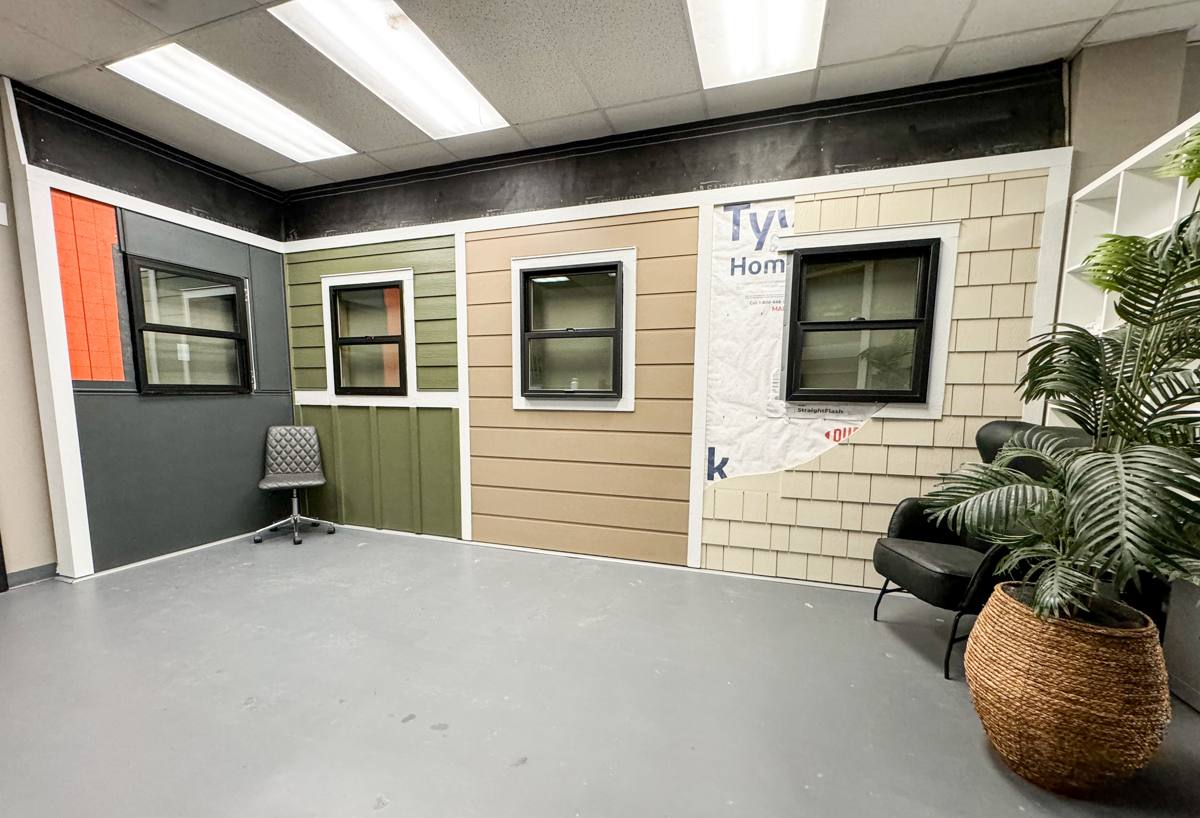
- Product and color selection. We go over James Hardie's HZ5 lines, textures, and ColorPlus color options so you can see and touch samples before deciding.
- Permitting. Sarasota County requires permits for siding replacement, and we handle that process rather than leaving it to the homeowner.
- Tear-off and inspection. Once old siding comes off, we inspect the sheathing and framing underneath for any hidden moisture or rot damage before closing the wall back up.
- Weather barrier and flashing. This step determines whether the siding stays watertight for its full lifespan, and we don't rush it.
- Installation to manufacturer spec. Correct fastening, clearances, and joint treatment for our wind zone.
- Final walkthrough. We review the finished work with you before calling the job complete.
Maintenance and Longevity in Nokomis's Salt Air and UV
One of the real advantages of fiber cement over wood-based alternatives is how little ongoing maintenance it asks for — but "low maintenance" doesn't mean "zero maintenance," especially this close to the Gulf. Salt air can leave a residue on any exterior surface over time, and an occasional gentle rinse with a garden hose keeps that from building up and keeps the ColorPlus finish looking the way it did on installation day.
It's also worth periodically checking caulked joints around windows, doors, and trim — sealant is the one component of the assembly with a shorter service life than the siding itself, and catching a failed bead of caulk early is a five-minute fix instead of a moisture problem waiting to happen. A quick visual check after major storm events, looking for impact damage or loosened trim, is good practice for any coastal home regardless of siding material.
What Drives Cost for a Nokomis Siding Project
Every home is different, so we don't publish blanket pricing, but the factors that move a fiber cement siding estimate up or down are consistent:
| Cost Factor | Why It Matters |
|---|---|
| Home size and wall complexity | More corners, dormers, and roofline intersections mean more flashing detail and labor time |
| Condition of existing sheathing | Rot or moisture damage found during tear-off has to be addressed before new siding goes up |
| Siding profile and texture | Lap siding, shingle-style panels, and board-and-batten each price differently |
| Trim and accessory scope | Fascia, soffit, and trim replacement alongside siding adds to total project scope |
| Access and site conditions | Multi-story sections, tight lot lines, and landscaping can affect labor time |
The only way to get an accurate number is a walkthrough of the actual home, which is why we start every project with a free, no-obligation estimate rather than a phone quote.
Why Hiring a Crew That Already Works in Nokomis Matters
A siding crew that regularly works Sarasota County jobs already knows the local wind zone requirements, the county permitting process, and the specific moisture and salt-air conditions this stretch of coastline creates. That's not something a crew primarily working inland, drier climates picks up overnight — it comes from doing the work here, seeing what fails and why, and adjusting fastening, flashing, and product selection accordingly.
It also matters for something more practical: availability after a storm. A contractor with an established local presence is easier to reach for a warranty question or a follow-up inspection than one that drove in from out of the area for a single job.
If you're planning a siding project in Nokomis and want to talk through what correct, climate-appropriate fiber cement installation looks like for your home, we're happy to walk the property and give you a straightforward, no-pressure estimate — no obligation, just an honest look at what your home needs.