 Sarasota Siding
 Building a Deck in Osprey Means Building for the Coast
Osprey sits along Sarasota County's coastal corridor, and that location shapes almost every decision that goes into a deck here. Homes in this part of the county deal with salt-laden air blowing off the Gulf and the Intracoastal, long stretches of intense UV exposure nearly year-round, sudden wind-driven rain squalls, and the real possibility of hurricane-force winds during storm season. A deck built the way you'd build one in a landlocked, low-humidity climate simply won't hold up the same way here.
That doesn't mean every deck in Osprey needs to look the same or cost a fortune — it means the fasteners, framing connections, footing depth, board spacing, and finish all need to be chosen with this specific environment in mind. A deck that looks identical to one built inland can fail years earlier if the wrong hardware or wrong drainage details were used.
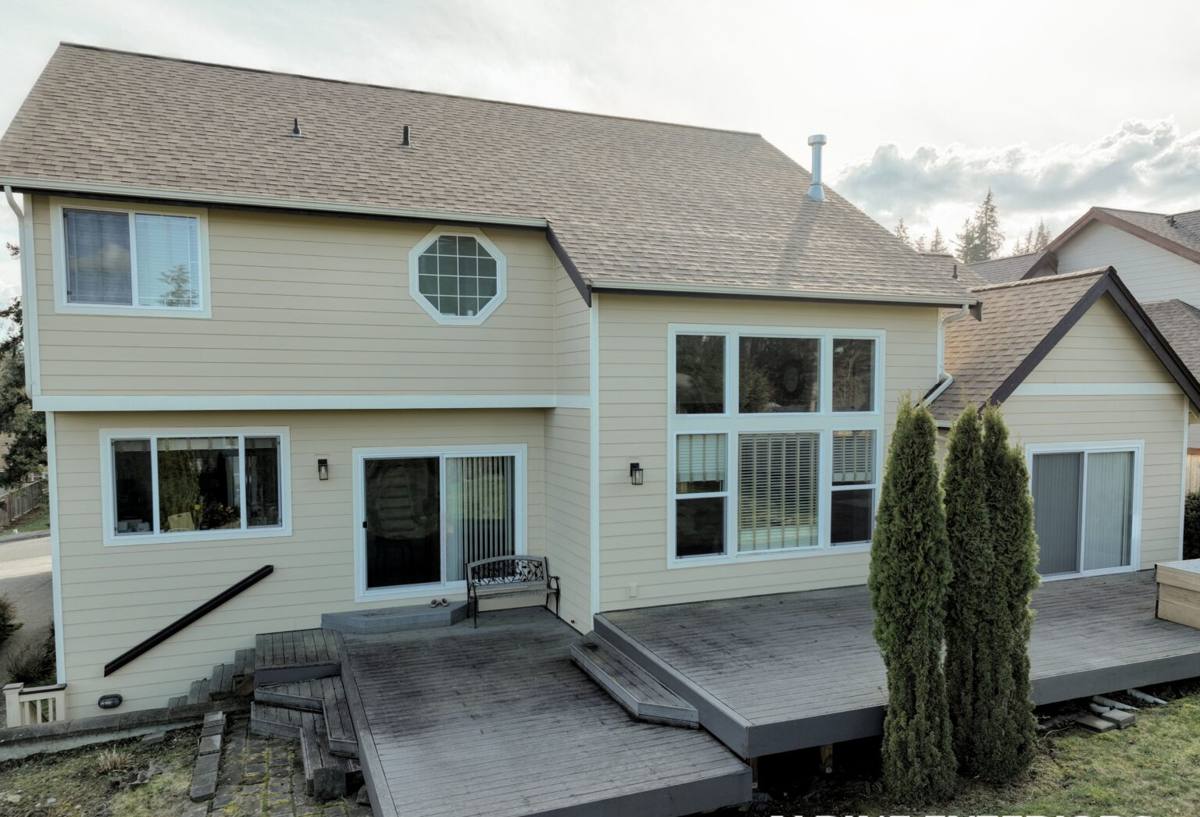
What Coastal Exposure Actually Does to a Deck
Salt Air and Corrosion
Salt air accelerates corrosion in any metal that isn't rated for a coastal environment. Standard galvanized fasteners and connectors can start rusting and staining within a couple of years in a salt-exposed setting like Osprey, long before the wood or composite decking itself shows wear. Once fasteners corrode, they lose holding strength — and a deck is only as strong as its connections.
UV and Heat
Florida sun is hard on any exterior material. Wood grays and can check or splinter without regular sealing. Lower-grade composite boards can fade unevenly, especially where part of the deck sits in shade from a roofline or tree and the rest sits in full sun. Dark-colored decking also gets genuinely hot underfoot in Sarasota County summers, which matters for barefoot use around a pool or spa.
Wind-Driven Rain and Moisture
Afternoon storms in this area don't just fall straight down — wind pushes rain sideways and up under railings, ledger boards, and fascia. Any gap in flashing or any spot where water can sit against a ledger board or post base becomes a rot or corrosion starting point. Proper drainage gaps between boards and correct water management at the house connection matter more here than in drier climates.
Wind Uplift
Sarasota County's building code reflects its hurricane exposure, and decks are structures the code cares about. Railings, post connections, and the deck's attachment to the house all need to be engineered to resist uplift and lateral loads, not just support the weight of people standing on them.
Material Choices for an Osprey Deck
There's no single "best" decking material — there's a best fit for your budget, your maintenance appetite, and how close your lot sits to open water or a canal. Here's how the common options actually compare in this climate:
| Material | Coastal Durability | Maintenance | Typical Lifespan Here |
|---|---|---|---|
| Pressure-treated pine | Fair — needs protective sealing | Annual cleaning + resealing every 1-2 years | 10-15 years with upkeep |
| Tropical hardwood (e.g. ipe) | Good — naturally dense | Periodic oiling to maintain color | 20-25+ years |
| Capped composite | Very good — resists moisture and salt | Occasional washing, no sealing | 25-30 years |
| PVC decking | Excellent — fully synthetic, no wood fibers | Lowest — occasional washing | 25-30+ years |
We're straightforward about trade-offs. Real wood has a warmth and price point that appeals to a lot of homeowners, but it demands a real maintenance commitment in this climate — skip a resealing cycle or two and you'll see it. Composite and PVC cost more upfront but remove most of that maintenance burden, which is often the right call for a rental property, a second home, or anyone who wants to spend weekends using the deck instead of maintaining it.
What a Correctly Built Deck Involves Here
- Footings sized and set to local frost-free, load-bearing depth requirements — not just "deep enough to look solid"
- Structural connectors and fasteners rated for coastal/salt exposure (stainless steel or coated hardware specified for marine-adjacent use, not standard galvanized)
- Proper ledger board flashing where the deck attaches to the house, so wind-driven rain can't work its way behind the siding
- Board spacing that allows real drainage and airflow underneath, not just a tight, "finished" look that traps moisture
- Railing and post connections engineered for wind loads, not just fastened for looks
- Correct joist spacing and beam sizing for the actual decking material chosen — composite and hardwood have different span requirements than standard lumber
- A finish or sealing plan appropriate to the material, from day one
Skipping any one of these doesn't usually show up as a problem on day one. It shows up two, five, or ten years later as a soft spot near the house, a rusted-out railing post, or boards that cup and split. Coastal environments don't forgive shortcuts the way inland ones sometimes do.
Permitting and Sarasota County Code
Deck construction in Osprey falls under Sarasota County's building permit and inspection process, which reflects the state's wind-load and coastal construction standards. That typically means a permit application, plan review for structural details like footing size and connection hardware, and inspections at key stages of the build. Depending on your specific property and its proximity to water, additional review may apply.
We handle the permitting process as part of the job rather than treating it as an afterthought. A deck built without a permit can create real problems later — at resale, with insurance claims after a storm, or if the work doesn't hold up to inspection standards down the road.
Our Process for an Osprey Deck Project
1. On-Site Assessment
We walk the property, look at how the deck will connect to the house, check drainage and grading, and talk through how you actually plan to use the space — dining, lounging, pool access, grilling.
2. Design and Material Selection
We lay out a design that fits the house and the lot, and walk through material options honestly, including what each one will actually cost to own over time in this climate, not just to build.
3. Permitting
We prepare and submit what Sarasota County requires and coordinate the inspection schedule so there are no surprises mid-project.
4. Construction
Framing, footings, ledger connection, decking, and railings are built to the standards outlined above — with coastal-rated hardware and correct flashing as a baseline, not an upsell.
5. Final Walkthrough
We go over the finished deck together, cover any maintenance recommendations specific to the material you chose, and make sure everything is signed off through final inspection.
Cost Factors Worth Understanding Upfront
| Factor | Why It Moves the Price |
|---|---|
| Decking material | Pressure-treated costs least upfront; hardwood and PVC/composite cost more but reduce long-term maintenance |
| Height off grade | Taller decks need more substantial framing, footings, and stair/railing work |
| Size and shape | Multiple levels, curves, or built-in features add labor beyond a simple rectangular footprint |
| Railing style | Cable, glass, and custom railing systems cost more than standard baluster railing |
| Site access | Waterfront or tight-lot access can add equipment or labor time |
| Permitting complexity | Proximity to water or flood zone status can add review requirements |
We'll always give you a written estimate that breaks these factors out, so you understand what's driving the number rather than a single lump figure.
Maintenance Once Your Deck Is Built
- Rinse salt residue and debris off the deck surface periodically, especially after storms
- Inspect fasteners and railing connections at least once a year for corrosion or looseness
- Reseal or oil wood decking on the schedule appropriate to that species — don't wait until it's already graying and checking
- Keep gutters and downspouts near the deck clear so water isn't dumping directly onto or under it
- Trim back vegetation that traps moisture against framing or decking
- Address any soft spots, loose boards, or rust spots right away rather than waiting for the next project season
Why a Crew That Already Works Osprey Matters
Building decks in Osprey isn't the same job as building them forty miles inland. A crew that already works this part of Sarasota County knows which hardware actually holds up to the salt air here, understands the county's permitting expectations, and has already seen how different materials perform a few years in — not just on a spec sheet. That local track record is the difference between a deck that's still solid in year fifteen and one that starts needing repairs in year five.
If you're planning a new deck or replacing one that's showing its age, we're happy to take a look and talk through what makes sense for your home. Reach out for a free, no-pressure estimate using the form below.