 Sarasota Siding
 Rosemary District Homes Face a Different Kind of Wear
Rosemary District sits close to downtown Sarasota and Sarasota Bay, which means its housing stock — a mix of older in-town bungalows and newer infill construction — takes the full brunt of what Gulf Coast weather does to exterior walls. Hurricane-force wind events, wind-driven rain that gets pushed sideways under trim and around openings, intense year-round UV exposure, and salt-laden air moving in off the bay all combine to age siding faster here than they would in a landlocked climate. A repair that would hold up for a decade in a drier, cooler part of the country can fail in a fraction of that time on the Gulf Coast if it isn't done correctly.
That's the reason a "local service" page like this one exists separately from a general siding repair page. Rosemary District's proximity to the water, its mix of older wood-framed homes and newer builds, and its walkable, closely-spaced lot layout all change what a correct repair looks like compared to a home ten miles inland in Sarasota County.
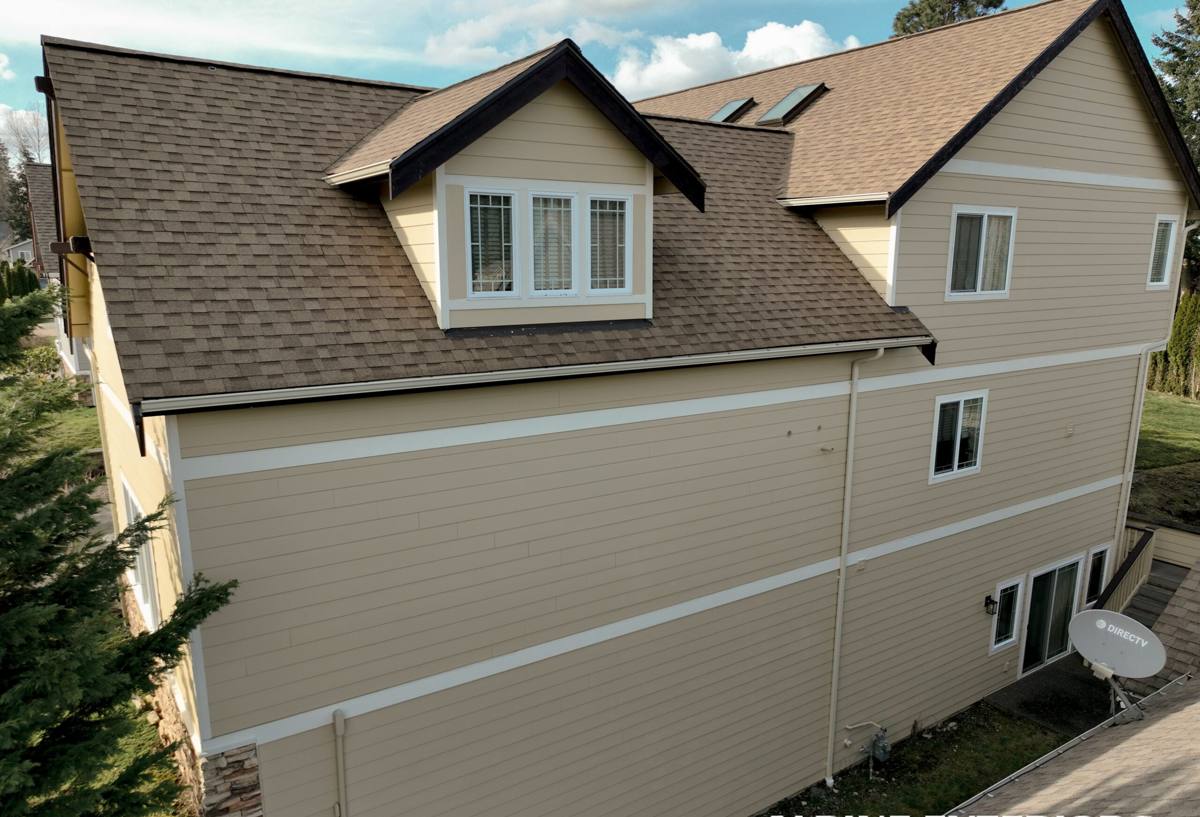
What Actually Causes Siding Damage in This Climate
UV and Heat Cycling
Florida sun is relentless on painted and coated surfaces. UV breaks down paint film and factory finishes over time, and the daily heat-up/cool-down cycle causes siding materials to expand and contract. Materials that aren't dimensionally stable — or paint systems not engineered for this exposure — chalk, fade, and crack faster near the coast than almost anywhere else in the country.
Wind-Driven Rain Intrusion
Sarasota doesn't just get rain — it gets rain pushed horizontally by wind, which finds any gap in flashing, caulking, or lap joints and drives moisture behind the siding rather than off of it. Once water gets behind a wall covering, the damage is often invisible from the street until it's advanced: soft trim, stained sheathing, or a musty smell inside an exterior wall.
Salt Air and Fastener Corrosion
Being close to Sarasota Bay means airborne salt is a constant, low-grade attacker on anything metal. Nails, screws, and flashing that aren't rated for coastal exposure corrode faster, and a corroded fastener eventually loses its grip — which is one of the more common, and more overlooked, causes of loose or popped siding boards in this part of the county.
Storm Impact and Wind Uplift
Beyond named storms, Sarasota gets regular high-wind events that can lift siding edges, crack corner boards, or drive debris into a wall. Damage from these events doesn't always show up as an obvious hole — sometimes it's a section that's been pulled just far enough from the wall to let water behind it on the next rain.
Signs Your Siding Needs Repair, Not Just Paint
Homeowners in this neighborhood often reach out because something looks "off" but they aren't sure if it's cosmetic or structural. Here's what tells us it's a repair issue and not just a maintenance-paint job:
- Soft or spongy spots when you press on the siding, especially near the bottom courses or around window and door trim
- Visible cracking, splitting, or buckling in individual boards or panels
- Boards that have pulled away from the wall or show gaps at the laps
- Paint that's bubbling or peeling in a localized area rather than uniformly across the wall
- Staining or streaking below seams, which usually points to water tracking through a joint
- Visible rust bleeding from fastener heads
- A musty or damp smell near an exterior wall, or interior drywall staining that lines up with an exterior wall
- Small holes or dings from wind-blown debris after a storm
What a Correct Repair Involves
Diagnose Before You Patch
The first mistake in a lot of siding repairs is treating the visible symptom instead of finding the cause. If a board is cracked because a fastener is corroded and the board has been flexing against it for years, replacing just the crack without addressing the fastener and checking for moisture behind it just buys a little time before the same spot fails again. A correct repair starts by pulling back the affected area, checking the condition of the water-resistive barrier and sheathing underneath, and confirming how far the damage actually extends before any new material goes on.
Matching Material and Finish
Patch repairs stand out badly when the replacement piece doesn't match the existing siding's profile, exposure, and color. We source and cut replacement material to match the existing reveal and, where the home is finished in James Hardie's factory ColorPlus finish, we work to match that finish rather than repainting a patch and creating a visible seam in sheen and color that will only get worse as the surrounding siding weathers.
Flashing and Moisture Management
Any repair around a window, door, corner, or butt joint gets new flashing and properly lapped house wrap or building paper — never just caulk over the gap. Caulk is a maintenance item, not a moisture barrier, and relying on it alone is one of the most common reasons a "repaired" spot fails again within a couple of years in a wind-driven-rain climate like ours.
Fastening to Spec
Replacement boards get fastened with corrosion-resistant fasteners at the manufacturer's specified pattern and spacing — not just wherever the old holes happened to be. Under-fastening or fastening into the wrong layer is a quiet failure point: the board looks fine on day one and works itself loose over the following storm seasons.
Cost Factors in a Rosemary District Repair
Every repair is different, but the scope and price generally come down to a handful of factors. This isn't a quote — it's what actually drives the range you'll see on an estimate.
| Factor | Why It Matters |
|---|---|
| Extent of moisture damage found | If sheathing or framing behind the siding is compromised, the repair scope grows beyond the visible siding |
| Siding material and finish | Matching an existing color and profile takes more care and sourcing than a uniform, unfinished material |
| Accessibility | Second-story sections, tight side yards, and areas near landscaping or fencing take longer to access safely |
| Number and location of affected areas | Scattered damage across several elevations costs more in setup and mobilization than one contiguous section |
| Flashing and trim condition | Trim and flashing that also need replacement add material and labor beyond the siding itself |
Repair vs. Replace: How We Make the Call
Not every damaged section needs a full re-side, and not every home is a good candidate for spot repair. We look at a few things before recommending one over the other:
| Consideration | Favors Repair | Favors Full Replacement |
|---|---|---|
| Extent of damage | Isolated to one or two sections | Present across multiple elevations |
| Age and condition of remaining siding | Siding is sound and reasonably current | Siding is near or past its expected service life |
| Underlying moisture barrier | Intact where damage is found | Compromised broadly, not just locally |
| Match feasibility | Current material or comparable profile is still available | Discontinued profile, color, or material no longer matches well |
Where the underlying structure is sound and the damage is contained, a targeted repair is the honest recommendation — we're not going to push a full re-side on a home that doesn't need one. Where the damage points to a broader moisture or material problem, we'll say so plainly and explain why.
Why Material Choice Matters When You Repair
We only install James Hardie fiber cement siding, and that shapes how we approach repairs too. Hardie's HZ5 product line is engineered specifically for the kind of humidity, moisture cycling, and heat this part of Florida sees, and its ColorPlus factory finish is baked on under controlled conditions — which is part of why a well-matched Hardie repair blends in rather than standing out as an obvious patch. Hardie is also non-combustible, which matters in closely-spaced, walkable neighborhoods like this one where homes sit nearer to each other than in more spread-out suburban areas.
We don't install vinyl, LP SmartSide, or other fiber cement alternatives, and if your home currently has one of those products, we'll still give you an honest read on whether a repair in matching material makes sense or whether it's worth discussing a transition to Hardie during the repair. Vinyl in particular struggles with the wind exposure common here — it can crack, warp, or blow off in high wind events, and matching an aged, sun-faded vinyl color is often impossible since the material isn't repainted the way fiber cement is. That's a maintenance and matching problem we'd rather be upfront about than paper over.
Our Process for Rosemary District Repair Calls
- On-site inspection — we look at the damaged area and the surrounding siding, not just the spot you called about, since Gulf Coast damage often extends further than what's visible
- Moisture check — where damage suggests water intrusion, we check the sheathing and barrier condition before quoting the repair
- Written scope and estimate — a clear explanation of what's being replaced, why, and what it will cost, with no pressure to upsell into work you don't need
- Material matching and ordering — sourcing the closest match in profile and finish before work begins
- Repair and moisture-barrier correction — proper flashing, house wrap lapping, and fastening to manufacturer spec
- Final walkthrough — reviewing the completed repair with you before we consider the job done
Why a Crew That Already Works This Neighborhood Matters
A contractor who regularly works Rosemary District and the surrounding Sarasota area knows what this neighborhood's mix of older and newer construction tends to hide behind the siding, understands local permitting expectations, and isn't guessing at how the close lot spacing affects access and scaffolding setup. That familiarity translates into a more accurate first estimate and fewer surprises once the wall is opened up. It also means faster response after a storm event, when a lot of homeowners across Sarasota County are calling around at the same time and a crew unfamiliar with the area is starting from zero.
Local experience also means knowing which failure patterns show up repeatedly in this specific pocket of Sarasota — bay-side salt exposure on the sides of homes facing the water, sun damage concentrated on south and west elevations, and wind-driven rain intrusion around older window trim details that weren't built to modern flashing standards. Recognizing those patterns quickly is the difference between a repair that solves the actual problem and one that just covers it up.
After the Repair: What to Watch For
A correct repair should hold up the same way the rest of your siding does, but it's still worth keeping an eye on for the first year through a full storm season. Watch the repaired area for any new gapping, color mismatch as the surrounding finish weathers, or signs of water tracking below the seam. A properly executed repair, tied into sound flashing and fastened to spec, shouldn't need attention again — but catching a small issue early is always cheaper than catching it late, especially this close to the bay.
If you're seeing damage on your Rosemary District home, or you just want an honest opinion on whether a section needs a repair or something more, we're happy to take a look. Reach out for a free, no-pressure estimate using the form below.