 Sarasota Siding
 Why Siding Repair Looks Different in Nokomis
Nokomis sits close to the Gulf, tucked between Sarasota and Venice, and that proximity to open water shapes everything about how siding ages here. Homes just a few miles inland in other parts of Sarasota County don't take quite the same combination of punishment that coastal Nokomis properties absorb year after year. Salt-laden air moves off the Gulf and settles on exterior walls, humidity stays high for most of the year, and afternoon storms roll in fast and sideways during summer and fall.
That's a different repair problem than, say, a siding crack from a stray baseball. When we look at a damaged wall in Nokomis, we're almost always looking at damage with a climate cause behind it — not just a single impact point. A proper repair has to account for what caused the failure, not just patch the visible symptom.
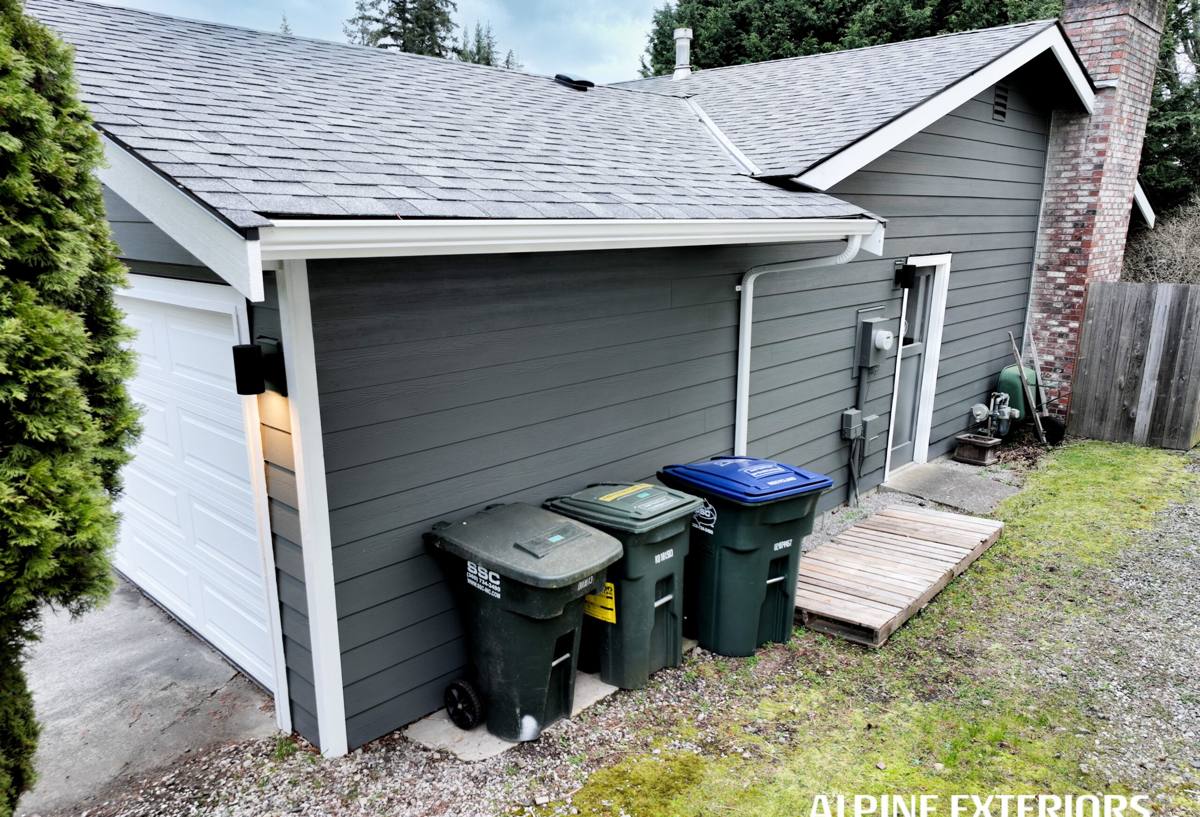
What Hurricane Wind, UV, and Salt Air Actually Do to Siding
Four forces work on Nokomis siding simultaneously, and each one causes a distinct type of damage:
- Hurricane-force and tropical-storm wind — flexes panels, works fasteners loose, and drives water up and under laps and trim that were never designed to shed water sideways.
- Wind-driven rain — pushes moisture into seams, corner joints, and butt joints that would stay dry in a normal vertical rainstorm. Once water gets behind siding, rot and swelling start on the substrate side, often invisible from the street.
- Intense, near-constant UV exposure — breaks down paint film, caulk, and unstable siding materials from the outside in. Sun-facing walls (typically south and west elevations) fade, chalk, and crack years before shaded walls on the same house.
- Salt air — accelerates corrosion on fasteners, flashing, and any exposed metal trim, and it keeps humidity elevated against the wall assembly even on dry days.
Individually, any one of these is manageable. Together, over a Florida siding lifecycle, they're why so many repair calls in this area turn out to be moisture damage at joints and penetrations rather than simple cosmetic wear.
Signs Nokomis Homeowners Should Watch For
Most siding failures give warning signs well before they become structural problems. On coastal Sarasota County homes, we see these most often:
- Soft or spongy spots when you press on siding near the bottom courses or around window and door trim
- Visible cracking, buckling, or warping, especially on south- and west-facing walls
- Staining or streaking below seams and butt joints — a sign water is tracking behind the siding
- Fastener heads popping through the surface, or nail streaks (rust bleeding through paint)
- Gaps opening up at corners, trim boards, or where siding meets window and door casings
- Paint that's chalking heavily or peeling in sheets rather than fading evenly
- Any bulging panel — almost always a sign of trapped moisture behind the surface
None of these mean the whole house needs new siding. But every one of them means water has already found a way in, and the longer it sits, the more it costs to fix.
What a Correct Siding Repair Actually Involves
It's Not Just Matching the Panel
A repair that only replaces the visibly damaged piece and stops there is a repair that's likely to fail again in the same spot. In a humid, storm-exposed area like Nokomis, a repair done right has to check what's happening underneath:
- Pull back adjacent siding to inspect the water-resistive barrier and sheathing behind the damaged area, not just the piece that's visibly cracked or stained.
- Check for rot or soft sheathing and replace it before any new siding goes back on — covering rotten substrate just hides the problem for another season.
- Re-flash penetrations — vents, hose bibs, light fixtures, and anything else that punches through the wall — since these are the most common wind-driven-rain entry points.
- Match the profile and reveal of the existing siding so the repair doesn't create a visible seam or shadow line down the road.
- Use corrosion-resistant fasteners appropriate for coastal exposure, not standard interior-grade hardware that will bleed rust within a couple of years.
- Reseal and repaint to match, using products rated for the UV load this area gets — a mismatched sheen or color is the fastest way to make a repair look like a patch instead of a fix.
How Different Siding Materials Hold Up to Repair in This Climate
What the siding is made of changes both how it fails and how well it can be repaired. This is a common decision point for Nokomis homeowners weighing a patch repair against a fuller replacement:
| Material | Common Failure Mode Here | Repair Considerations |
|---|---|---|
| Vinyl siding | Warping and cracking from UV and heat, wind uplift at loose panels | Color-matching aged panels is difficult since vinyl fades unevenly; repeated wind damage often means recurring repairs |
| Wood or cedar siding | Rot at joints and butt ends, paint failure from UV and humidity | Damaged sections often require carpentry-level repair; repainting cycles are frequent in this climate |
| Untreated/primed spruce panel siding | Swelling, delamination, and rot at cut edges and fastener points | Once moisture gets into the substrate, repair often means replacing full sheets, not spot patches |
| James Hardie fiber cement | Rare structural failure when installed correctly; issues typically trace to caulking, flashing, or paint film | Non-combustible and dimensionally stable; repairs are usually isolated to trim, sealant, or impact damage rather than the panel material itself |
This is part of why we standardized on James Hardie fiber cement for the installation work we do. It doesn't mean fiber cement never needs repair — flashing fails, caulk ages, and impact damage happens on any material — but the repairs tend to be isolated rather than symptomatic of the material breaking down under coastal conditions.
Our Repair Process
When we come out to a Nokomis property for a siding repair, the process is straightforward and it's the same whether the job is one damaged panel or a section of wall:
- On-site inspection — we look at the damage itself, plus the surrounding area and any penetrations nearby, to understand whether this is an isolated issue or a symptom of a broader moisture problem.
- Diagnose the cause — impact damage, wind uplift, failed flashing, and long-term UV breakdown all get repaired differently, so identifying the actual cause comes before any material gets touched.
- Open it up — if there's any sign of moisture intrusion, we pull back enough siding to see the sheathing and barrier underneath before deciding on scope.
- Repair the substrate first — any rot, soft wood, or damaged barrier gets addressed before new siding goes back on.
- Match and install — replacement material is matched to profile, reveal, and finish as closely as possible, with corrosion-resistant fasteners and proper flashing detail.
- Final seal and inspection — caulking, paint touch-up, and a final check that the repair sheds water the way the rest of the wall does.
Repair or Replace? Weighing Your Options
Not every damaged wall needs full replacement, and not every repair is worth doing on siding that's near the end of its life. A few honest questions help sort that out:
- Is the damage isolated to one area, or do you see similar issues (staining, popped fasteners, cracking) across multiple walls?
- Is the siding original to the home, and if so, how old is it relative to its expected service life?
- When the damaged section was opened up, was the substrate underneath sound or compromised?
- Has this same spot been repaired before? Recurring failure at the same location usually points to a design or flashing issue, not bad luck.
- Is the material itself reaching the point where matching color and profile is no longer realistic?
If the answers point to widespread age-related failure rather than a single isolated issue, a repair is often just a short-term patch on a longer-term problem — and that's worth knowing before money goes into it.
What Drives Repair Cost
| Factor | Why It Matters |
|---|---|
| Extent of moisture damage behind the siding | Rotted sheathing or framing adds carpentry work beyond the siding itself |
| Material match availability | Older or discontinued profiles and colors can be harder to match without a wider repair area |
| Access and wall height | Second-story or hard-to-reach walls take more setup time |
| Number of penetrations involved | Each vent, fixture, or utility line through the wall is an additional flashing detail to get right |
| Underlying cause | A one-time impact repair costs far less than fixing damage tied to a chronic flashing or moisture issue |
Why a Crew That Already Works Nokomis Matters
Siding repair in a coastal Sarasota County community isn't identical to repair work inland. A crew that already works this area knows what wind-driven rain does to specific wall orientations, understands the permitting and wind-rating expectations that apply near the coast, and has seen enough local moisture damage to recognize a pattern instead of treating every repair as a one-off. That familiarity shows up in fewer repeat callbacks and repairs that are diagnosed correctly the first time, rather than patched and revisited a year later.
It also matters for material decisions. A contractor who only installs one product line has no incentive to steer a repair toward a bigger job than it needs to be — the recommendation is based on what the wall actually needs, not what's easiest to sell.
Get a Straight Answer on Your Siding
If you're seeing cracking, staining, soft spots, or loose panels on a Nokomis home, it's worth having someone look at it before the next storm season adds to the damage. We offer free, no-pressure estimates — we'll tell you honestly whether you're looking at a straightforward repair or something bigger, and why.