 Sarasota Siding
 Why Siesta Key Decks Wear Out Faster Than Most
A deck on Siesta Key lives a harder life than a deck fifteen miles inland. This is a barrier island, which means salt-laden air moves across every board, railing, and fastener nearly every day of the year. Add in Sarasota's intense, near-constant UV exposure, sudden wind-driven rain squalls, and the occasional hurricane-force wind event, and you have a structure that's under attack from four directions at once: sun, salt, moisture, and wind. None of that means a deck can't last for decades here. It means the repair work has to account for those conditions specifically, not just patch what's visible.
We work on decks throughout Sarasota County, and the ones on Siesta Key consistently show a particular pattern: fasteners corroding well before the wood around them fails, finishes breaking down faster than the manufacturer's stated lifespan, and structural connections loosening from repeated wet-dry, hot-cold cycling. A repair that ignores this pattern is a repair that fails again in a year or two.
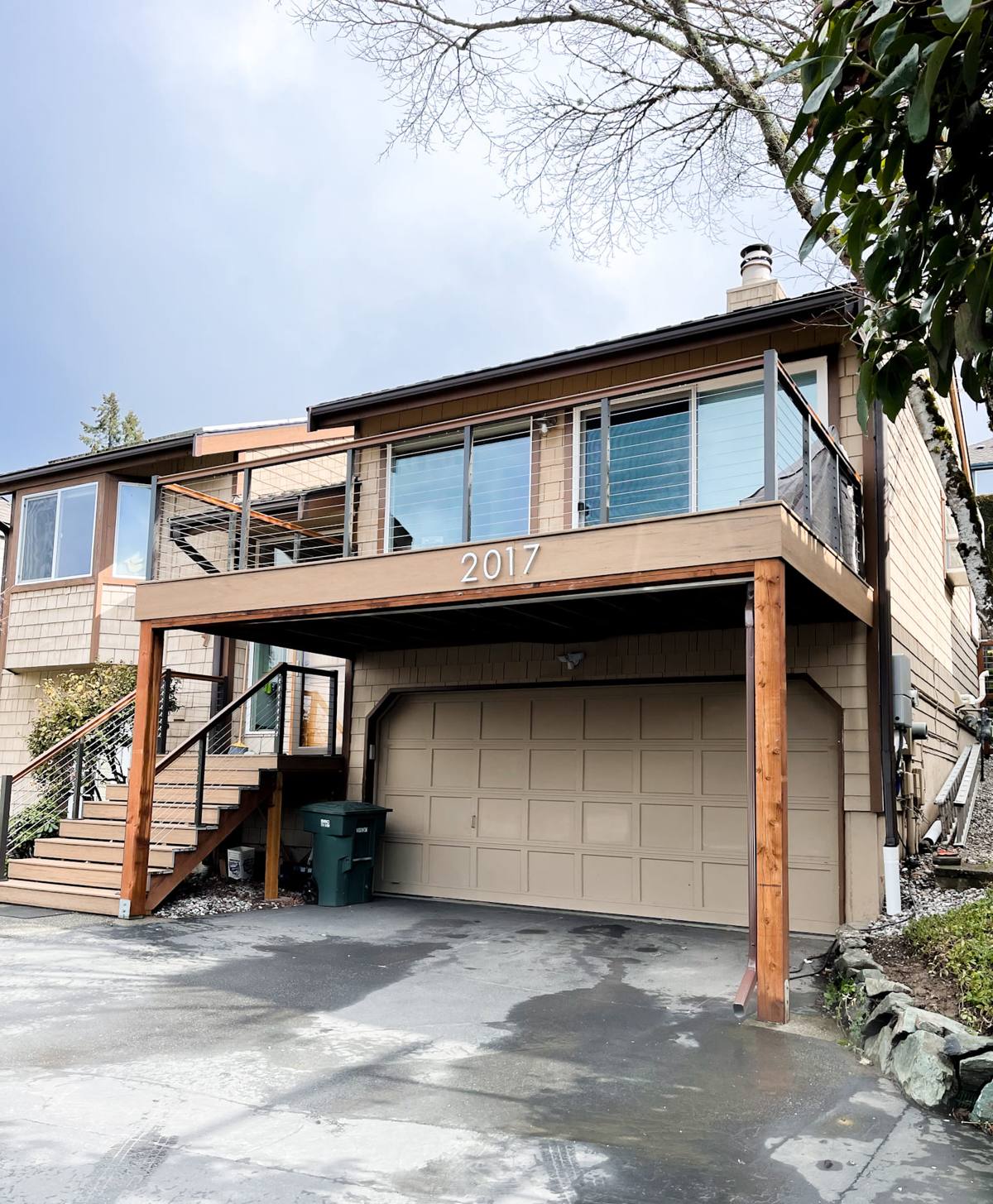
Signs a Siesta Key Deck Needs Attention
Most deck problems don't announce themselves with a collapse. They show up as small, easy-to-dismiss details first. On the island, we tell homeowners to watch for these specifically:
- Rust streaking down from screws, nails, or bolt heads — a strong sign the fastener itself is failing, not just the finish
- Soft or spongy spots when you walk the deck, especially near the house or at board ends
- Railings or stair posts that flex or wiggle when pushed
- Gaps opening up between the deck and the house wall (the ledger board connection)
- Peeling, graying, or chalky finish on wood decking that hasn't been resealed recently
- Visible cupping or warping in individual boards
- Corrosion or white powdery buildup on metal railings, brackets, or hardware
- A musty smell or discoloration underneath the deck, which can point to trapped moisture
Any one of these on its own might just need a straightforward fix. Several together usually mean it's time for a full inspection before more of the structure is compromised.
Cosmetic Wear vs. Structural Damage
Homeowners often ask us to tell the difference over the phone, and honestly, we can't — not reliably. A gray, weathered board can be purely cosmetic, or it can be sitting on a joist that's lost most of its integrity underneath. That's why an in-person inspection matters more here than it might in a drier, calmer climate: Sarasota's combination of moisture and salt hides damage in ways a quick visual pass from a distance won't catch.
What a Correct Deck Repair Actually Involves
A proper repair starts underneath the deck, not on top of it. We check the substructure first — ledger board attachment, joists, beams, and posts — because that's where hidden rot and fastener failure do the most damage, and it's the part most easily missed by a surface-level fix. Only after the structure is confirmed sound (or repaired) does it make sense to address decking boards, railings, and finish.
The Core Steps
- Structural inspection — checking the ledger board connection to the house, joist condition, post bases, and any areas showing moisture intrusion
- Fastener assessment — identifying corroded or failing screws, nails, bolts, and joist hangers before they're relied on for another season
- Targeted board and framing replacement — swapping out only what's actually compromised, matched to the existing material where possible
- Hardware upgrade — replacing standard fasteners with corrosion-resistant hardware rated for coastal exposure
- Railing and stair repair — these take the most direct wind and hand contact, so they're inspected for looseness and wood or metal fatigue
- Sealing and finishing — the last line of defense against UV and moisture, and the step most often skipped or done with the wrong product
Skipping straight to step 6 — a fresh coat of sealer over a deck with underlying fastener or framing issues — is the single most common mistake we see homeowners inherit from a previous "repair." It looks good for a season and then fails again, often worse than before.
Fasteners and Hardware: The Detail Most Repairs Get Wrong
Salt air corrodes standard fasteners faster than almost anything else on a deck. It's common to find a deck where the wood itself is still in decent shape, but the nails or screws holding it together have rusted to the point of losing grip strength. This is one area where cutting corners costs the most long-term, because replacing fasteners later means pulling the boards back up.
For coastal repair work, we use stainless steel or hot-dip galvanized fasteners and connectors rated for exterior, high-corrosion environments — not the standard-grade hardware that's often used inland where salt exposure isn't a factor. Joist hangers, post bases, and structural screws all get the same treatment. It costs a little more up front and saves a full re-repair down the line.
Choosing Repair Materials: Wood vs. Composite
When boards need replacing, homeowners usually have a choice between matching the existing wood or transitioning that section to a composite product. There's no universally "right" answer — it depends on the rest of the deck's condition, budget, and how much long-term maintenance you want to take on.
| Factor | Wood (PT Pine, Cedar) | Composite Decking |
|---|---|---|
| Upfront repair cost | Lower | Higher |
| Maintenance in coastal climate | Regular sealing/staining needed, roughly every 1-2 years given Sarasota's UV and rain | Minimal — occasional cleaning |
| UV fading resistance | Fades and grays without upkeep | Better, though color can still shift over years |
| Feel underfoot in heat | Stays relatively cool | Can run hotter in direct sun; capped/lighter-color products help |
| Matching existing deck | Easiest for a seamless repair | Only viable if existing deck is already composite, or you're open to a visible material transition |
| Typical lifespan with proper care | 15-25 years | 25-30+ years |
We don't push one material over the other by default — we'll walk you through what makes sense for your specific deck and give you our honest read on the trade-offs, including maintenance burden and how a partial-replacement repair will look once it's done.
Our Repair Process on Siesta Key
Because we already work regularly on the island, we know what to expect before we arrive: salt exposure on hardware, the moisture patterns common to homes near the water, and the access considerations that come with island properties. Our process is straightforward:
- Free on-site assessment — we look above and below the deck, not just the visible surface
- A clear explanation of what's structural, what's cosmetic, and what can wait
- A written scope and honest cost range before any work starts
- Repair work using coastal-rated fasteners and materials suited to Sarasota County's climate
- Final walkthrough so you know what was done and what to watch going forward
We're not interested in selling a full deck replacement when a targeted repair will genuinely hold up. We're also not interested in doing a patch job that we know will fail in a Gulf Coast summer. The goal is a repair that matches the actual condition of your deck.
Permits and Local Requirements
Structural deck repairs — particularly anything involving the ledger board, framing, posts, or railings — commonly require a permit through Sarasota County or the applicable local jurisdiction, and inspections are typically tied to the county's wind-load and coastal construction standards. Purely cosmetic work, like refinishing existing boards, generally doesn't. We'll tell you upfront which category your project falls into and handle the permitting process as part of the job, so you're not left guessing about what's required.
Why It Matters to Hire a Crew That Already Works This Area
Deck repair isn't identical everywhere in Florida, let alone everywhere in the country. A contractor unfamiliar with barrier island conditions may use standard-grade fasteners, skip the substructure inspection, or recommend a finish product that isn't built for this level of salt and UV exposure — not out of carelessness, but because it's simply not what they see day to day. A crew that regularly works Siesta Key and the surrounding Sarasota coastline has already seen how the local climate ages decks, which means fewer surprises, fewer callbacks, and a repair that's actually built for where it sits.
After the Repair: Keeping It That Way
A good repair buys you time, but coastal conditions don't pause. A few habits go a long way toward protecting the work:
- Rinse salt residue off decking and hardware periodically, especially after storms
- Reseal or restain wood decking on the schedule appropriate to the product — don't wait for visible graying
- Check railings and stair connections for looseness once or twice a year
- Keep gutters and drainage clear so water isn't funneling onto or under the deck
- Have any new rust spotting on hardware addressed early, before it spreads to the connection itself
If you're noticing soft spots, loose railings, rusting hardware, or a deck that's simply showing its age faster than you expected, we're happy to take a look. We offer free, no-pressure estimates for Siesta Key homeowners — you'll get an honest assessment of what your deck actually needs, with no obligation to move forward. Use the form below to get started.