 Sarasota Siding
 Composite Decking Built for Bradenton's Climate
Bradenton sits right in the thick of it — hot, humid summers, intense year-round UV, salt-laden air blowing in off Sarasota Bay and the Gulf, and the real possibility of hurricane-force wind and wind-driven rain during storm season. A deck here isn't just an outdoor living space; it's a structure that has to survive conditions most decking products were never designed for. We install composite decking specifically with Bradenton and Sarasota County homes in mind, and that shapes almost every decision we make on a project — from board selection to fastener choice to how we frame the substructure underneath.
Composite decking has become the go-to choice for homeowners in this part of Florida for good reason. Unlike wood, it doesn't rot, doesn't need annual staining, and doesn't warp the way pressure-treated lumber does when it cycles between soaking wet and bone dry — which happens constantly on the Gulf Coast. But "composite" isn't one product. There's a wide range of quality, core construction, and capping technology out there, and the difference matters a lot more here than it does in a drier, milder climate.
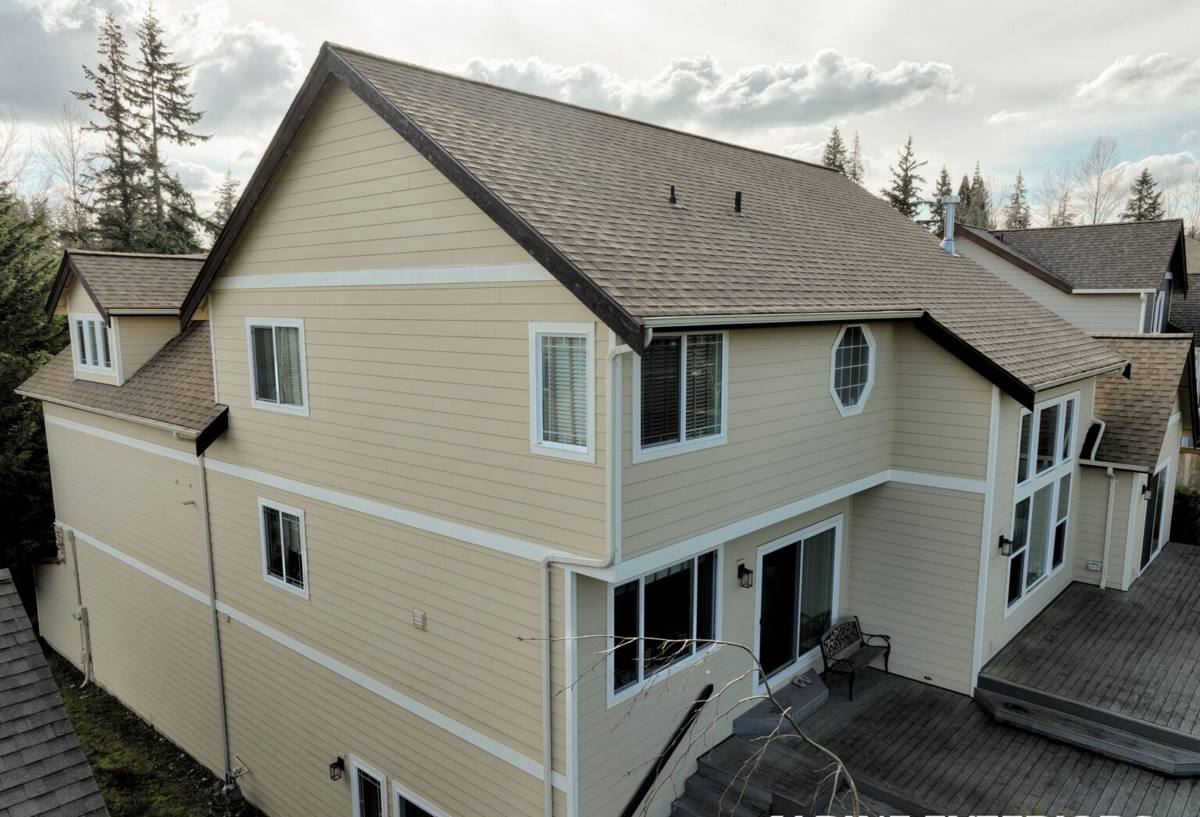
Why Bradenton's Environment Is Hard on Decking
UV Exposure
Florida sun is relentless almost all year. Cheap composite boards without proper UV-stabilized capping will fade unevenly, chalk on the surface, and become brittle faster than the manufacturer's warranty literature suggests. We look at UV performance data, not just marketing claims, before we recommend a product line to a homeowner.
Salt Air
Bradenton's proximity to the coast means airborne salt settles on everything, including deck boards and — more importantly — the fasteners and hardware holding them together. Salt accelerates corrosion in anything less than marine-grade or coated stainless steel. A deck can look fine on the surface while its hidden hardware is quietly failing underneath.
Wind-Driven Rain and Standing Water
Afternoon thunderstorms and tropical systems don't just bring rain — they drive it sideways into every gap and seam. Decking that isn't installed with proper drainage, ventilation gaps, and joist protection will trap moisture against the framing even if the boards themselves are waterproof. That's where deck failures actually start: not in the visible boards, but in a substructure that never gets a chance to dry out.
Heat Cycling
Composite boards expand and contract with temperature swings. A deck surface that hits well over 120°F in direct summer sun and then cools rapidly during an evening downpour needs correct gapping and fastening at installation, or you'll see buckling, board movement, and popped fasteners within a couple of seasons.
What a Correctly Built Composite Deck Includes
A composite deck that holds up in Sarasota County isn't just "composite boards nailed down." The board is maybe a third of the equation. The rest is substructure, fastening, and drainage detail that most homeowners never see once the project is finished — but that determines whether the deck is still solid in ten years or needs rework in three.
- Pressure-treated or coated framing rated for ground contact where applicable, sized to local span requirements
- Joist tape or flashing on top of framing members to keep moisture from wicking into the wood over time
- Corrosion-resistant, coastal-rated fasteners and hardware — not standard interior-grade screws or brackets
- Proper board spacing and gapping for expansion, contraction, and drainage between boards
- Ledger board attachment engineered and flashed correctly where the deck meets the house, since this is a common point of hidden water intrusion
- Post footings sized and set to local frost-free, wind-load standards for this region
- Ventilation beneath the deck so trapped humidity has somewhere to go instead of sitting against joists
Skip any of these and the boards on top can be premium-grade composite and the deck will still underperform. This is the part of the job that separates a deck built to last from one that looks good for a photo and starts having problems within a few years.
Choosing the Right Composite Product for This Climate
Not every composite board is engineered the same way, and the differences show up fastest in hot, humid, salt-air conditions. We walk homeowners through the real trade-offs rather than just pushing whatever has the best margin.
| Factor | What to Look For in Bradenton's Climate | Why It Matters Here |
|---|---|---|
| Capping | Full four-sided capped boards | Uncapped or partially capped boards absorb moisture at cut ends and are more prone to swelling and mold in humid conditions |
| Core material | Moisture-resistant or fully encapsulated core | Standard wood-plastic cores can retain moisture longer during our long wet season |
| Color/heat | Lighter or heat-reflective shades for open, sun-exposed decks | Dark composite in direct Florida sun gets hot enough to be uncomfortable barefoot and increases thermal expansion stress |
| Fastening system | Hidden fastener systems rated for coastal/corrosive environments | Face-screwed boards with standard hardware are a common source of rust staining and loosening near the coast |
| Warranty structure | Read fade, stain, and structural coverage separately | Some warranties cover structural integrity but exclude fading — which is the most common visible issue in this climate |
Our Installation Process
1. Site and Structure Assessment
We start by evaluating the existing structure (if replacing an old deck) or the site conditions for new construction — soil, drainage patterns, ledger attachment point, and how the deck will be used. In Bradenton, drainage away from the house and proper elevation relative to grade get extra attention given how much rain this area sees.
2. Substructure Build or Repair
Framing gets built or reinforced to current span and load standards, with joist protection and coastal-rated hardware throughout. If we're replacing an old wood deck, this is also where we typically find the real condition of the framing underneath — sometimes better than expected, sometimes needing more work than the homeowner realized.
3. Board Installation
Boards are laid with correct expansion gapping, using fastening systems matched to the product line and rated for our coastal conditions. Cut ends are capped or treated per manufacturer spec so exposed core material isn't left absorbing moisture.
4. Trim, Railing, and Stairs
Fascia, railing systems, and stair components get the same attention to coastal-grade hardware and correct attachment as the deck field itself. Railings in particular need secure post attachment to meet wind and load expectations for this region.
5. Final Walkthrough
We walk the finished deck with the homeowner, check board seating and railing security, and go over any maintenance basics specific to the product installed.
Maintenance Reality for Composite Decks Here
One of the main reasons homeowners choose composite over wood is lower maintenance — but "low maintenance" doesn't mean "no maintenance," especially in this climate.
- Rinse pollen, salt residue, and organic debris off periodically — buildup in a humid climate can lead to surface mildew even on capped boards
- Keep planters, grills, and furniture feet from trapping moisture against the board surface for extended periods
- Clear leaves and debris from between boards and around drainage points so water keeps moving through, not sitting
- Inspect railing posts and fastener points once or twice a year, particularly after a rough storm season
- Address any framing or ledger concerns promptly — composite boards can outlast a substructure that isn't holding up
Why Hire a Crew That Already Works in Bradenton
A lot of what makes a composite deck succeed or fail in this region isn't visible in a brochure — it's knowing which fastener grades actually hold up to salt air, how to detail a ledger connection so it doesn't become a hidden leak point during the next tropical system, and how local drainage and grading conditions affect a deck's substructure over time. A crew that installs decks across Sarasota County day in and day out has already seen what fails here and builds around it from the start, rather than learning that lesson on your project.
We also understand that a deck is a real investment, and the cost of getting it wrong isn't just cosmetic — a poorly detailed substructure or the wrong hardware can mean structural rework years sooner than it should be needed. Our approach is to build it right the first time: correct materials, correct fastening, correct drainage, matched to what Bradenton's climate actually demands.
Cost Factors to Expect
Composite deck pricing varies based on size, framing condition, product tier, and features like railing style or multi-level design. Broadly, homeowners should expect a range depending on whether it's a straightforward rebuild on sound existing framing versus a new structure requiring full footings, framing, and drainage work from scratch. We provide a clear, itemized estimate after seeing the site so there are no surprises — no vague ballpark numbers that don't reflect your actual project.
If you're planning a new composite deck or replacing an aging one in Bradenton or elsewhere in Sarasota County, we're happy to take a look and put together a free, no-pressure estimate. Use the form below to get started.