 Sarasota Siding
 Downtown Sarasota sits close enough to the bay and the Gulf that its housing stock takes a different kind of beating than homes ten or fifteen miles inland. The mix of older bungalows, mid-century infill, and newer builds packed into a walkable urban core all face the same combination of problems: salt-laden air, relentless UV exposure, wind-driven rain, and the real possibility of hurricane-force wind at some point during ownership. Siding installation done right in this neighborhood isn't just about picking a good-looking product — it's about how that product is installed, flashed, and fastened to survive conditions that are noticeably harsher than a national average install spec assumes.
This page focuses specifically on siding installation for homes in and around Downtown Sarasota — what the climate demands, what a correct installation actually involves, and why the details matter more here than they would in a milder inland market.
What Downtown Sarasota's Climate Does to Siding
Sarasota County's coastal position means siding here is under constant, low-grade attack even in a quiet year with no named storms.
Salt Air and Corrosion
Proximity to Sarasota Bay and the Gulf means airborne salt settles on exterior surfaces year-round, not just after a storm surge. Salt is hard on fasteners, trim accessories, and any siding material that relies on paint film or a surface coating to keep moisture out. Once that coating is compromised — by UV, by a scratch, by age — salt-laden moisture finds the weak point fast.
Intense, Year-Round UV
Florida sun is a year-round condition here, not a summer one. UV breaks down pigments and surface coatings over time, which is why paint-grade siding in this climate tends to fade, chalk, and need repainting far sooner than the same product would inland or up north. Whatever goes on a Downtown Sarasota home needs a finish engineered to hold color under sustained UV load, not just a standard exterior paint job.
Wind-Driven Rain and Hurricane Wind Loads
Wind-driven rain doesn't behave like ordinary rainfall — it gets pushed sideways and upward under siding laps, behind trim, and into any gap in the water-resistive barrier. Add in the wind loads this part of Florida is built to withstand, and it's clear why siding installation here has to treat water management and fastening as first-order concerns, not finishing touches.
Why the Housing Mix in Downtown Sarasota Raises the Stakes
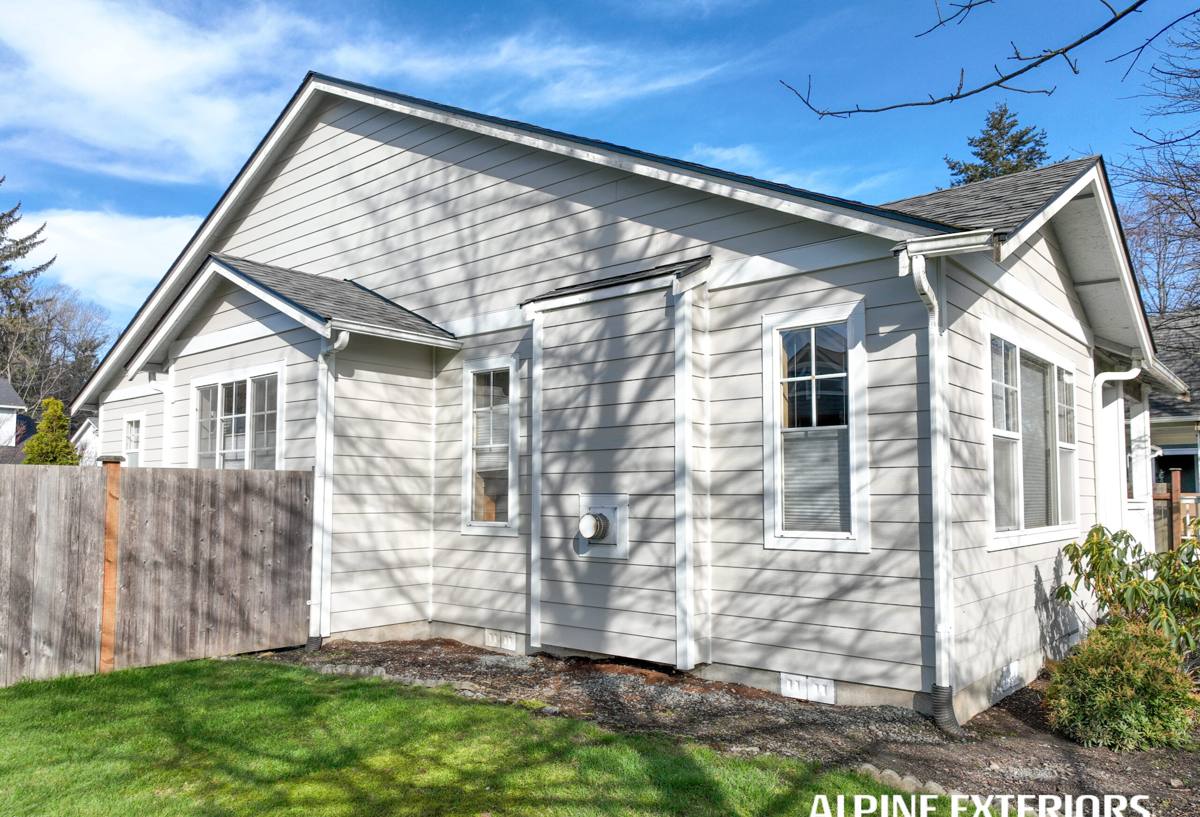
Downtown Sarasota isn't a single housing type. It's a blend of older bungalows and cottages, mid-century homes, and newer construction and additions, often on smaller urban lots with less setback and more exposure to reflected heat and wind funneling between structures. That mix matters for siding installation in a few practical ways:
- Older homes often have wall assemblies that were never designed with a modern water-resistive barrier in mind, so a re-side is a chance to correct decades-old moisture problems — or to lock them in if it's done carelessly.
- Additions and renovations frequently create transitions between original wall framing and newer construction, which need careful flashing and tie-in work rather than a single uniform detail.
- Tighter urban lots mean less room for staging, scaffolding, and material storage, which affects how a job needs to be sequenced and protected.
- Many homes sit close to neighbors, so dust, debris containment, and noise control during tear-off matter more than they would on a larger rural lot.
What a Correct Siding Installation Actually Involves
Siding installation is often sold as a cosmetic upgrade, but the material you see is the last layer of a system. In a climate like this one, every layer underneath it has to do its job.
The Water-Resistive Barrier and Flashing
Before a single piece of siding goes up, the wall needs a continuous, properly lapped water-resistive barrier, with flashing integrated at every window, door, penetration, and horizontal trim transition. In wind-driven rain, water will find any shortcut in this layer — a flashing installed out of sequence, a gap left at a window head — and it will find it repeatedly, not just once.
Fastening and Clearances
Fastener type, spacing, and embedment all affect how siding performs in high wind. So does keeping proper clearance between the bottom of the siding and grade, roofing, decks, and patios — clearances that are easy to shortcut on a tight urban lot but that exist specifically to keep splash-back moisture and standing water away from the material's most vulnerable edge.
Manufacturer Installation Instructions
Every siding product has a manufacturer installation spec, and that spec is what the product warranty is actually built on. An installation that ignores fastener patterns, joint treatment, or caulking requirements can look fine on day one and still fall outside warranty coverage the moment a problem shows up.
| Detail | Correct Practice | Common Shortcut |
|---|---|---|
| Water-resistive barrier | Continuous, correctly lapped, integrated with all flashing | Patched around openings, seams not properly lapped |
| Flashing at windows/doors | Installed in proper shingle-lap sequence before siding | Caulk used in place of proper flashing |
| Fasteners | Correct type, spacing, and embedment per manufacturer spec | Whatever's on hand, spaced by eye |
| Bottom clearance | Proper gap maintained above grade, roofing, and decks | Siding run tight to grade or hardscape |
| Joints and seams | Treated and sealed per manufacturer instructions | Butted and painted over |
Why We Install James Hardie Fiber Cement — and Nothing Else
We standardized on James Hardie fiber cement siding and don't install vinyl, LP SmartSide, or other fiber cement alternatives. That's not a marketing preference — it's a decision built around what actually holds up under salt air, UV, and Florida wind over the long term.
Fiber cement is non-combustible, which matters in a state where wildfire risk exists inland and where insurers increasingly factor exterior materials into coverage and pricing. James Hardie's ColorPlus factory-applied finish is baked on and warranted against fading in a way that field-applied paint on other materials can't match, which directly addresses the UV problem this area deals with year-round. Hardie also engineers HZ5 product lines specifically for high-humidity, high-moisture climates like Florida's — a distinction that matters here more than it would in a drier region.
We won't install products where the trade-offs — moisture sensitivity, coating longevity, or installation tolerance for error — don't hold up to what this coastline demands. That standard applies on every job, including smaller re-sides in established Downtown Sarasota neighborhoods.
Our Installation Process
- Assessment and measurement — we evaluate the existing wall assembly, look for moisture damage or rot, and take precise measurements for materials.
- Tear-off and substrate inspection — old siding comes off and the sheathing underneath gets inspected before anything new goes on.
- Water-resistive barrier installation — a continuous barrier is installed and integrated with flashing at every penetration.
- Flashing at all openings — windows, doors, and trim transitions get flashed in the correct sequence before siding installation begins.
- Siding installation to manufacturer spec — fastening, clearances, and joint treatment follow James Hardie's published installation requirements.
- Trim, caulking, and touch-up — final detailing is completed and the site is cleaned up.
- Final walkthrough — we review the completed work with the homeowner before calling the job done.
Permitting and Code Considerations in Sarasota County
Siding installation in Sarasota County typically requires a permit, and inspections are tied to Florida Building Code wind-load requirements for this region. That means fastening schedules and installation details aren't just manufacturer recommendations — they're tied to what will pass inspection. A contractor who pulls the correct permits and builds to the applicable wind requirements up front avoids the far more expensive problem of a failed inspection or, worse, siding that underperforms in the next significant wind event.
Why a Crew That Already Works Downtown Sarasota Matters
Downtown Sarasota has its own practical logistics: tight lots, limited staging space, on-street parking constraints, and in some cases neighborhood or HOA expectations about appearance and project timelines. A crew that already works this area understands how to stage a job efficiently without disrupting a block, how to sequence tear-off and dry-in to minimize the window a wall is exposed to weather, and how local permitting typically moves. That familiarity translates into fewer surprises and a tighter project timeline than a crew working the area for the first time.
Cost Factors for Siding Installation
Every home is different, but the same variables tend to drive cost on Downtown Sarasota siding installation projects.
| Factor | Why It Affects Cost |
|---|---|
| Home size and wall complexity | More square footage and more corners, gables, and transitions mean more material and labor |
| Existing substrate condition | Rot or moisture damage found at tear-off may require sheathing repair before siding goes on |
| Siding profile selected | Lap width, panel style, and trim details affect material and installation time |
| Site access | Tight urban lots with limited staging space can affect labor efficiency |
| Permitting and inspections | Required by Sarasota County and built into project timelines |
Maintaining Your Siding After Installation
Even with a correctly installed, climate-engineered product, a little routine attention keeps siding performing as designed.
- Rinse salt residue off exterior walls periodically, especially on sides facing the bay or prevailing wind.
- Inspect caulking at trim and penetrations annually and have any cracked or missing sealant addressed promptly.
- Keep gutters and downspouts clear so water isn't discharging directly onto siding or pooling near the base of walls.
- Watch for any staining, soft spots, or discoloration after a major storm and have them checked before the next season.
- Trim vegetation back from exterior walls to maintain airflow and reduce trapped moisture.
If you're weighing a siding project for a home in Downtown Sarasota, we're happy to take a look and walk you through what your specific home needs. Reach out for a free, no-pressure estimate using the form below.