 Sarasota Siding
 Laurel Park's Climate Puts Real Stress on Exterior Siding
Laurel Park sits close enough to Sarasota Bay and the Gulf that its homes take on a specific combination of exterior wear that inland Florida neighborhoods don't deal with in the same way. Salt-laden air moves through the area year-round, intense UV exposure runs nearly twelve months out of the year, and wind-driven rain during summer storms and hurricane season pushes moisture into every gap, seam, and fastener point on a home's exterior. Add in the occasional direct hit from tropical-storm or hurricane-force winds, and you have a climate that is genuinely hard on siding — harder than most manufacturers' generic marketing accounts for.
This isn't a reason to panic about your home's exterior. It's a reason to be deliberate about what material goes on the walls and how it's installed. Siding that performs well in Ohio or the Carolinas doesn't automatically perform well a few blocks from Sarasota Bay. The material has to resist moisture intrusion without trapping it, hold paint and color under relentless sun, and stay fastened tight through wind events without the panels working loose or the seams opening up.
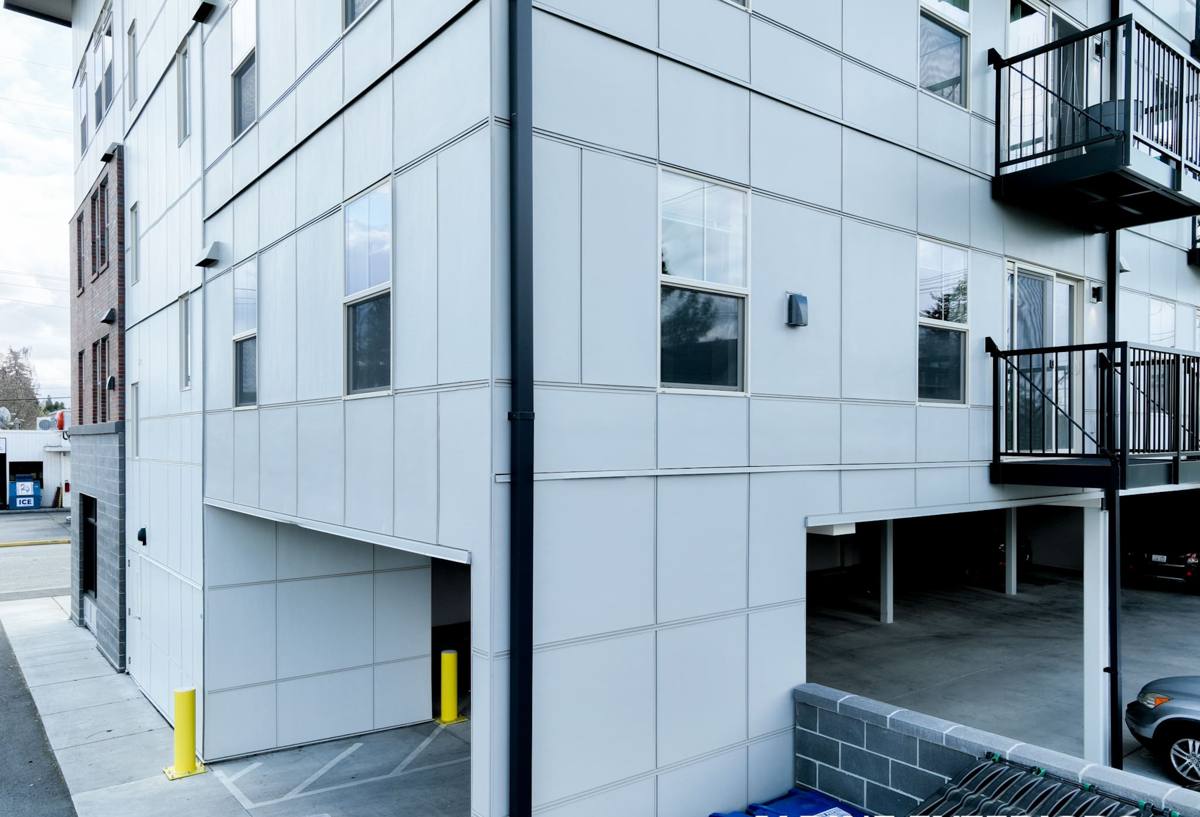
Why We Install Only James Hardie Fiber Cement
We don't install vinyl siding, LP SmartSide, or other fiber cement brands on Laurel Park homes, and that's a deliberate standard, not a sales pitch. Vinyl softens and can distort under sustained high heat and direct sun, and it has real limits in wind events once fastener spacing or panel engagement is off even slightly. Engineered wood products like LP SmartSide are wood-based at the core, which means their long-term performance depends heavily on unbroken paint film and flashing detail — a tough standard to hold for decades in a climate this humid and salty.
James Hardie fiber cement is cement, sand, and cellulose fiber — it doesn't rot, it's non-combustible, and it doesn't provide a food source for pests. Hardie also engineers specific product lines for different climate zones, and the HZ5 line used across most of Florida is formulated for high-moisture, high-humidity regions. That's the difference between a product built for "siding in general" and one built for what Laurel Park actually experiences.
ColorPlus Finish and Sun Exposure
Standard field-painted siding in Sarasota County has to fight UV fade and coating breakdown almost immediately. James Hardie's ColorPlus finish is baked on in a factory-controlled process, which gives it stronger fade resistance and adhesion than a job-site paint job can typically match. For a Laurel Park home getting sun exposure most of the day, that finish durability is one of the most practical reasons homeowners lean toward Hardie over repainting a wood-based product every several years.
Laurel Park's Mixed Housing Stock Changes the Job
Laurel Park is one of Sarasota's older, established residential neighborhoods, and that means the housing stock is mixed — some homes with original framing and construction details from decades past, others updated or rebuilt more recently. That mix matters for a siding job. Older wall assemblies can have different sheathing, different stud spacing, or settling that's shifted things slightly out of square. A crew that treats every wall like new-construction plywood over 16-inch centers will miss those details, and missed details on an older home show up later as loose panels, visible waviness, or water finding its way behind the cladding.
Before any siding goes up, the existing wall needs a real inspection — not a glance. That means checking for soft or water-damaged sheathing, confirming the weather-resistant barrier is intact or needs replacing, and verifying that window and door flashing is doing its job before it gets covered up. On a home with any age to it, this inspection step is where a lot of future problems get caught or missed.
What a Correct James Hardie Installation Actually Involves
Weather Barrier and Flashing First
Everything under the siding matters more than the siding itself when it comes to keeping water out. A code-compliant weather-resistant barrier, correctly lapped and sealed, along with proper flashing at every window, door, and penetration, is what actually stops wind-driven rain from reaching the wall assembly. Hardie panels are a durable outer layer, but they're not a substitute for correct water management underneath.
Fastening for Wind Resistance
Fastener type, spacing, and placement are specified by James Hardie for a reason, and those specs get more important, not less, in a wind zone like this one. Hand-nailing versus pneumatic nailing, fastener penetration depth, and proper blind- or face-nailing patterns all affect how well the siding holds during a wind event. A crew that speeds through fastening to save labor time is trading long-term wind performance for a faster job.
Gaps, Caulking, and Clearances
James Hardie's installation instructions call for specific clearances — siding-to-roofline, siding-to-grade, siding-to-deck — and for gaps at butt joints and trim to be properly caulked with a high-quality, paintable sealant rated for exterior use. Skipping or shortcutting these details is one of the most common ways an otherwise good product fails early, because water finds the one place it wasn't sealed and works from there.
Cutting and Dust Control
Fiber cement cutting produces silica dust, and Hardie's own guidelines call for proper cutting methods and dust control, both for the crew's safety and for a clean job site. This is a basic professionalism marker — a crew that follows manufacturer cutting guidance is generally following the rest of the spec too.
Our Process, Start to Finish
1. On-Site Inspection and Estimate
We walk the exterior, check the condition of the existing siding and substrate, and talk through what we're seeing before we quote anything. For a Laurel Park home, this often includes a closer look at areas most exposed to prevailing wind and rain.
2. Product and Color Selection
We help you choose the right Hardie product line and profile — lap siding, panel, or shingle style — along with a ColorPlus color that fits the home and holds up to the sun exposure specific to your lot and orientation.
3. Prep and Removal
Old siding comes off, the sheathing and structure get inspected and repaired as needed, and the weather-resistant barrier goes on correctly before a single piece of Hardie touches the wall.
4. Installation to Manufacturer Spec
Fastening, flashing, clearances, and joint treatment are all done to James Hardie's published installation guidelines — not a shortcut version of them. This is where a warranty either stays valid or gets quietly voided by improper installation, so we don't cut corners here.
5. Final Walkthrough
We walk the finished job with you, point out what was done and why, and make sure you're clear on what maintenance (if any) is expected going forward.
Cost Factors for a Laurel Park Siding Job
Every home is different, but the factors below are the ones that most often move the price up or down on a real Laurel Park estimate.
| Factor | Why It Matters Here | Effect on Cost |
|---|---|---|
| Age and condition of existing sheathing | Older homes may need sheathing repair or replacement before new siding goes on | Can add labor and material cost |
| Home shape and trim detail | More corners, gables, and architectural detail mean more cutting and fitting | Increases labor time |
| Product line and profile chosen | Lap width, panel style, and shingle-look products vary in material cost | Shifts material cost |
| Access and site conditions | Mature landscaping, fencing, or tight lot lines common in older neighborhoods | Can add setup and protection time |
| Removal and disposal of old siding | Full tear-off versus siding over an already-compliant substrate | Adds disposal and labor cost |
As a broad range, James Hardie installation across the Sarasota area typically runs somewhere in the $9 to $16 per square foot range installed, with older homes needing more substrate work landing toward the higher end. We'll always give you a real number based on your home, not a generic estimate.
Installation Mistakes That Cause Problems Later
Most James Hardie failures we're called to look at aren't a product problem — they're an installation problem. Here's what to watch for when vetting any crew for this kind of work:
- Fasteners driven too deep or too shallow, or spaced wider than Hardie's spec allows
- Missing or improperly lapped flashing around windows, doors, and roof intersections
- Siding installed with insufficient clearance from the roofline, deck, or grade
- Butt joints and trim gaps left uncaulked or sealed with the wrong product
- Weather-resistant barrier torn, gapped, or skipped in a rush to get siding up
- Cutting done without proper dust control or blade selection for fiber cement
- No documentation of the installation for warranty purposes
Why Local Experience in Sarasota County Matters
A crew that already works in and around Sarasota County knows the county's permitting process, understands the wind-load and product-approval requirements that apply to exterior work on the Gulf Coast, and has already worked through the kind of older-home quirks common in a neighborhood like Laurel Park. That's not something you can fully substitute with a crew that mostly works inland or out of state, even if they're competent installers in general. Local code familiarity and local climate experience both show up in how the job actually holds up five and ten years out.
Maintenance After Installation
One of the practical advantages of James Hardie with a factory ColorPlus finish is how little ongoing maintenance it asks for compared to wood-based siding. It doesn't need repainting on the same schedule a primed wood product does. What it does need is periodic rinsing to clear salt residue and airborne debris, a visual check of caulked joints and trim over time, and prompt attention if a panel is ever impacted or damaged. None of that is heavy lifting, but it's worth knowing going in.
If you're weighing a siding project for a Laurel Park home, we're glad to come take a look and walk you through what we're seeing — no pressure, no obligation. Use the form below to request a free estimate.