 Sarasota Siding
 Siding Repair Built for Laurel Park's Older Homes and Coastal Climate
Laurel Park sits close to downtown Sarasota, and it's one of the city's older, more established neighborhoods — a mix of long-standing homes, mature tree canopy, and additions and updates layered on over the decades. That combination creates a specific siding repair profile. Older exterior walls have often seen multiple paint jobs, patch repairs, and material changes over the years, and the shade from mature trees keeps some walls damp longer after rain while others bake in direct Gulf Coast sun most of the day. Add Sarasota County's hurricane-force wind events, wind-driven rain, and steady salt air drifting in from the coast, and you get siding that fails unevenly — one wall cracked and sun-bleached, the next holding moisture behind it with no visible sign from the street.
Repairing siding correctly in a neighborhood like this isn't just about patching what looks broken. It's about understanding why that section failed in the first place, and making sure the fix doesn't just hide the same problem for another year.
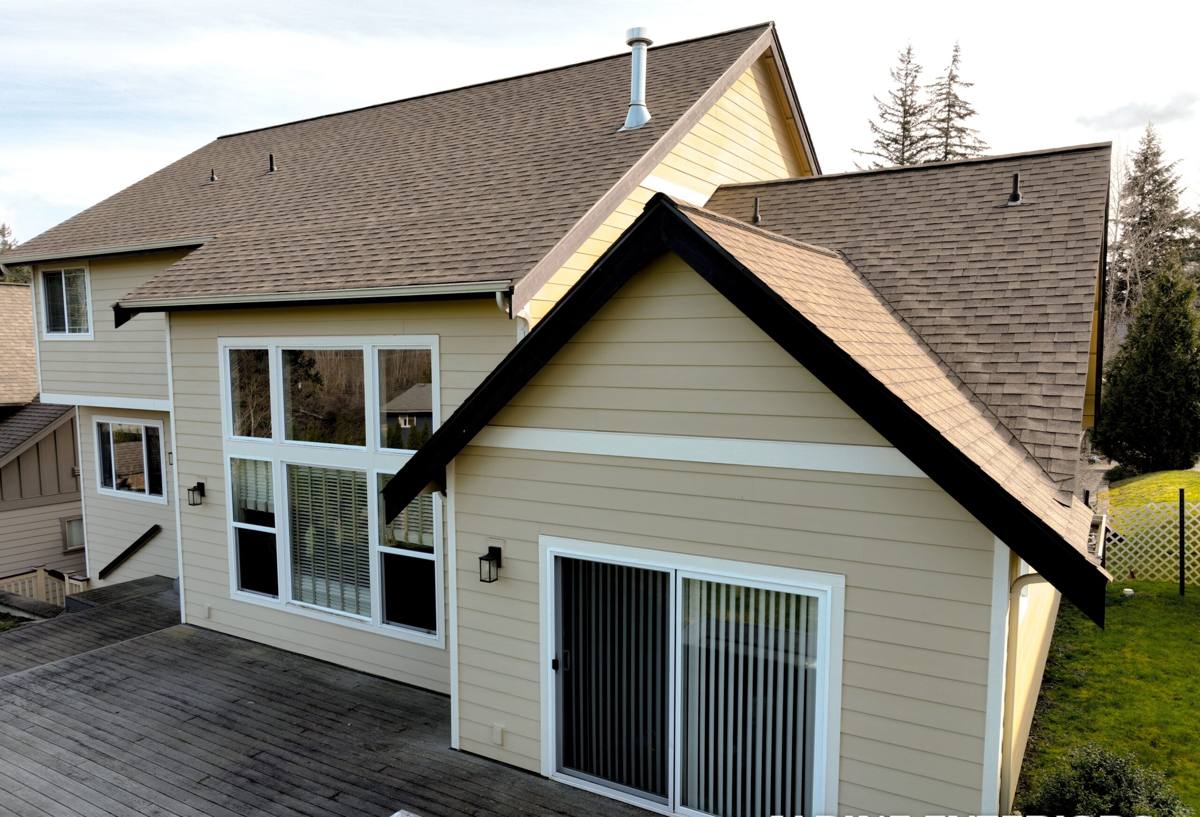
Why Siding Damage Shows Up the Way It Does Here
Sun and UV Exposure
Florida sun is relentless, and it doesn't hit a house evenly. South- and west-facing walls in Sarasota take the brunt of year-round UV, which breaks down caulk, degrades paint film, and can cause certain siding materials to warp, crack, or fade faster than the rest of the house. On older homes, this shows up as chalky, brittle siding on one elevation while the shaded north side looks almost untouched.
Wind-Driven Rain and Storm Impact
Hurricane-force wind doesn't just tear siding off in dramatic fashion — more often it drives rain sideways into seams, laps, and trim joints that were never built to take water head-on. Over multiple storm seasons, that repeated soaking finds every weak point in the original installation: a poorly sealed joint, a fastener that missed the stud, a piece of trim installed without proper flashing.
Salt Air and Coastal Humidity
Sarasota's proximity to the Gulf means siding, fasteners, and trim are dealing with salt-laden air even well inland from the water. Salt air accelerates corrosion in metal fasteners and trim, and it keeps humidity levels high enough that any siding material with a weakness for moisture absorption will show it eventually — swelling, soft spots, or paint failure well ahead of schedule.
Mature Tree Canopy
The tree cover that gives Laurel Park its character also means more organic debris, more shade holding moisture against walls, and occasionally limb or branch impact during storms. Homes tucked under heavy canopy tend to show more moisture-related siding issues than open-lot homes nearby, even when the materials and installation age are similar.
What a Correct Siding Repair Actually Involves
A siding repair that's done right is a diagnostic process first and a patch job second. Cutting out a cracked or damaged panel and nailing up a replacement piece is the easy part — the part that actually protects the house is everything that happens before and after that step.
- Inspecting the damaged area and the surrounding siding to understand whether the damage is isolated or a symptom of a wider problem
- Checking for moisture intrusion behind the siding, including soft or discolored sheathing
- Confirming the condition of the weather-resistive barrier (house wrap) behind the removed section
- Verifying flashing at windows, doors, and trim joints near the repair area
- Matching the replacement material's profile, exposure, and finish to the existing siding
- Properly fastening and sealing the new section to manufacturer specifications
- Repainting or refinishing as needed so the repair doesn't stand out as a visible patch
Skip the diagnostic steps and you end up with a repair that looks fine for a season or two, then fails again — often in the same spot, because the underlying cause was never addressed.
Our Repair Process
1. On-Site Assessment
We start by inspecting the damaged section and the surrounding wall assembly, not just the visible crack or gap. We're looking for moisture staining, soft sheathing, corroded fasteners, and any signs the damage extends further than what's visible from the ground.
2. Diagnosing the Cause
Before any material comes off the wall, we identify why that section failed — storm impact, a failed seal, UV degradation, a flashing gap, or a material that was never suited to Sarasota's climate in the first place. This determines what actually needs to happen during the repair, not just what needs to be covered up.
3. Removal and Inspection
We remove the damaged siding carefully to check the sheathing and house wrap underneath. If there's rot or water damage to the structure behind the siding, that gets addressed before anything new goes back on the wall — patching over a wet or compromised substrate just guarantees a repeat repair.
4. Repair with Matched Materials
We repair using James Hardie fiber cement, matched to the existing profile and, wherever possible, the existing ColorPlus finish, so the repaired section blends in rather than reading as an obvious patch.
5. Sealing and Finishing
Every repair is fastened and sealed to manufacturer specification, with attention to the same joints and transitions that caused the original failure, so the fix holds up through the next storm season rather than just the next few months.
Repair or Replace? How We Help You Decide
Not every damaged section calls for a full re-side, and not every "small" repair is actually small once you look behind the wall. Here's how we generally think through it:
| Factor | Repair Usually Makes Sense | Full Replacement Usually Makes Sense |
|---|---|---|
| Extent of damage | Isolated to one or two sections or elevations | Widespread across multiple walls or the whole exterior |
| Underlying structure | Sheathing and house wrap are sound | Rot or moisture damage found in multiple areas behind siding |
| Material condition | Existing siding is a durable material still within its service life | Existing material is failing broadly (warping, delaminating, chronic moisture issues) |
| Age of siding | Relatively recent installation with an isolated issue | Original siding is decades old and nearing the end of its useful life |
| Color/profile match | Replacement material is available to closely match existing siding | Existing product is discontinued or too weathered to match convincingly |
We'll always tell you honestly which side of that line your home falls on. If a targeted repair will hold up, we're not going to push a full replacement — but if the damage points to a bigger problem, we'll explain exactly why and what we're seeing.
Why the Material You Repair With Matters
We install and repair with James Hardie fiber cement exclusively — we don't install vinyl, LP SmartSide, Cemplank, Allura, primed spruce, or cedar. That standard matters just as much during a repair as it does on a full install, because the material going into a patch has to survive the same sun, wind, and salt air as everything around it.
Fiber cement doesn't rot, and it isn't fuel for a fire the way wood-based products are. James Hardie's HZ5 formulation is engineered specifically for high-humidity, high-moisture climates like ours, and the ColorPlus factory finish resists the fading and chalking that plain field-painted repairs are prone to under constant Florida UV. When we patch a section of Hardie siding, we're not introducing a weaker material into a stronger wall — the repair is built to the same standard as everything around it, and it's backed by Hardie's transferable warranty.
That's a real advantage over mixing materials during a repair, or patching an aging wood or vinyl product with whatever's available. A repair is only as good as its weakest section, and if that section is a material prone to the same moisture and UV problems that caused the original damage, you're just buying time before the next call.
Why Hiring a Crew That Knows Laurel Park Matters
Older neighborhoods close to downtown Sarasota come with their own quirks — narrower lots, mature landscaping that limits access, mixed architectural styles, and homes where previous repairs or additions may have used materials that are no longer made. A crew that's worked in areas like Laurel Park before knows to check for those mismatches before starting, knows how to work around established trees and tight side yards without causing more damage, and understands Sarasota County's permitting and inspection expectations for exterior work.
Just as important, local experience means understanding which walls in this kind of neighborhood tend to fail first — the sun-exposed side, the shaded side that stays damp, the corner that catches wind-driven rain during a storm — and inspecting those areas closely even when they're not the section you called about.
Signs Your Laurel Park Home May Need Siding Repair
Some siding damage is obvious. Some isn't visible until it's already caused real damage behind the wall. Watch for:
- Cracked, split, or warped siding panels, especially on sun-exposed walls
- Soft or spongy spots when you press on the siding
- Peeling or bubbling paint, particularly near seams and trim
- Visible gaps or separation at joints, corners, or around windows and doors
- Discoloration or staining that suggests water is getting behind the siding
- Missing or corroded fasteners
- A musty smell or interior wall discoloration on the corresponding indoor wall
- Siding that flexes or moves when pushed, rather than staying rigid
If you're seeing any of these, it's worth having someone look before the next big storm rather than after.
Get an Honest Look at What Your Siding Needs
If you're dealing with damaged, aging, or storm-affected siding on a Laurel Park home, we're happy to come take a look and give you a straight answer on whether a targeted repair will do the job or whether you're better served by a broader fix. There's no pressure and no obligation — just an honest assessment from a crew that works this exact climate and this kind of neighborhood regularly. Fill out the form below to schedule a free estimate.