 Sarasota Siding
 Why Longboat Key Siding Wears Out Faster Than Almost Anywhere Else
Longboat Key sits on a narrow barrier island between the Gulf of Mexico and Sarasota Bay, which means most homes here take on weather from two directions at once. Gulf-facing walls absorb salt-laden wind and driving rain straight off the water, while bay-facing walls deal with reflected heat, humidity, and their own share of salt drift carried across the island on prevailing winds. Add in Florida's year-round UV exposure and the periodic hurricane-force wind events that come with living on the coast, and you have a siding environment that is genuinely harder on a building envelope than almost any inland Sarasota County neighborhood.
Siding on Longboat Key isn't just cosmetic. It's the first line of defense against wind-driven rain intrusion, and on a barrier island, a compromised wall system can mean moisture problems long before anything looks wrong from the curb. That's why we treat siding replacement out here differently than a standard re-side — the materials, the detailing, and the sequencing all have to account for what this specific stretch of coastline does to a house.
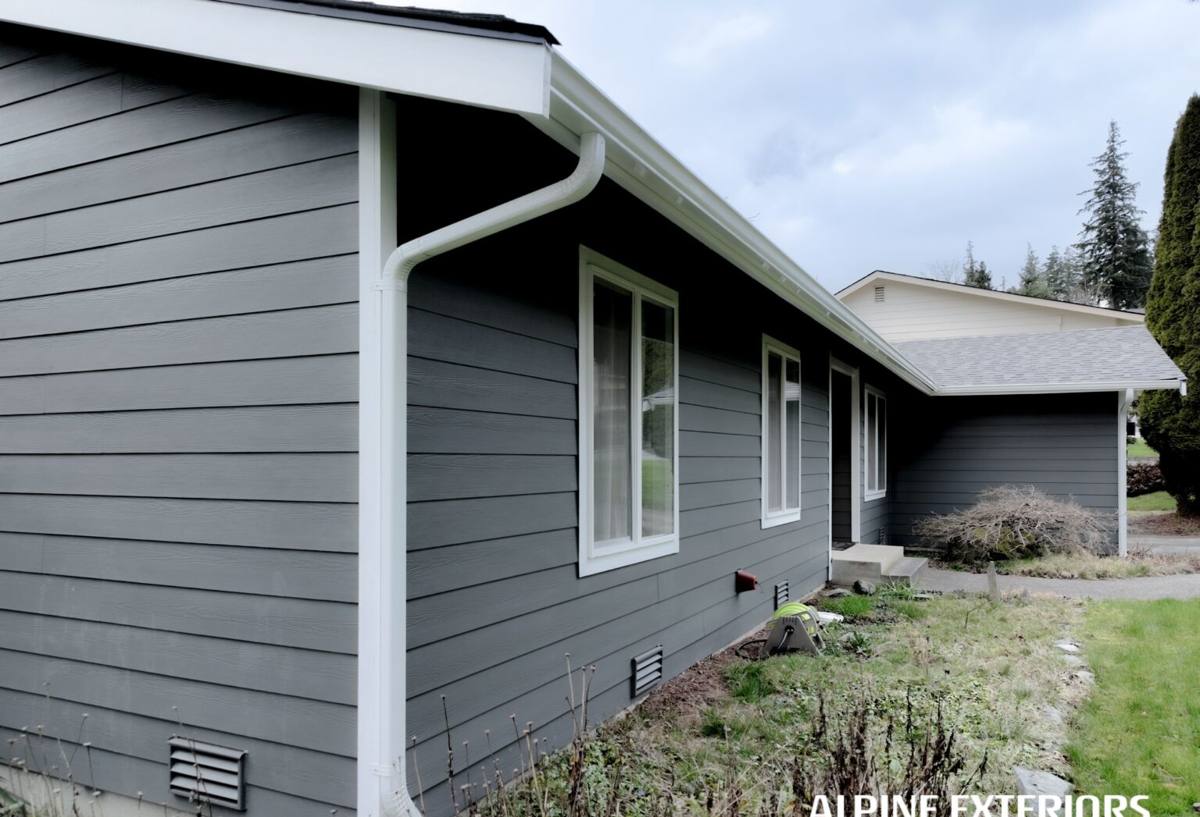
What Failing Siding Looks Like on a Barrier Island Home
Salt air accelerates almost every failure mode siding can have. On homes we've evaluated in coastal Sarasota County, the warning signs tend to show up in a predictable order:
- Chalking, fading, or blistering paint on wood or fiber cement that was field-painted rather than factory-finished
- Warping, buckling, or soft spots on wood-based or engineered wood siding, especially near ground level and around window trim
- Cupping or lifting panel edges on vinyl siding after repeated high-wind cycles, even when the material itself hasn't cracked
- Corroding or rust-streaked fasteners, which usually means the fastener spec wasn't matched to a coastal environment
- Caulk joints that have shrunk, cracked, or pulled away at trim and penetrations, letting wind-driven rain track behind the cladding
- Soft or discolored sheathing visible at seams once siding is removed — a sign moisture has already been getting behind the wall
Any one of these on its own might just mean a repair. Several at once, especially on a home that's 15-20 years old, usually means the whole system — siding, house wrap, and flashing — is due for replacement rather than patching.
Why We Install Only James Hardie Fiber Cement Here
We don't install vinyl, LP SmartSide, primed wood, or cedar on any home we work on, and that standard matters even more on Longboat Key than it does further inland. Vinyl softens and distorts in the kind of sustained heat and direct sun a Gulf-facing wall sees, and it's a poor match for wind loads in an open coastal exposure — panels can lift or pop loose from their locking channels under gusts that a fiber cement installation is designed to shrug off. Wood and wood-based siding products depend on paint film and caulk staying intact to keep moisture out, and salt air is exactly the kind of environment that breaks those down fastest.
James Hardie fiber cement is manufactured in two climate-engineered formulations across the country, and the version specified for Gulf Coast Florida is built for the highest moisture exposure category Hardie makes — it's designed around this climate, not adapted to it. Fiber cement is also non-combustible, which matters on a barrier island where wildfire risk is lower but wind-driven ember exposure during storm season is a real consideration for insurers. And because the color coat is baked on at the factory under Hardie's ColorPlus finish rather than applied on-site, you're not depending on field paint to hold up against salt air and UV — the finish is engineered to resist fading and chipping from day one, backed by its own finish warranty separate from the substrate warranty.
Product Lines That Fit Longboat Key's Architecture
Longboat Key homes run the range from Old Florida coastal cottages to Mediterranean-influenced estates to clean-lined contemporary builds, and Hardie's product lines cover all of it. HardiePlank lap siding gives you the traditional horizontal reveal that suits coastal cottage and craftsman styles. HardiePanel vertical siding works well on Mediterranean and contemporary facades, often paired with stucco or stone accents that are already common on the island. HardieTrim boards finish out corners, window and door surrounds, and fascia in a material that won't rot the way wood trim does in this humidity.
What a Correct Siding Replacement Actually Involves
A siding replacement that's done right on a coastal home is a system replacement, not just a material swap. The siding itself is the visible piece, but the work that matters most for long-term performance happens underneath it.
Tear-Off and Substrate Inspection
Removing the old siding is also when we find out what's really going on with the wall. We check the sheathing for soft spots, water staining, or rot, particularly around window and door openings and at the base of walls, which is where barrier-island homes tend to show moisture damage first.
Weather-Resistive Barrier and Flashing
A new weather-resistive barrier goes on correctly lapped so water sheds outward rather than working its way behind it, and every window, door, and penetration gets properly integrated flashing. On a home taking direct wind-driven rain off the Gulf, flashing details at these transition points are usually the single biggest factor in whether a wall stays dry over the next 20 years.
Fastening and Clearances
Fastener spacing and type are set to meet Florida Building Code wind pressure requirements for the specific exposure category of the site, and siding is held to proper clearances above roof lines, decks, and grade so it isn't sitting in standing water or trapped moisture.
| Step | Why It Matters on Longboat Key |
|---|---|
| Old siding removal & disposal | Reveals hidden moisture or substrate damage before it's covered up again |
| Sheathing repair as needed | Rotten or soft sheathing under new siding just hides the problem, it doesn't fix it |
| New weather-resistive barrier | Primary defense against wind-driven rain intrusion behind the cladding |
| Window, door & penetration flashing | The most common failure point on coastal homes if done incorrectly |
| James Hardie fiber cement install | Climate-engineered, factory-finished material built for Gulf moisture and salt exposure |
| Coastal-rated fastening schedule | Meets wind pressure requirements for open barrier-island exposure |
| Trim, caulking & touch-up | Seals every transition point where water could otherwise track in |
Our Process for Longboat Key Projects
We start with an on-site assessment, not a phone estimate — on a coastal home, you can't accurately judge siding condition or wall moisture without walking the exterior and often opening a test section. From there we put together a written scope covering material, color, trim details, and the substrate repairs we expect to need, so there are no surprises once tear-off starts. Permitting goes through Sarasota County (or the Town of Longboat Key's building department, depending on the specific parcel), and we handle that paperwork as part of the job rather than leaving it to the homeowner. Once permits are issued, we sequence the work section by section so the home is never left with more open wall than necessary at the end of a workday, which matters on a site exposed to sudden coastal weather. A final walkthrough and inspection close out the job.
Working Around Longboat Key's Access and HOA Realities
Barrier-island projects come with logistics that don't apply to a typical mainland job. Longboat Key is accessed by a limited number of bridges, and depending on the property, staging space for materials and equipment can be tight — narrow lots, shared driveways, and condo association parking rules all factor into how we plan delivery and dumpster placement. A significant share of homes and condos on the island are part of an HOA or condo association with its own architectural review process, and exterior changes, including siding material and color, often need approval before work can start. We factor that review timeline into scheduling up front rather than treating it as an afterthought. Seasonal occupancy is another consideration — many Longboat Key homes are used part of the year, and we work with homeowners to schedule around that so the project lands when it's actually convenient.
Cost Factors for a Longboat Key Siding Replacement
There's no single number that applies across the island — cost depends heavily on the specifics of the home and site. The factors that move the price most are:
| Factor | How It Affects Cost |
|---|---|
| Home size & wall complexity | More square footage and more corners, dormers, or offsets mean more labor and trim work |
| Substrate condition | Rotten sheathing found at tear-off adds repair cost that can't be quoted sight unseen |
| Siding profile & accessories | Lap siding, panel siding, and added trim details each carry different material and labor costs |
| Access & staging | Tight lots, bridge access, and limited parking can affect equipment and delivery logistics |
| HOA/architectural review | Approved color and material lists may narrow options, which can affect material costs |
| Height & roofline complexity | Multi-story homes and steep or complex rooflines require more scaffolding and safety setup |
We give a firm, itemized quote after the on-site assessment — not a ballpark that changes once work begins.
Maintaining Hardie Siding in a Salt-Air Environment
James Hardie fiber cement needs far less upkeep than wood or vinyl, but a coastal environment still calls for some routine attention to get the full life out of it:
- Rinse siding periodically with a garden hose to clear salt residue, especially on Gulf-facing walls
- Inspect caulk joints at trim, windows, and penetrations annually and re-caulk any that have shrunk or cracked
- Keep irrigation heads and sprinklers from spraying directly onto siding, which causes localized mineral buildup
- Trim back landscaping so foliage isn't holding moisture against the wall
- Check fastener heads and trim after major storm events for anything that's worked loose
- Avoid pressure-washing at close range or high PSI, which can damage the factory finish over time
None of this is a heavy maintenance burden — it's a fraction of what wood siding demands in this climate — but a little attention goes a long way toward hitting the full service life the material is capable of.
Why Local Experience on Longboat Key Matters
A contractor who mostly works inland projects doesn't necessarily think about wind-driven rain exposure from two directions, HOA architectural review timelines, or bridge and staging logistics until they run into them mid-project. A crew that already works this island knows the permitting path, plans around access constraints before the dumpster shows up, and specs fastening and flashing details for the wind exposure this specific coastline sees — not a generic inland spec. That experience shows up in fewer surprises during the job and in how the finished siding actually performs through its first few storm seasons.
If your Longboat Key home's siding is showing its age, or you just want an honest read on whether repair or full replacement makes sense, we're happy to take a look. Reach out for a free, no-pressure estimate using the form below.