 Sarasota Siding
 Osprey's Coastal Climate Is Hard on Siding
Osprey sits in the stretch of Sarasota County between the open Gulf and the Intracoastal waterways, and that location cuts both ways. It's part of what makes the area beautiful, and it's also exactly why siding here ages faster than it does thirty miles inland. Homes in Osprey deal with a combination of stresses that few other markets see all at once: hurricane-force wind gusts and wind-driven rain during storm season, intense year-round UV exposure that never really lets up, and a steady drift of salt air off the water that settles on every exterior surface, siding included.
Any one of those on its own is manageable. Together, they compound. Wind-driven rain finds every gap in flashing and trim. UV bakes coatings and breaks down caulk faster than manufacturer charts assume. Salt air accelerates corrosion on fasteners and trim pieces, and it holds moisture against the wall longer than dry inland air would. That's the environment any repair on an Osprey home has to be built to survive — not just patched to look right for a season.
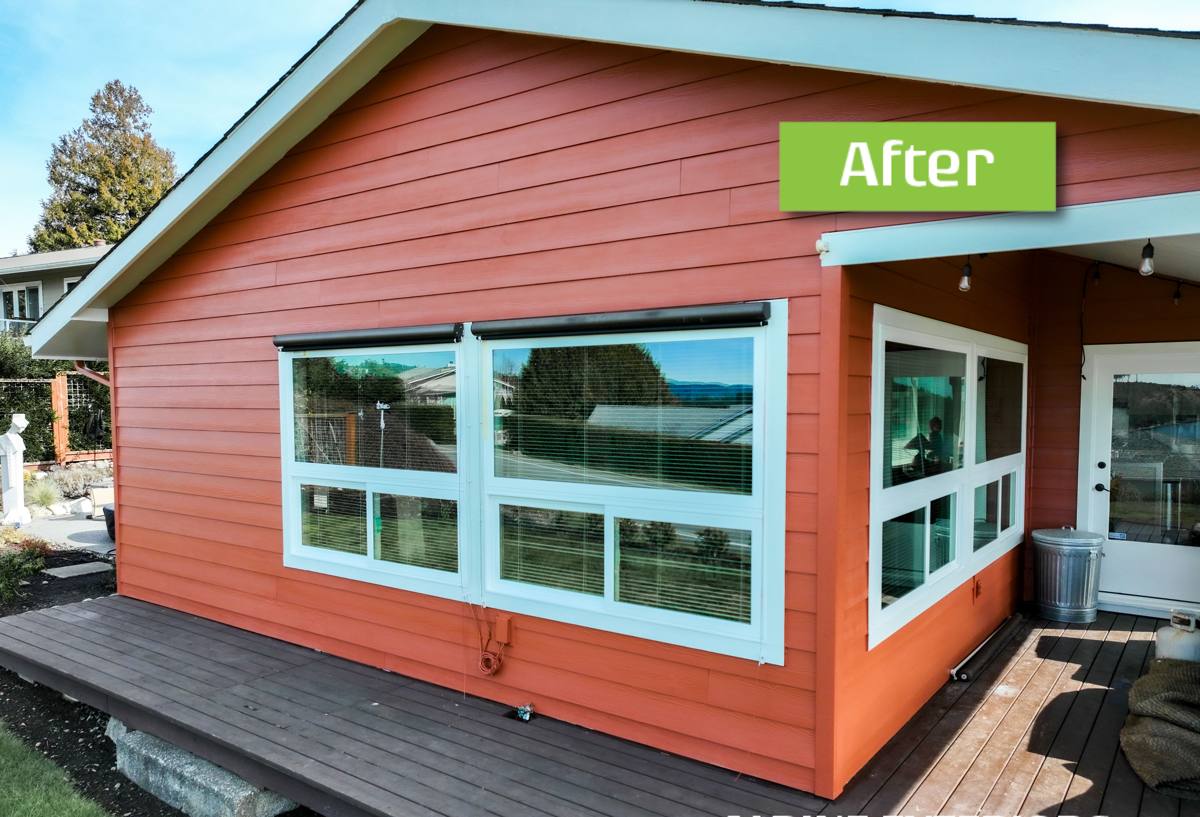
What Siding Damage Looks Like in Osprey
Most of the repair calls we get in this area fall into a handful of patterns, and knowing which one you're looking at helps set expectations for the fix.
Storm and Wind Damage
High wind gusts can crack, lift, or completely tear off siding panels and trim, especially around corners and roof lines where wind pressure concentrates. Wind-driven rain during those same storms pushes water sideways into any opening that damage creates, so a cracked panel that looks cosmetic on day one can turn into a soaked wall cavity within a few storms if it isn't sealed properly.
Sun and Heat Damage
Constant UV exposure fades paint and factory finishes unevenly, especially on south- and west-facing walls that catch the most direct sun. Over time, UV also dries out caulk joints and can make older, low-quality siding materials brittle enough to crack from normal thermal movement.
Moisture and Salt Damage
Salt-laden air combined with humidity is a slow, steady problem rather than a dramatic one. It shows up as corroded fasteners, staining or streaking below seams, and — on siding materials that aren't built for wet climates — softening, swelling, or delamination at butt joints and around penetrations like hose bibs and light fixtures.
Signs It's Time to Call for a Repair
Catching damage early is what keeps a repair a repair instead of a full re-side. Homeowners in Osprey should watch for:
- Visible cracks, splits, or missing sections of siding, especially after a windstorm
- Soft or spongy spots when you press on the siding near the bottom edge or around windows
- Bubbling, peeling, or flaking paint that keeps coming back in the same spot
- Dark streaks, staining, or a musty smell near seams, corners, or penetrations
- Gaps or separation at seams, trim boards, or where siding meets windows and doors
- Rust streaks around fasteners or trim connectors
- Visible warping, buckling, or waves in the siding surface
Any of these on their own might be a small fix. Several appearing together, or damage that keeps recurring in the same location, usually points to a moisture problem behind the siding that needs to be opened up and looked at directly — not just resealed from the outside.
What a Correct Repair Actually Involves
A siding repair that's done right in a climate like Sarasota's is not just "replace the broken piece and caulk it." There's a sequence that matters:
1. Diagnose Before Patching
We pull back the damaged section far enough to see what's underneath. Cracked siding is often just the visible symptom — the real question is whether water has already reached the sheathing, the weather-resistive barrier, or the framing. Patching over a hidden moisture problem just hides it for a while longer.
2. Check and Repair the Water Barrier
Siding is the visible layer, but the weather barrier and flashing behind it are what actually keep a wall dry. Any repair that doesn't restore proper flashing, lapping, and drainage behind the siding is a cosmetic fix, not a real one — and in a wind-driven-rain climate, that shortcut shows up again fast.
3. Match Material and Fastening
Mismatched siding profiles, thicknesses, or fastening patterns stand out visually and can also create new points where water collects. We match the existing product where it's still sound, and where a section needs to come out entirely, we explain honestly whether patching or a broader section replacement is the better long-term call.
4. Reseal and Finish for the Climate
Caulk and touch-up paint that aren't rated for constant UV and salt exposure fail early. We use products suited to this environment and finish the repair so the patched area holds up the same as the surrounding wall — not just until the next intense summer.
Repair or Replace? How We Help You Decide
Not every damaged section needs a full re-side, and not every "small" repair is actually small once you're inside the wall. Here's the general framework we use when we assess a home in Osprey:
| Situation | Usually a Repair | Usually Points to Replacement |
|---|---|---|
| Damage extent | Isolated to one or two panels/areas | Spread across multiple walls or elevations |
| Moisture found behind siding | None, or limited to the damaged spot | Present in multiple areas or has reached framing |
| Age and condition of existing siding | Sound, well-installed material with a few storm-damaged sections | Older, failing, or a product not suited to coastal exposure |
| Underlying cause | A one-time event like storm impact | A recurring, systemic issue (poor original install, wrong product for climate) |
We'll always tell you honestly which side of that line your home falls on. If a repair is the right call, that's what we recommend — we're not trying to sell a full re-side when a targeted fix will genuinely last.
Why We Repair With James Hardie — and Only Hardie
We install and repair exclusively with James Hardie fiber cement siding. That's a deliberate standard, not a default. Fiber cement doesn't absorb water the way wood-based or foam-backed products can, it's non-combustible, and its factory-applied ColorPlus finish is engineered to hold color under sustained UV exposure — a real advantage in a market where the sun is a year-round factor, not a summer one. Hardie's HZ5 product line in particular is engineered for the kind of humidity, moisture cycling, and coastal exposure that Osprey homes deal with.
When we repair a section of existing Hardie siding, we can match the exact profile, plank width, and reveal so the repaired area blends into the rest of the wall. When a repair calls for replacing a section of a different material — vinyl, LP SmartSide, or an older fiber cement product — we'll talk through the trade-offs honestly rather than just patching like-for-like. Sometimes matching the existing material for a small patch is the practical choice; sometimes it makes more sense to transition that section, or eventually the elevation, to Hardie so it stops being a recurring repair call. Either way, the decision is yours, and we'll explain the reasoning rather than push a bigger job than the damage warrants.
Our Process for Osprey Repair Calls
Because we work in this part of Sarasota County regularly, we already know the general wind exposure patterns, humidity load, and typical siding ages for homes in and around Osprey. That means less time spent figuring out the basics and more time actually assessing your specific situation. Our process is straightforward:
- An on-site inspection where we look at the damaged area and the surrounding siding, not just the spot you called about
- An honest assessment of whether you're looking at a repair, a partial replacement, or something bigger — explained in plain terms
- A written estimate that separates material, labor, and any additional work needed if we find hidden moisture damage
- Repair work that matches existing material where possible and restores the weather barrier and flashing properly, not just the visible surface
- A final walk-through so you can see the completed work before we consider the job done
Why Local Experience Matters for This Kind of Work
Siding repair looks simple from the outside, but doing it correctly in a hurricane-exposed, salt-air environment takes judgment that comes from actually working in that environment. A crew that's used to inland or dry-climate conditions may not think to check flashing behind a "cosmetic" crack, may use sealants that aren't rated for constant UV and salt exposure, or may not recognize early signs of moisture intrusion that are common in this region but rare elsewhere.
Working regularly in Sarasota County also means we're familiar with the local permitting process for exterior repair work, and we handle that paperwork as part of the job rather than leaving it on you. If your property is in a deed-restricted community with exterior guidelines, we'll work within those requirements too.
What Affects the Cost of a Siding Repair
Every repair is different, but the same handful of factors drive the cost up or down on most jobs we look at in this area:
| Factor | Why It Matters |
|---|---|
| Extent of damage | A single panel is a much smaller job than damage spread across a wall or multiple elevations |
| Hidden moisture | If water has reached the sheathing or framing, that repair work adds cost beyond the visible siding |
| Material match | Matching an existing profile, especially an older or discontinued one, can take more time to source and install correctly |
| Access | Height, landscaping, and roofline obstructions all affect labor time |
| Trim and flashing work | Repairs that require rebuilding flashing or trim take longer than a straight panel swap |
We don't quote broad numbers on a page like this because every repair is genuinely different — but we will give you a clear, itemized estimate after seeing the actual damage in person, with no pressure to turn a repair into a bigger job than it needs to be.
Get a Free Estimate on Your Osprey Siding Repair
If your siding has storm damage, sun-worn finish, or signs of moisture intrusion, it's worth having someone look at it before a small problem becomes a bigger one. We offer free, no-pressure estimates for siding repair throughout Osprey and the surrounding Sarasota area — use the form below to get started.