 Sarasota Siding
 Why Palmer Ranch Homes Need Siding Built for This Climate
Palmer Ranch sits in one of the more demanding exterior-durability zones in Sarasota County. Homes here take on hurricane-force wind loads during storm season, near-constant UV exposure year-round, wind-driven rain that gets pushed sideways into wall assemblies, and a steady dose of salt air carried in off the Gulf. Any one of those on its own is manageable. Together, over years, they punish siding that wasn't engineered for the conditions.
This isn't a coastal-adjacent concern that only matters a few miles from the water. Salt air travels well inland on prevailing winds, and UV degradation doesn't care how far you are from Siesta Key. If your siding is going to hold its shape, color, and seal for the next fifteen to thirty years, it needs to be a product designed for exactly this combination of stressors — not a product that merely tolerates milder climates.
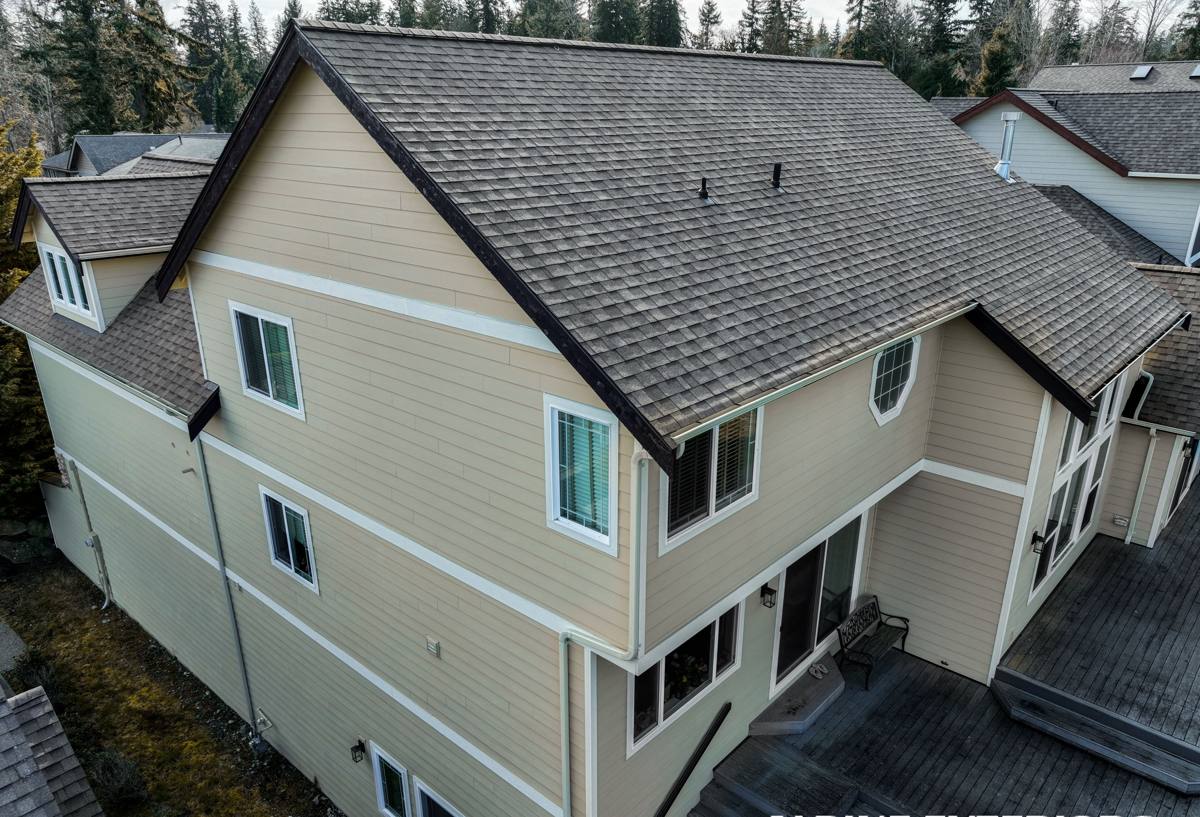
Why We Only Install James Hardie Fiber Cement Here
We install James Hardie fiber cement siding exclusively on Palmer Ranch homes. We don't offer vinyl, LP SmartSide, Cemplank, Allura, or primed wood as alternatives, and that's a deliberate standard, not a sales pitch. Each of those products has legitimate strengths in the right application — but none of them holds up to Gulf Coast wind, moisture, and UV load the way Hardie's engineered fiber cement does, and we won't put our name on an install we don't believe will last in this specific climate.
- Vinyl softens, warps, or cracks under sustained high heat and can pull away from fasteners in sustained wind events.
- Wood-based products (LP SmartSide, primed spruce, cedar) depend on an unbroken paint film to keep moisture out; any breach in that film in a humid climate invites swelling and rot.
- Other fiber cement brands (Cemplank, Allura) are real competitors to Hardie on paper, but we've standardized on Hardie for its HardieZone engineering, factory finish, and warranty structure specific to our region — consistency across every job matters more to us than mixing suppliers.
Hardie fiber cement is non-combustible, dimensionally stable in heat and humidity swings, and manufactured with a factory-applied ColorPlus finish that's formulated to resist UV fading — a meaningful advantage on a home that sits in direct Florida sun most of the year.
What a Correct Fiber Cement Installation Involves
Fiber cement siding is only as good as the assembly behind it. A beautiful plank on a poorly detailed wall will fail early regardless of the product printed on the box. For Palmer Ranch homes, the installation details that matter most are:
Climate-Rated Product Selection
James Hardie engineers its siding by climate zone under its HardieZone system. Sarasota County installs call for the HZ5 product line, formulated for high humidity, heat, and moisture exposure rather than the drier or colder HZ10 formulation used in other parts of the country. Using the correct zone-rated product is not optional — it directly affects how the plank performs against moisture over time.
Weather-Resistive Barrier and Flashing
Behind every plank, a properly lapped weather-resistive barrier and correctly integrated flashing at windows, doors, and penetrations is what actually keeps wind-driven rain out of the wall cavity. Siding sheds the bulk of the water; the barrier and flashing behind it handle what gets past the surface.
Fastening for Wind Load
Fastener type, spacing, and placement all change based on local wind exposure. Homes in wind-exposed Palmer Ranch subdivisions need fastening patterns that meet or exceed the manufacturer's high-wind installation instructions — not the minimum spec written for calmer inland regions.
Proper Clearances and Caulking
Fiber cement needs the manufacturer-specified gap from roofing, decking, and grade, and correct caulking at joints and trim. Skipping these details is one of the most common ways an otherwise good installation traps moisture and shortens the life of the siding.
How Our Process Works on a Palmer Ranch Home
- On-site inspection — we walk the exterior, check for existing moisture damage, evaluate current siding condition, and note any HOA-relevant details before quoting anything.
- Written estimate — a clear scope covering tear-off, product line, trim details, and color, with no vague allowances.
- HOA documentation support — where a Palmer Ranch community requires architectural review approval, we provide the product and color documentation needed for that submission.
- Tear-off and prep — removal of existing siding, inspection of sheathing for hidden moisture damage, and repair of any compromised substrate before new material goes up.
- Installation to manufacturer spec — HZ5-rated Hardie product, correct barrier and flashing integration, and fastening appropriate to the home's wind exposure.
- Final walkthrough — we review the finished job with the homeowner and confirm everything matches the agreed scope.
HOA and Architectural Review in Palmer Ranch
Palmer Ranch is a large master-planned community made up of numerous individually governed subdivisions, many with active homeowners associations and architectural review requirements. Siding color, texture, and sometimes profile can be subject to approval before work begins. This adds a step to the project timeline that homeowners in older, non-HOA neighborhoods don't have to plan around.
We build that review time into our scheduling rather than treating it as a surprise delay, and we provide the manufacturer spec sheets and color samples most architectural review boards ask for. Knowing which of the several HOA processes across Palmer Ranch's subdivisions applies to your specific address — and what they typically expect to see in a submission — is exactly the kind of local familiarity that speeds this step up.
What Drives the Cost of a Fiber Cement Siding Project
Every home is different, but the same handful of factors drive most of the cost variation we see on Palmer Ranch projects. We won't quote a number without seeing the house, but this table gives an honest sense of what moves the price up or down.
| Cost Factor | Why It Matters |
|---|---|
| Home size and story count | More surface area and second-story access both add labor time. |
| Existing siding removal | Tear-off of old material and disposal adds a labor and dumpster line item. |
| Hidden substrate damage | Rotted sheathing found during tear-off must be repaired before new siding goes on. |
| Trim and accent complexity | Gables, dormers, and decorative trim take more time than flat wall runs. |
| Siding profile and texture | Lap width, shake-style panels, and board-and-batten detailing price differently. |
| Color and finish | Factory-applied ColorPlus finishes carry a different cost than field-painted options. |
| HOA-driven specifications | Some communities require specific colors or trim details that affect material choice. |
Signs Your Current Siding Needs Attention
Given how hard this climate is on exterior materials, it's worth knowing what to look for before small problems turn into structural repairs. Walk the exterior of your Palmer Ranch home periodically and check for:
- Soft, spongy, or visibly swollen sections of siding, especially near the bottom courses or around window trim
- Paint that's peeling, bubbling, or chalking heavily to the touch
- Visible cracking, warping, or panels pulling away from the wall
- Staining or discoloration that keeps returning after cleaning
- Gaps at caulk joints, corners, or trim that weren't there before
- A musty smell or soft drywall on interior walls that share an exterior wall with a suspect area
Any of these are worth a professional look before the next storm season rather than after.
Why Hiring a Crew That Already Works Palmer Ranch Matters
Palmer Ranch isn't a uniform tract of identical homes — it's a collection of distinct subdivisions with different ages of construction, different HOA rules, and different exposure depending on proximity to open water and prevailing wind. A crew that already works in this specific area brings a few practical advantages:
- Familiarity with the HOA and architectural review expectations of the community you're in
- An understanding of which parts of Palmer Ranch see the heaviest wind exposure and need extra fastening attention
- Experience catching the kind of hidden moisture damage that shows up in this climate's older wood-sided homes
- A track record installed to James Hardie's published specifications, not shortcuts that void the manufacturer warranty
None of that replaces a careful, honest estimate — but it does mean fewer surprises once tear-off starts.
Ready to Talk About Your Home
If your Palmer Ranch home's siding is showing its age, or you're planning ahead of the next storm season, we're happy to take a look and walk you through what a correctly installed James Hardie fiber cement system would involve for your specific house. Reach out for a free, no-pressure estimate using the form below.