 Sarasota Siding
 Siding Installation in Fruitville: A Climate That Doesn't Forgive Weak Siding
Fruitville sits inland from downtown Sarasota, but "inland" in Sarasota County doesn't mean sheltered. Homes here still face the full range of Gulf Coast weather: hurricane-force winds during storm season, wind-driven rain that gets pushed sideways into every seam and joint, intense year-round UV that never really takes a break, and salt-laden air that drifts in off Sarasota Bay and the Gulf on breezy days. Siding is the material standing between that weather and your home's structure, and in this part of Florida, the wrong siding — or the wrong installation — shows its weaknesses fast.
This page is about one job done right: installing new siding on a home in Fruitville. Not a generic overview of siding in general, but what actually matters when the crew shows up, measures your walls, and starts removing the old material.
What Fruitville Homes Actually Need From Their Siding
Every siding product on the market claims to handle Florida weather. Very few are actually engineered for it. Before we talk about installation, it's worth being specific about what the climate demands.
Wind and Storm Exposure
Sarasota County sits well within Florida's hurricane-prone wind zones, and Fruitville is no exception. Siding has to stay fastened through sustained wind loads and wind-driven debris, not just look good on a calm day. That means the right product, but just as important, the right fastening schedule and installation technique.
Sun, Heat, and UV Breakdown
Florida sun is relentless. Products with painted-on finishes, or finishes not engineered for constant UV exposure, chalk, fade, and crack years before a homeowner expects to repaint. A siding system needs a finish built to hold color and integrity under year-round sun, not just look good the year it's installed.
Moisture, Humidity, and Wind-Driven Rain
Humidity and wind-driven rain work siding from two directions at once — constant ambient moisture that never fully dries out, and storm rain that gets forced up and under poorly sealed seams. Siding that traps moisture behind it, or swells and softens when it gets wet, creates rot, mold, and structural problems that are far more expensive than the siding itself.
Why We Only Install James Hardie Fiber Cement in Fruitville
We made a deliberate decision to install one siding system — James Hardie fiber cement — and nothing else. Not vinyl, not LP SmartSide, not cedar or primed spruce, not other fiber cement brands. That's not a marketing position; it's a standard we hold because of what we've seen these products do, and not do, in Florida's climate over time.
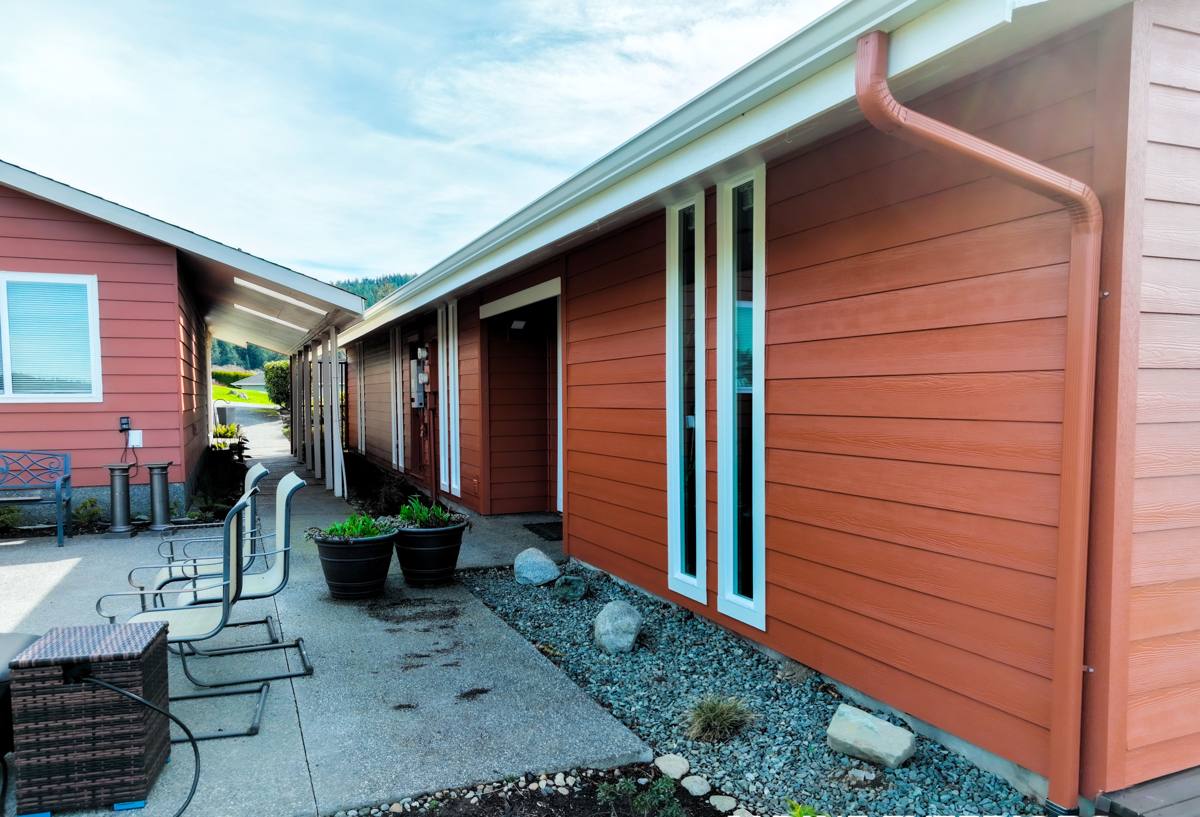
James Hardie fiber cement is non-combustible, resists moisture-driven swelling and rot far better than wood-based or engineered-wood siding products, and is available in HZ product lines specifically engineered for humid, high-moisture climates like ours. The ColorPlus factory finish is baked on under controlled conditions and backed by a real finish warranty, which matters enormously under Florida's UV load — it holds color and resists fading in a way field-applied paint jobs on other materials struggle to match. It also carries a strong, transferable product warranty, which protects the investment for the current owner and adds value if the home is sold. When we stand behind an installation, we want to stand behind a product that holds up to what Fruitville weather actually does to a house, not just what a spec sheet promises.
What a Correct Siding Installation Involves
Fiber cement siding is only as good as the installation behind it. A rushed or generic job — the kind that ignores Florida-specific moisture and wind conditions — will fail early no matter how good the product is. A correct installation involves several steps that are easy to skip and hard to notice once the siding is up:
- Full removal of old siding and inspection of the sheathing underneath, not installation over existing material
- Repair or replacement of any rotted, soft, or water-damaged sheathing before new siding goes up
- A continuous, correctly lapped weather-resistive barrier behind the siding to manage bulk water
- Proper flashing at every window, door, and roofline penetration — the places most siding failures actually start
- Fastening that follows the manufacturer's wind-zone fastening schedule, not a generic nailing pattern
- Correct gapping between panels and at trim, filled with the right sealant rather than caulked tight and left to crack
- Factory-finished, color-matched materials at cuts and seams so the finish performs consistently across the whole wall
Skipping any one of these steps doesn't usually show up on day one. It shows up two, five, or ten years later as a soft spot behind the siding, a streak of water staining, or a section that's come loose in a storm — problems that are far more expensive to fix than they would have been to install correctly the first time.
Our Installation Process for Fruitville Homes, Step by Step
- On-site assessment. We walk the home, measure elevations, check existing siding and trim condition, and note anything unusual about the structure, exposure, or drainage around the house.
- Code and wind-load review. We confirm the installation plan meets Florida Building Code and Sarasota County permitting requirements for the applicable wind zone before any material is ordered.
- Removal and substrate inspection. Old siding comes off completely so we can see the sheathing underneath, not just the surface we're covering up.
- Repairs. Any rot, soft sheathing, or water damage found during removal gets repaired before anything new goes on. Covering up a damaged wall is not an option.
- Weather barrier and flashing. A continuous weather-resistive barrier goes on first, followed by properly lapped flashing at every window, door, and penetration.
- Siding installation. James Hardie panels or lap siding go up per the manufacturer's fastening schedule for our wind zone, with correct gapping and alignment throughout.
- Trim, corners, and sealant. Trim boards, corner detailing, and color-matched sealant finish the job and protect every seam.
- Final inspection and cleanup. We walk the finished job with the homeowner, confirm everything meets spec, and clear the site of old material and debris.
Signs Your Fruitville Home May Need New Siding
Some siding problems are obvious. Others build quietly for years before a homeowner notices anything is wrong. Watch for:
- Visible cracking, warping, or buckling panels, especially after storm season
- Paint that peels or blisters again soon after repainting, even with quality paint
- Soft spots when you press on the siding, which usually means moisture damage underneath
- Widening gaps or separation at seams, corners, and trim
- A noticeable jump in cooling costs, which can point to a siding and moisture barrier system no longer doing its job
- Mold, mildew, or persistent staining that comes back no matter how often it's cleaned
- Siding that's simply reached the end of its practical service life, particularly older vinyl or wood products never built for Florida's climate
If more than one of these applies, it's worth getting an honest look before small problems turn into structural ones.
What Siding Installation Costs Depend On
Every home is different, so we don't quote pricing without seeing the house, but the factors that drive cost are consistent from job to job:
| Factor | How It Affects the Job |
|---|---|
| Home size and wall area | More square footage means more material and labor hours |
| Number of stories | Multi-story homes require more scaffolding, staging, and time |
| Substrate condition | Rot or water damage found during tear-off adds repair work before siding goes on |
| Trim and architectural detail | Corners, dormers, and detailed trim work take more time than flat, simple elevations |
| Product line selected | HardiePlank lap siding, HardieShingle, and HardiePanel carry different material and labor costs |
| Access and site conditions | Tight lot lines, landscaping, or limited equipment access can affect labor time |
The one thing that shouldn't vary between contractors is the installation quality underneath the price — the moisture barrier, flashing, and fastening steps described above aren't optional extras, they're what makes the siding actually perform in Fruitville's climate.
Why Hiring a Crew That Already Works Fruitville Matters
Siding installation isn't just a product decision — it's a local one. A crew that regularly works in and around Fruitville and greater Sarasota County already understands the wind zone requirements that apply here, has an established working relationship with local permitting and inspection processes, and knows how the area's mix of sun exposure, tree cover, and proximity to the water tends to affect a home over time. That local familiarity shows up in small but meaningful ways: fewer permitting delays, fewer surprises during inspection, and a faster, more informed response if a storm damages siding and repairs are needed quickly. It's the difference between a contractor applying a generic process and one applying a process shaped by what actually happens to siding in this specific area.
Caring for Your New Siding After Installation
James Hardie fiber cement is genuinely low-maintenance compared to wood or vinyl alternatives, but "low-maintenance" doesn't mean "no maintenance." A little routine care keeps a correctly installed system performing for the long haul:
- Rinse the exterior periodically to clear salt residue, pollen, and general grime
- Do a visual check of caulking and sealant lines once a year, especially before hurricane season
- Keep gutters clear so water is directed away from siding and trim rather than running down the wall
- Trim back vegetation and irrigation spray so sprinklers and shrubs aren't keeping siding constantly wet
- Address any impact damage — storm debris, lawn equipment, woodpeckers — promptly rather than leaving it exposed
Staying on top of these small things is what lets a well-installed siding system reach the long service life it's actually engineered for.
If your Fruitville home needs new siding, or you're just not sure whether what's on the walls now is still doing its job, we're happy to take a look. The estimate is free, there's no pressure, and you'll get a straight answer about what your home actually needs.