 Sarasota Siding
 Siding Installation in Venice: Built for a Barrier Island Climate
Venice sits right on the Gulf, wedged between Sarasota to the north and Charlotte County to the south, and that location shapes what siding actually needs to do here. Homes a few blocks from the water deal with a different set of stresses than homes even ten miles inland: constant salt-laden air, wind-driven rain that gets pushed sideways into wall assemblies during storms, and sun exposure that runs nearly year-round instead of seasonally. A siding installation in Venice isn't just a cosmetic upgrade — it's the first line of defense for the wall behind it.
We install siding across Sarasota County, and Venice comes with its own patterns: older concrete block homes with aging siding accents, newer construction with builder-grade material that's already showing wear, and a lot of houses within a mile or two of brackish water and canals where salt exposure is worse than the county average. Getting the installation right here means accounting for all of that up front, not patching problems after the first hurricane season.
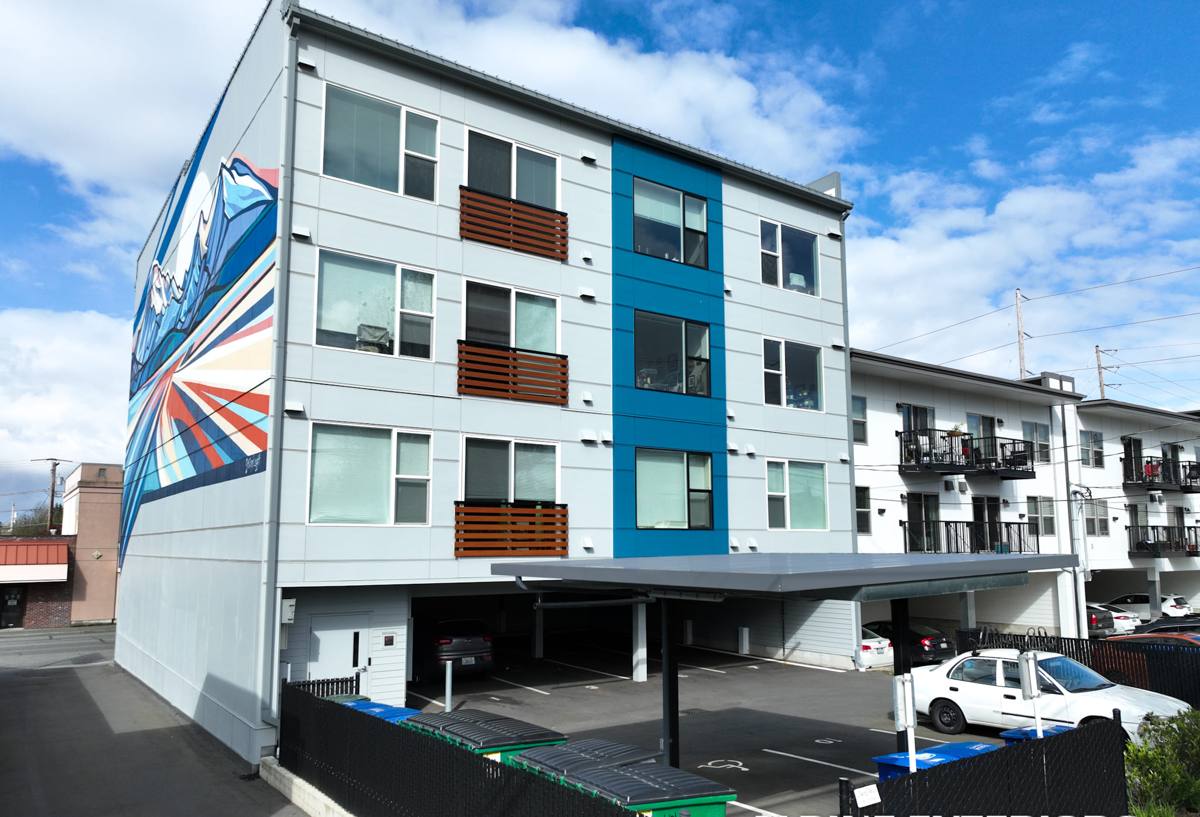
What Venice's Climate Actually Does to Siding
Hurricane-Force Wind
Venice is exposed to the same tropical storm and hurricane risk as the rest of the Gulf Coast, and wind doesn't just threaten to tear siding off — it tests every fastener, every seam, and every piece of flashing behind the panels. Siding that's under-fastened or installed with the wrong nailing pattern can start lifting at the edges long before a storm actually arrives, just from routine gusts.
Wind-Driven Rain
During a storm, rain in this area rarely falls straight down. It gets driven sideways and upward under eaves and around windows, which means the water-resistive barrier, flashing details, and panel overlaps behind the siding matter as much as the siding itself. A siding product can look fine on the surface while water is already working its way behind it through a poorly sealed joint.
Intense, Year-Round UV
Florida sun is harsher and more consistent than in most of the country. UV breaks down pigments and surface coatings over time, which is why so many houses in this area show chalking, fading, or blistering paint well before a typical repaint cycle would suggest. Siding finish quality — not just the substrate — determines how a house looks in year eight versus year two.
Salt Air
Venice's proximity to the Gulf and to the Intracoastal means airborne salt is a daily factor, not an occasional one. Salt accelerates corrosion in fasteners and trim hardware, and it can degrade certain siding materials and coatings faster than the same product would wear in a drier, inland climate.
Why We Only Install James Hardie Fiber Cement
We made a decision as a company to install James Hardie fiber cement siding exclusively — not vinyl, not LP SmartSide, not Cemplank, not Allura, not primed wood. That's not a marketing position; it's a response to what we've seen hold up in this climate and what doesn't.
Vinyl siding can warp, buckle, or crack under sustained UV and heat, and in a direct hurricane-force wind event it has less structural integrity than fiber cement. Wood-based and OSB-based siding products depend heavily on an intact factory coating and perfect field sealing to resist moisture — a tall order in a climate with this much wind-driven rain and humidity, and a single installation slip can lead to swelling or rot years down the line. Other fiber cement brands exist, but James Hardie's HZ5 product line is specifically engineered for hot, humid, high-moisture climates like ours, and its ColorPlus factory finish is baked on and warrantied against fading in a way field-applied paint isn't.
Fiber cement is also non-combustible, which matters in a state where wildfire and lightning-strike risk exist alongside the coastal weather. And because Hardie backs its product with a long transferable warranty when installed by a certified contractor, homeowners get protection that follows the house, not just the original owner.
What a Correct Siding Installation Involves
Fiber cement siding is only as good as the assembly behind it. A correct installation in a coastal climate like Venice's involves several layers working together:
- A properly lapped and sealed water-resistive barrier under the siding, not just a stapled house wrap
- Correct flashing at every window, door, and penetration so wind-driven rain has nowhere to enter
- Fastener spacing and type matched to Hardie's specifications for high-wind zones, using corrosion-resistant fasteners appropriate for salt air exposure
- Proper clearance between the bottom of the siding and grade, decks, or roof lines to avoid wicking moisture
- Correct panel gapping and caulking at butt joints to allow for expansion without letting water in
- Manufacturer-specified starter strips and trim details rather than shortcuts that look fine on day one
Skipping any one of these doesn't usually show up immediately. It shows up two or three years later as a soft spot near a window, a streak of rust bleeding from a fastener, or a section that comes loose in the next named storm.
Our Process for Venice Installations
We approach every Venice siding job the same methodical way, whether it's a full re-side or a targeted section replacement:
1. Assessment
We inspect the existing wall assembly, not just the visible siding, looking for prior water intrusion, soft sheathing, or flashing issues that need to be corrected before new siding goes on.
2. Product and Color Selection
We walk homeowners through Hardie's HZ5 panel and lap siding options and ColorPlus palette, factoring in HOA requirements common in Venice's planned communities where applicable.
3. Prep and Weather Barrier
We address any sheathing repairs, install or correct the water-resistive barrier, and detail flashing around every opening before a single piece of siding goes up.
4. Installation to Manufacturer Spec
Fastening patterns, clearances, and joint treatment follow James Hardie's published specifications for our wind zone — this is also what keeps the manufacturer's warranty intact.
5. Final Walkthrough
We review the completed job with the homeowner, covering care and maintenance expectations specific to a salt-air, high-UV environment.
Comparing Siding Options for a Venice Home
| Material | Wind Performance | Moisture/Salt Air Behavior | UV/Color Stability |
|---|---|---|---|
| Vinyl | Can crack or blow off in high winds | Doesn't rot, but seams can allow water behind it | Prone to fading and chalking under intense sun |
| Wood/OSB-based siding | Adequate if fastened correctly | Vulnerable to swelling and rot if coating fails | Depends entirely on maintained paint/coating |
| Other fiber cement brands | Generally solid | Varies by climate engineering | Varies; not all offer factory-baked finishes |
| James Hardie HZ5 | Engineered for high-wind, high-moisture zones | Built specifically for humid, salt-air climates | ColorPlus factory finish resists fading |
What Drives the Cost of a Venice Siding Job
| Factor | Why It Matters Locally |
|---|---|
| Wall prep and sheathing condition | Older Venice homes near the water sometimes need sheathing repair before new siding can go on |
| Home size and complexity | More corners, gables, and window openings mean more flashing detail work |
| Siding profile chosen | Lap siding, panel siding, and accent shingle styles carry different material and labor costs |
| Removal of existing siding | Full tear-off versus installing over an already-sound assembly changes labor scope |
| HOA or coastal design requirements | Some Venice communities have color or style guidelines that affect product selection |
We give homeowners a firm, itemized quote after an on-site assessment rather than a ballpark number over the phone — every Venice property carries its own combination of these factors.
What to Check Before Hiring a Siding Contractor in Venice
- Are they a certified James Hardie installer, or just someone who occasionally installs it
- Do they carry current Florida licensing and insurance, and will they provide proof
- Do they follow manufacturer fastening and flashing specs for our wind zone, or their own shortcuts
- Do they explain what's happening behind the siding, not just the finish color
- Do they have ongoing work in the Venice/Sarasota area, or are they traveling in from another market
- Will the manufacturer's warranty actually stay valid based on how they install it
Why a Local Sarasota Crew Matters for Venice Specifically
Siding installation isn't a one-size-fits-all trade. A crew that works Venice regularly already knows which streets sit closer to salt water, which neighborhoods have HOA color restrictions, and how the local building department handles wind-load and flashing inspections. That familiarity shortens the permitting process and reduces the chance of a detail getting missed because a crew was guessing at conditions instead of already knowing them.
We're based in Sarasota County and treat Venice as core territory, not a stretch job. That means faster response for follow-up questions, a crew that's seen how different Hardie profiles actually weather in this exact climate over time, and accountability that doesn't disappear once the invoice is paid.
If you're planning a siding project in Venice, we're happy to walk your property, look at what's there now, and give you a straight assessment of what it needs — no pressure, no obligation. Reach out below for a free estimate.