 Sarasota Siding
 Building a Deck for Life on a Barrier Island
Siesta Key sits out on the Gulf side of Sarasota County, and that location shapes everything about how a deck should be built here. A deck designed for an inland Florida yard doesn't automatically hold up a quarter mile from open salt water. Between direct sun exposure nearly every day of the year, salt-laden air moving off the Gulf, and the wind-driven rain that comes with our summer storm season, an outdoor structure on the Key is under more sustained stress than the same deck would face almost anywhere else in the region.
That doesn't mean a custom deck can't last for decades on Siesta Key — it just means the material choices, fasteners, framing details, and even the footing design have to account for conditions most decking products were never tested against. This page covers what actually matters when you're planning a deck for a Siesta Key home, and what a correctly built one looks like from the ground up.
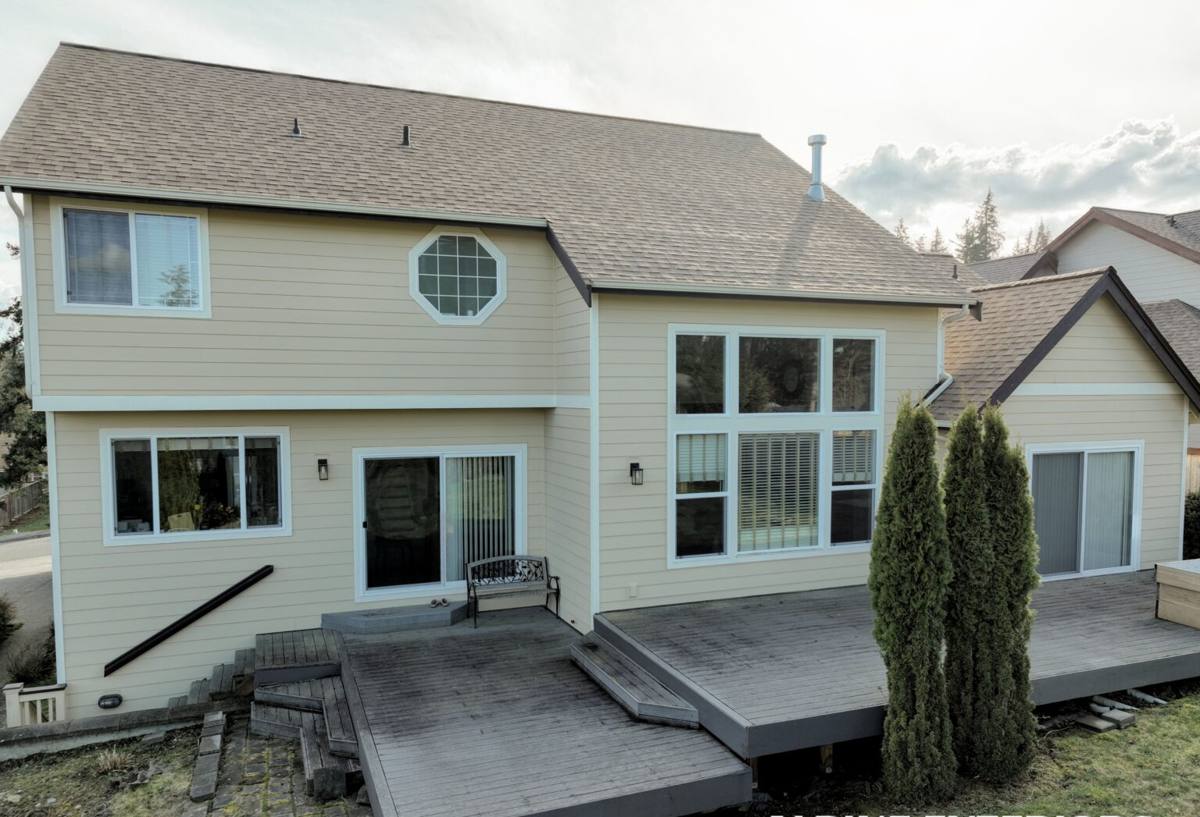
What Salt Air and Sun Actually Do to a Deck
It helps to understand the specific failure points before talking about solutions, because most deck problems on the Key trace back to the same handful of causes.
- Fastener corrosion: Standard or lower-grade coated screws and nails corrode faster in salt air, and once a fastener starts rusting it can bleed streaks into the decking and eventually lose its grip.
- UV breakdown: Year-round sun fades wood tones unevenly, dries out natural oils in real wood, and over time can make lower-quality composite boards chalky or brittle.
- Moisture cycling: Afternoon storms followed by intense heat mean boards are constantly swelling and drying. Wood that isn't properly spaced or sealed will cup, crack, or split as it goes through this cycle season after season.
- Metal fatigue in structural hardware: Joist hangers, post bases, and structural screws take the same corrosive exposure as visible fasteners, but they're hidden — so problems there go unnoticed until there's a real structural issue.
None of this means a deck is a bad investment on Siesta Key. It means the build has to be specified correctly the first time, because retrofitting corrosion-resistant hardware or replacing warped framing later is far more expensive than building it right.
Choosing a Decking Material for Coastal Sarasota County
There's no single "best" decking material for every home — it depends on your budget, how much upkeep you want to do, and whether the deck is Gulf-front, canal-front, or set back in a more sheltered yard. Here's how the common options actually perform in this environment.
| Material | Salt Air / Moisture Behavior | Maintenance | Typical Cost Tier |
|---|---|---|---|
| Pressure-treated pine | Prone to cupping and checking without regular sealing; needs reapplication of sealant to resist moisture cycling | High — annual inspection and resealing | $ |
| Tropical hardwood (e.g., ipe) | Naturally dense and rot-resistant, but still needs oiling to prevent graying and surface checking in constant sun | Moderate to high — periodic oiling | $$$ |
| Capped composite | A protective outer shell resists moisture absorption and salt exposure far better than wood or uncapped composite | Low — occasional washing | $$ |
| PVC decking | Contains no wood fiber, so it doesn't absorb moisture or feed rot; performs well in humid, salty air | Low — occasional washing | $$$ |
We steer most Siesta Key clients toward capped composite or PVC for anything close to the water, not because wood is a bad product, but because our professional standard is to match the material's real-world moisture and UV tolerance to the exposure the deck will actually see. A gorgeous hardwood deck that needs oiling every few months in this climate is a maintenance commitment — we'll tell you that honestly up front rather than let you find out the hard way.
Uncapped vs. Capped Composite
Not all composite decking is the same. Older, uncapped composite boards are a wood-plastic blend with no outer barrier, which means they can still absorb moisture at the surface and are more prone to fading and mildew staining in a humid coastal climate. Capped composite adds a polymer shell around the board, which is what actually gives it the low-maintenance, fade- and stain-resistant performance most homeowners expect when they choose composite in the first place. If you're comparing quotes, ask specifically whether the product is capped on all four sides — that detail affects long-term performance more than the brand name on the box.
Fasteners, Framing, and Substructure: Where Deck Failures Actually Start
The decking surface gets all the attention, but the framing underneath is what determines whether a deck is safe and long-lasting. On Siesta Key specifically, we treat the substructure as the priority, not an afterthought.
That means stainless steel or marine-grade coated fasteners throughout — not just on visible surface screws, but on every joist hanger, post base, and structural connector. It means proper flashing where the deck ledger meets the house, since water intrusion at that connection is one of the most common (and most expensive) deck failures in coastal Florida. And it means framing lumber rated for ground contact and moisture exposure, spaced and gapped correctly so boards have room to expand and contract without buckling.
Hidden fastener systems, which clip decking boards from underneath rather than screwing through the top face, are worth considering too — fewer surface penetrations means fewer points where salt air and moisture can start working on exposed metal.
Wind Load, Flood Zones, and Florida Building Code
Sarasota County sits in a high-velocity coastal zone under the Florida Building Code, and a barrier island location like Siesta Key doesn't get any exemptions from that. A custom deck attached to your home has to be engineered to resist wind uplift and lateral loads, which affects everything from post footing depth to how railings and structural connections are specified.
Many properties on Siesta Key also fall within FEMA-mapped flood zones, which is common for barrier island communities. Depending on your specific property and how the deck is configured — attached, freestanding, elevated, at grade — that can affect permitting requirements and sometimes footing or elevation details. We pull the required permits and handle inspections as part of the build, and if your property has flood zone considerations that affect the design, we'll walk you through what that means before work starts, not after.
How We Approach a Siesta Key Deck Project
Every property on the Key is a little different — Gulf-front, canal-front, or a few streets back — so we don't start with a template.
- On-site assessment: We look at sun exposure, prevailing wind, proximity to salt water, existing structure (for attached decks), and drainage before recommending materials.
- Material and layout consultation: We walk through decking, railing, and hardware options honestly, including the maintenance trade-offs of each, so you're choosing based on real information.
- Permitting and engineering: We handle the permit submission and any required structural documentation for Sarasota County and local wind/flood requirements.
- Framing and substructure build: Corrosion-resistant hardware, correctly flashed ledger connections, and properly spec'd footings go in before a single deck board is laid.
- Decking, railing, and finish work: Boards are installed with proper gapping for expansion, and railing systems are secured to meet code wind and load requirements.
- Final walkthrough and inspection: We review the finished deck with you and make sure it passes required inspections.
Maintaining a Deck in a Salt Air Climate
Even a well-built deck needs some seasonal attention on Siesta Key. The good news is that with the right materials, that attention is minor — a maintenance schedule, not a renovation.
- Rinse the deck surface periodically to clear salt residue, especially after storms with onshore wind
- Check fastener heads and structural hardware once or twice a year for early signs of corrosion or staining
- Inspect the ledger board flashing where an attached deck meets the house for any signs of water intrusion
- Keep gutters and nearby drainage clear so water isn't pooling against posts or footings
- For wood decking, reapply sealant or oil on the manufacturer's recommended schedule — don't wait until graying or checking is already visible
- After a named storm, walk the deck and check railings, connections, and footings before resuming normal use
Why Hiring a Crew That Already Works Siesta Key Matters
Building codes, wind load requirements, and flood zone rules are enforced at the county and local level, and a contractor who regularly pulls permits and passes inspections in Sarasota County already knows what inspectors are looking for on this island. That familiarity avoids the delays and rework that come from a crew learning local requirements on your project instead of before it.
Just as important is material judgment earned from watching how decks actually age here — which fasteners hold up, which composite lines perform in direct Gulf-facing sun, and which framing details prevent water problems at the house connection. That's the kind of knowledge that only comes from building and maintaining decks in this specific climate over time, not from a general contracting background alone.
Get a Straightforward Estimate
If you're planning a new deck or replacing one that hasn't held up to Siesta Key's sun, salt, and storms, we're happy to take a look and give you an honest read on materials, layout, and cost — no pressure, no obligation. Use the form below to request a free estimate.