 Sarasota Siding
 Siesta Key Roofs Work Harder Than Most
A roof on Siesta Key deals with a combination of stresses that inland homes rarely see all at once. You've got hurricane-force wind gusts that can lift shingles and tiles clean off a deck, wind-driven rain that gets pushed sideways under flashing and vents, salt air rolling in off the Gulf that accelerates corrosion on fasteners and metal components, and intense, nearly year-round UV exposure that dries out and embrittles roofing materials faster than in cooler, cloudier climates. Any one of these on its own is manageable. Together, over years, they compound — which is why a roof that looks fine from the driveway can still have real storm damage underneath.
Because Siesta Key sits on a barrier island, homes here are also more exposed to open wind fetch than properties tucked further inland in Sarasota County. There's less tree cover and fewer buildings to break up gusts before they hit a roofline. That exposure is part of what makes this a beautiful place to live, and it's also exactly why storm damage repair here needs to be handled by people who understand barrier-island wind and moisture behavior, not treated like a generic repair job.
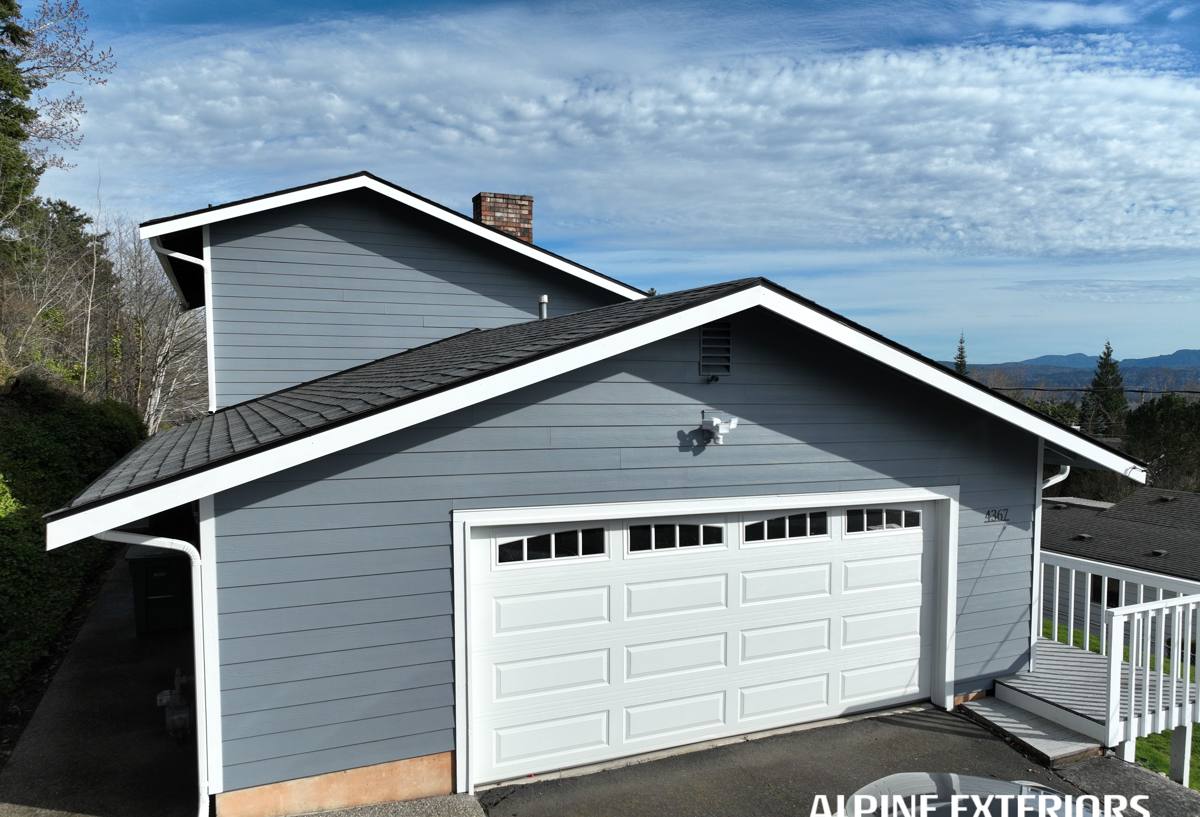
What Storm Damage Actually Looks Like
Storm damage isn't always a missing shingle or a visible hole. Some of the most costly damage is the kind you can't see from the ground, and it's often the difference between a straightforward repair and a much bigger problem a few months later.
Visible Signs
- Missing, cracked, or lifted shingles or tiles
- Creased or curled shingle edges from wind uplift
- Torn or missing ridge caps
- Bent, loose, or missing flashing around vents, chimneys, and roof-to-wall transitions
- Granule buildup in gutters or at downspout outlets
- Visible sagging or an uneven roofline
Hidden Signs
Wind-driven rain is the sneaky one. It doesn't need a hole to get in — it just needs a lifted shingle edge, a compromised seal, or aged flashing to find a path under the roofing material and into the deck below. From inside the house, that can show up weeks later as a ceiling stain, a musty smell in an attic or closet, peeling paint near a wall-ceiling joint, or soft spots underfoot in an upstairs room. By the time those symptoms show up indoors, the moisture has usually been working on the wood decking and insulation for a while, which is why a proper storm inspection checks the attic and decking, not just the surface.
How We Approach a Storm Damage Assessment
A rushed inspection misses things. Our process on Siesta Key storm calls follows the same order every time, because skipping a step is how minor damage gets missed until it turns into a rot or mold problem.
- Exterior roof inspection — walking the full roof plane, not just the section that looks obviously damaged, checking shingles or tiles, ridge lines, valleys, and all penetrations.
- Flashing and seal check — flashing around chimneys, skylights, pipe boots, and wall transitions is where wind-driven rain gets in first, so it gets checked closely, including fastener corrosion from salt exposure.
- Attic and decking inspection — looking for water staining, damp insulation, or soft decking from underneath, which tells us whether water actually made it through and how far it traveled.
- Gutter and drainage review — clogged or damaged gutters after a storm can send water back up under the roof edge instead of away from the house.
- Written scope and photos — a clear, itemized explanation of what's damaged, what's not, and what we recommend, before any work starts.
We're upfront when a repair is genuinely all that's needed, and equally upfront when we see damage that a patch would only hide temporarily. The goal is an honest scope, not the biggest invoice we can justify.
Repair Approaches by Damage Type
Not every storm hit needs the same fix. Matching the repair to the actual damage — instead of a one-size approach — is what keeps costs reasonable and keeps the repair from failing again in the next storm.
| Damage Type | Typical Repair | What to Watch For |
|---|---|---|
| Localized missing/cracked shingles or tiles | Spot replacement matched to existing material | Color and profile match on older roofs can be limited by material availability |
| Damaged flashing at penetrations | Flashing removal and reinstallation with new sealant | Corroded fasteners from salt air should be replaced, not just resealed |
| Wind-lifted ridge caps | Ridge cap re-securing or replacement | Underlying ridge vent should be checked for wind intrusion too |
| Saturated decking under a small area | Section decking replacement plus roofing repair | Extent of rot isn't always visible until decking is opened up |
| Widespread granule loss or brittle material | Often a sign the roof is near end of service life | Repair may only buy limited time — full replacement should be discussed |
Repair or Replace: How We Help You Decide
This is the question every homeowner asks after a storm, and the honest answer depends on a few concrete factors rather than a gut feeling. We walk through this with you directly rather than defaulting to whichever answer is more profitable for us.
Factors That Point Toward Repair
- Damage is localized to one area rather than spread across the roof
- The roof is under 10-15 years old and otherwise in sound condition
- Decking underneath the damaged area is dry and structurally solid
- Matching material is available for a clean, watertight repair
Factors That Point Toward Replacement
- Multiple storms have caused repeated, scattered damage over the years
- The roof is already near or past its expected service life
- Underlayment or decking shows widespread moisture damage, not just a local spot
- Repeated repairs are starting to cost more than a replacement would over time
For a lot of Siesta Key homes, especially older ones, the honest answer is somewhere in between — repair the current storm damage now, but go in with clear eyes about how much life is realistically left on the roof so you can plan and budget for replacement rather than get surprised by it.
Insurance and Documentation
If a storm damage repair is going through homeowners insurance, documentation matters as much as the repair itself. We provide dated photos of the damage, a written scope of work, and a clear explanation of cause when we can determine it, which helps support a claim. What we won't do is inflate a scope or describe damage that isn't there to help a claim get approved — that kind of thing can come back on the homeowner, not the contractor, and it's not how we operate. If you're not sure whether damage is worth filing a claim for, we're happy to give you a straight assessment before you decide.
Why It Matters That We Already Work on Siesta Key
Storm repair work on a barrier island isn't quite the same as storm repair work a few miles inland. Salt air corrosion patterns, the way wind wraps around waterfront and near-waterfront structures, permitting and access considerations on the Key, and the specific materials that tend to hold up here versus those that don't — that's knowledge you build by working the area repeatedly, not by showing up once after a storm. A crew that's unfamiliar with Siesta Key conditions is more likely to miss corrosion-driven flashing failures or underestimate how much wind uplift a given roof edge has actually taken. We've done storm repair work across Sarasota County, including Siesta Key specifically, and that local pattern recognition is part of what you're paying for when you hire a crew that already knows the area.
After the Storm: What to Do First
What you do in the first day or two after a storm can affect both the repair outcome and any insurance claim. This is the same checklist we walk clients through on storm calls.
- Do a safe visual check from the ground — don't get on the roof yourself, especially after high winds
- Photograph any visible exterior damage and any interior water intrusion (stains, drips, damp spots)
- Check the attic if it's safely accessible, using a flashlight rather than walking on insulation
- Clear debris from gutters and downspouts so water can drain properly
- Use a tarp only if it's safe to do so and you have someone experienced helping — improper tarping can cause more damage
- Call for a professional inspection promptly rather than waiting, since hidden moisture damage gets worse the longer it sits
- Avoid signing anything with a contractor who showed up unsolicited door-to-door right after the storm; verify licensing and local presence first
What a Proper Storm Repair Includes
A quality storm repair on Siesta Key isn't just about closing up the visible damage. It should also address why that section failed in the first place, so the same spot isn't the first thing to go in the next hurricane season. That means checking fastening patterns against current wind resistance standards where a repair touches them, replacing corroded hardware rather than reusing it, and confirming flashing details are actually sealed correctly rather than just cosmetically patched. We treat every storm repair as a chance to leave that section of roof more storm-ready than we found it, not just visually repaired.
If your Siesta Key home has storm damage — visible or suspected — we're glad to come take an honest look. The estimate is free, there's no pressure to sign anything on the spot, and you'll get a clear, written explanation of what we find either way. Fill out the form below to get a repair or inspection scheduled.