 Sarasota Siding
 Why Storm Damage Repair Looks Different in Bee Ridge
Bee Ridge sits inland from the barrier islands, but that doesn't mean it's spared from what Gulf Coast storm seasons put onto a roof. Homes in this part of Sarasota County still deal with the full package: hurricane-force wind gusts that lift and pry at shingles and flashing, wind-driven rain that finds its way in sideways instead of straight down, intense year-round UV that bakes roofing material for months at a time, and salt-laden air drifting in off the Gulf that speeds up corrosion on metal components even a few miles from open water. Storm damage here isn't always the dramatic kind — a tree limb through the decking or shingles torn off in sheets. More often it's the kind that starts small: a lifted shingle tab, a compromised seal, a flashing joint that shifted just enough to let water in. Left alone, that's exactly the kind of damage that turns into a much bigger repair.
This page covers what actually damages roofs in Bee Ridge, how to tell cosmetic wear from a real problem, what a correct storm damage repair involves, and why working with a crew that already handles roofs in this part of Sarasota matters once a storm has come through.
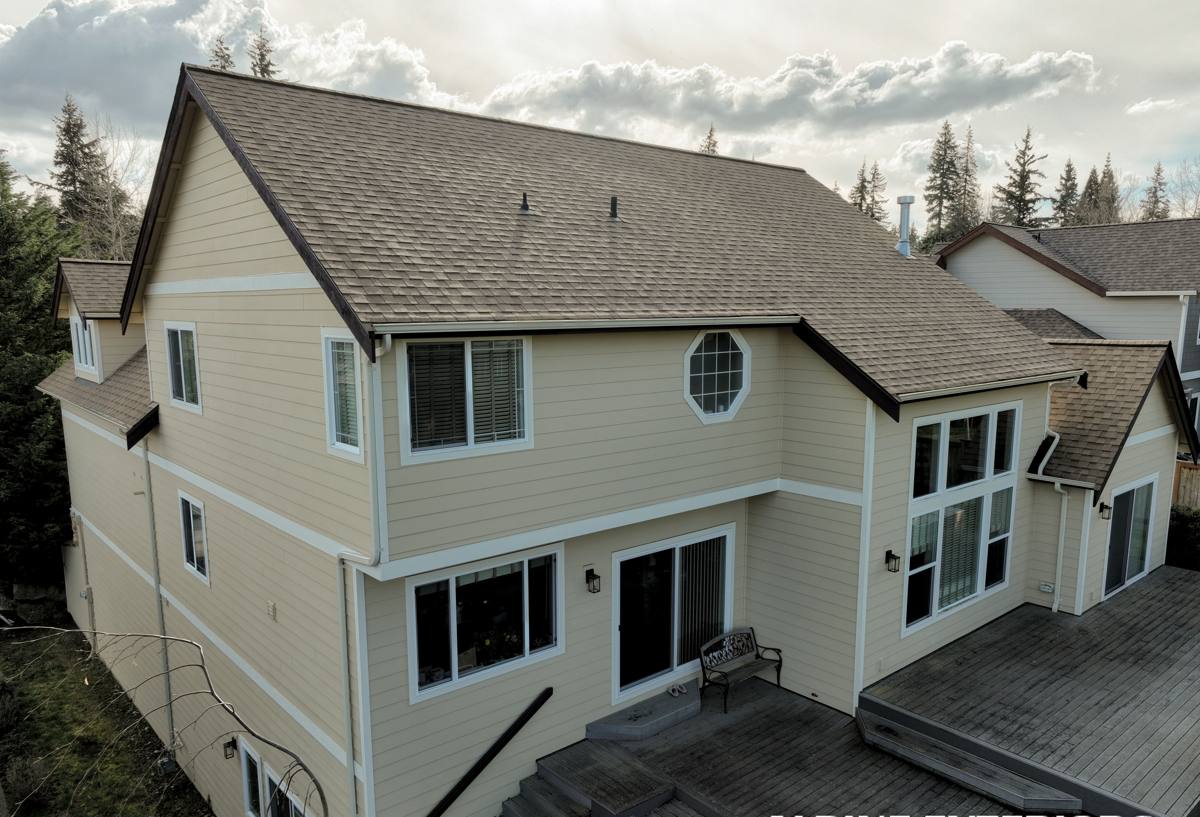
What Actually Causes Storm Damage to Bee Ridge Roofs
Wind Uplift at Edges and Corners
Roof edges, ridges, and corners take the highest wind loads during any storm, because that's where wind separates from the roofline and creates uplift pressure. Shingles and flashing in those zones are usually the first to loosen, crack a seal, or tear loose outright. A roof can look intact from the ground after a storm and still have compromised edges that a walk-up inspection would catch.
Wind-Driven Rain Intrusion
Ordinary rain runs downhill off a roof the way it's designed to. Wind-driven rain during a tropical system or severe thunderstorm gets pushed sideways and even upward under shingle tabs, around flashing, and into any gap that a calm-weather rain would never reach. This is one of the most common ways a roof develops a slow leak that doesn't show up as a stain on the ceiling for weeks or months after the storm that actually caused it.
UV and Heat Cycling
Florida's UV exposure is among the highest in the country, and Bee Ridge roofs take that heat load essentially year-round. Constant UV breaks down asphalt shingle granules and the mat underneath over time, while daily heating and cooling cycles stress seals and fasteners. A roof already worn from sun exposure is far more vulnerable to wind and rain damage than a newer or well-maintained one, which is why storm damage often shows up worse on older roofs even when every roof on the same block took the same storm.
Debris and Impact Damage
Mature tree canopy is common throughout Bee Ridge, and high wind turns branches and debris into projectiles. Impact damage can range from an obvious puncture to bruised shingles that look fine but have lost granule protection at the impact point, which shortens the life of that section of roof even without an active leak.
Signs Your Roof May Have Storm Damage
Not all storm damage is visible from the ground, and not all of it announces itself right away. After any significant wind or rain event, it's worth checking for:
- Shingles that are visibly lifted, curled, cracked, or missing entirely
- Granules collecting in gutters or at downspout outlets, which signals accelerated shingle wear
- Soft spots, sagging, or a change in the roofline's straightness when viewed from across the yard
- Flashing around chimneys, vents, or roof-to-wall joints that looks bent, lifted, or separated
- Water stains on interior ceilings or upper walls, even faint ones that seem to dry up on their own
- Debris damage such as dented vents, cracked pipe boots, or visible impact marks on the roof surface
- Gutters pulling away from the fascia or showing new dents and dings after a storm
Any one of these is worth a closer look. Several together usually means it's time to have someone walk the roof, not just the ground.
Cosmetic Wear vs. Structural Storm Damage
Not every mark on a roof after a storm needs the same response, and telling the two apart correctly is the real job of an honest inspection.
| Symptom | Usually Cosmetic | Often Structural or Active |
|---|---|---|
| A few granules in the gutter after a storm | Yes — normal weathering | Only if paired with bald or exposed spots on the shingle |
| One or two lifted shingle tabs | Sometimes — can often be resealed | Can allow water entry if left through the next rain |
| Sagging deck or soft spot underfoot | No | Yes — usually decking damage or trapped moisture |
| Bent or lifted flashing at a wall or chimney | Rarely | Usually — this is a common active leak point |
| Interior ceiling stain | No | Yes — active or past water intrusion |
| Missing shingles in an isolated area | No | Yes — exposed decking needs prompt attention |
Cosmetic wear can typically be monitored and addressed on a normal maintenance schedule. Anything pointing to active water intrusion or exposed decking needs attention before the next rain, not after it.
How We Diagnose Storm Damage Before Recommending Repair
A repair estimate is only as good as the inspection behind it. A proper storm damage assessment includes:
- A full walk of the roof surface, not just a look from the ground or a drone pass, since granule loss and lifted seals are easiest to miss from a distance
- Checking every flashing point — chimneys, vents, skylights, and roof-to-wall transitions — since these fail more often than the field of the roof itself
- Inspecting the attic or underside of the decking where accessible, since interior signs often show up before an exterior leak is obvious
- Documenting damage with photos tied to specific roof sections, which matters both for our own repair scope and for any insurance claim involved
- Distinguishing new storm damage from pre-existing wear, since insurance coverage typically hinges on that distinction
We walk through what we find plainly — what's storm-related, what's ordinary wear, and what can wait versus what can't — before recommending any scope of work.
Repair vs. Replace: How That Decision Actually Gets Made
A storm doesn't automatically mean a full new roof, and it doesn't automatically mean a quick patch will hold either. The honest factors that drive this decision:
- Extent and location of the damage. Isolated damage to one section of roof is usually a straightforward repair. Damage spread across multiple slopes or affecting the roof's overall wind-resistant assembly often isn't worth chasing section by section.
- Age of the roof. A roof already near the end of its expected service life may only have limited repair value left before replacement becomes the more sensible path, especially heading into another storm season.
- Underlying decking condition. If water intrusion has reached and damaged the roof decking itself, that changes the scope regardless of how the shingles above it look.
- Insurance scope versus actual damage. Sometimes an adjuster's initial scope doesn't fully match what a close inspection finds, in either direction, and that's worth sorting out before work starts.
We'll give a straight answer on which category a given roof falls into, including when a repair is genuinely the right call rather than defaulting to the larger job.
What a Correct Storm Damage Repair Involves
Matching Materials and Meeting Code
Repairs use shingles and components that match the existing roof as closely as possible in profile and, where available, color, and every repair meets current Florida Building Code wind-resistance requirements for the work performed — not a lesser standard just because it's a repair rather than a full replacement.
Flashing and Underlayment Done Right
Most storm-related leaks trace back to flashing or underlayment, not the shingles themselves, so a correct repair addresses those layers directly rather than just replacing the visible shingle on top. A new shingle over a still-compromised flashing detail is a repair that fails again on the next storm.
Documentation Along the Way
We document damage and repair work with dated photos, which supports any insurance claim tied to the repair and gives you a record of what was found and what was done, not just a finished roof with no paper trail behind it.
Working With Your Insurance Claim
Storm damage repair often runs alongside an insurance claim, and we treat that as part of the job rather than something separate from it. That means documenting damage clearly enough to support a claim, providing a straightforward scope and estimate an adjuster can review, and being available to talk through the roof's condition if there's a difference between what was initially approved and what an inspection actually found. We don't inflate a scope to chase a bigger claim, and we don't shrink one to make a repair look simpler than it is — an accurate picture of the roof is what holds up, whether it's reviewed once or revisited later.
Why It Matters That We Already Work in Bee Ridge
A roofing crew that mostly works other parts of the country can still do competent work here, but Bee Ridge roofs deal with a specific combination of conditions — sustained UV exposure, tropical-system wind and rain, mature tree canopy, and salt air drifting in from the Gulf even this far inland — that a generalist crew doesn't run into every week. Working this area regularly means we're not learning Sarasota County's wind and building code requirements mid-project, and we're not guessing at what a typical Bee Ridge roof looks like underneath after a given storm. That familiarity shows up in a more accurate first inspection and a repair scope that reflects what actually happened to your roof, not a generic checklist applied to it.
Get a Free, No-Pressure Roof Inspection
Whether you've got a specific leak, storm damage you want documented for an insurance claim, or just want an honest read on where your roof stands after the latest weather, we're glad to walk the roof and explain what we find plainly — including if the answer is that it doesn't need much. Reach out below for a free estimate.