 Sarasota Siding
 Board & Batten Siding in Osprey: A Look That Has to Earn Its Keep
Board and batten has become one of the most requested siding styles in Sarasota County, and it's easy to see why. The vertical lines read as clean and modern on new construction, but the profile also has deep roots in coastal and cottage architecture, which makes it feel right at home on older Osprey properties too. It works on a full elevation, a gable accent, a porch surround, or a single street-facing wall paired with another material. The look is simple. Getting it to perform for twenty-plus years on a home sitting between Little Sarasota Bay and the Gulf is the harder part, and that's where the material and the installer both matter more than the style itself.
Osprey sees the same climate stack as the rest of the barrier-island and mainland communities along this stretch of Sarasota County: sustained hurricane-force wind events, near-constant UV exposure, wind-driven rain that gets pushed sideways into wall assemblies, and salt-laden air moving in off the water. Board and batten siding has more vertical seams and more exposed batten edges than lap siding, which means there are simply more places for water and wind to find a weakness if the product or the install is wrong. None of that makes board and batten a bad choice for this area. It means the choice of material and the choice of crew carry more weight here than they would in a drier, calmer climate.
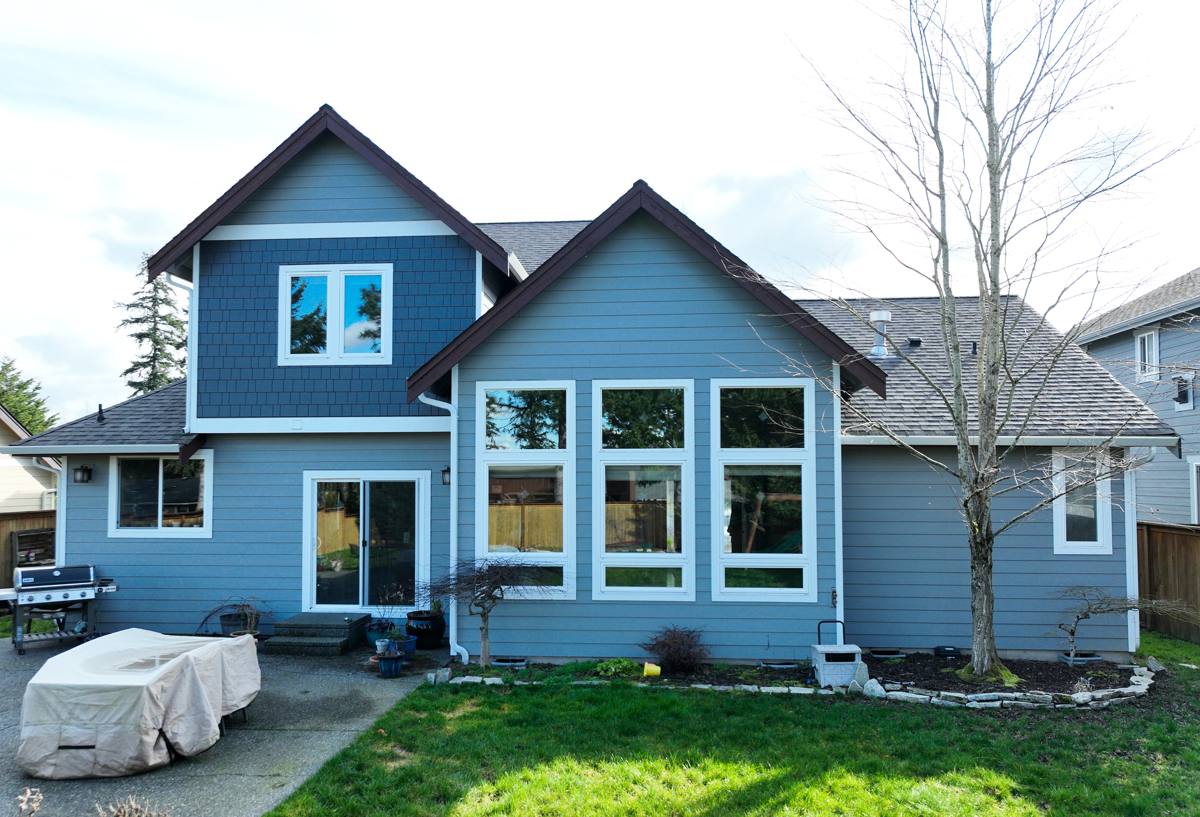
Why the Wrong Material Fails Faster in This Climate
A lot of board and batten siding on the market is built around wood, engineered wood, or vinyl. Each has a place in the country, but each has a specific vulnerability that shows up faster in Osprey's climate than it would inland or up north.
- Solid wood board and batten looks great on day one but is organic material sitting in a humid, salt-air environment. It absorbs moisture at the battens and seams, and once it does, rot, cupping, and repainting cycles start stacking up.
- Engineered wood products improved on solid wood's weaknesses but are still wood-based at the core, which means the cut edges and any breach in the factory coating are places moisture can get in and start swelling the substrate.
- Vinyl board and batten won't rot, but it's a thin plastic product that softens and can visibly warp under direct, sustained Florida sun, and it has a well-documented ceiling for wind resistance compared to fiber cement in a storm-prone market like this one.
This is why our company installs one material system on every job: James Hardie fiber cement. It's not a marketing preference — it's a standard we set because we were tired of pulling failed siding off homes that were only a few years old.
Why We Install James Hardie Board & Batten, Specifically
James Hardie fiber cement is a blend of cement, sand, and cellulose fibers, engineered and pressed into board form and then cured. It's non-combustible, dimensionally stable, and doesn't feed on moisture the way wood-based products do. For board and batten specifically, Hardie offers two paths that we work with regularly:
HardiePanel Vertical Siding with Battens
A large-format fiber cement panel installed vertically, with cedar-style battens fastened over the seams at consistent spacing. This is the traditional way to build a board and batten look and gives us flexibility on batten width and spacing to match the proportions of the home.
Hardie Artisan Board & Batten Collection
A premium engineered profile designed specifically to replicate authentic board and batten reveal and shadow lines, built to a tighter manufacturing tolerance. It's a heavier, denser product intended for homeowners who want the board and batten look with the least visible seam movement over time.
Both are manufactured to the HZ5 climate specification, which is Hardie's engineering designation for high-humidity, storm-exposed regions like the Florida Gulf Coast — meaning the product is formulated for this specific climate, not a generic national spec. Every board also carries Hardie's factory-applied ColorPlus finish as an option, a baked-on finish that resists fading and chipping far better than field-applied paint, which matters on a coastline where UV exposure is relentless nearly year-round.
What a Correct Board & Batten Installation Actually Involves
The material is only half the equation. Board and batten fails in this climate almost exclusively at the details, not because Hardie itself is a weak product. A correct install includes:
- A proper water-resistive barrier installed and lapped correctly behind the panels, so any moisture that does reach the wall plane drains out instead of sitting against sheathing.
- Correct fastener type, spacing, and embedment — undriven or overdriven fasteners are one of the most common causes of panel movement and cracking we see when we're asked to look at someone else's failing siding.
- Proper joint and seam treatment, including manufacturer-specified gaps and sealant at trim and penetrations, not just caulk smeared over a tight butt joint.
- Batten spacing and fastening built for wind uplift, not just visual spacing — the batten is doing structural work in a storm, not just adding a design line.
- Flashing at every horizontal transition — window heads, roof-to-wall intersections, and band boards — since board and batten's vertical seams funnel water downward faster than horizontal lap siding does.
Skip any one of these and the siding can still look right for a season or two. The failures we get called out to inspect are almost never obvious at install — they show up two, three, five years later as staining, soft spots at the base, or a batten that's started to bow.
Comparing Board & Batten Material Options for Osprey Homes
| Material | Wind/storm performance | Moisture behavior | UV/color stability | Typical maintenance |
|---|---|---|---|---|
| James Hardie fiber cement | Engineered and rated for high-wind regions | Non-combustible, doesn't absorb and swell like wood | ColorPlus factory finish resists fading | Occasional wash; repaint only if field-painted |
| Solid wood | Adequate if installed correctly, but panel/board movement is common | Absorbs moisture at seams and battens; prone to rot | Fades and chalks; needs repainting on a cycle | Regular repainting, caulking, and rot inspection |
| Engineered wood (LP-style) | Reasonable when new | Wood-core substrate vulnerable at cut edges and breaches | Coating degrades over time | Edge sealing, moisture monitoring |
| Vinyl | Lower wind and impact rating than fiber cement | Won't rot, but can crack or blow off in high wind | Can soften, warp, or fade in intense sun | Low, but limited repair options once damaged |
This table reflects general product behavior, not a specific test result or brand claim — it's the reasoning behind why we standardized on one material rather than offering all four.
How We Approach a Board & Batten Job in Osprey
Our process doesn't change because a house is board and batten instead of lap siding, but the sequence matters more given the number of vertical seams involved.
- On-site assessment. We look at the existing wall assembly, current siding condition, window and door flashing, and any moisture staining before we ever talk product or price.
- Design and layout. Batten spacing and board width get planned around the home's proportions — window and door alignment, corners, and roofline — not just applied in a default pattern.
- Tear-off and substrate check. Old siding comes off, and sheathing gets inspected for any hidden rot or damage before a single new panel goes up. This step gets skipped by crews trying to move fast, and it's where we find most of the problems that would have shortened the life of the new siding.
- Water-resistive barrier and flashing. Installed and lapped to shed water outward and downward, with extra attention at every horizontal transition.
- Panel and batten installation to Hardie's fastening and spacing specifications, sized for our regional wind-load requirements.
- Final detailing. Trim, caulking at manufacturer-specified joints, and a walkthrough before we consider the job finished.
Why a Crew That Already Works in Osprey Is Worth Asking About
Osprey isn't a uniform housing stock. It has waterfront and near-waterfront homes close to Little Sarasota Bay and the barrier island communities nearby, and it has inland neighborhoods set back from direct coastal exposure. Wind and moisture load isn't identical on every lot, and a crew that has actually worked this stretch of Sarasota County knows the difference between a house that needs every flashing detail treated as critical and one with a bit more buffer from direct salt air. That's not something you learn from a spec sheet — it's something you learn from doing the work here repeatedly.
A local crew also understands the permitting and inspection process specific to Sarasota County, knows the wind-load requirements that apply to exterior work in this part of Florida, and isn't learning the local building department's expectations on your home's dime. When something needs a follow-up visit — a warranty question, a small repair after a storm — a company that's actually based and working in this area can get back out to the property without the runaround.
Maintenance and Long-Term Ownership
One of the most underrated advantages of fiber cement board and batten in this climate is how little it asks of the homeowner afterward. It doesn't need repainting on the schedule that wood does, it doesn't require the caulk-and-patch cycle that wood-based products often do, and it holds up to the intense year-round UV without the same fading pattern vinyl and painted wood show. A rinse to clear off salt residue and pollen, and a periodic look at the caulk lines and trim, is the bulk of what board and batten siding needs going forward when it's installed correctly. James Hardie also backs its siding with a strong transferable warranty, which matters both for your own peace of mind and for resale — a documented, professionally installed Hardie system is something a buyer's inspector will recognize as a real asset, not a question mark.
What to Ask Before You Hire for a Board & Batten Project
- Is the fiber cement rated for our climate zone (HZ5), or is it a generic national product?
- Will the crew tear off and inspect the substrate, or install over existing siding?
- What fastener schedule and batten spacing will be used, and is it documented in writing?
- How will flashing be handled at windows, doors, and roof-to-wall transitions?
- Is the warranty from the manufacturer, the installer, or both — and what does it actually cover?
- Has the crew worked on homes in Osprey or nearby Sarasota County communities before?
If a contractor can't give a straight answer to these questions, that's worth paying attention to before any contract gets signed.
Get a Straight Answer on Your Home
Every property carries its own mix of sun exposure, wind exposure, and wall condition, and the right board and batten plan follows from that, not from a one-size answer. If you're weighing board and batten siding for a home in Osprey, we're glad to take a look, walk you through what your house specifically needs, and give you a straightforward, no-pressure estimate using the form below.