 Sarasota Siding
 Composite Decking Built for Downtown Sarasota's Climate
Downtown Sarasota sits close enough to the bay and the Gulf that every outdoor structure on a home takes a real beating year-round. A deck here isn't just furniture for the backyard — it's exposed to intense UV nearly every day of the year, sudden wind-driven rain that finds its way into any gap in a build, salt-laden air that accelerates corrosion on hardware, and, during hurricane season, wind loads that a poorly fastened structure simply won't survive. Composite decking, installed correctly, holds up to all of that far better than untreated wood, but "composite" is a broad category and not every board or every installation approach is built for a coastal Sarasota County climate.
This page focuses specifically on composite decking for homes in and around Downtown Sarasota — what the climate demands, what a correct installation actually involves, and how our process works from first estimate to final walkthrough.
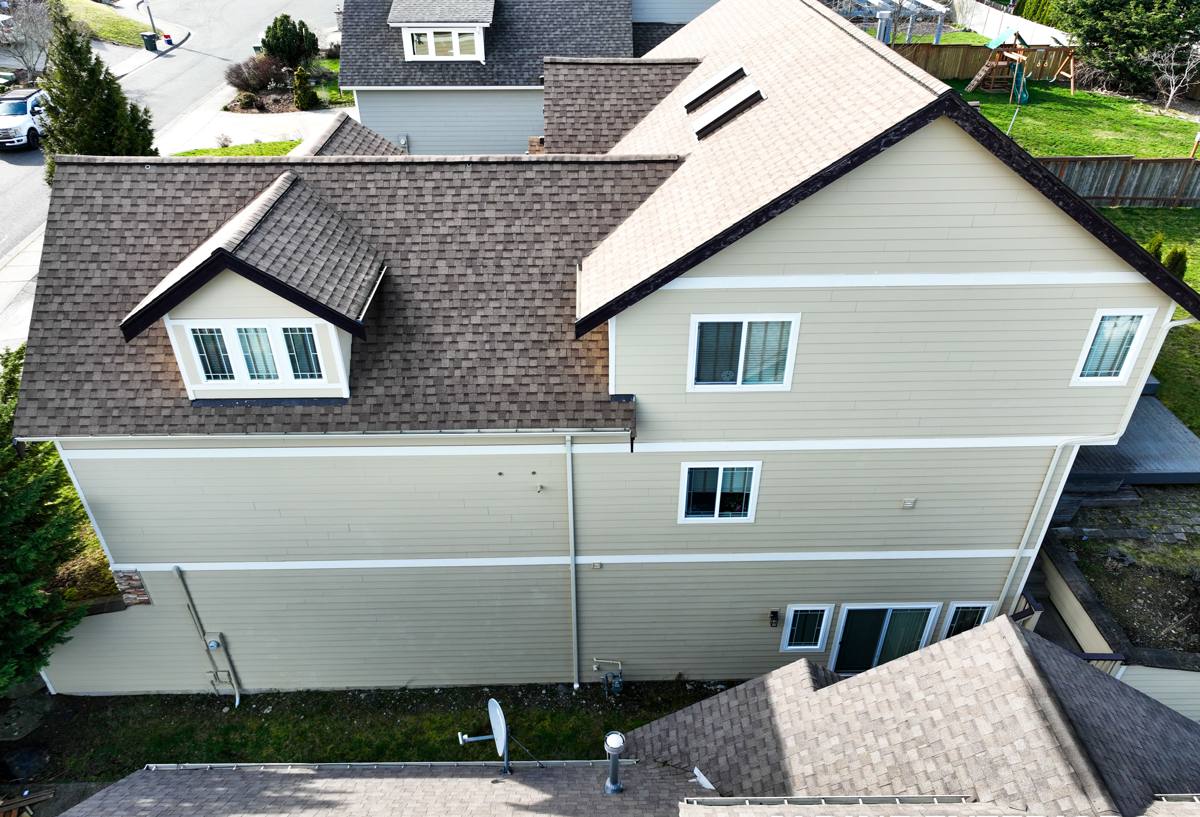
What Sun, Salt Air, and Storms Do to a Deck
Homeowners who've lived in the area for even a few years already know the pattern: materials that look fine when new start showing wear faster here than they would inland. A few specific mechanisms are at work.
UV Exposure
Sarasota gets strong, direct sun for most of the year. On decking, constant UV breaks down surface fibers and pigments over time. Lower-quality composite boards without a real capped surface can fade unevenly, especially where furniture, planters, or shade patterns create inconsistent sun exposure across the same deck.
Wind-Driven Rain and Moisture
Rain here rarely falls straight down. Storms push moisture sideways into board ends, fastener holes, and any seam where water can collect. If a deck's substructure doesn't drain and dry properly, trapped moisture becomes the real long-term threat — not to the composite boards themselves in most cases, but to the framing underneath and to any hardware that isn't rated for the exposure.
Salt Air and Corrosion
Being close to the coast means airborne salt settles on everything outdoors, including screws, brackets, and structural connectors. Standard hardware corrodes faster in this environment, which is why fastener selection matters as much as the decking material itself.
Hurricane-Force Wind
A deck attached to the house, or a freestanding structure, has to resist uplift and lateral wind loads. Ledger attachment, joist hangers, and post connections all need to be sized and fastened for the wind exposure category this part of Sarasota County falls under — not just "strong enough for a normal yard."
Composite vs. Other Decking Materials for This Climate
We get asked often why we lean toward composite for coastal Sarasota properties over pressure-treated wood or other options. Here's an honest comparison based on how each material actually performs in this specific climate, not marketing claims.
| Material | UV & Fade Resistance | Moisture Behavior | Maintenance | Typical Lifespan Here |
|---|---|---|---|---|
| Pressure-treated wood | Fades and grays quickly under strong sun | Absorbs moisture, prone to cupping/splitting in wet-dry cycles | Annual sealing/staining needed | 10-15 years with upkeep |
| Capped composite | Strong resistance with a real cap layer | Doesn't absorb water into the board core | Occasional washing, no sealing | 25-30+ years |
| Uncapped/first-gen composite | Weaker; can fade and stain more than capped boards | More susceptible to moisture wicking at cut ends | More frequent cleaning | Shorter than capped composite |
| PVC decking | Very good UV resistance | Fully moisture-resistant board | Low | Long, but different feel/expansion behavior than composite |
Wood isn't a bad material everywhere — it just requires a maintenance commitment that most homeowners underestimate in a climate this harsh on exposed lumber. Our standard for Downtown Sarasota decks is capped composite, paired with corrosion-resistant hardware, because it gives the best balance of appearance, low upkeep, and actual coastal durability without asking the homeowner to re-seal a deck every year.
What a Correct Composite Deck Installation Involves
The board itself is only part of the equation. Most composite deck problems we get called to inspect or repair trace back to substructure and fastening decisions made during installation, not the decking material failing on its own.
Substructure and Framing
Joists and beams need proper spacing for the specific composite product being used — composite boards flex differently than wood and manufacturers specify tighter joist spacing than a typical wood deck. We also grade the substructure to shed water rather than trap it against framing members.
Fasteners and Hardware
Given the salt air here, we use stainless steel or coated corrosion-resistant fasteners and connectors rather than standard-grade hardware. This is one of the most common corners cut in budget installations, and it's usually invisible until the hardware starts failing years later.
Ventilation and Drainage
Enclosed or low-clearance deck framing needs airflow underneath to let moisture escape after wind-driven rain events. We build in proper clearance and, where the design allows, drainage systems that route water away from the structure instead of letting it pool.
Board Spacing and Expansion
Composite boards expand and contract with temperature and humidity swings, which Sarasota sees plenty of across a year. Gapping boards correctly at installation prevents buckling and keeps seams tight over time.
Our Process for Downtown Sarasota Composite Decks
1. On-Site Assessment
We walk the property, look at drainage, sun exposure, existing structure (for replacements), and how the deck will actually be used, then talk through composite options that fit the home and the budget.
2. Design and Permitting
Decks attached to the home or built above certain heights typically require permitting through the City of Sarasota or Sarasota County, depending on the property's location. We handle the permitting process and design the structure to meet local wind-load requirements.
3. Build
Framing first, with corrosion-resistant hardware and proper spacing, then decking installed with manufacturer-specified fastening and expansion gaps, followed by any railing, stairs, or fascia work.
4. Final Walkthrough
We go over the finished deck with the homeowner, review basic care, and make sure everything meets the standard we hold ourselves to before calling the job done.
Maintenance in a Coastal Sarasota Climate
One of the real advantages of composite is how little ongoing work it demands compared to wood, but "low maintenance" doesn't mean "zero maintenance" here. A short seasonal checklist keeps a composite deck performing the way it should:
- Rinse or wash the deck periodically to remove salt residue, pollen, and organic buildup before it stains the surface
- Check railing posts and structural connections after major storms for looseness
- Keep gutters and nearby drainage clear so runoff isn't pooling against the deck structure
- Inspect fastener heads and hardware annually for early signs of corrosion, especially on older installations
- Trim back plants or landscaping that trap moisture against the deck edge
- Avoid dragging metal furniture across the surface, which can scuff the cap layer over time
Cost Factors for a Downtown Sarasota Composite Deck
Every project is different, but the main variables that move the price of a composite deck in this area are consistent. We'll always give a firm, itemized number after seeing the site — this is just a framework for what drives cost up or down.
| Factor | Impact on Cost |
|---|---|
| Deck size and shape (straight runs vs. multi-level or curved designs) | Larger, more complex layouts cost more in material and labor |
| Board tier (capped composite grades vary by manufacturer) | Higher-grade capped boards cost more upfront, less over the deck's life |
| Substructure condition (new build vs. replacing existing framing) | Full substructure replacement adds cost but is often necessary for safety |
| Height and railing requirements | Elevated decks need code-compliant railing systems, adding cost |
| Permitting and engineering | Required for most attached or elevated decks; factored into the timeline and price |
Why Hiring a Crew That Already Works Downtown Sarasota Matters
A composite deck built to a generic national standard isn't necessarily built for this specific climate. Crews that regularly work Downtown Sarasota know the local permitting process, understand the wind exposure requirements for this part of Sarasota County, and have seen firsthand how salt air and storm exposure affect decks that weren't fastened or framed correctly the first time. That local experience shows up in the details — hardware selection, drainage planning, and framing spacing — that don't show up on a spec sheet but determine whether a deck holds up for decades or needs repair work in a few years.
If you're considering a new composite deck or replacing an aging wood deck in Downtown Sarasota, we're happy to take a look at your property and put together a free, no-pressure estimate using the form below.